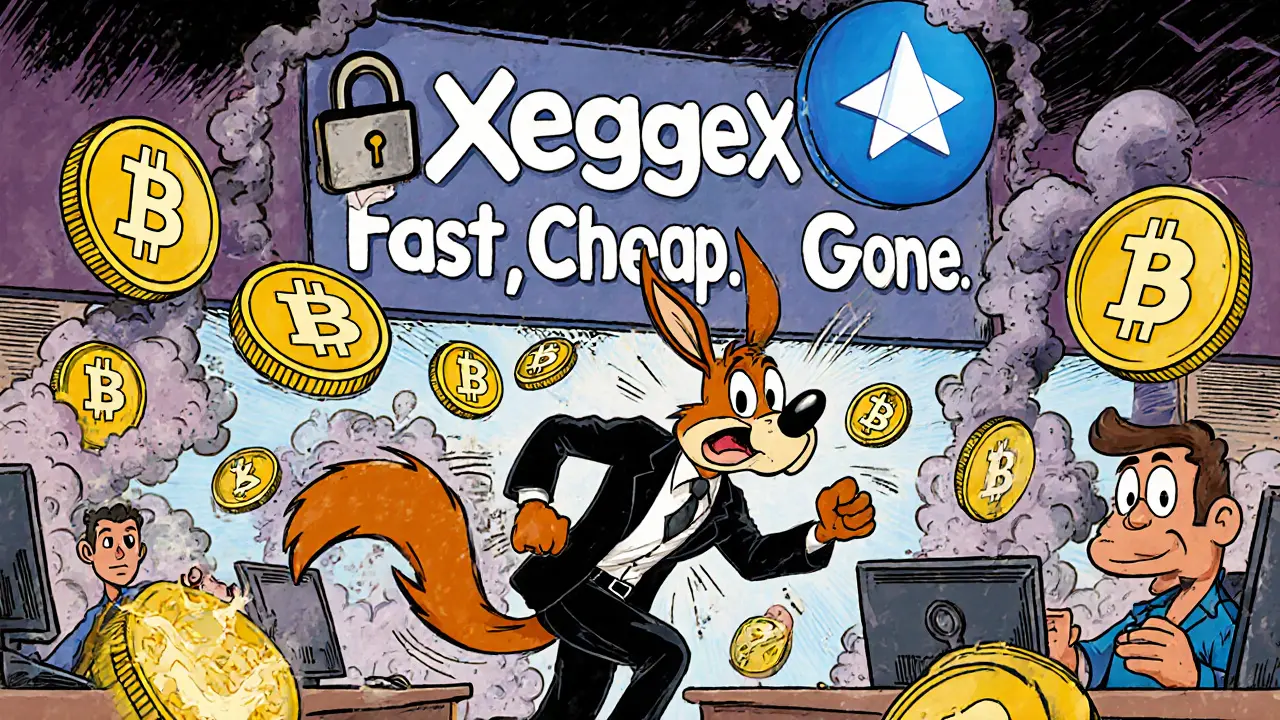
When you're looking for a crypto exchange, you want speed, low fees, and access to new coins. XeggeX promised all of that - and then vanished. By June 27, 2025, the platform was gone. No trading. No withdrawals. No customer support. Just a single notice on its website: "Due to the hack in February and other recent issues, XeggeX is shutting down and filing for insolvency." If you held funds there, they’re likely gone for good.
What Was XeggeX?
XeggeX (pronounced "Zeg-Ex") launched in 2021 as a niche crypto exchange targeting obscure, low-market-cap tokens - especially mining coins like PYI, TRL, and other projects that bigger exchanges like Binance or Coinbase wouldn’t touch. It wasn’t trying to compete with the giants. It was trying to serve traders who wanted early access to the next big thing - even if that thing had a market cap of $2 million and zero real-world use.
At its peak, it claimed to list over 530 assets and support more than 1,100 trading pairs. It offered Spot Trading, P2P, NFTs, and Liquidity Pools. Its interface was simple. Onboarding was fast. You didn’t need heavy KYC to deposit crypto. That made it popular among Chinese-speaking traders and small investors chasing high-risk, high-reward plays.
The platform’s secret sauce? Its native token, XPE (Xpense). Holding XPE gave you 25% off trade fees, withdrawal fees, and NFT listing fees. It was an ERC-20 token that worked on Ethereum, Binance Smart Chain, and Polygon. For users who traded often, it looked like a smart way to cut costs. But here’s the catch: XPE’s value was entirely tied to XeggeX’s survival. When the exchange died, so did XPE.
The Security Disaster That Killed XeggeX
The downfall didn’t come from a lack of users. It came from a catastrophic failure in security.
On February 3, 2025, hackers gained access to the CEO’s Telegram account. That’s right - a messaging app. No multi-factor authentication. No separation between personal comms and platform control. Once inside, the attackers sent fake updates, tricked staff into handing over credentials, and eventually accessed internal systems that held user data and wallet keys.
XeggeX’s response? They locked down wallets and disconnected the database from the network to "prevent further damage." Sounds logical - until you realize that meant no one could log in anymore. Not even the team. Users woke up to blank balances. Withdrawals stopped. Support emails went unanswered.
For months, the platform promised fixes. "We’re working on it," they said. "Funds are safe." But by May 2025, users were reporting wallet balances showing as zero. No recovery. No explanation. Just silence.
Security experts later confirmed: this wasn’t a sophisticated hack. It was a basic, avoidable mistake. Major exchanges don’t let CEOs use unsecured Telegram chats for operational decisions. XeggeX did. And it cost users everything.
Why Users Trusted XeggeX - and Why They Shouldn’t Have
Before the collapse, XeggeX had fans. Reddit threads praised its "incredibly fast listing process." One user on Bitcointalk wrote in March 2024: "Finally an exchange that lists real mining coins without ridiculous fees."
It was cheap. P2P trades were 0.2% - cheaper than Coinbase’s tiered system. It listed coins other exchanges ignored. If you were betting on a new mining token with 500 holders and no whitepaper, XeggeX was your only option.
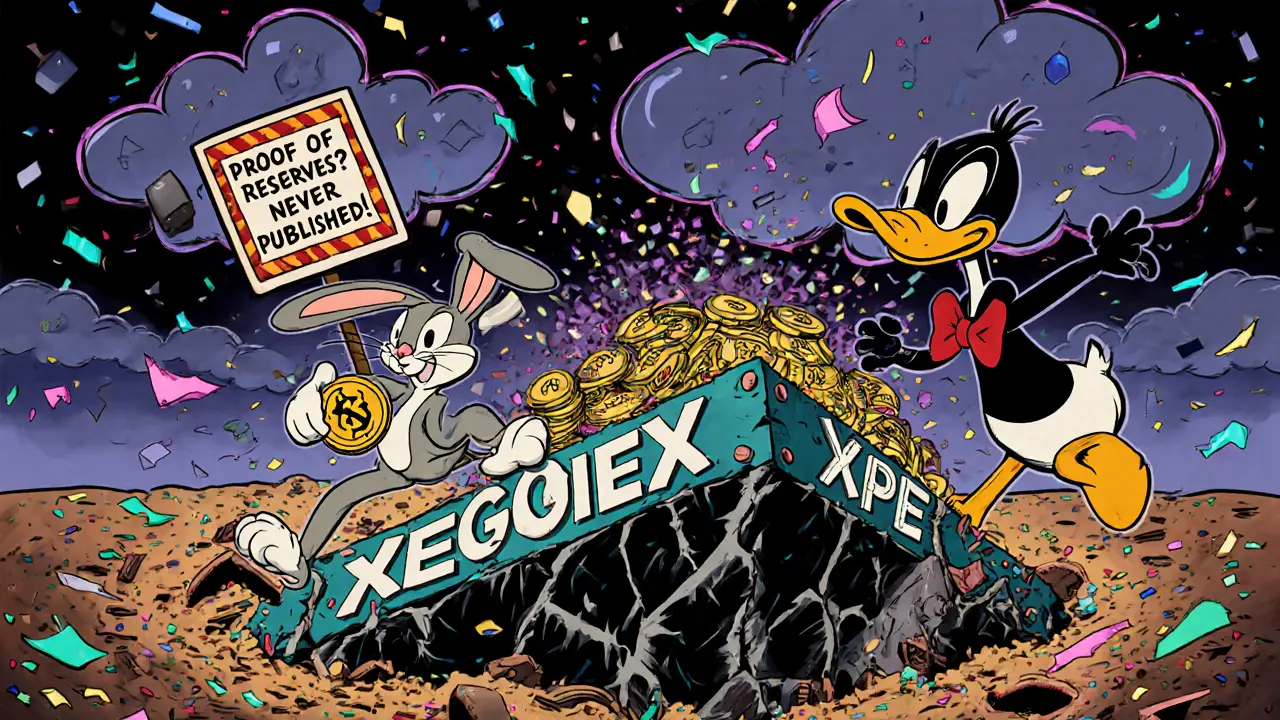
But that’s also why it was dangerous. XeggeX didn’t vet projects. It didn’t require audits. It didn’t publish proof-of-reserves. While Binance and Kraken release quarterly attestations showing they hold users’ funds, XeggeX never did. Not once.
According to Chainalysis’ 2025 Crypto Crime Report, 63% of all exchange-related user losses in 2024-2025 came from platforms trading tokens under $50 million market cap. XeggeX was built on that exact segment. It didn’t just accept risk - it depended on it.
What Happened After the Hack?
After February, the platform limped along. Users kept checking in. Some still held hope. But by May, the website showed $0 trading volume and 0 active markets. The NFT marketplace was empty. The P2P section had no listings.
Then, on June 27, 2025, the final notice dropped. Bankruptcy. No recovery plan. No insurance. No legal path to reclaim funds.
Trustpilot reviews from that period show 98% of 1,247 ratings were 1-star. Comments like "Lost 3.2 BTC in obscure tokens" and "Zero customer support response" dominated. A Reddit thread with over 2,800 comments called it "exit scam adjacent" - not because they believed it was planned, but because the response was so negligent it felt intentional.
Regulators noticed too. On October 22, 2025, Canada’s Securities Administrators officially removed XeggeX from its list of approved platforms. No other major jurisdiction had ever approved it - and now, no one ever will.
How XeggeX Compared to Other Exchanges
Here’s how XeggeX stacked up against major players before its collapse:
| Feature | XeggeX | Binance | Coinbase |
|---|---|---|---|
| Founded | 2021 | 2017 | 2012 |
| Assets Listed | 530+ | 1,000+ | 200+ |
| Specialty | Obscure mining coins | High-volume, regulated assets | Beginner-friendly, compliant assets |
| P2P Fee | 0.2% | 0.1%-0.4% | 0.5%-0.6% |
| Proof of Reserves | Never published | Quarterly audits | Quarterly attestations |
| Multi-Factor Auth for Admins | No | Yes, enforced | Yes, enforced |
| Security Breach in 2025 | Yes - CEO Telegram compromised | No | No |
| Current Status | Bankrupt, defunct | Active, global | Active, regulated |
The takeaway? XeggeX traded on speed and low fees. The big exchanges trade on trust and security. One offered opportunity. The others offered safety. Most users didn’t realize they were choosing between the two - until it was too late.
What You Can Learn from XeggeX’s Collapse
If you’re still using small exchanges, here’s what you need to know:
- Never trust a platform that doesn’t publish proof-of-reserves. If they won’t show you they hold your coins, don’t leave them there.
- Avoid exchanges that list hundreds of obscure coins. These are magnets for rug pulls and hacks. High-risk coins = high-risk platforms.
- Check if the team uses public communication tools like Telegram for operational updates. If yes, that’s a red flag. Real companies use encrypted, audited systems.
- Don’t get lured by low fees alone. A 0.2% fee means nothing if your entire balance disappears.
- Use cold wallets for long-term holds. If you’re not actively trading, keep your assets offline.
XeggeX wasn’t an outlier. It was a warning. According to Cambridge Centre for Alternative Finance, 23% of exchanges under 500,000 users had major security incidents in 2024-2025. Two-thirds of them never recovered. XeggeX was one of them.
Final Verdict: Was XeggeX Worth It?
No.
It offered what many traders wanted: access to early-stage tokens, low fees, and fast listings. But it offered none of the safety nets that make crypto trading sustainable. No insurance. No audits. No transparency. No recovery plan.
If you were one of the 361,000+ users who held funds there, you’ve likely lost everything. There’s no legal recourse. No fund recovery. No hope.
XeggeX’s story isn’t just about a failed exchange. It’s about the cost of chasing shortcuts in crypto. The market rewards patience and caution. It punishes recklessness - and sometimes, it takes your money with it.
Is XeggeX still operating?
No. XeggeX officially shut down on June 27, 2025, and filed for bankruptcy. Its website is inactive, and all trading, withdrawals, and support functions have been permanently disabled.
Can I get my money back from XeggeX?
Almost certainly not. The exchange filed for insolvency with no insurance, no recovery plan, and no assets to distribute. Legal action is unlikely to succeed, as there are no funds left to reclaim. Users are considered unsecured creditors, meaning they rank last in any potential liquidation process.
What happened to the XPE token?
The XPE token lost all value with the collapse of the exchange. Since it was a utility token tied entirely to XeggeX’s platform, it became worthless once trading stopped. No exchanges list it anymore, and there is no active development or community support.
Why did XeggeX get hacked?
The hack started when attackers compromised the CEO’s Telegram account. They used that access to trick staff into revealing system credentials. Once inside, they accessed databases and wallet keys. The core issue? No multi-factor authentication on admin accounts, and no separation between personal communication tools and critical platform functions.
Should I use small crypto exchanges like XeggeX?
Only if you’re prepared to lose everything. Small exchanges often list risky assets and lack security infrastructure. If you want to trade obscure tokens, use a reputable platform with cold storage, proof-of-reserves, and strong security - even if fees are higher. Your assets are worth more than a 0.2% discount.
How can I avoid a similar exchange in the future?
Check for three things: 1) Public proof-of-reserves reports, 2) Regular third-party security audits, and 3) No use of public messaging apps (like Telegram) for official platform updates. Also, avoid exchanges that list more than 300 obscure tokens with market caps under $10 million. If it sounds too good to be true - it usually is.
Next Steps for Former XeggeX Users
If you lost funds on XeggeX, your options are extremely limited. Here’s what you can do:
- Document everything: Save screenshots of your balances, transaction history, and the shutdown notice.
- Join user groups: Search for "XeggeX victims" on Reddit or Discord. Collective pressure sometimes forces legal action.
- Report to authorities: File a complaint with your country’s financial regulator - even if recovery is unlikely, it helps build a case for future regulation.
- Move on: Use a trusted exchange like Kraken, Coinbase, or Bitstamp for future trades. Learn from this. Don’t repeat it.
The crypto market moves fast. But the best traders aren’t the ones chasing the next big coin. They’re the ones who protect their capital - even when it means missing out.