

Remember when managing crypto risk meant just keeping your private keys in a hardware wallet and hoping for the best? That was fine for hobbyists, but it’s a disaster waiting to happen for institutions moving billions. Today, crypto risk management is no longer an afterthought; it is the backbone of institutional adoption. With global institutional inflows into physical bitcoin exchange-traded products hitting nearly $35 billion recently, the stakes have never been higher. If you’re still treating digital assets like speculative lottery tickets rather than complex financial instruments with unique vulnerabilities, you’re leaving money on the table-and exposing yourself to catastrophic loss.
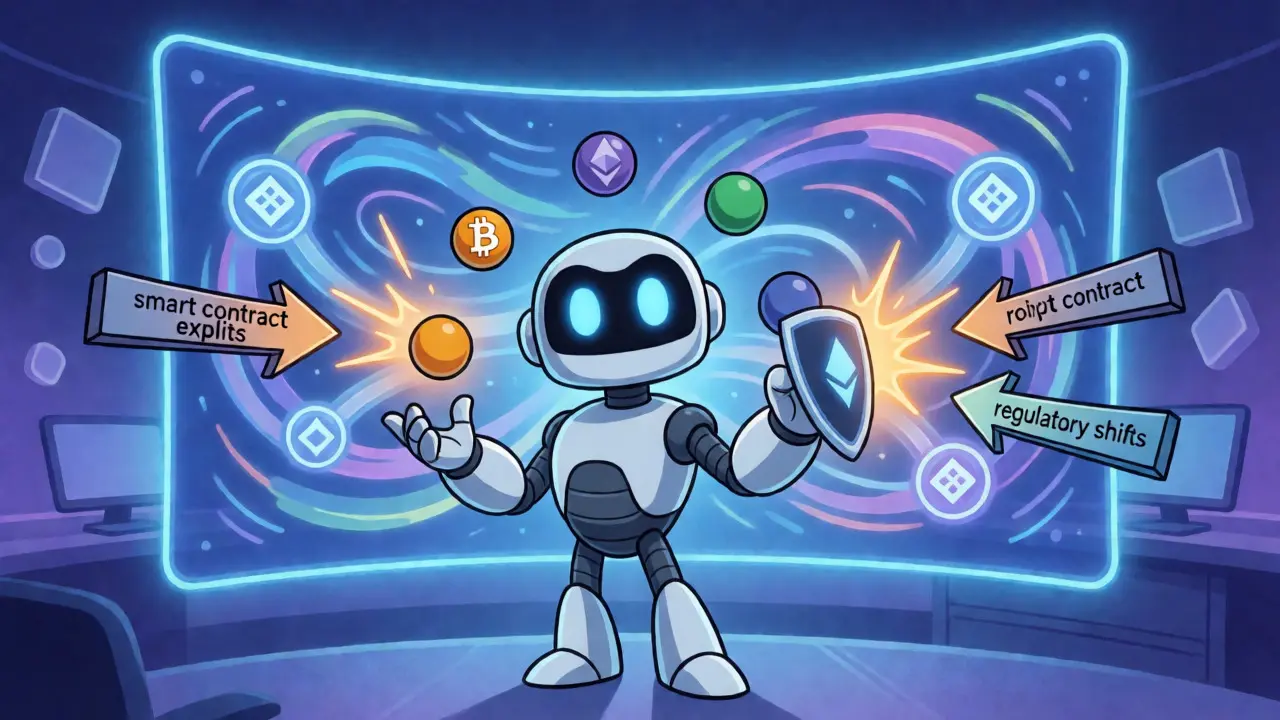
The shift isn’t just about size; it’s about sophistication. We’ve moved from a wild west era where bad actors ran rampant to a structured environment where compliance, technology, and traditional finance techniques converge. But here’s the catch: as the market matures, the risks don’t disappear-they evolve. Smart contract exploits, regulatory shifts, and quantum computing threats are now part of the daily conversation for portfolio managers. This article breaks down exactly how the future of protecting digital wealth looks, what tools actually work, and where the next big pitfalls are hiding.
The Rise of Institutional Governance
Let’s look at the numbers, because they tell a stark story. By 2025, 78% of global institutional investors reported having a formal crypto risk management framework in place. That’s a massive jump from 54% just two years prior. Why the sudden rush? Because the "wait and see" approach stopped being viable once Bitcoin started outperforming traditional assets in multi-asset portfolios. Asset managers realized that skipping crypto meant lagging behind competitors who were capturing that alpha.
This wasn’t just about buying more Bitcoin. It was about building guardrails. Institutions began demanding clear lines of responsibility for who monitors volatility, who handles custody breaches, and who interprets new SEC guidelines. The maturation of the ecosystem forced these entities to treat digital assets with the same rigor as equities or bonds. You can’t manage what you don’t measure, and the lack of standardized metrics was a major blocker. Now, with clearer reporting requirements and established benchmarks, firms are finally comfortable allocating significant capital. They aren’t just guessing anymore; they are calculating exposure based on hard data.
Insurance and Hedging: Beyond Simple Volatility
If you think hedging is just shorting futures, you’re missing half the picture. While derivatives remain popular-with 63% of institutional investors using them to manage price swings-the real innovation is happening in insurance. In 2025, underwriting for crypto-specific policies hit $6.7 billion, a 52% year-over-year increase. This isn’t just about insuring against theft, although crime policies covering cyberattacks are purchased by 41% of institutions. The game-changer is parametric insurance.
Parametric insurance pays out automatically when specific conditions are met, such as a smart contract exploit or a protocol failure. Unlike traditional claims processes that take months, this model triggers payouts instantly via code. It’s a perfect fit for the speed of blockchain transactions. About 29% of institutions have adopted this specialized approach, recognizing that DeFi risks are fundamentally different from stock market crashes. You can’t hedge a rug pull with a put option, but you can insure against it.
Then there’s the rise of credit default swaps (CDS) adapted for crypto counterparties. Used by 17% of institutions, these instruments help manage lending risks in decentralized finance (DeFi). When you lend stablecoins on a platform, you face counterparty risk-who guarantees the borrower will pay back? CDS provide a safety net. Meanwhile, risk-sharing pools like Nexus Mutual are gaining traction, used by 22% of institutions to cover protocol risks through decentralized mechanisms. It’s a hybrid world where traditional financial engineering meets blockchain-native solutions.
| Risk Management Tool | Adoption Rate | Primary Use Case |
|---|---|---|
| Crypto Derivatives (Futures/Options) | 63% | Managing price volatility |
| Crime/Cyber Insurance | 41% | Theft, fraud, and cyberattack coverage |
| Algorithmic Risk Tools | 48% | Dynamic exposure adjustment |
| Parametric Insurance | 29% | Smart contract exploits and protocol failures |
| Decentralized Risk Pools | 22% | DeFi protocol risk sharing |
| Crypto Credit Default Swaps | 17% | Lending counterparty risk |
Technology as the First Line of Defense
You cannot manually monitor thousands of smart contracts across multiple chains. It’s physically impossible. That’s why 48% of institutions now rely on algorithmic risk management tools powered by artificial intelligence. These systems don’t just track prices; they analyze on-chain behavior, detect anomalies in transaction patterns, and adjust exposure limits in real-time. Think of it as an automated immune system for your portfolio.
Artificial Intelligence in crypto risk management goes beyond simple alerts. Predictive analytics models ingest vast amounts of historical data and social sentiment to forecast potential market shocks before they hit. For example, if AI detects unusual liquidity drains from a major DeFi pool, it can trigger a partial sell-off or hedge position automatically. This proactive stance saves millions in losses that would have occurred during a manual review delay.
Looking further ahead, quantum computing looms large. While not yet mainstream, its potential to revolutionize risk modeling is undeniable. Quantum processors could simulate complex market scenarios involving millions of variables simultaneously, offering insights current supercomputers can’t match. However, this tech also poses a threat: quantum computers could eventually break current encryption standards. Forward-thinking firms are already exploring post-quantum cryptography to future-proof their assets. Ignoring this timeline is dangerous; the transition won’t happen overnight, but preparation takes years.
Regulatory Clarity and Compliance Shifts
Regulation used to be the elephant in the room-everyone knew it was there, but nobody wanted to address it. Now, it’s the architect of the landscape. Recent executive orders banning consumer-focused central bank digital currencies (CBDCs) while encouraging wholesale versions signal a clear preference for private-sector innovation over state-controlled retail money. This distinction matters for risk managers. It means the focus remains on interoperability and settlement efficiency within banking sectors, rather than replacing cash with government tokens.
Compliance frameworks like SAB 122 are reshaping how companies report digital assets. Proper accounting treatment reduces ambiguity, which in turn lowers perceived risk for auditors and boards. When regulators speak clearly, institutions listen. The trend toward explicit standards means less legal gray area. Firms must now maintain rigorous awareness of reporting requirements, especially regarding custody services. Collateralized insurance is increasingly mandated by custodians before accepting large deposits, effectively making insurance a prerequisite for doing business at scale.
Don’t underestimate the power of standardization. Initiatives like Mastercard’s Multi-Token Network (MTN) exemplify how traditional finance infrastructure is adapting. By partnering with banks like Standard Chartered and J.P. Morgan’s Kinexys, MTN creates trusted, standardized rails for digital asset transactions. This interoperability reduces operational risk by ensuring that different blockchains and traditional ledgers can communicate seamlessly without messy middlemen.
DeFi and Real-World Assets: New Frontiers, New Risks
Decentralized Finance (DeFi) promised to remove intermediaries, but it introduced new layers of complexity. Borrowing, lending, and investing without banks sounds great until you realize there’s no FDIC insurance backing your deposit. This is where Real-World Asset (RWA) tokenization becomes critical. Tokenizing securities, real estate, and commodities bridges the gap between traditional liquidity and blockchain efficiency. But it requires sophisticated custody and settlement frameworks that didn’t exist five years ago.
Privacy is another growing concern. As privacy-focused cryptocurrencies and encryption methods advance, consumers demand more control over their data. Institutions must balance transparency required for audits with the need for user privacy. Enhanced security protocols are no longer optional; they are competitive advantages. If you can prove your platform protects user identity while maintaining audit trails, you attract both retail and institutional users.
Venture capitalists are becoming more selective, too. Fears of recession impact sizable crypto investments, forcing startups to prove sustainable revenue models rather than relying on hype. This filtering process strengthens the ecosystem long-term but increases short-term volatility. Businesses interacting with digital assets must stay updated on shifting regulatory frameworks and industry-specific accounting practices. Staying informed isn’t just good practice; it’s survival.

Key Takeaways for Future-Proofing Your Portfolio
- Adopt Formal Frameworks: Move beyond ad-hoc decisions. Implement structured risk governance similar to traditional asset classes.
- Diversify Insurance: Combine crime insurance with parametric models to cover both human error and code failures.
- Leverage AI: Use algorithmic tools for real-time monitoring and dynamic hedging adjustments.
- Watch Regulation: Track developments in CBDCs and accounting standards like SAB 122 to avoid compliance surprises.
- Prepare for Quantum: Start evaluating post-quantum cryptographic solutions to secure long-term holdings.
Frequently Asked Questions
Why is parametric insurance better for DeFi risks?
Traditional insurance relies on proving negligence or damage, which is difficult with autonomous smart contracts. Parametric insurance uses predefined data points (like a hack event) to trigger automatic payouts via code, eliminating lengthy claims processes and providing immediate liquidity during crises.
How does AI improve crypto risk management?
AI analyzes vast datasets including on-chain transactions, social sentiment, and market microstructure to predict volatility and detect anomalies faster than humans. It enables dynamic hedging, adjusting positions in real-time to mitigate losses before they escalate.
What is the role of Credit Default Swaps in crypto?
Crypto CDS allow institutions to transfer the risk of a counterparty defaulting on loans or stablecoin issuances failing. They function similarly to traditional CDS but are tailored for digital asset markets, helping lenders manage credit exposure in decentralized environments.
Are consumer CBDCs going away?
Recent policy shifts suggest a ban on consumer-focused retail CBDCs due to concerns about financial stability. Instead, development is focusing on wholesale CBDCs aimed at improving interbank settlement efficiency, keeping the retail layer dominated by private stablecoins and commercial bank money.
Why do institutions require collateralized insurance?
Collateralized insurance ensures that funds are available immediately in case of a breach or loss. Custodians mandate this to protect client assets and limit their own liability, creating a safer environment for large-scale deposits by guaranteeing coverage without waiting for insurer solvency checks.





Categories