

| Feature | Details |
|---|---|
| Consensus Mechanism | Proof of Stake (PoS) |
| Architecture | Hybrid Co-Chain (EVM + Cosmos SDK) |
| Native Token | KAVA |
| Stablecoin | USDX (Algorithmic) |
| Interoperability | IBC Protocol |
How Kava's Hybrid Architecture Actually Works
Most blockchains are single-track. They do one thing well but struggle with everything else. Kava takes a different approach with a "hybrid co-chain" design. Think of it as two parallel tracks running side-by-side, connected by a smart translator module that lets them talk to each other in real-time. On one side, you have the Ethereum Virtual Machine (EVM) is the software environment that executes smart contracts for the Ethereum network chain. This is a huge deal because it means any developer who has built an app on Ethereum can move their project to Kava with almost zero effort. They get to keep their familiar tools and coding languages while escaping the high gas fees often found on the main Ethereum chain. On the other side is the Cosmos SDK is a framework that allows developers to build custom, interoperable blockchains . This part of the house provides the speed, fast block finality, and the ability to talk to other chains. By merging these two, Kava eliminates the fragmentation that usually plagues the crypto space. You get the reach of Ethereum and the efficiency of the Cosmos ecosystem in one place.The Engine of Kava DeFi: Lending and USDX
At its core, Kava started as a powerhouse for decentralized lending. Instead of going to a bank to get a loan, you use the Kava protocol. The process relies on something called a Collateralized Debt Position (CDP). Here is how the cycle works for a typical user:- Deposit Collateral: You lock up a supported cryptocurrency, such as Bitcoin (BTC), Binance Coin (BNB), or XRP, into a smart contract.
- Mint USDX: The protocol then mints USDX is Kava's native algorithmic stablecoin pegged to the US Dollar . This is your loan. You receive USDX based on the value of the coins you locked up.
- Earn Rewards: Because you are providing liquidity to the system, Kava pays you back. Users who mint USDX receive weekly rewards paid out in Kava crypto coin (KAVA).
What Does the KAVA Token Actually Do?
If Kava is the city, the KAVA token is the currency, the voting ballot, and the electricity that keeps the lights on. It isn't just a speculative asset; it has four primary jobs within the network:- Governance: Holding KAVA gives you a seat at the table. You can vote on protocol changes, fee structures, and the overall direction of the network development.
- Network Security: Kava uses a Proof of Stake (PoS) system. By staking your KAVA tokens, you help validate transactions and keep the network secure. In return, you earn interest on your staked assets.
- Payment for Gas: Every time someone sends a transaction or interacts with a smart contract on the Kava network, they pay a fee. These fees are paid in KAVA, creating a constant demand for the token as the network grows.
- Incentives: As mentioned before, KAVA is used to reward those who provide collateral to mint USDX, encouraging more people to join the DeFi ecosystem.

Beyond Lending: The Shift Toward AI and Tokenization
Kava isn't staying in the "lending only" lane. The team has realized that their hybrid architecture is too powerful to just be a loan shop. They are currently pivoting toward becoming a foundational layer for tokenized finance and decentralized AI. What does "tokenized finance" actually mean? It means taking real-world assets-like real estate, gold, or stocks-and putting them on the blockchain. Because Kava can bridge the gap between Ethereum and Cosmos, it's an ideal spot for these assets to live. Similarly, the platform is exploring decentralized AI compute coordination. Instead of one giant company like Google or OpenAI owning all the processing power, Kava aims to allow a distributed network of computers to work together on AI tasks. This move transforms Kava from a simple DeFi tool into a comprehensive infrastructure project.The Cosmos Connection and Interoperability
To understand Kava, you have to understand the Inter-Blockchain Communication (IBC) protocol is a networking protocol that allows different independent blockchains to communicate and exchange assets . Because Kava is built using the Cosmos SDK, it speaks the same language as other "zones" in the Cosmos ecosystem. This is why Kava can accept so many different types of collateral. While a typical Ethereum-based lending app can only take tokens that exist on Ethereum, Kava can reach out via IBC to other blockchains and pull in assets. This makes it a cross-chain hub, meaning assets can flow in and out of the Kava ecosystem with minimal friction. This connectivity is the secret sauce that prevents Kava from becoming an isolated island in the sea of blockchains.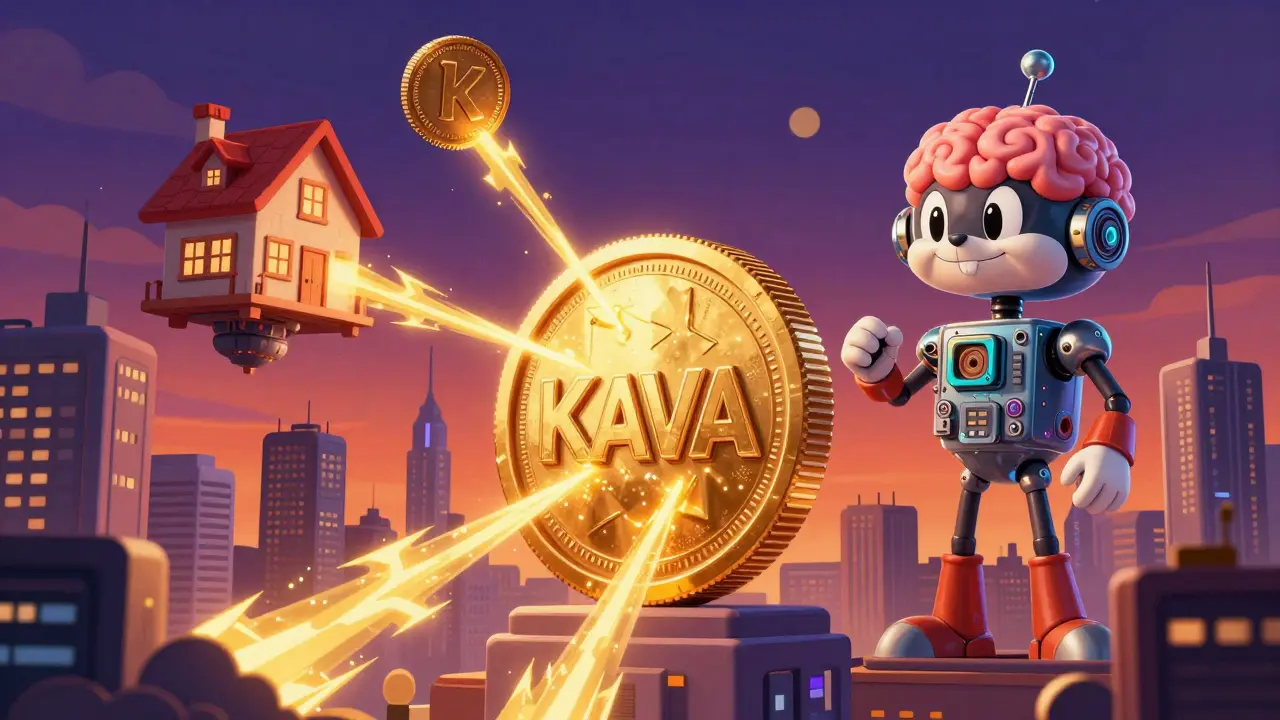
Potential Pitfalls and Realities
No project is without risk. While the hybrid co-chain model is brilliant on paper, it adds complexity. Managing two different chain types and a translator module creates more "surface area" for potential bugs or security vulnerabilities compared to a simple single-chain design. Furthermore, the success of the KAVA token is heavily tied to the adoption of the network. If developers don't migrate their apps from Ethereum or if the AI compute vision doesn't gain traction, the demand for KAVA as a gas fee could drop. Users should also keep an eye on the stability of USDX; since it is an algorithmic stablecoin, it relies on the mathematical balance of collateral to maintain its peg.Is KAVA a Layer-1 or Layer-2 blockchain?
Kava is a Layer-1 blockchain. This means it has its own independent network and consensus mechanism (Proof of Stake) rather than relying on another blockchain like Ethereum for security.
How does USDX differ from USDT or USDC?
USDT and USDC are typically backed by actual US dollars in a bank account. USDX is an algorithmic stablecoin, meaning its value is maintained by the cryptocurrency collateral (like BTC or BNB) locked in Kava's smart contracts.
Can I use Ethereum apps on Kava?
Yes. Because Kava includes an EVM-compatible chain, developers can deploy Ethereum-based smart contracts and apps directly onto Kava with very few changes.
What happens if my collateral value drops?
In the Kava lending system, if the value of your collateral drops below a certain threshold, the protocol may liquidate a portion of your assets to ensure the USDX stablecoin remains fully backed. This is a standard safety measure in DeFi.
How do I earn KAVA rewards?
You can earn KAVA by staking your tokens to secure the network or by providing cryptocurrency as collateral to mint USDX tokens. The amount of rewards depends on the asset used and the amount of USDX minted.