Coinbase Country Accessibility Checker
Check Your Coinbase Access
Enter your country to see if you can use Coinbase App with fiat or Coinbase Wallet.
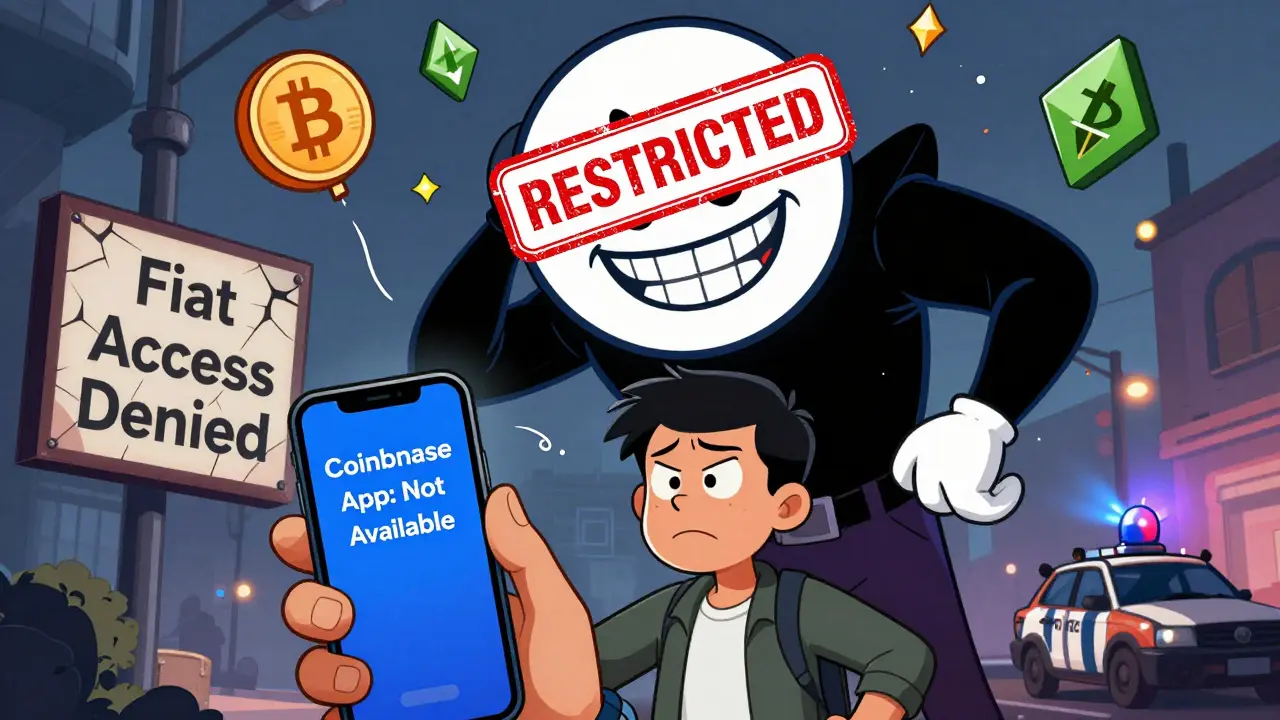
If you're trying to buy Bitcoin or Ethereum on Coinbase and got blocked, you're not alone. Thousands of users around the world hit the same wall: Coinbase doesn't let everyone use its full service. It’s not a glitch. It’s not a bug. It’s a legal wall built by compliance teams in San Francisco, responding to rules from Washington, Brussels, and beyond. The truth is simple: Coinbase works in about 48 countries for buying crypto with real money. Everywhere else? You might get a wallet-but no bank transfers, no credit cards, no Apple Pay. And that gap between what you want and what you can do is growing.
What Coinbase Actually Lets You Do-By Country
Not all Coinbase services are the same. There’s the Coinbase App, which lets you buy and sell crypto with dollars, euros, pounds, and other local currencies. Then there’s Coinbase Wallet, a self-custody app that works almost anywhere-even in places where the main app is blocked. But here’s the catch: Wallet doesn’t let you deposit fiat money. You can’t link your bank account. You can’t use PayPal. You can only move crypto you already own. So if you’re in Pakistan, Nigeria, or Colombia and you want to buy your first Bitcoin with your local currency, the Wallet won’t help you. You’ll need another exchange.
As of early 2025, the Coinbase App supports fiat transactions in 48 countries. That includes the U.S., U.K., Germany, France, Canada, Australia, Japan, and Singapore. In these places, you can deposit cash via bank transfer, debit card, or Apple Pay. Daily limits range from $500 for new users to $50,000 for fully verified ones. In Germany, SEPA transfers clear in under two hours. In the U.S., ACH deposits take 1-3 days. Both work. Both are legal.
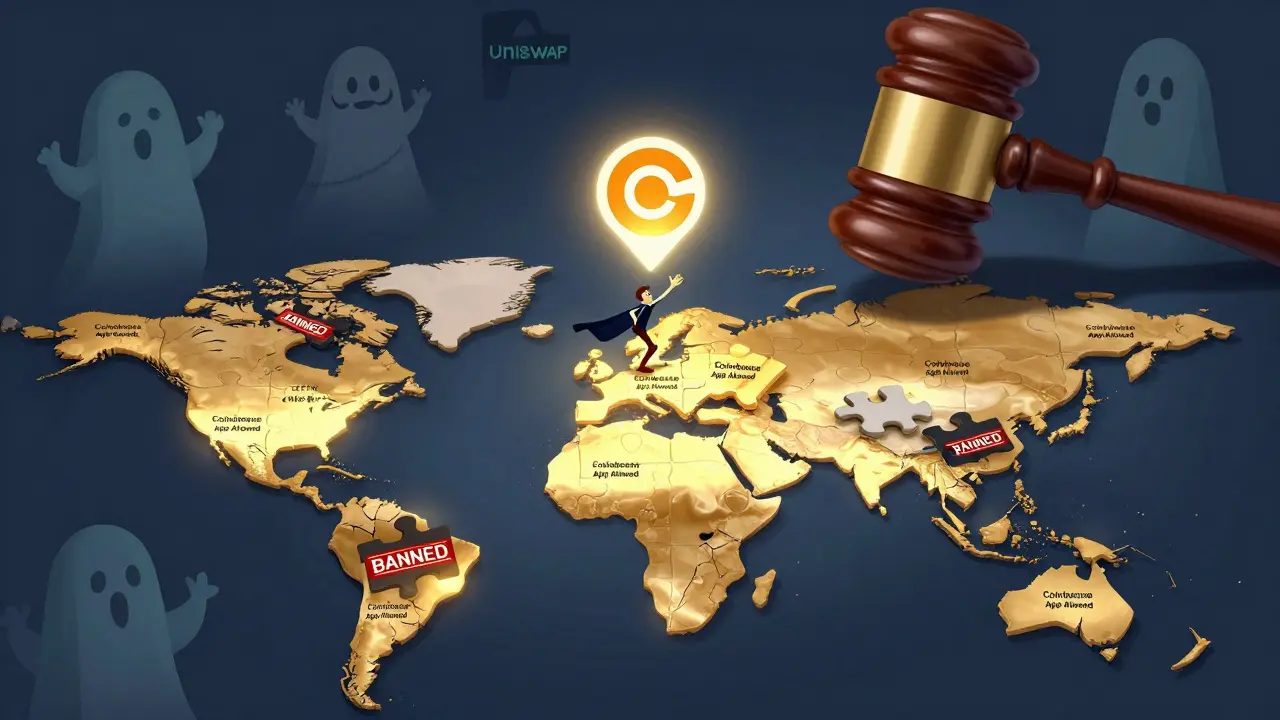
But in 63 other countries, the App is completely locked. That includes Russia (since 2022), Pakistan, Bangladesh, Nigeria, Egypt, and the Philippines. In these places, you might still download the Coinbase Wallet app. You can store Bitcoin, Ethereum, and over 5,500 other tokens. You can connect to DeFi apps like Uniswap or Aave. But you can’t buy crypto with your local currency. You’re stuck. And that’s by design.
Why Does Coinbase Block So Many Countries?
It’s not about technology. It’s about money and law. Coinbase is a publicly traded company on NASDAQ. It has to follow U.S. sanctions rules from the Office of Foreign Assets Control (OFAC). That means if a country is on the U.S. sanctions list-like Russia, Iran, North Korea, Syria, Cuba, or Crimea-Coinbase can’t serve users there. Not even a little bit. No exceptions.
But it’s not just U.S. sanctions. Europe’s MiCA regulation (Markets in Crypto-Assets) forced Coinbase to restructure how it operates across 30 EU countries. Some features, like staking Cardano (ADA), are blocked in 12 EU nations because they don’t meet MiCA’s new rules. In India, Coinbase tried to register with the Reserve Bank of India in early 2025 after being blocked for years. It’s still unclear if they’ll get approval. Meanwhile, countries like Nigeria and Egypt banned crypto exchanges outright in 2024, and Coinbase complied.
There’s also the SEC lawsuit. Filed in June 2023, the U.S. Securities and Exchange Commission accused Coinbase of operating as an unregistered securities exchange. That legal pressure pushed Coinbase to pull back even harder in gray-area markets. If the SEC wins, more countries could lose access. If Coinbase loses, it might have to shut down its entire U.S. business. Either way, users abroad feel the squeeze.
How Coinbase Knows Where You Live
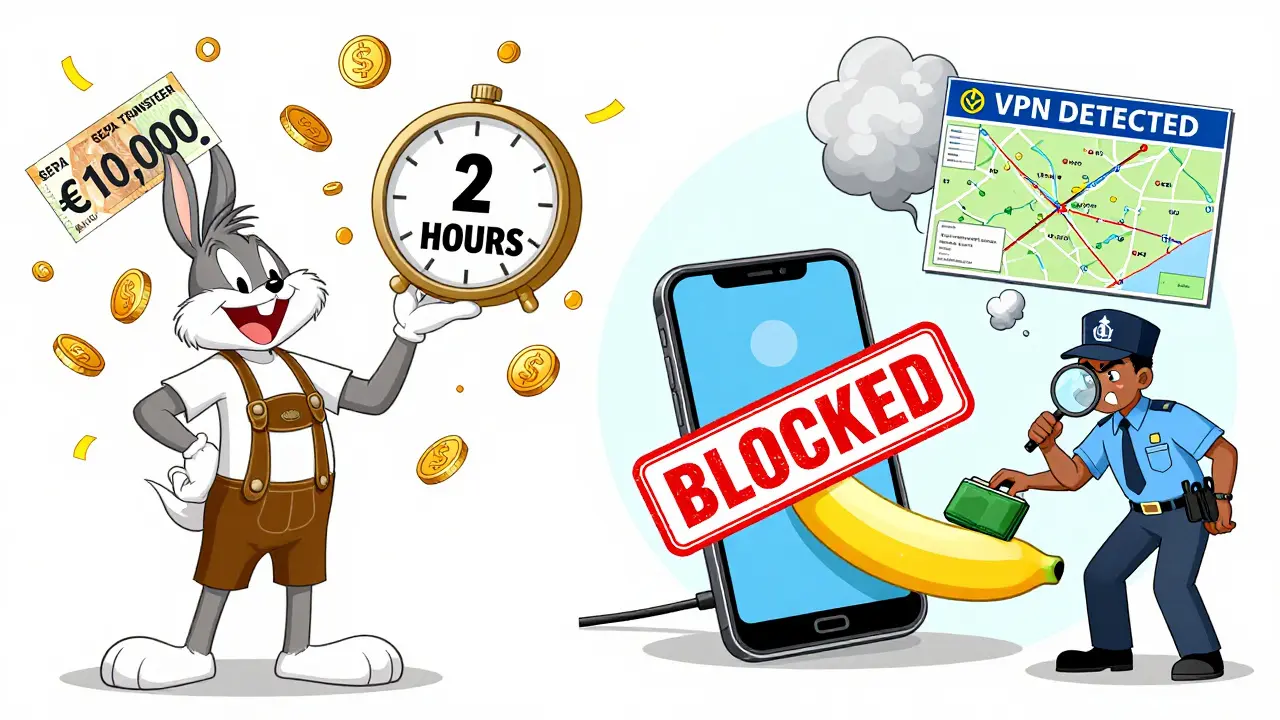
Coinbase doesn’t guess. It checks. When you sign up, you must upload a government ID-passport, driver’s license, national ID. You also need proof of address: a utility bill, bank statement, or tax document. The system cross-references your ID with your IP address. If you’re in Colombia but your IP says you’re in the U.S., your account gets flagged. If you use a VPN to bypass the block, Coinbase can and will shut you down. One user in the UAE lost $2,300 after using a VPN to access the App. His account was frozen. He never got the money back.
Even after approval, Coinbase monitors your activity. If you suddenly log in from a different country, or your bank account is in a restricted zone, your transactions get paused. New accounts in high-risk countries like Pakistan or Colombia face 24-72 hour holds on every deposit. That’s not a delay-it’s a compliance buffer. Coinbase’s system is built to catch anything that looks like a violation before it happens.
What About Coinbase Wallet? Can You Use It Everywhere?
Yes-almost. Coinbase Wallet works in 190+ countries. It’s a non-custodial wallet, meaning you control your own keys. It doesn’t need your bank details. It doesn’t ask for your address. It just needs your phone and an internet connection. Android 8.0 or iOS 13 and up. That’s it. You can send and receive crypto. You can use dApps. You can even swap tokens without going through Coinbase’s exchange.
But here’s what it can’t do: buy crypto with your local currency. You can’t deposit pesos, naira, rupees, or rubles. You can’t use mobile money like M-Pesa or GCash. You can’t link your bank. So if you’re in Pakistan and you want to buy Bitcoin with your rupees, Wallet won’t help. You’ll have to go to Binance P2P, where you pay 8% extra in premiums just to trade with strangers. That’s not a feature. That’s a workaround.
Some users in the Philippines use Wallet to store crypto bought on local exchanges like PDAX. But PDAX charges 3.5% per trade. Coinbase charges 0.5%. If Coinbase allowed fiat on-ramps there, it would dominate. But it doesn’t. And that’s not because it can’t. It’s because it won’t.
How Coinbase Compares to Other Exchanges
Compared to other exchanges, Coinbase is the most restricted. Kraken operates in 190+ countries with fiat access in 55. Binance, despite its own legal troubles, still lets users in Pakistan, Nigeria, and the UAE deposit local currency. Even Binance P2P lets users in Bangladesh trade with Tether (USDT) using local bank transfers.
MetaMask, a decentralized wallet, works in 195+ countries with no restrictions. But again-it doesn’t let you buy crypto with cash. You still need another service to get your first Bitcoin. So while MetaMask is more open, it’s not more useful for beginners.
Coinbase’s advantage is trust. In the U.S., it holds 56% of the crypto exchange market. In Germany, it’s fully licensed by BaFin. In France, it’s registered with the AMF. That’s why institutions and banks partner with it. But that same trust is what forces it to be so strict. It can’t afford to be the one that gets fined $100 million for letting someone in Russia trade.
Real People, Real Problems
Reddit threads are full of frustration. A user in Lahore wrote: “Wallet works. Coinbase App? Blocked. I tried everything. Even used my cousin’s U.S. address. Got banned.” Another in Manila said: “I can’t buy crypto here. I have to fly to Singapore to deposit cash.” A Colombian user on Trustpilot said: “I uploaded my ID. My bank is Colombian. Coinbase says ‘not supported.’ Binance processed my COP deposit in 10 minutes.”
On the flip side, German users love it. One wrote: “€10,000 deposit in 2 hours. No drama. No fees. Just works.” That’s the split. In regulated markets, Coinbase is the easiest. In emerging markets, it’s the hardest.
What’s Changing in 2025?
Things are shifting fast. MiCA is now live in the EU. Coinbase moved its European operations from Ireland to Luxembourg in August 2025 to comply. That means users in Malta, Iceland, Liechtenstein, and Hungary now get service from a different legal entity. It’s invisible to you-but it’s huge behind the scenes.
India’s future is uncertain. The RBI is still reviewing Coinbase’s registration. If approved, India could become the largest new market for Coinbase in 2025. If rejected, it’ll stay blocked. Pakistan is another gray zone. Some users report partial Wallet access. Others say even Wallet is blocked. Coinbase hasn’t clarified.
And then there’s the SEC lawsuit. If Coinbase loses, it could be forced to stop offering trading in the U.S. That would mean no U.S. users. No U.S. revenue. And if that happens, the entire business model collapses. That’s why Coinbase is so cautious everywhere else. It’s playing defense.
What Can You Do If You’re Blocked?
If you’re in a restricted country, here’s your reality: You can’t use Coinbase to buy crypto with your local money. That’s not going to change soon. But you have options.
- Use Coinbase Wallet to store crypto you already own.
- Use peer-to-peer platforms like Binance P2P, Paxful, or LocalCryptos to buy crypto with cash or mobile money.
- Use local exchanges like PDAX (Philippines), Luno (Nigeria), or Rain (Brazil) to buy crypto with your local currency, then transfer it to Coinbase Wallet for safekeeping.
- Never use a VPN to bypass restrictions. Your account will be frozen. Your money could be lost.
There’s no magic fix. The system is designed to keep out users in sanctioned or high-risk countries. It’s not personal. It’s legal. And until governments change their rules, exchanges like Coinbase won’t either.
Is There Any Hope for the Future?
Maybe. MIT researchers found that Coinbase’s geo-blocks reduced illicit activity by 78% in sanctioned countries. That’s a win for regulators. But they also found it hurt 12.7 million unbanked people who just want to use crypto as a tool-not a crime.
Some experts think decentralized finance (DeFi) will eventually bypass these restrictions. If you can swap tokens on a non-custodial DEX without a bank, you don’t need Coinbase. But that’s not easy for most people. It requires learning new tools, managing keys, and trusting code over companies.
For now, Coinbase remains a gatekeeper. It’s safe, regulated, and trusted. But it’s also exclusive. If you live in the U.S., U.K., or Germany, you get the best experience. If you live elsewhere? You’re on the outside looking in.
Why can't I use Coinbase in my country?
Coinbase blocks access in certain countries because it must comply with U.S. sanctions (like OFAC rules) and local crypto regulations. If a country is under U.S. sanctions-or has banned crypto exchanges-Coinbase legally can't offer its services there. Even if you have a valid ID, your location is checked through your IP address and government documents. If your country is on the restricted list, the App won't work. You may still use Coinbase Wallet, but only to store crypto you already own.
Can I use Coinbase Wallet in a restricted country?
Yes, Coinbase Wallet works in 190+ countries, including places where the main Coinbase App is blocked. It’s a non-custodial wallet, so it doesn’t require bank links or KYC. You can send, receive, and store over 5,500 cryptocurrencies and interact with DeFi apps. But you cannot deposit or withdraw fiat money (like USD, EUR, or local currency) through Wallet. You’ll need another service to buy crypto first.
What’s the difference between Coinbase App and Coinbase Wallet?
The Coinbase App is a custodial exchange where you buy, sell, and store crypto using fiat money (like dollars or euros). It requires ID verification and is only available in 48 countries. Coinbase Wallet is a non-custodial app that lets you control your own keys. It works globally but doesn’t support fiat deposits. Think of the App as a bank and Wallet as a digital piggy bank-you can only fill it if you already have crypto.
Can I use a VPN to access Coinbase in a blocked country?
No. Using a VPN to bypass geographic restrictions violates Coinbase’s User Agreement. The system detects VPN usage and will freeze or permanently ban your account. Users who’ve tried this have lost access to their funds. Coinbase’s compliance team actively blocks known VPN IP addresses. Even if you get in, your transactions will be flagged, and your account may be terminated without warning.
Which countries are completely blocked by Coinbase?
Coinbase fully blocks the App in 63 countries, including Russia, Iran, North Korea, Syria, Cuba, Pakistan, Nigeria, Bangladesh, Egypt, and the Philippines. These are mostly due to U.S. sanctions or local crypto bans. Some countries, like the UAE, have partial access-Apple Pay works, but bank transfers don’t. Always check Coinbase’s official country list in your account settings, as restrictions change with new laws.
Will Coinbase ever expand to more countries?
It depends on regulation. Coinbase is expanding slowly in compliant markets like India, where it’s seeking regulatory approval. But it’s unlikely to enter countries under U.S. sanctions or with strict crypto bans. The company’s priority is staying legal in the U.S. and EU, not chasing growth in risky regions. Unless global crypto rules become more unified, Coinbase will remain selective about where it operates.