
When you build a blockchain system that can plug in new features like Lego blocks - a new payment module here, a privacy layer there - you’re using composability. It’s powerful. You can stitch together DeFi protocols, NFT marketplaces, and identity systems without rebuilding everything from scratch. But every time you add a new piece, you also add a new way for attackers to break in.
What Composability Really Means in Blockchain
Composability in blockchain isn’t just about coding neatly. It’s about letting one smart contract call another, and another, and another - all in a single transaction. Think of it like a chain reaction: a user swaps tokens on Uniswap, borrows against them on Aave, and uses the loan to buy a NFT on OpenSea - all in one go. That’s composability in action.
It’s why DeFi exploded. Developers didn’t need to build wallets, oracles, or lending engines from scratch. They reused what already worked. The result? Thousands of protocols built on top of Ethereum, Solana, and others, each adding new capabilities without reinventing the wheel.
But here’s the catch: every connection is a potential weakness. If one contract has a bug, it can ripple through the whole system. In 2022, the Wormhole bridge exploit happened because a signature check was missing in one module - and attackers drained $320 million by chaining that flaw across multiple protocols.
Why Security Gets Harder With More Pieces
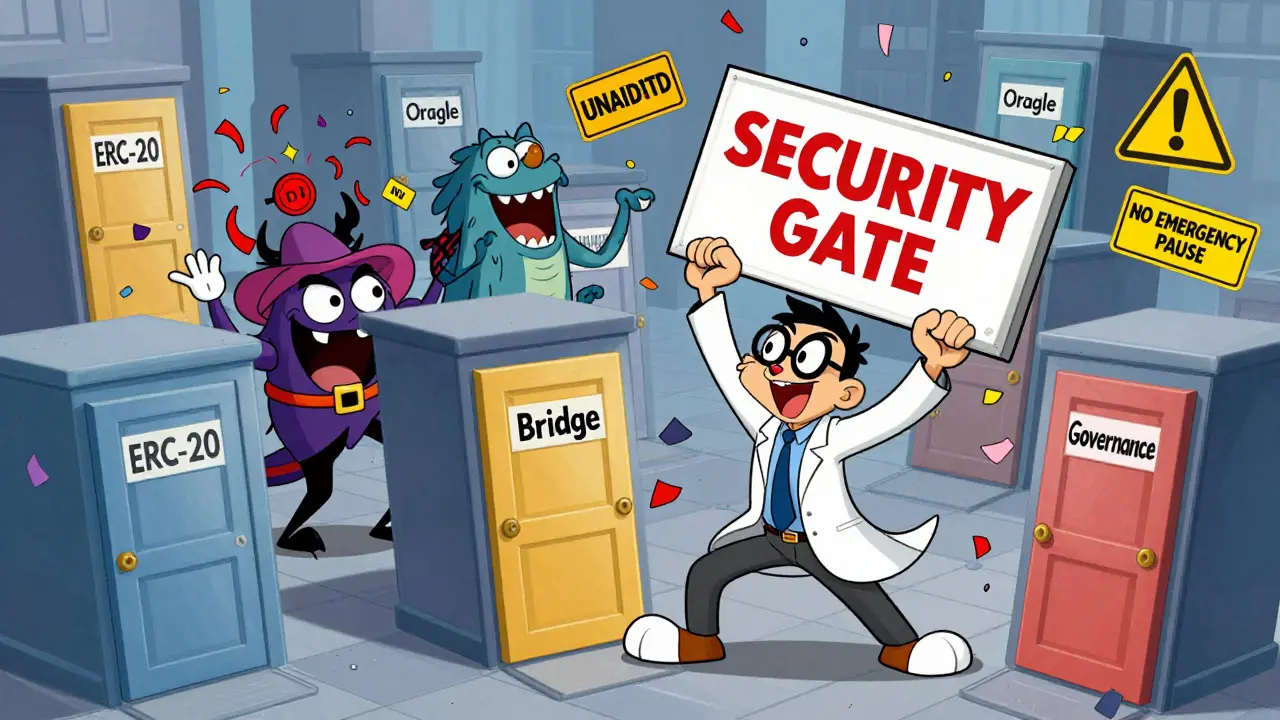
In a monolithic system, you lock the front door, monitor the windows, and control who comes in. Simple. In a composable blockchain system, you have dozens of doors, each with different locks, operated by different teams, and some of them aren’t even owned by you.
Each smart contract you integrate becomes a new attack surface. A token standard like ERC-20 might be secure on its own, but when combined with a flawed governance contract, it can be drained through reentrancy attacks. Or a seemingly harmless oracle that feeds price data might be manipulated if it pulls from a single source - and suddenly, every leveraged position using that data gets liquidated.
JetSoftPro’s 2025 research calls this "API sprawl" - and in blockchain, it’s worse. You don’t just have HTTP endpoints to secure. You have on-chain function calls, cross-chain bridges, signature validations, and gas fee manipulations. Every interaction between contracts needs to be authenticated, authorized, and monitored. And if one team forgets to check input validation? The whole chain of trust breaks.
The Hidden Costs of Speed
Composability lets teams launch features 80% faster than traditional development. That’s why startups and DeFi projects love it. You can prototype a yield aggregator in days, not months. But speed comes at a cost: testing.
Monolithic apps can be tested end-to-end in one environment. Composable systems? You need to test each contract individually, then test how they interact. You need to simulate attacks across multiple chains, check for front-running, and verify that gas limits won’t cause failures in nested calls.
And it’s not just code. Governance matters too. If a protocol you rely on changes its rules - say, by upgrading its core contract without warning - your app might stop working overnight. In 2023, a popular lending protocol upgraded its interest rate model without proper notice. Dozens of yield optimizers broke, locking up over $400 million in user funds.
That’s the paradox: the more you compose, the more you depend on others. And in blockchain, you can’t just call customer support if something breaks.
When the Trade-Off Makes Sense
Not every project needs to be a fortress. Some use cases justify the risk.
- DeFi aggregators - like Yearn or Beefy - thrive on composability. They pull liquidity from multiple pools to maximize returns. Their value is in speed and flexibility, not in being impenetrable.
- DAO tooling - voting, treasury management, and proposal systems - benefit from modular upgrades. You can swap out a voting contract without rebuilding the whole DAO.
- Enterprise blockchain pilots - like supply chain tracking - use composability to connect legacy systems with on-chain ledgers. Security is handled at the gateway, not in every contract.
These projects succeed because they accept the trade-off. They don’t try to be unbreakable. They build for resilience: they monitor every external call, set limits on fund exposure, and include emergency pauses.
How to Build Securely Anyway
You don’t have to choose between speed and safety. You can have both - if you’re disciplined.
- Limit trust boundaries. Only integrate contracts with audited code. Use platforms like CertiK or Quantstamp. Avoid "beta" or unverified contracts.
- Use a security layer. Deploy an API gateway or proxy contract that enforces rate limits, input validation, and access control before any external call.
- Monitor like a hawk. Set up alerts for unusual transaction patterns. Tools like Trail of Bits’ BlockSec or Tenderly can flag reentrancy attempts or unexpected fund flows.
- Design for failure. Build in circuit breakers. If a connected contract behaves oddly, pause interactions automatically. Don’t wait for a hack to happen.
- Keep it simple. Don’t chain five protocols together just because you can. Each layer adds risk. Ask: "Do we really need this integration?"
Some teams use "sandboxed" environments - isolated testnets that mirror mainnet conditions - to simulate attacks before deploying. Others use formal verification tools like Certora to mathematically prove contracts behave as intended. These aren’t cheap, but they’re cheaper than losing millions.
The Future: Less Trade-Off, More Integration
Right now, the security burden falls on developers. But that’s changing.
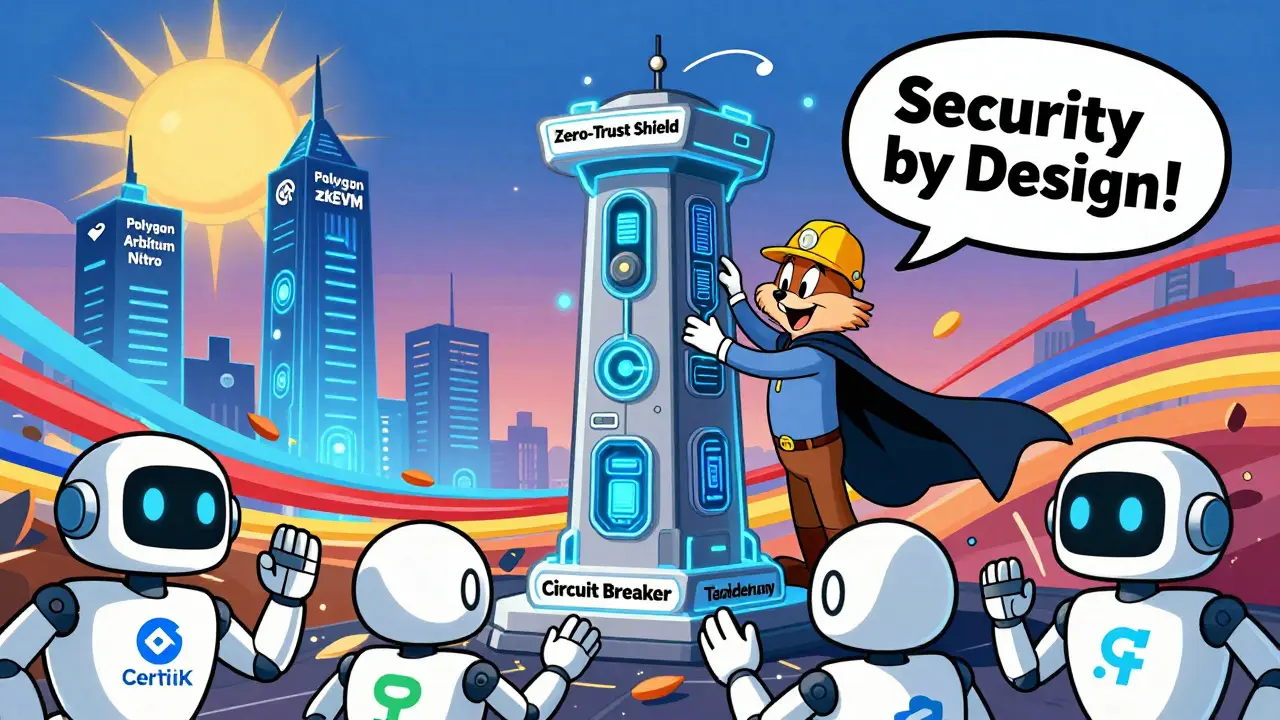
In 2025, we’re seeing the rise of "secure-by-design" frameworks. Projects like Polygon’s zkEVM and Arbitrum’s Nitro are building composability into their core - with built-in access controls, automatic gas limits, and on-chain anomaly detection. New standards like ERC-6551 (token-bound accounts) make it easier to manage identity and permissions across contracts without adding complexity.
Zero-trust models are also gaining ground. Instead of assuming internal contracts are safe, every call is treated as untrusted. This shifts the mindset: not "how do I make this contract secure?" but "how do I make every interaction secure?"
The goal isn’t to eliminate composability’s risks. It’s to make them predictable. To turn security from a bottleneck into a feature - something you build in, not bolt on.
Final Thought: It’s Not Either/Or
Composability isn’t dangerous. Ignorance is.
You can build fast and build safe - if you treat security as part of the architecture, not an afterthought. The most successful blockchain projects aren’t the ones with the most complex integrations. They’re the ones that understand the cost of every connection - and pay it upfront.
Ask yourself: Is this module worth the risk? Can I monitor it? Can I pause it? Can I replace it without breaking everything? If the answer is yes, you’re on the right path. If not - maybe it’s better to build your own piece, instead of borrowing someone else’s.
What is composability in blockchain?
Composability in blockchain means building applications by connecting pre-existing smart contracts - like DeFi protocols, oracles, or NFT standards - so they work together in a single transaction. It lets developers reuse code instead of rebuilding everything, speeding up innovation.
Why is security harder with composability?
Every added contract creates a new attack surface. If one contract has a bug - like a reentrancy flaw or poor input validation - attackers can chain it with others to steal funds. Unlike monolithic systems, you don’t control all the pieces, so you can’t guarantee their security.
Can you have both speed and security in composable systems?
Yes - but only with discipline. Use audited contracts, enforce access controls at gateways, monitor for unusual behavior, and design emergency pauses. Security isn’t optional - it’s part of the architecture. Teams that treat it that way build faster and stay safer.
What are real-world examples of composability risks?
The Wormhole bridge hack in 2022 exploited a missing signature check in one contract, allowing attackers to drain $320 million across connected protocols. In 2023, a lending protocol’s unannounced upgrade broke dozens of yield aggregators, locking up $400 million. These weren’t random failures - they were predictable results of unmanaged dependencies.
Which blockchain projects benefit most from composability?
DeFi aggregators (like Yearn), DAO tooling (voting and treasury systems), and enterprise pilots (supply chain trackers) benefit most. These projects need flexibility and rapid iteration - and can tolerate some risk if they have monitoring and emergency controls in place.
What tools help secure composable blockchain systems?
Use audit platforms like CertiK or Quantstamp, monitoring tools like Tenderly or BlockSec, and security gateways that enforce input validation and rate limits. Formal verification tools like Certora can mathematically prove contract behavior. Always test in sandboxed environments before going live.
Is composability the future of blockchain?
Yes - but only if security becomes embedded, not bolted on. New frameworks like Polygon zkEVM and Arbitrum Nitro are building security into the protocol layer. Zero-trust models and standardized access controls are making it easier to compose without compromising safety. The future belongs to systems that are both modular and secure by design.