
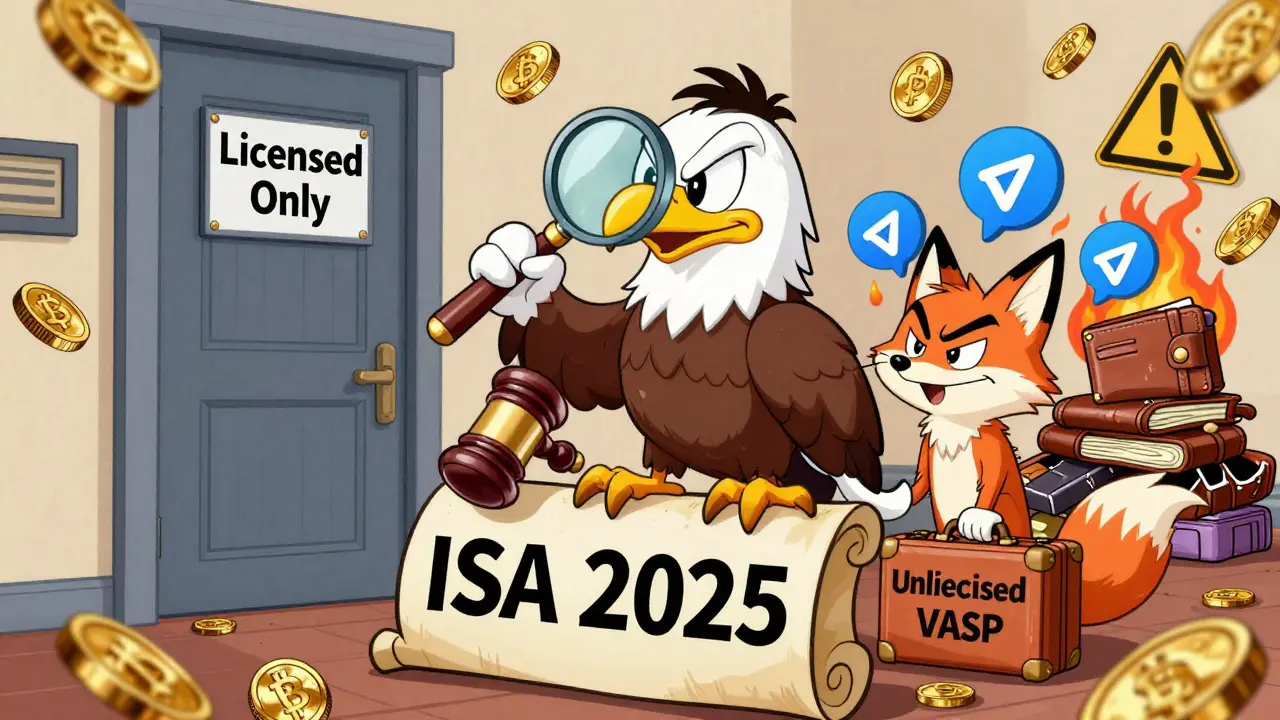
Before March 2025, Nigerian banks couldn’t legally touch cryptocurrency businesses. If you ran a crypto exchange, you were stuck. No bank accounts. No payroll. No way to move money without jumping through hidden loops. That changed with the Investment and Securities Act (ISA) 2025, signed into law on March 31, 2025. This wasn’t just a tweak-it was a full rewrite of how Nigeria treats digital assets. For the first time, cryptocurrencies are officially classified as securities under Nigerian law. That means the Securities and Exchange Commission (SEC) Nigeria now has full power to license, monitor, and shut down crypto operators who break the rules.
What the SEC ISA 2025 Actually Means
The ISA 2025 didn’t just say "crypto is legal." It defined exactly what counts as a digital asset under Nigerian law. Any token, coin, or platform that promises returns based on the effort of others-like staking rewards, yield farming, or pooled investment contracts-is now considered a security. That brings hundreds of projects under SEC oversight. It also means platforms like Quidax and Busha, which got licensed in 2024, are now legally recognized. But if you’re a new crypto startup and you haven’t applied for a license? You’re operating illegally.The SEC doesn’t just hand out licenses. They demand ongoing compliance. Every licensed Virtual Asset Service Provider (VASP) must report transaction data, maintain anti-money laundering (AML) logs, and prove they can protect customer funds. Failure to comply? The SEC can freeze operations, revoke your license, or fine you up to ₦10 million ($6,693) in the first month of violation. Each month after that? Another ₦1 million ($669) on top.
How Financial Institutions Fit In
Banks used to be banned from working with crypto firms. In 2021, the Central Bank of Nigeria (CBN) told all banks: no accounts, no payments, no services for crypto businesses. That forced exchanges to use informal channels, shell companies, and offshore accounts. But in 2023, the CBN reversed course. Now, banks are allowed-and expected-to provide services to SEC-licensed VASPs. This shift was huge. It meant crypto firms could finally pay staff, deposit revenue, and pay suppliers like any other business.But here’s the catch: banks aren’t just opening accounts. They’re now gatekeepers. Before a bank gives a crypto firm a corporate account, they must verify the firm’s SEC license. They must also check the firm’s AML controls with the Nigerian Financial Intelligence Unit (NFIU). If the NFIU flags suspicious activity, the bank can freeze the account. That means your crypto business can’t just get a license and relax. You need clean records with both the SEC and the NFIU.
Taxes Are Now Part of the Rules
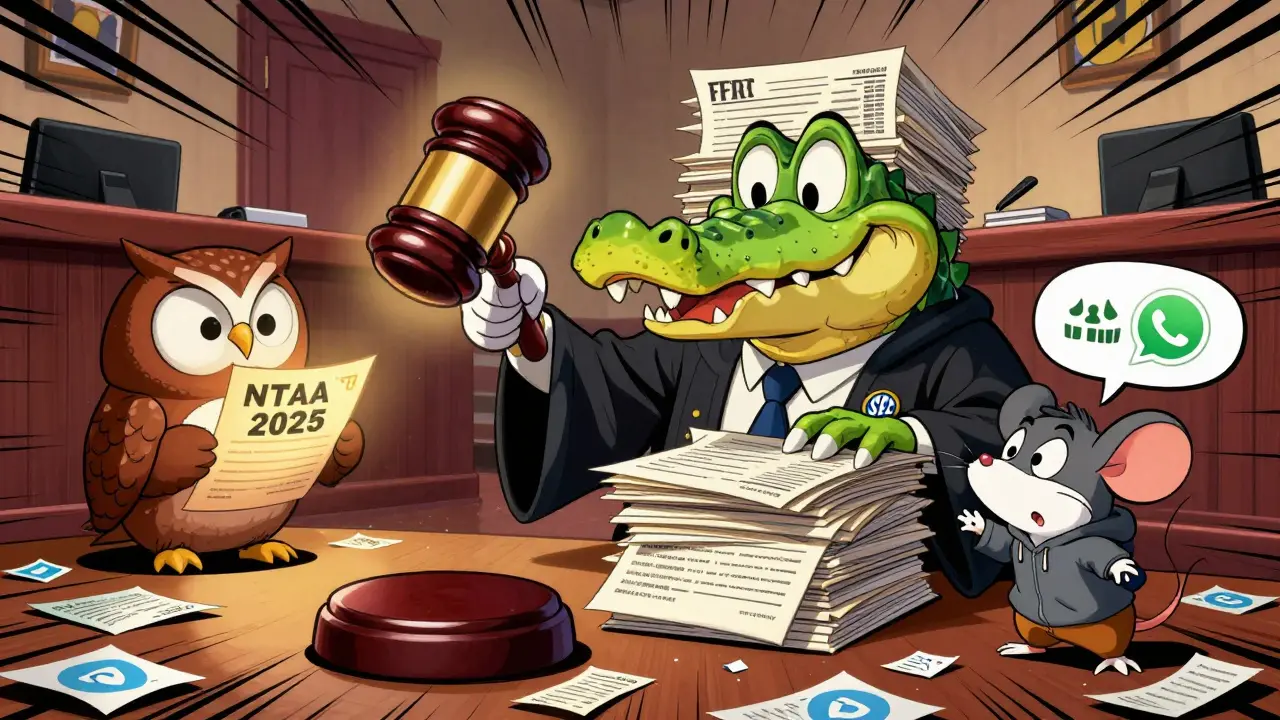
The SEC doesn’t collect taxes-but the Nigeria Tax Administration Act (NTAA) 2025 does. Signed in June 2025 and effective from January 2026, this law makes it clear: crypto gains are taxable. VASPs must report user transaction data to the Federal Inland Revenue Service (FIRS). If you’re a Nigerian user trading Bitcoin, you owe capital gains tax. If you’re a VASP earning fees from trades, you owe corporate tax. The penalties for non-compliance are harsh: ₦10 million in the first month, then ₦1 million per month after that. There’s no grace period. The law is designed to force reporting, not encourage it.Many crypto businesses assumed they could operate under the radar. That’s over. The SEC and FIRS are now sharing data. If your exchange reports $5 million in monthly volume but your bank account shows only $500,000 in deposits? That mismatch triggers an audit. The tools to track this exist. Nigeria’s digital infrastructure is now built for financial surveillance.

How Nigeria Compares to Other African Markets
Nigeria isn’t the only African country with crypto activity. South Africa has a more mature stock market. Kenya has had crypto taxes since 2022. But Nigeria’s regulatory framework is the most detailed. Between July 2024 and June 2025, Nigeria processed $92.1 billion in cryptocurrency transactions-almost double South Africa’s volume. Nigerians do more peer-to-peer (P2P) trading than any other country in the world. That’s not because they’re speculating more. It’s because the naira is unstable, and crypto offers a way to preserve value.Other countries picked regulation through taxation. Nigeria picked regulation through control. The SEC doesn’t just want to tax crypto. It wants to own the entire ecosystem. Every exchange, wallet provider, and trading bot must be licensed. Every transaction must be traceable. Every user must be verified. That’s why Nigeria’s model is so strict. It’s not about stopping crypto. It’s about making sure the government controls it.
What Happens If You Don’t Comply?
The penalties aren’t theoretical. In October 2024, the SEC shut down three unlicensed crypto platforms in Lagos. One of them had over 120,000 users. The founders were arrested. Their assets were seized. Their bank accounts-opened through shell companies-were frozen by the CBN after the SEC flagged them. That’s the new reality.For financial institutions, the risk is reputational. If a bank is found knowingly serving an unlicensed VASP, the CBN can fine the bank, suspend its operations, or even revoke its banking license. That’s why banks are now doing deep due diligence. They’re not just checking if a company has a license. They’re checking who owns it, where the money comes from, and how they handle customer data. One misstep can cost a bank millions.
Who’s Winning Under the New Rules?
The winners are the licensed players. Quidax, Busha, and other SEC-approved platforms are growing fast. They’re partnering with banks. They’re hiring compliance officers. They’re building KYC systems that meet international standards. They’re even starting to offer fiat on-ramps through mobile money and USSD-something unlicensed platforms couldn’t do before.Investors are also winning. Before ISA 2025, there was no recourse if a crypto platform disappeared. Now, if a licensed exchange fails, the SEC can step in to protect users’ assets. They’ve started requiring cold storage, insurance, and segregation of customer funds. That’s a big deal.
But small operators? They’re getting squeezed. Many informal traders who used WhatsApp groups or Telegram channels to sell crypto are now out of business. They can’t afford the compliance costs. They don’t have lawyers. They don’t have auditors. The system isn’t built for them.
What’s Next for Nigeria’s Crypto Market?
The ISA 2025 is just the start. The SEC is already working on amendments to cover decentralized finance (DeFi) platforms and non-fungible tokens (NFTs). They’re also exploring how to regulate crypto mining, which is growing in Nigeria due to cheap electricity and high naira inflation. The CBN is expected to issue guidance on stablecoin usage by banks in early 2026.By 2026, Nigeria is projected to have 28.69 million crypto users. That’s nearly 15% of the population. The government knows it can’t stop that. So they’re trying to own it. The goal isn’t to kill crypto. It’s to make sure it runs through their pipes, not around them.
If you’re a financial institution in Nigeria, the message is simple: if you want to work with crypto, get licensed. If you’re a crypto business, get SEC-approved. There’s no middle ground anymore. The grey area is gone. The rules are clear. And the SEC is watching.
Are cryptocurrencies legal in Nigeria?
Yes, but only if they’re operated under the SEC’s ISA 2025 framework. Cryptocurrencies are classified as securities, so all exchanges, wallet providers, and trading platforms must be licensed by the SEC. While individuals can hold and trade crypto, businesses must comply with licensing, reporting, and AML rules. Crypto is not legal tender and cannot replace the naira for official payments.
Can Nigerian banks now work with crypto companies?
Yes, but only with SEC-licensed Virtual Asset Service Providers (VASPs). The Central Bank of Nigeria lifted its 2021 ban on banking services for crypto firms in 2023. Banks are now required to verify that a crypto business holds a valid SEC license before opening accounts. They must also ensure compliance with NFIU anti-money laundering rules. Unlicensed VASPs still cannot access banking services.
What are the penalties for not complying with SEC crypto rules?
The SEC can suspend or revoke licenses of non-compliant operators. Financial penalties start at ₦10 million ($6,693) for the first month of violation, then add ₦1 million ($669) for each subsequent month. The Nigerian Tax Administration Act 2025 adds separate tax penalties for unreported crypto income. Banks that serve unlicensed VASPs risk fines or license suspension from the CBN.
Do I need to pay taxes on my crypto gains in Nigeria?
Yes. The Nigeria Tax Administration Act (NTAA) 2025, effective January 2026, requires individuals and businesses to report crypto gains as taxable income. VASPs must submit transaction data to the Federal Inland Revenue Service (FIRS). Capital gains from trading, staking rewards, and mining income are all subject to tax. Failure to report can result in monthly fines of up to ₦1 million.
How do I get a license from SEC Nigeria for my crypto business?
To get licensed, your business must apply to the SEC as a Virtual Asset Service Provider (VASP). You’ll need to submit detailed documentation on ownership, AML/CFT procedures, cybersecurity protocols, and financial statements. You must pass a background check, demonstrate technical security measures, and agree to ongoing reporting. The process takes 60-90 days. Only approved platforms like Quidax and Busha have received licenses so far.