
Have you ever wondered if an algorithm could beat the market without needing a team of Wall Street analysts? That is exactly the promise behind EfficientFrontier, known by its ticker symbol SN53. It is described as an artificial intelligence application utility token operating as Subnet 53 within the Bittensor ecosystem.
If you have been scrolling through crypto charts lately, you might have seen SN53 pop up. It sits at the intersection of two massive trends: decentralized machine learning and automated portfolio optimization. But what does that actually mean for you? Is it just another hype coin, or is there real tech underneath?
The short answer is that SN53 is designed to optimize cryptocurrency trading strategies. It combines blockchain-based AI models with live market data to find the best risk-adjusted returns. In this guide, we will break down how it works, who built it, and what the current market data tells us about its value.
The Core Concept: What is the Efficient Frontier?
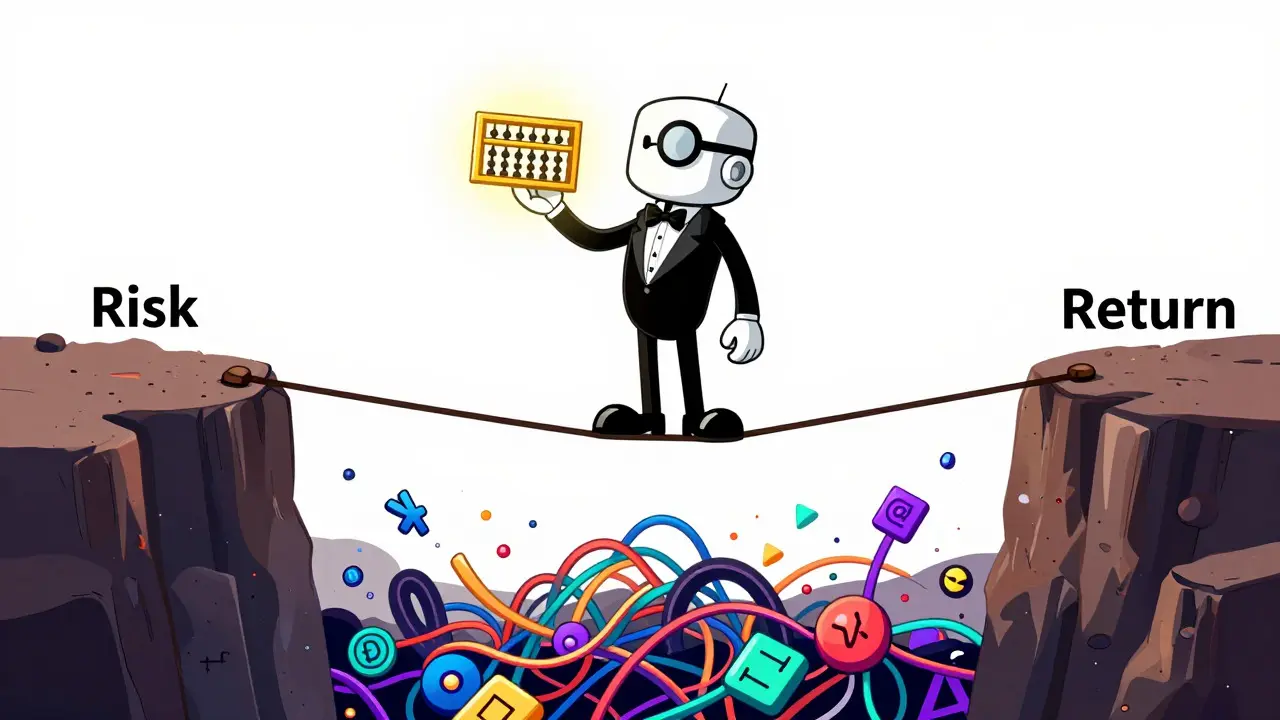
To understand the token, you first need to understand the name. The "efficient frontier" is a concept from modern portfolio theory developed by Harry Markowitz in the 1950s. It represents the set of optimal portfolios that offer the highest expected return for a defined level of risk or the lowest risk for a given level of expected return.
In traditional finance, calculating this requires complex math and massive datasets. Most retail traders don't have access to those tools. EfficientFrontier (SN53) aims to democratize this by using decentralized AI to identify these optimal strategies automatically.
Instead of guessing which coins will pump, the system analyzes vast amounts of trading data to construct portfolios that maximize efficiency. This isn't just about picking winners; it's about managing risk intelligently across a basket of assets.
How SN53 Works Within the Bittensor Ecosystem
SN53 doesn't exist in a vacuum. It operates as Subnet 53 within the Bittensor decentralized machine learning ecosystem. Bittensor (TAO) is a network where different subnets compete to provide specific AI services. Some subnets focus on image generation, others on text processing, and Subnet 53 focuses on financial strategy optimization.
Here is how the machinery works:
- Data Ingestion: The subnet pulls live trading data from various crypto markets.
- AI Processing: Decentralized machine learning networks analyze this data to simulate thousands of potential trading scenarios.
- Strategy Output: The system identifies the most efficient risk-weighted strategies.
- Integration: These insights are made available to users, often through partner platforms like SignalPlus.
The SN53 token acts as the utility asset within this subnet. It incentivizes node operators to contribute computing power and high-quality algorithms. If your AI model generates better trading signals, you earn more rewards. This creates a competitive environment where only the most effective strategies survive.
Key Players: SignalPlus and Bittensor
Two organizations are central to the story of EfficientFrontier. First, there is Bittensor, the underlying infrastructure provider. Second, there is SignalPlus, a platform that provides the interface for traders.
CoinCarp states that the project was initiated by both SignalPlus and Bittensor. SignalPlus offers a desktop trading toolkit that allows everyday users to access these professional-grade AI strategies. Without SignalPlus, the AI outputs would remain locked inside the blockchain, inaccessible to regular people. With it, the technology becomes a practical tool for retail traders.
It is worth noting that there is also a separate entity called Efficient Frontier (efficientfrontier.io), a digital asset algorithmic trading firm based in Tel Aviv. While they share the same branding theme around algorithmic trading, public sources do not explicitly confirm that the Tel Aviv firm created the SN53 subnet token. However, the conceptual lineage is clear: both aim to bring institutional-level algorithmic trading to a broader audience.
Tokenomics: Supply and Circulation Discrepancies
If you look up SN53 on different crypto aggregators, you will notice something confusing. The numbers don't always match. This is common for newer or niche assets, but it is crucial to understand why.
All major sources agree on one thing: the maximum supply is 21,000,000 SN53. However, the circulating supply varies wildly depending on who you ask.
| Platform | Max Supply | Circulating Supply | Market Cap Estimate |
|---|---|---|---|
| CoinGecko | 21,000,000 | ~5.2M (implied) | $35.36 Million |
| JustScreener | 21,000,000 | 5,000,000 | $24.57 Million |
| Holder.io | 21,000,000 | 3,739,474 | $8.00 Million |
| CoinMarketCap | 21,000,000 | 0 (Data Error) | $0 |
Why the difference? CoinMarketCap and Binance sometimes list the circulating supply as zero because their automated crawlers haven't picked up the transaction volume correctly, or the token hasn't been fully indexed yet. JustScreener and Holder.io show more realistic figures, suggesting that between 3.7 million and 5.1 million tokens are actually in circulation.
This discrepancy affects the market cap calculation. If you see a $0 market cap on one site and $35 million on another, it’s not necessarily a scam-it’s a data lag. Always check multiple sources before making decisions.
Price Volatility and Market Performance
Like most mid-cap AI tokens, SN53 is volatile. Prices have ranged significantly across different timeframes and exchanges.
- Highs: CoinGecko has recorded prices around $6.80 per token.
- Lows: Other trackers have shown dips to roughly $1.46.
- Average Range: Much of the trading activity seems to cluster between $2.00 and $3.00.
Trading volume also fluctuates. On some days, 24-hour volume exceeds $10 million on active venues, while on quieter days, it drops below $1 million. This suggests that interest spikes during broader AI-crypto rallies but can thin out during consolidation periods.
For a trader, this means liquidity can be tight. You might find yourself buying easily but struggling to sell large positions without moving the price against yourself. Always check the order book depth before entering significant trades.
Use Cases: More Than Just Speculation
Is SN53 just a meme coin with a fancy name? Not quite. Its primary use case is utility within the Bittensor Subnet 53.
- Access to AI Strategies: Holding SN53 may grant access to premium trading signals generated by the subnet’s top-performing nodes.
- Staking and Rewards: Users can stake SN53 to support the network’s validators. In return, they earn a share of the rewards distributed to successful AI models.
- Governance: As the ecosystem matures, token holders may gain voting rights on which types of trading strategies are prioritized or which fees are charged.
The goal is to create a self-sustaining economy where good AI gets rewarded, and bad AI gets pruned. This aligns the incentives of developers, traders, and investors.
Risks and Considerations
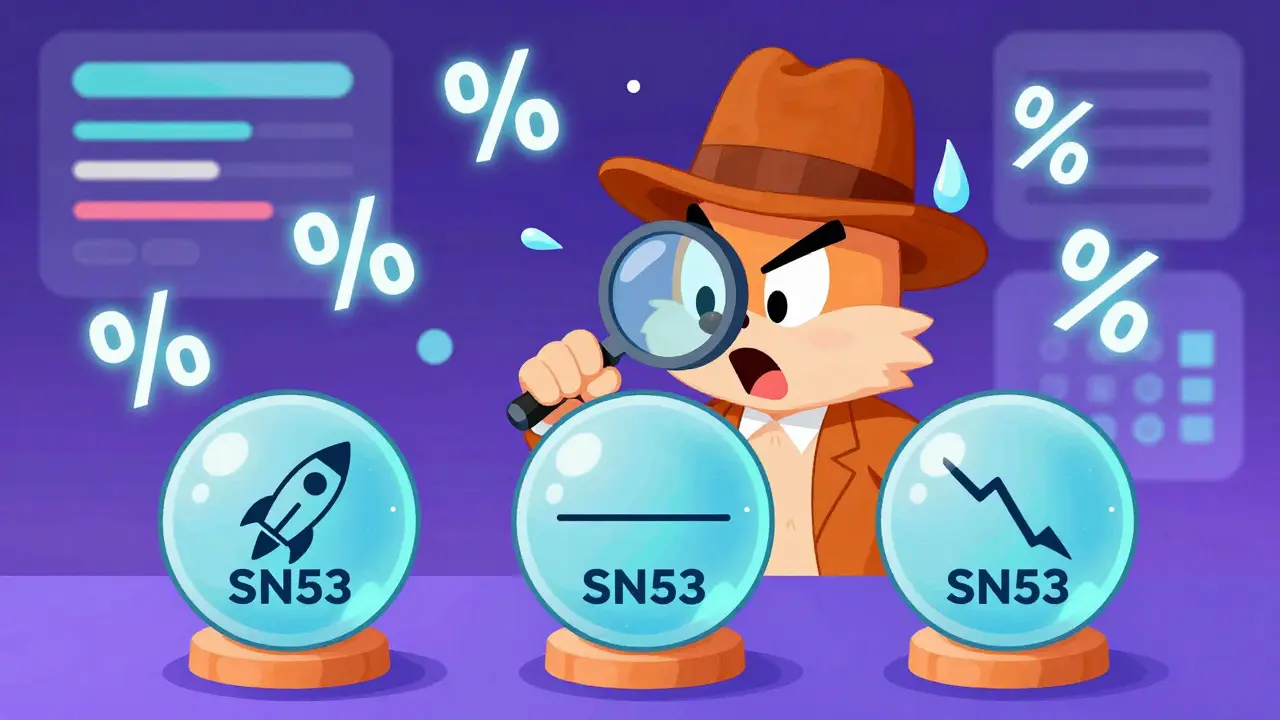
No investment is without risk, and SN53 has several unique challenges.
Data Reliability: As noted earlier, inconsistent data across aggregators can lead to confusion. Misinterpreting a $0 market cap as "dead" when it’s actually a tracking error could cause you to miss opportunities-or vice versa.
Regulatory Uncertainty: AI-driven trading bots operate in a gray area legally. If regulators decide that certain algorithmic strategies constitute unregistered securities offerings, projects like EfficientFrontier could face scrutiny.
Technical Complexity: Understanding how Bittensor subnets work requires a steep learning curve. If you aren’t familiar with concepts like Yuma Consensus or validator emissions, you might struggle to assess the health of the network.
Competition: The space for AI crypto tokens is crowded. Competitors include TAO (Bittensor’s native token), FET (Fetch.ai), and various other DeFi yield optimizers. SN53 needs to prove that its specific approach to portfolio efficiency is superior to generic yield farming.
How to Get Started with SN53
If you want to explore EfficientFrontier, here is a practical path forward.
- Choose an Exchange: Platforms like Bitget and MEXC currently list SN53. Create an account and complete any necessary KYC (Know Your Customer) verification.
- Fund Your Account: Deposit USDT or USD into your exchange wallet.
- Buy SN53: Search for the SN53/USDT pair. Check the order book to ensure there is enough liquidity for your trade size.
- Secure Your Tokens: For long-term holding, consider withdrawing your SN53 to a non-custodial wallet that supports Bittensor assets. Keep your private keys safe.
- Monitor the Subnet: Follow official channels for updates on Subnet 53 performance. Look for metrics like emission rates and validator participation.
Remember, this is not financial advice. Do your own research (DYOR) and never invest more than you can afford to lose.
Future Outlook
The future of SN53 depends heavily on the success of the Bittensor ecosystem as a whole. If decentralized AI becomes a standard part of crypto infrastructure, subnets like EfficientFrontier could become essential utilities.
We should watch for a few key developments:
- Integration Depth: Will SignalPlus expand its user base? More users mean more demand for SN53.
- Performance Metrics: Are the AI strategies actually generating alpha? Publicly verified backtests would boost credibility.
- Exchange Listings: Getting listed on Tier-1 exchanges like Coinbase or Kraken would drastically improve liquidity and visibility.
As of now, SN53 remains a speculative but technically interesting asset. It represents a bold attempt to solve one of finance’s oldest problems-risk management-using the newest tools available. Whether it succeeds will depend on execution, adoption, and the broader market’s appetite for AI narratives.
What is the ticker symbol for EfficientFrontier?
The ticker symbol for EfficientFrontier is SN53. It operates as Subnet 53 within the Bittensor network.
Is SN53 a good investment?
Whether SN53 is a good investment depends on your risk tolerance. It is a mid-cap AI token with high volatility. It offers exposure to decentralized machine learning in finance, but lacks the established track record of larger cryptocurrencies. Always conduct your own research.
Who created the SN53 token?
The project was initiated by SignalPlus and Bittensor. While there is a trading firm named Efficient Frontier, direct confirmation linking them as the sole creators of the SN53 subnet is limited in public sources.
Where can I buy SN53?
You can buy SN53 on cryptocurrency exchanges such as Bitget and MEXC. Ensure you verify the correct trading pair (usually SN53/USDT) before purchasing.
What is the maximum supply of SN53?
The maximum supply of SN53 is 21,000,000 tokens. Circulating supply estimates vary between 3.7 million and 5.1 million depending on the data source.
How does SN53 relate to Bittensor?
SN53 is a subnet within the Bittensor network. Bittensor provides the decentralized infrastructure for AI tasks, and Subnet 53 specifically focuses on optimizing crypto trading strategies using machine learning.