Nigeria Crypto Platform License Checker
Check if your preferred crypto platform is legally licensed to operate in Nigeria under the Securities and Exchange Commission (SEC) regulations.
Verification Results
Key Compliance Requirements
Legitimate platforms must:
- Display SEC registration number and license status
- Complete KYC verification for users
- Report suspicious transactions to NFIU
- Pay ₦10 million ($6,693) fine for compliance failures
When you ask if crypto payments are allowed in Nigeria, the answer isn’t a simple yes or no. It’s not illegal-but it’s not legal tender either. As of 2025, you can send, receive, and trade cryptocurrency legally in Nigeria, but only if you use platforms that are officially licensed by the government. The rules changed dramatically in March 2025, and now everything depends on whether the service you’re using is registered with the Securities and Exchange Commission (SEC).
What Changed in March 2025?
Before March 2025, Nigeria’s crypto scene existed in a legal gray zone. The Central Bank of Nigeria (CBN) had banned banks from dealing with crypto businesses in 2021, which forced users onto peer-to-peer (P2P) platforms like Paxful and LocalBitcoins. Despite the ban, Nigerians kept trading-so much so that Nigeria became the #1 country in the world for P2P crypto volume. Between July 2024 and June 2025, over $92 billion in crypto flowed into Nigeria, mostly through unofficial channels. That all changed when President Bola Tinubu signed the Investments and Securities Act (ISA) 2025. This law officially recognized cryptocurrencies as securities under Nigerian law. It didn’t make crypto legal tender-that’s still the naira’s job-but it gave the SEC full authority to regulate crypto exchanges, wallets, and payment processors. Now, any company offering crypto services must apply for a license from the SEC or risk being shut down.Who Can Legally Process Crypto Payments?
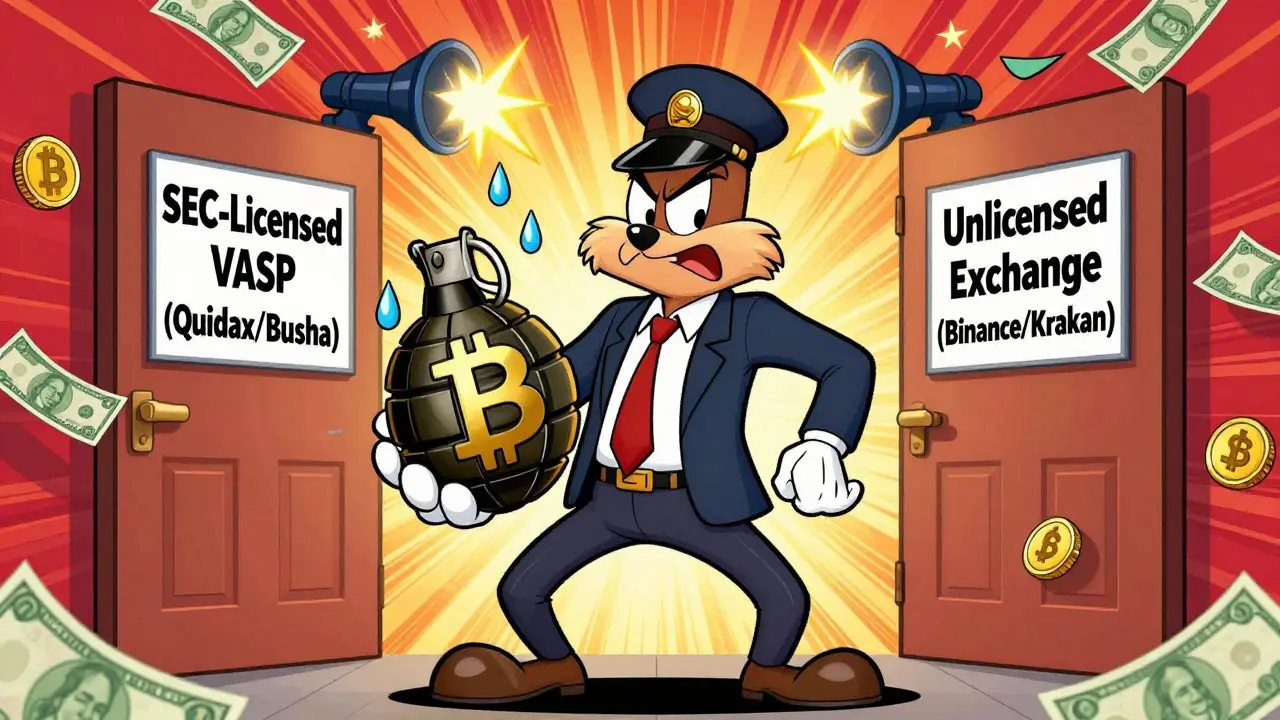
Not every app or platform can take your naira and send you Bitcoin anymore. Only Virtual Asset Service Providers (VASPs) that are licensed by the SEC are allowed to operate. As of late 2025, only a handful of Nigerian-based platforms have cleared the process, including Quidax and Busha. These platforms now offer direct bank integration because the CBN reversed its 2021 ban and now permits banks to serve SEC-licensed crypto firms. This means if you want to pay for goods or services using crypto in Nigeria, you’re limited to businesses that use these licensed gateways. For example, a Lagos-based online retailer can now accept crypto payments through Quidax’s payment API. But if you try to pay someone using Binance or Kraken directly, those platforms aren’t licensed in Nigeria-so the transaction isn’t protected under local law, and your bank might block it.How Do You Know If a Platform Is Legit?
The SEC publishes a public list of licensed VASPs on its website. Look for this: the platform must display its SEC registration number and license status clearly. If you don’t see it, assume it’s not approved. Unlicensed platforms are still operating, but they’re at high risk of being frozen or shut down by regulators. In fact, the SEC has already suspended three unregistered crypto exchanges in 2025 after investigations by the Nigerian Financial Intelligence Unit (NFIU). Also, licensed platforms must follow strict rules:- Verify every user’s identity (KYC)
- Report suspicious transactions to the NFIU
- Keep records for at least five years
- Pay a ₦10 million ($6,693) fine if they miss a compliance deadline
- Face license revocation if they repeatedly violate rules

What About Taxes?
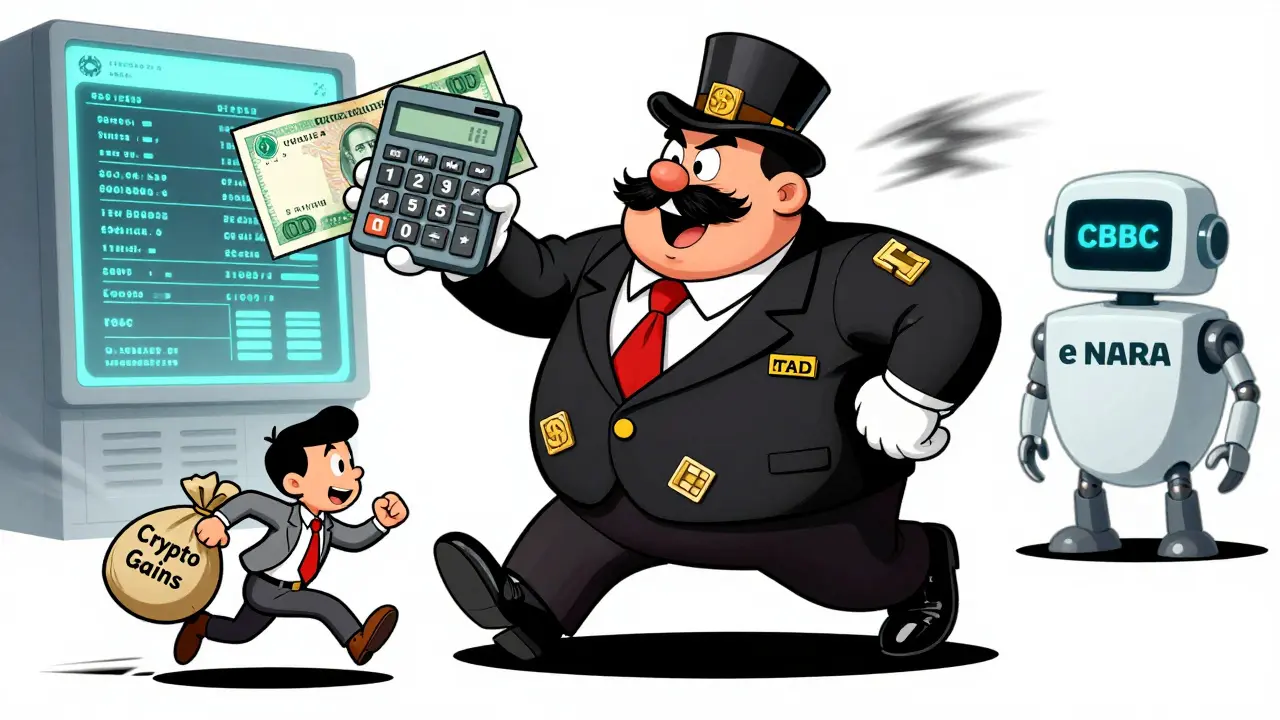
Starting January 1, 2026, crypto profits are taxable in Nigeria. The Nigerian Tax Administration Act (NTAA) 2025 says crypto is treated like property-not currency. That means:- You don’t pay tax just for holding Bitcoin or Ethereum
- You pay tax when you sell, trade, or use crypto to buy something
- Personal income tax applies: 10% to 25%, depending on your total earnings
- Companies pay 20% if they earn ₦25M-₦100M yearly, 30% if they earn more
- All crypto businesses must charge 7.5% VAT on transaction fees
Can You Use Crypto to Pay for Everyday Things?
Yes-but only in limited cases. A few Nigerian businesses now accept crypto payments through licensed VASPs:- Online retailers (fashion, electronics, books)
- Freelance service platforms (for designers, developers, writers)
- Some real estate agencies for deposits
- Private schools and tutoring services
What’s Not Allowed?
The SEC and CBN have drawn clear lines:- **Ponzi schemes** disguised as crypto investments are banned outright. The EFCC has arrested over 120 operators since 2024.
- **Unlicensed exchanges** can’t offer trading or payment services.
- **Banks can’t process crypto transactions** unless they’re linked to a licensed VASP.
- **Mining operations** are not regulated but face power and tax compliance issues.
- **NFTs used for investment** (like fractional real estate tokens) are regulated. Artistic NFTs are not.
Is It Safe to Use Crypto Payments in Nigeria Today?
If you stick to licensed platforms like Quidax or Busha, yes-it’s safer than ever. Your funds are protected by regulatory oversight, your identity is verified, and your transactions are traceable. You’re not in the wild west anymore. But if you use unregulated apps, you’re on your own. No recourse if you get scammed. No way to recover funds if the platform vanishes. And if your bank finds out you’re sending money to an unlicensed exchange, they might freeze your account. The bottom line: use only SEC-licensed VASPs. Don’t gamble with your money on platforms that don’t show their license number.What’s Next?
The SEC plans to roll out a digital asset registry in early 2026, where every crypto transaction over ₦50,000 will be recorded. This will make tax compliance easier and fraud harder. Meanwhile, the CBN is testing a central bank digital currency (CBDC)-the eNaira-which could compete with crypto in the long run. For now, Nigeria’s crypto payments ecosystem is growing up. It’s not perfect. It’s not free from bureaucracy. But it’s finally legal, regulated, and transparent. If you’re using crypto in Nigeria, you’re not breaking the law-you’re operating inside a system that’s trying to catch up with the future.Is it legal to receive crypto payments in Nigeria?
Yes, it’s legal to receive crypto payments in Nigeria as long as the platform you’re using is licensed by the SEC. You can accept Bitcoin, Ethereum, or other digital assets through registered VASPs like Quidax or Busha. However, if you receive crypto through an unlicensed platform, you risk losing access to your funds or triggering bank account freezes.
Can I use Binance or Coinbase to pay for things in Nigeria?
Not directly. Binance and Coinbase are not licensed by Nigeria’s SEC, so Nigerian banks are not allowed to process transactions to or from them. While you can still use these platforms to trade crypto, you can’t use them to pay Nigerian businesses unless you first convert your crypto to naira through a licensed VASP like Quidax or Busha.
Do I have to pay tax on crypto gains in Nigeria?
Yes, starting January 1, 2026, you must pay tax on crypto profits. If you sell, trade, or spend crypto and make a profit, that gain is taxable. Individuals pay 10%-25% income tax based on total earnings. Companies pay 20% or 30% depending on revenue. You don’t pay tax just for holding crypto-only when you cash out or exchange it.
Can Nigerian banks block my account for using crypto?
Yes, if you use unlicensed platforms. Banks are now allowed to serve SEC-licensed crypto businesses, but they’re still required to monitor for suspicious activity. If your bank detects regular transfers to unregistered exchanges or known scam platforms, they can freeze your account and report you to the NFIU. Always use licensed VASPs to avoid this risk.
What happens if I use an unlicensed crypto exchange?
You’re operating outside the law. If the exchange gets shut down, you lose access to your funds with no legal recourse. You could also face scrutiny from the NFIU or EFCC if your transactions appear suspicious. In 2025, over 15 unlicensed platforms were forcibly closed, and hundreds of users lost access to their crypto. Stick to SEC-registered services to protect yourself.