
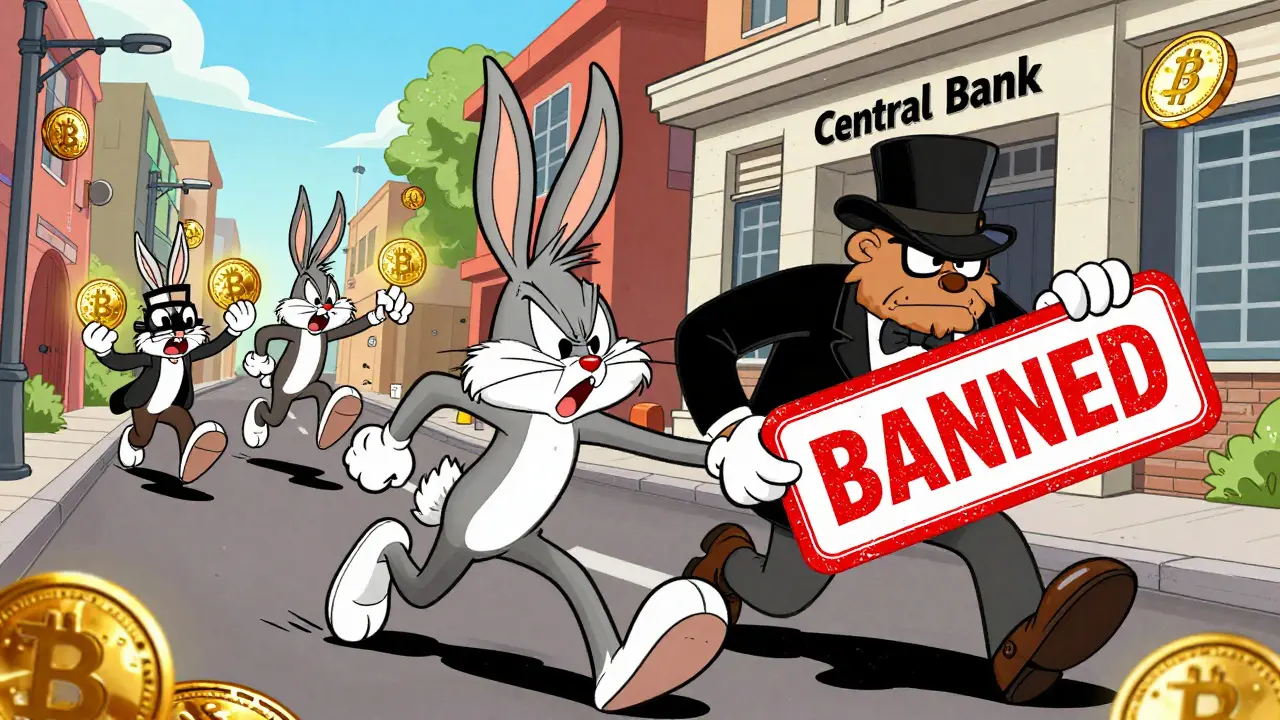
Imagine trying to buy or sell digital assets in a country where your bank is legally forbidden from helping you. That was the reality for millions of Nigerians between February 2021 and December 2023. When the Central Bank of Nigeria (CBN) issued a directive cutting off financial institutions from cryptocurrency transactions, it didn't kill the market. Instead, it pushed it into the shadows, creating one of the most vibrant and resilient underground crypto economy is an informal network of peer-to-peer trading channels that operated outside formal banking regulations on the continent.
This wasn't just about tech enthusiasts hoarding Bitcoin. It was about students paying tuition, small business owners managing cash flow, and everyday citizens protecting their savings from currency devaluation. The ban forced a massive shift from centralized exchanges to decentralized, community-driven networks. Today, looking back at this period reveals how regulatory pressure can actually accelerate innovation rather than suppress it.
The Catalyst: How the CBN Ban Created a Vacuum
On February 5, 2021, the Central Bank of Nigeria sent a circular to all commercial banks. The message was clear: identify and terminate accounts linked to cryptocurrency exchanges. The goal was to protect the Naira and curb capital flight. However, the CBN clarified shortly after that individuals were not prohibited from owning crypto-just not through banks. This created a legal gray area. You could own Bitcoin, but you couldn't easily move Naira in or out using traditional banking rails.
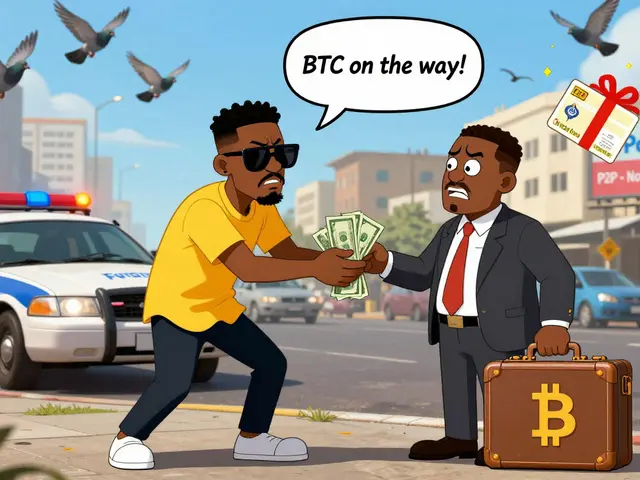
This ambiguity was the spark. With formal channels closed, Nigerians had to find new ways to convert fiat currency to digital assets. The result was an explosion in Peer-to-Peer (P2P) trading is a method of exchanging cryptocurrencies directly between users without an intermediary exchange holding funds. Platforms like Binance P2P became lifelines. By late 2022, Binance P2P alone hosted over 1.2 million Nigerian users, processing roughly $150 million in monthly transactions. The vacuum left by the banks was filled by trust-based digital communities.
How the Underground Market Actually Worked
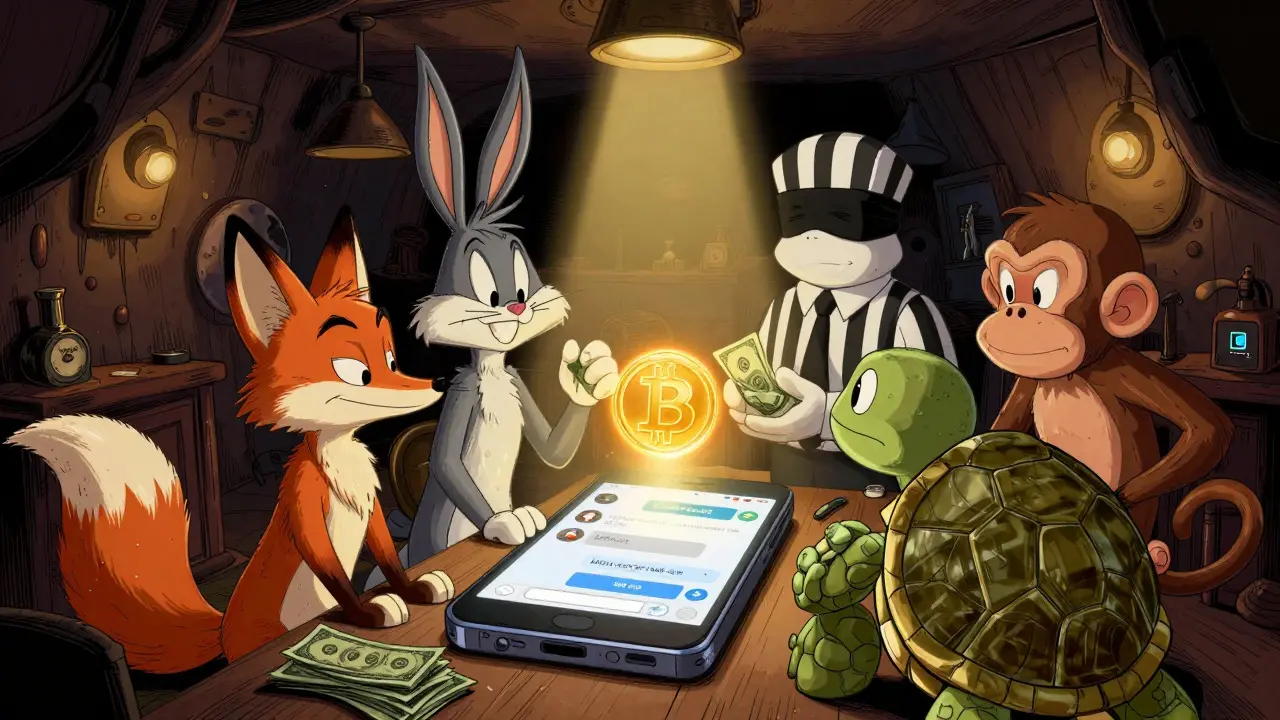
You might wonder how people traded safely without bank oversight. The answer lies in sophisticated social engineering and digital tools. The underground economy didn't rely on single platforms; it relied on ecosystems. Here is how the typical transaction flow looked during the height of the ban:
- Discovery via Social Media: Most traders found partners through WhatsApp groups and Telegram channels. A 2022 survey by Breet.io found that 78% of underground traders used WhatsApp for verification, while 63% used Telegram for price discovery. These weren't random chats; they were organized communities with strict rules.
- Escrow Services: To prevent scams, traders used multi-signature escrow services or platform-held escrows. Paxful reported that Nigerian users accounted for 32% of its global escrow transactions during this period. The platform held the crypto until the buyer confirmed receipt of Naira, reducing the risk of fraud.
- Reputation Systems: Trust was currency. Traders built reputations based on completion rates and response times. Community-managed blacklists circulated through large WhatsApp groups (some with over 50,000 members), warning users about fraudulent actors. If you got scammed once, you were likely banned from multiple trading circles.
This system was messy but effective. It allowed for rapid liquidity in small-to-medium transactions (under ₦500,000 or roughly $600). For larger institutional amounts, however, the lack of banking support remained a significant bottleneck.
| Feature | Formal Banking Channel (Pre-Ban) | Underground P2P Network (During Ban) |
|---|---|---|
| Speed of Settlement | Instant (via bank transfer) | Variable (12-72 hours due to manual verification) |
| Trust Mechanism | Institutional Guarantee | Community Reputation & Escrow |
| Risk of Account Freeze | Low | High (67% of users experienced freezes) |
| Fraud Protection | Bank Dispute Resolution | Community Blacklists & Arbitration Groups |
| Accessibility | Required Bank Account | Mobile Money & Airtime Exchanges Available |
The Human Side: Innovation Amidst Risk
The statistics tell part of the story, but the human experience defines it. For many Nigerians, the underground crypto economy was a necessity, not a choice. Dr. Ibrahim Dosumu, Director of Research at the CBN, acknowledged in a leaked memo that the ban created an unregulated ecosystem processing over $100 million monthly. Professor Chijioke Nwankwo from the University of Lagos noted that Nigerians had essentially built a parallel financial infrastructure.
Success stories are common. On Reddit’s r/NigeriaCrypto, user 'LagosTrader87' shared how he started with ₦5,000 in March 2021 and built a ₦2.3 million portfolio by December 2022, funding his university education entirely through P2P trades. This reflects a broader trend: 41% of underground traders were students, and 29% were small business owners. They weren't speculating; they were surviving.
However, the risks were real. Fraud was prevalent, with 42% of traders reporting at least one scam experience. The most common issue? Frozen bank accounts. Even if you completed a trade successfully, receiving Naira from a known crypto trader could trigger bank alerts. 67% of users faced account freezes, forcing them to open new accounts frequently or use mobile money alternatives. The 'trade verification protocol'-conducting small test transactions before larger ones-became a standard practice, reportedly reducing scam rates by 37%.
Why Nigeria’s Model Was Unique
Nigeria’s underground market differed significantly from other banned jurisdictions like China or Egypt. In China, individual ownership was largely prohibited. In Nigeria, only the *channel* was restricted. This distinction allowed for a "gray market" that was semi-transparent. Chainalysis data showed Nigerian crypto transaction volume reached $56.7 billion between July 2021 and June 2022. Despite representing only 0.1% of global GDP, Nigeria accounted for 1.2% of global crypto transactions.
This surge propelled Nigeria to rank 2nd globally in the Chainalysis 2022 Cryptocurrency Adoption Index. The driving force was trust. 89% of surveyed users reported trusting P2P trading more than formal banking channels for crypto transactions. Why? Because banks were actively hostile to the activity, while P2P communities were incentivized to keep the network healthy. A bad actor got blacklisted; a helpful trader got promoted as a preferred merchant.

The Legacy: From Underground to Regulated Hybrid
The ban officially ended on December 23, 2023, when the CBN reversed its position. But the damage-or perhaps the transformation-was already done. The infrastructure built during the ban didn't disappear; it evolved. New guidelines issued in January 2024 still prohibited banks from holding crypto but allowed licensed exchanges to operate with naira-denominated accounts.
Yet, regulators remain cautious. In February 2024, the SEC announced intentions to restrict P2P naira trading to protect the national currency. The Investments and Securities Act of March 2025 further regulates cryptocurrencies as financial securities, introducing a 25% tax on profits starting in 2026. These moves suggest that while the era of total prohibition is over, the tension between control and adoption continues.
The cultural impact is lasting. A Techpoint Africa survey found that 89% of Nigerians now view cryptocurrency as a legitimate financial tool, regardless of regulatory status. The underground economy taught a generation of Nigerians how to navigate decentralized finance, verify transactions independently, and build trust in digital spaces. As Dr. Yemi Babarinsa of the African Fintech Network predicted, this experience demonstrates how bans often accelerate adoption, creating hybrid ecosystems that force regulatory evolution.
Key Takeaways for Understanding the Era
If you are studying this period, remember these core insights:
- Bans Drive Innovation: Restricting access didn't stop demand; it forced users to develop more efficient, albeit risky, methods.
- Trust is Decentralized: Without banks, communities became the guarantors of truth through reputation systems and blacklists.
- Resilience is High: The Nigerian market absorbed shocks that would have collapsed less mature economies, proving the deep-rooted need for alternative financial tools.
When did the CBN crypto ban in Nigeria end?
The official ban on banks facilitating crypto transactions ended on December 23, 2023, when the Central Bank of Nigeria reversed its previous directive. However, new regulations introduced in 2024 and 2025 continue to impose strict controls on how banks and exchanges interact with virtual assets.
Was it illegal to own cryptocurrency in Nigeria during the ban?
No, it was not illegal for individuals to own or trade cryptocurrency. The CBN clarified in March 2021 that individuals were free to buy and trade crypto, but financial institutions were prohibited from facilitating these transactions. This created a legal gray area where ownership was permitted, but banking support was removed.
How did Nigerians avoid frozen bank accounts during the P2P trading era?
Traders used several strategies, including splitting transactions across multiple accounts, using mobile money services instead of direct bank transfers, and conducting small test transactions first. Many also relied on community warnings to avoid trading with individuals whose payments triggered bank alerts. Despite these efforts, 67% of users still experienced account freezes at some point.
What role did Binance P2P play in Nigeria's underground economy?
Binance P2P became the dominant platform for crypto-to-fiat conversion in Nigeria during the ban. It provided an escrow service that reduced fraud risk and offered high liquidity. By late 2022, it hosted over 1.2 million Nigerian users and processed approximately $150 million in monthly transactions, making it the backbone of the informal market.
Did the crypto ban hurt the Nigerian economy?
The impact was mixed. While the CBN aimed to stabilize the Naira, the ban drove a significant portion of financial activity underground, reducing regulatory visibility. Estimates suggest the underground crypto market represented about 1.2% of Nigeria's informal economy. However, it also provided crucial financial inclusion for millions who lacked access to reliable banking services.
Categories