When your country bans bank transactions with crypto exchanges, you don’t just give up-you adapt. In places like Nigeria, Vietnam, Bangladesh, and Iran, people aren’t waiting for permission to use crypto. They’ve built their own systems, using tools and tricks that bypass government controls, banking blocks, and surveillance. This isn’t theory. It’s daily life for millions.
Why Banking Restrictions Exist
Governments in these countries don’t ban crypto because they dislike technology. They’re trying to control money flow. In Nigeria, the Central Bank shut down crypto transactions in 2021 to stop capital flight and protect the naira. In China, the goal was to reduce energy use from mining and keep financial control tight. In Algeria and Bangladesh, authorities fear crypto could enable smuggling, corruption, or underground economies. The result? Banks are ordered not to process crypto payments. Local exchanges are shut down. And users face fines-or worse.How People Bypass the Ban
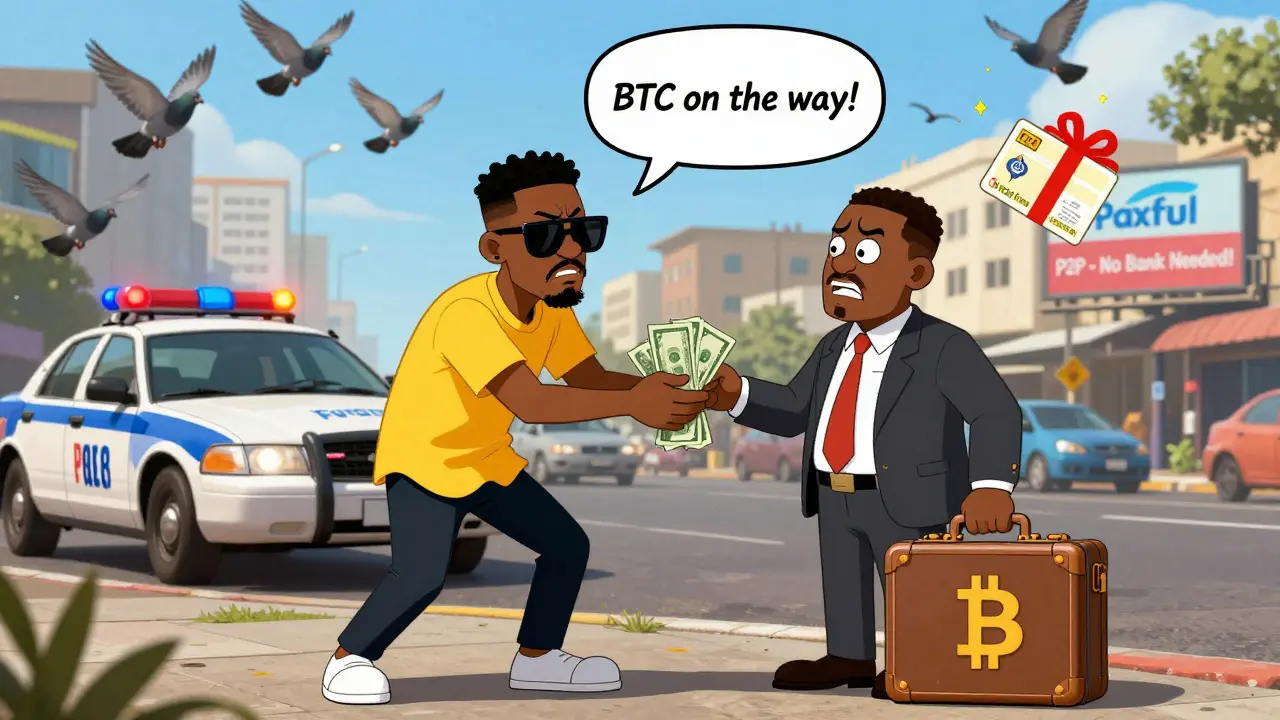
People in restricted countries don’t use the same methods as those in the U.S. or Europe. They’ve created a parallel financial system. Here’s how it actually works.- Peer-to-Peer (P2P) Platforms like Paxful and Binance P2P are the backbone of crypto access. Instead of depositing money into a bank account linked to an exchange, users trade directly with each other. A Nigerian trader might pay a middleman in cash for Bitcoin, and the middleman sends BTC to their wallet. No bank involvement. Paxful reports over 1.2 million active users from Nigeria, Venezuela, and Argentina alone in early 2025.
- No-KYC Exchanges like Bisq, Hodl Hodl, and LocalBitcoins don’t ask for ID. You don’t need a passport or selfie. You trade directly using crypto or gift cards. These platforms have seen a 40% spike in users from restricted countries since 2023. But there’s a catch: liquidity is low. Bisq averages just $1.2 million in daily volume compared to Coinbase’s $14.7 billion.
- Gift Card Arbitrage is everywhere. Users buy Amazon, Steam, or iTunes gift cards with local cash, then sell them on Paxful or Bitrefill for Bitcoin or USDT. Chainalysis recorded $427 million in gift card-based crypto trades from restricted countries in 2024. It’s slow, but it works when banks won’t touch you.
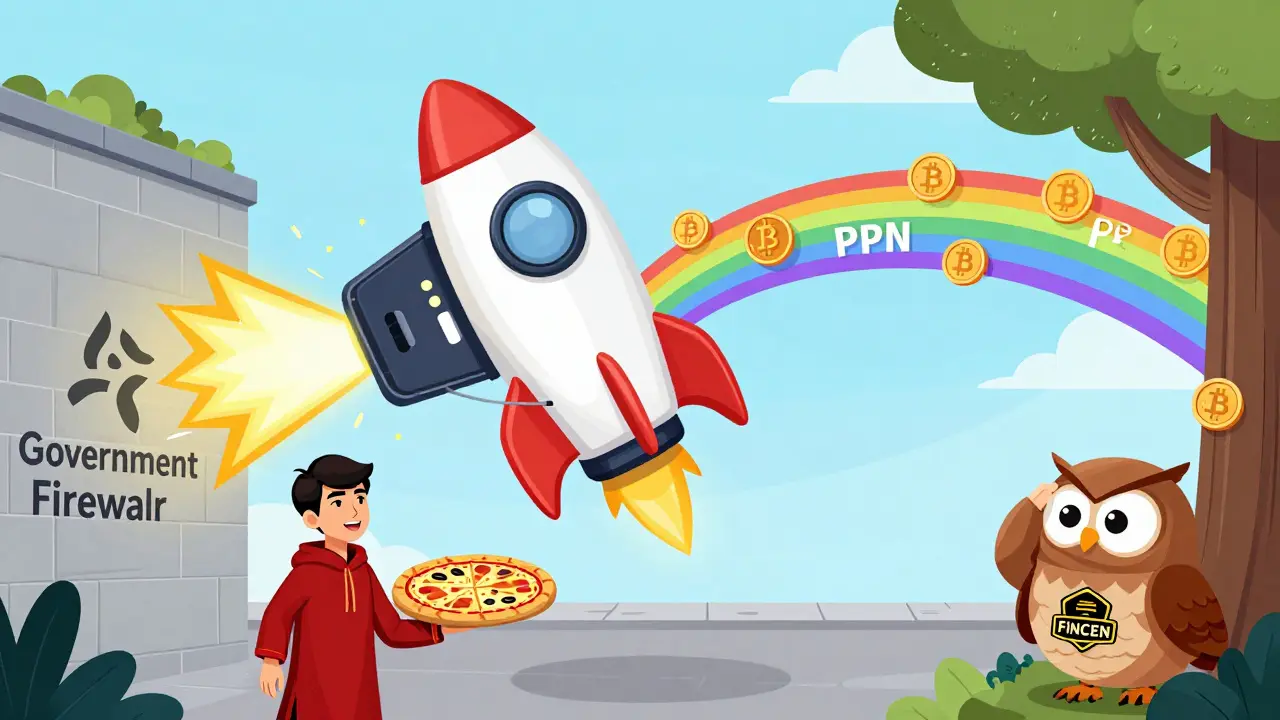
- Virtual Private Networks (VPNs) are mandatory. If your government blocks access to Binance or Kraken, you use NordVPN or ExpressVPN to hide your location. NordVPN says users from China increased by 217% and from Nigeria by 342% between late 2023 and late 2024. Tor browser use has jumped 223% in North Korea.
- Decentralized Exchanges (DEXs) like Uniswap and PancakeSwap run on blockchain, not companies. You connect your wallet-no sign-up, no ID. After the OKX ban in January 2025, Uniswap v4 saw an 187% surge in users from restricted nations.
- Hawala Networks, traditional informal money transfer systems, are now being used for crypto. In the Middle East, users send cash to a local hawala agent, who then pays a UAE-based exchange to send crypto to the buyer’s wallet. Dubai’s VARA-regulated exchanges processed over $30 billion in crypto from these networks in 2023-2024.
What Works Best-And What Doesn’t
Not all methods are equal. Some are fast. Some are safe. Most are neither.| Method | Privacy | Liquidity | Speed | Risk Level |
|---|---|---|---|---|
| P2P Platforms (Paxful, Binance P2P) | Medium | High | Hours to days | Medium-High |
| No-KYC Exchanges (Bisq, Hodl Hodl) | High | Low | Days | High |
| Decentralized Exchanges (Uniswap) | High | Medium | Minutes | Medium |
| Gift Card Arbitrage | Medium | Low | Days | High |
| VPN + Centralized Exchange | Low | High | Seconds | Medium |
P2P is the most popular because it balances access and volume. But it’s risky. Scammers pose as buyers, then vanish after you send crypto. In Bangladesh, 87 accounts were frozen in January 2025 alone. In China, Paxful users complain of 72-hour delays and account blocks when using local phone numbers.
The Hidden Costs
Accessing crypto isn’t free. It’s expensive in time, money, and stress.- Premiums: In Vietnam, traders pay up to 2.5% extra on Binance P2P to get around local bans.
- Time: It takes 3 to 5 weeks for a new user to set up a reliable system-getting a VPN, learning wallet security, finding trusted traders.
- Security: 67% of users in restricted countries report at least one security incident. Scams, phishing, and fake wallets are common. One in eight lost significant money.
- Internet Shutdowns: In Nigeria and Iran, governments cut internet access during protests. 47% of users lose access during these periods.
- Language Barriers: Only 37% of no-KYC exchanges offer support in local languages. Response times for non-English users average 58 hours.
Real Stories, Real Risks
A Nigerian user named u/NaijaCryptoGuy on Reddit says he’s sent $3,200 monthly through Bybit using Chipper Cash for 18 months. Only one freeze. That’s success. But in Vietnam, a user on Tinhte.vn traded 1.2 billion VND ($49,500) through Binance P2P using bank transfers to middlemen. He paid the premium. He got his crypto. But he’s always worried. In Bangladesh, Facebook group admins track account closures. In January 2025, 87 users lost access. Their funds? Frozen. Estimated loss: $412,000. And in China, Trustpilot reviews for Paxful average 2.1 out of 5 stars. People say: “I sent money. I never got crypto.”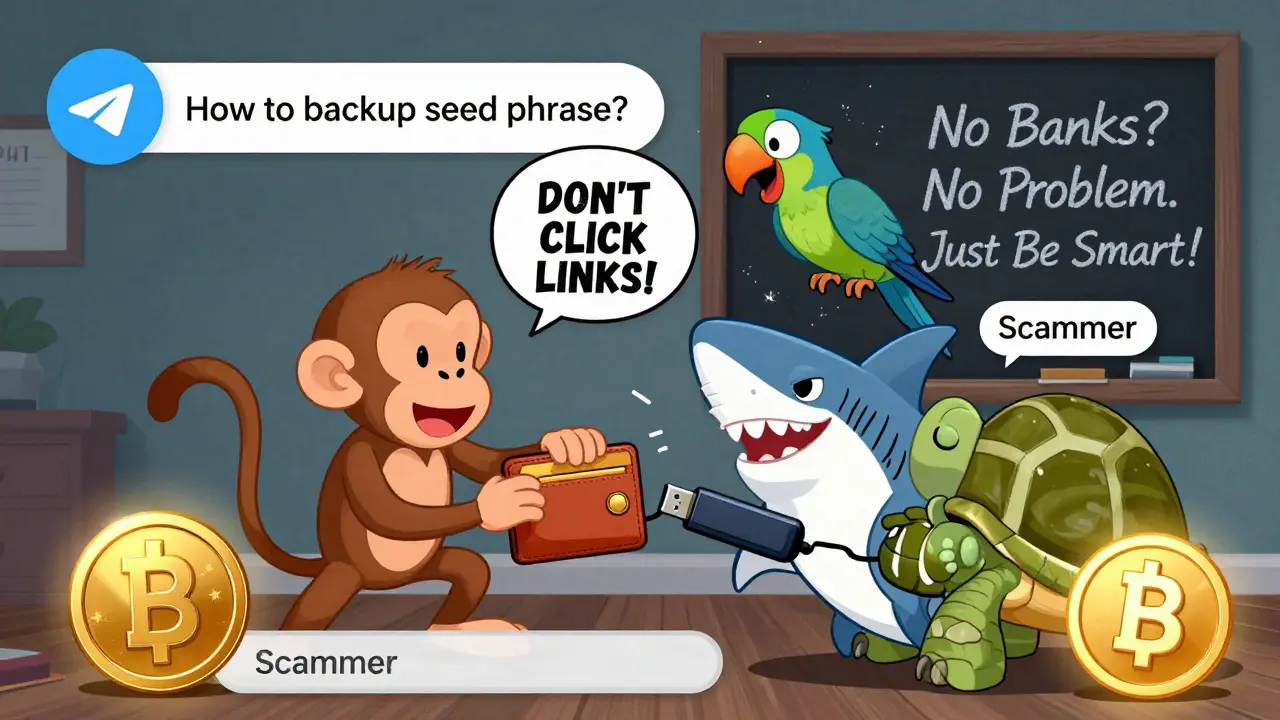
What’s Next?
Governments aren’t backing down. The U.S. FinCEN proposed rules in February 2025 that could force all exchanges serving American users to enforce KYC on transactions over $300. That would hit many P2P users who rely on U.S.-linked payment processors. But innovation keeps pace. Privacy coins like Monero and Zcash are growing fast-up 317% in China since 2023. Zero-knowledge proofs, which let you prove you’re eligible for a transaction without revealing details, are expected to grow 340% in restricted markets by 2026. Meanwhile, communities are stepping in. The Telegram group “Crypto Without Borders” has 147,000 members sharing guides for 43 restricted countries. They teach how to back up seed phrases, avoid scams, and find trusted traders.Is It Worth It?
For many, yes. In Nigeria, crypto adoption ranks 4th globally. In Vietnam, 5.3% of the population-over 5 million people-use crypto. The $1.27 trillion in crypto transactions from restricted countries in 2024 proves one thing: when people are locked out of the system, they build a new one. But it’s not a game. It’s survival. Every step carries risk. Every trade could be the last. And every tool you use today might be blocked tomorrow.There’s no perfect way. Only the least bad one. And for millions, that’s still better than nothing.
Can you use crypto in Nigeria if banks ban it?
Yes. Even though Nigerian banks are banned from processing crypto transactions, people use P2P platforms like Paxful and Binance P2P to buy and sell Bitcoin with cash, mobile money, or gift cards. Over 1.2 million Nigerians actively trade crypto through these channels. The Central Bank can block banks, but it can’t block people trading directly with each other.
Are no-KYC exchanges safe?
They offer privacy but come with high risk. Since there’s no identity verification, there’s also no customer support or chargeback protection. Scammers often target these platforms. Only 37% offer multilingual support, and response times can take days. Use them only if you understand wallet security, double-check addresses, and never send large amounts at once.
Why do people use gift cards to buy crypto?
Gift cards bypass banks entirely. You buy an Amazon or Steam card with local cash, then trade it on Paxful or Bitrefill for Bitcoin. It’s slow and often comes with a 10-20% premium, but it works where bank transfers are blocked. In 2024, $427 million in crypto was bought this way from restricted countries.
Do VPNs guarantee access to crypto exchanges?
No. While VPNs hide your location, exchanges like Binance and OKX can still block traffic from known VPN IP ranges. Some users report being locked out after switching servers. A good VPN helps, but it’s not foolproof. Combine it with P2P or DEXs for better results.
What happens if you get caught trading crypto in a banned country?
Penalties vary. In Algeria, you could face prison under anti-money laundering laws. In Bangladesh, trading is illegal under the Money Laundering Prevention Act, and users have been arrested. In Vietnam, fines range from $6,500 to $8,800. In most cases, enforcement targets large-scale traders or exchange operators-not everyday users. But the risk is real.
Is crypto adoption growing in restricted countries?
Yes, despite bans. Nigeria ranks 4th globally in crypto adoption. Vietnam is 7th. In 2024, restricted countries accounted for $1.27 trillion in crypto transactions-14.3% of the global total. People aren’t waiting for permission. They’re building alternatives.
Can I use a U.S. exchange like Coinbase from a restricted country?
Not officially. Coinbase blocks users from most restricted countries and requires KYC. Some try using a VPN, but Coinbase detects and bans those connections. Even if you get in, your account can be frozen later. It’s risky and unreliable. P2P or decentralized exchanges are better options.