Compliance Deadline Tracker
Add a Compliance Obligation
Compliance Tracking Dashboard
| Regulation | Jurisdiction | Due Date | Time Remaining | Responsible | Status | Actions |
|---|
Pro Tip: Check your compliance register quarterly. The EU's MiCA regulations require annual renewals, while US FinCEN requires SAR reporting within 30 days of detection.
Most people think once you set up a blockchain project-whether it’s a token, a smart contract, or a decentralized app-you’re done. You launched. You’re live. But here’s the truth: blockchain compliance isn’t a one-time setup. It’s a daily, weekly, monthly grind. If you ignore ongoing compliance obligations, you’re not just risking fines. You’re risking shutdowns, lawsuits, and losing trust before your project even gains traction.
Why Blockchain Changes the Compliance Game
Traditional businesses deal with compliance through paper forms, annual audits, and quarterly filings. Blockchain? It moves faster. It’s global. It’s anonymous by design. And that’s exactly why regulators are watching closer than ever. In 2024, the EU’s MiCA (Markets in Crypto-Assets) regulation came fully into force. It didn’t just say “be careful.” It said: “If you issue tokens, you must register. If you run an exchange, you need licenses. If you handle user funds, you must prove you’re not laundering money.” And it applies to anyone serving EU customers-even if your company is based in New Zealand, Canada, or Nigeria. The U.S. SEC has been equally aggressive. In 2023 alone, they brought 48 enforcement actions against crypto firms for failing to register as securities exchanges or for not disclosing how tokens were marketed. Many of these cases didn’t involve fraud. They involved inaction. Companies assumed their token was a “utility token” and didn’t bother checking if regulators agreed. Blockchain doesn’t make you exempt from the law. It just makes it harder to hide when you’re not following it.What Counts as an Ongoing Compliance Obligation in Blockchain?
Ongoing compliance obligations in blockchain aren’t just about filling out forms. They’re about systems you maintain every day. Here’s what you need to keep track of:- Registration and licensing: If you’re operating a crypto exchange, custodial wallet provider, or token issuer in the EU, U.S., or UK, you must renew licenses annually. Missing a renewal date = immediate suspension.
- Anti-Money Laundering (AML) checks: You must verify every new user’s identity (KYC), screen them against global sanctions lists, and flag suspicious transactions in real time. This isn’t optional. The FATF requires it for all VASPs (Virtual Asset Service Providers).
- Transaction monitoring: Blockchain is public, but that doesn’t mean you’re safe. You still need tools to detect mixing services, privacy coins used for obfuscation, or unusual wallet activity. The 2023 Chainalysis report showed 22% of crypto transactions on DeFi platforms involved some form of illicit activity.
- Reporting obligations: Many jurisdictions require quarterly or annual reports on transaction volume, user growth, and flagged activities. In the U.S., FinCEN requires crypto businesses to file SARs (Suspicious Activity Reports) within 30 days of detection.
- Privacy law compliance: If you collect user data-even just an email or IP address-you’re subject to GDPR, CCPA, or similar laws. You must allow users to delete their data, provide transparency about what you collect, and secure it properly. A 2024 audit of 120 DeFi apps found 67% were storing user data in unencrypted formats.
- Smart contract audits: Once deployed, smart contracts don’t change. But regulations do. If a new law requires you to add a kill switch, freeze function, or compliance layer, you may need to launch a new contract version. That’s not a bug. It’s a compliance update.
These aren’t checkboxes. They’re live systems. If you stop monitoring them, they stop working.
What Happens When You Ignore These Obligations?
In 2023, a New Zealand-based DeFi lending platform called ChainLend was shut down by the Financial Markets Authority after it failed to update its KYC system for 14 months. They didn’t break any laws intentionally. They just assumed their initial setup was enough. The result? $2.3 million in fines, a 6-month operational freeze, and a 78% drop in user trust. Their token price fell from $0.85 to $0.11 in 30 days. Compare that to Kraken. They spend over $40 million a year on compliance-not because they’re huge, but because they treat it like engineering. They have a team that scans global regulatory updates daily. When the EU passed MiCA, they had their new licensing documents ready within 11 days. That’s not luck. That’s process. The difference between success and failure isn’t how smart your code is. It’s how disciplined you are about keeping up.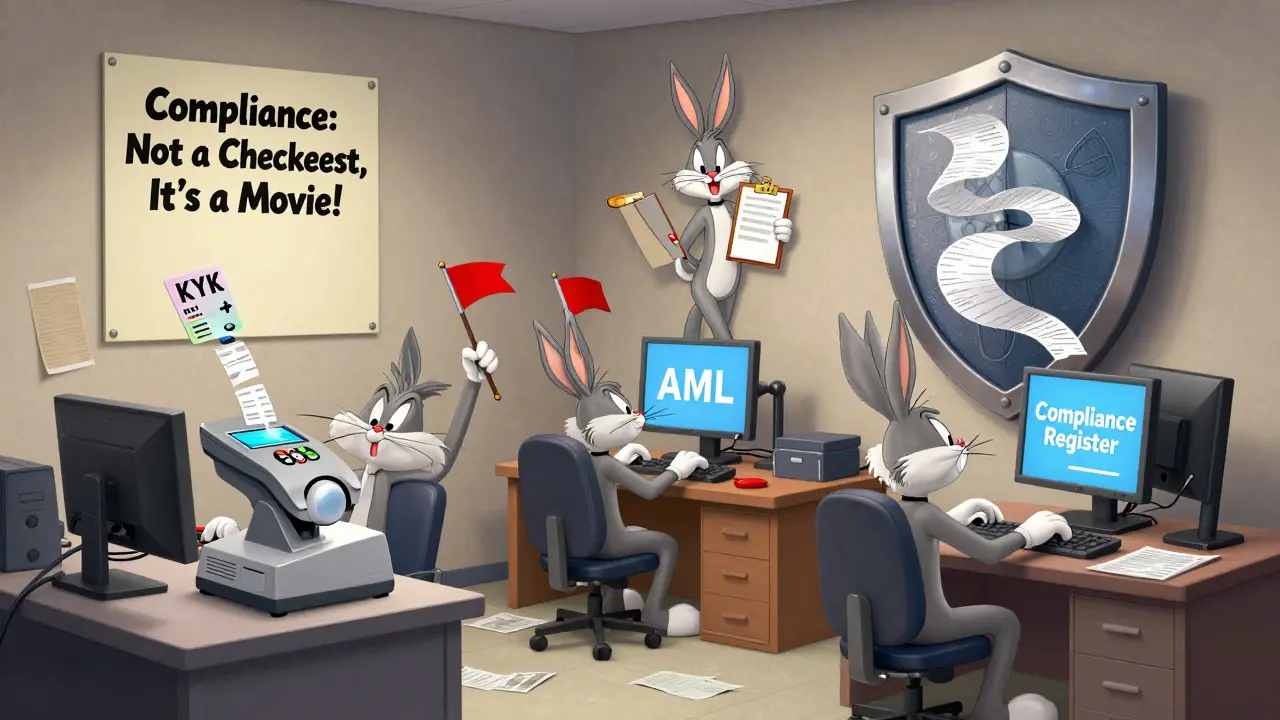
How to Build an Ongoing Compliance System (Step-by-Step)
You don’t need a legal team of 20 to stay compliant. But you do need structure. Here’s how to build a working system:- Map your obligations. List every regulation that applies to you: local laws, international rules, platform terms (like Ethereum’s community guidelines), and even your own internal policies. Use a simple spreadsheet: Regulation Name | Jurisdiction | Due Date | Responsible Person | Evidence Required.
- Assign ownership. Don’t put compliance in one person’s inbox. Give each obligation to a team member. KYC? The ops lead. AML monitoring? The security lead. Reporting? The finance lead. Accountability prevents gaps.
- Set up alerts. Use free tools like Google Alerts for “blockchain regulation [your country]” or paid platforms like ComplyAdvantage or Notified. Set up weekly digest emails. If you’re in the EU, subscribe to the ESMA newsletter. In the U.S., sign up for FinCEN updates.
- Review quarterly. Every three months, meet as a team. Check: Did any laws change? Did any users report issues? Did our tools flag new risks? Update your compliance register. Delete outdated items. Add new ones.
- Train monthly. Even one 30-minute session per month keeps your team aware. Use real examples: “Last month, a user tried to deposit $50,000 in Monero. Why is that a red flag?”
- Document everything. Regulators don’t care what you thought. They care what you wrote down. Save screenshots, emails, audit logs, training records. If you’re ever questioned, your paper trail is your shield.
Small teams can do this. One founder in Wellington runs a blockchain-based carbon credit platform with 3 employees. They use Notion for their compliance register, set calendar reminders for every deadline, and hire a freelance AML consultant for $1,200/month. Their compliance cost is under 8% of their revenue. And they’ve never been fined.
Common Mistakes (And How to Avoid Them)
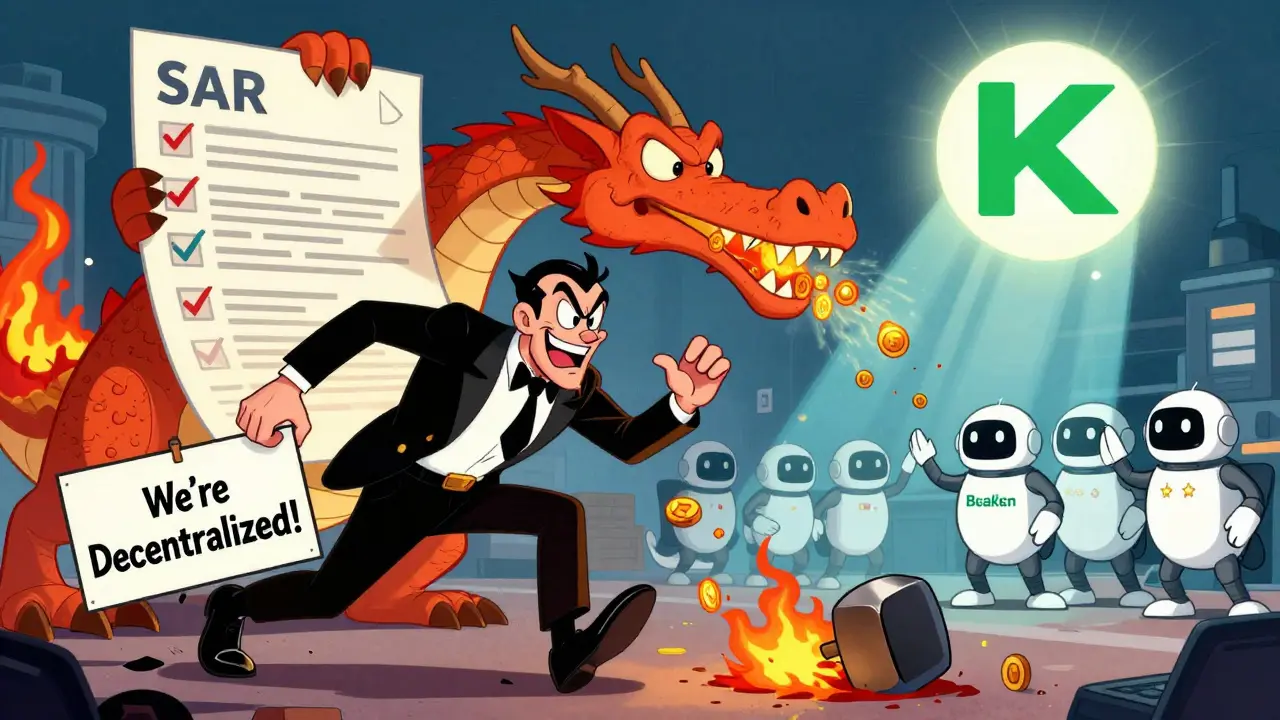
Here’s what most blockchain teams get wrong:- “We’re decentralized, so we’re not regulated.” Wrong. Regulators target operators, not protocols. If you’re running a wallet, exchange, or staking service, you’re an operator.
- “We’re based in a crypto-friendly country.” Doesn’t matter. If you serve users in the U.S. or EU, their laws apply to you.
- “We did a one-time audit. We’re good.” Audits are snapshots. Compliance is a movie. You need to keep filming.
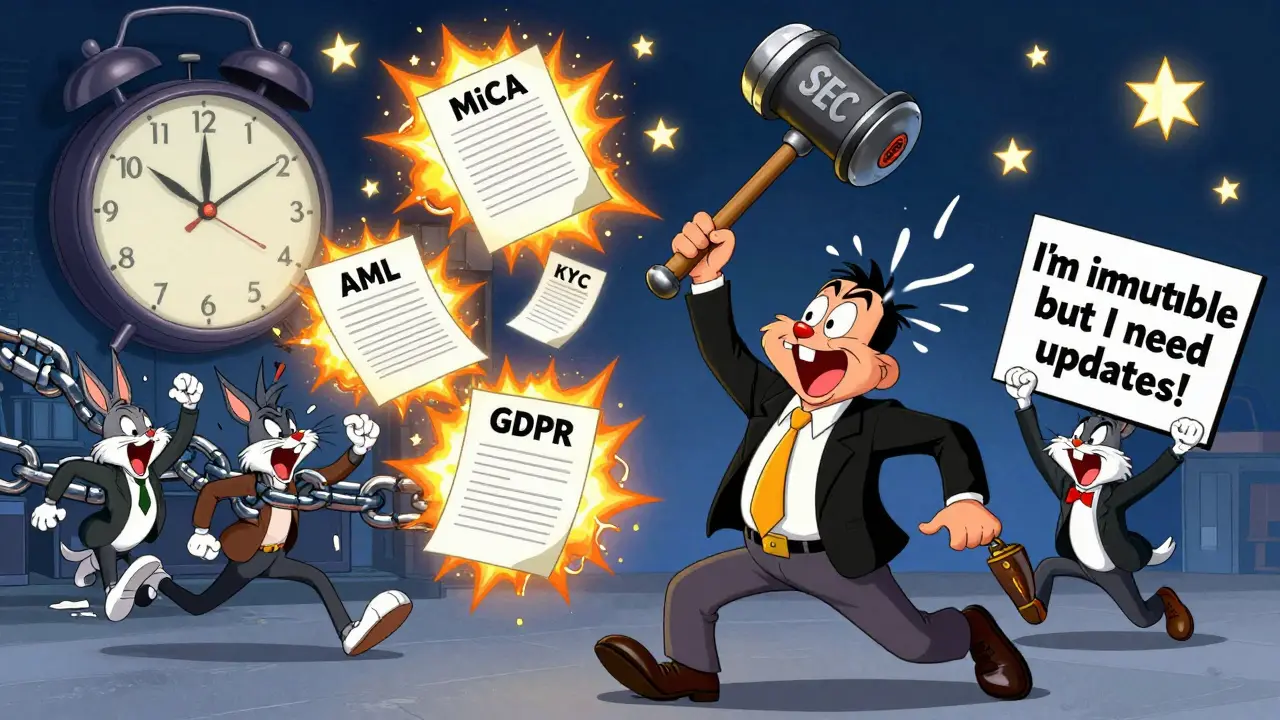
- “Our smart contract is immutable, so we don’t need to update.” If a law says you must freeze funds in case of fraud, and your contract can’t do that, you’re non-compliant. Period.
- “We’ll handle it when we grow.” The biggest fines go to startups who ignored compliance early. Regulators don’t wait for you to scale before they act.
The Future: AI, Blockchain, and Compliance
The future of compliance isn’t more paperwork. It’s automation. Companies like Chainalysis and Elliptic now use AI to scan blockchain transactions in real time. They flag wallets linked to darknet markets, ransomware gangs, or sanctioned entities. Some platforms even auto-freeze funds when a violation is detected. In 2025, the EU will require all major crypto platforms to use AI-powered monitoring. The U.S. SEC is testing similar rules. If you’re not using any automated tools, you’re already behind. And here’s the twist: blockchain itself can help compliance. Some projects are now using on-chain compliance logs-immutable records that prove you did your KYC, filed your reports, and updated your policies. These logs can be verified by regulators without sharing private data. It’s transparency without exposure. The winners won’t be the ones with the fanciest tech. They’ll be the ones who treat compliance like a core feature-not a legal afterthought.Frequently Asked Questions
Do I need to comply with blockchain regulations if I’m not based in the U.S. or EU?
Yes-if you serve users in those regions. Jurisdiction is based on who you’re doing business with, not where you’re located. A blockchain project hosted in New Zealand but accepting payments from EU residents must follow MiCA. A U.S.-based wallet that lets Australians use it must follow AML rules in both countries.
How often should I update my compliance documentation?
At minimum, quarterly. But if you’re in a fast-moving space like DeFi or NFTs, monthly checks are safer. Regulatory changes can happen overnight. In 2024, Switzerland changed its crypto tax rules in a single press release. Companies that checked their compliance register the next day avoided penalties.
Can I outsource my compliance obligations?
You can outsource tasks-like KYC verification or AML monitoring-but you can’t outsource responsibility. If your third-party provider fails, you’re still liable. Always keep a clear audit trail of who did what, and verify their credentials. Use firms with ISO 27001 or SOC 2 certification.
What’s the cheapest way to start with blockchain compliance?
Start with a free compliance register (Google Sheets or Notion). Use free regulatory alerts from government sites. Do a self-audit: list every user interaction, data point, and transaction type you handle. Then check each one against local laws. Most small projects spend under $500/month on tools and consultants in their first year.
What happens if I accidentally miss a compliance deadline?
Act fast. Self-report if possible. Many regulators offer reduced penalties for voluntary disclosure. Document what happened, why, and how you fixed it. Regulators respect honesty more than perfection. A 2023 case in Singapore reduced a $200,000 fine to $25,000 because the company reported the error within 72 hours.
Next Steps
If you’re running a blockchain project right now, do this today:- Open a spreadsheet. Write down every regulation you think applies to you.
- Find one compliance tool you can start using this week-even if it’s free.
- Set a calendar reminder: “Compliance Review” every 90 days.
- Ask one team member: “What’s the one thing we’re not doing that we should be?”
Compliance isn’t glamorous. But it’s the difference between building something that lasts-and something that disappears when the regulators knock on your door.