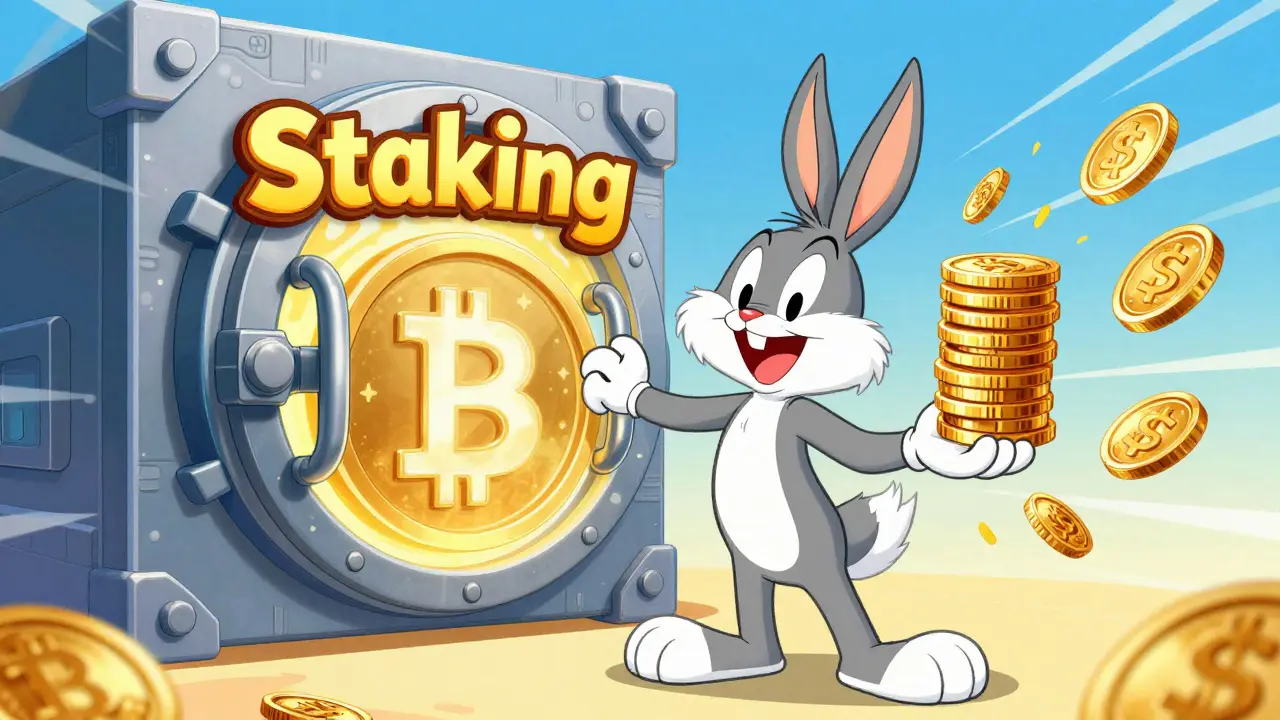
You hold a bag of crypto tokens. You want them to work for you, not just sit there collecting digital dust. But you also don't want to be ignored when the protocol makes big decisions. That is the sweet spot where Governance Token Staking lives. It is a mechanism that lets you lock up your assets to earn financial rewards while simultaneously gaining a voice in how the decentralized network operates.
This isn't just about passive income anymore. Since the rise of Decentralized Autonomous Organizations (DAOs), staking has evolved from a simple security measure into a hybrid model. You get paid to participate. According to data from Bitbond's 2023 analysis, roughly 78% of the top 50 DeFi protocols now use this exact model. It has become the standard way projects align the interests of users with the long-term health of the platform.
Key Takeaways
- Dual Benefit: Governance staking offers both financial yield (APY) and voting power in protocol decisions.
- Varying Lock-ups: Some platforms like Aave require fixed lock-up periods, while others like Algorand offer flexible, no-lockup models.
- Risk Factors: Watch out for slashing penalties, impermanent loss, and the risk of "plutocracy" where whales dominate votes.
- Sustainability Check: Not all rewards are funded by real revenue; some rely on unsustainable token inflation.
- Tax Implications: Staking rewards are often considered taxable income in many jurisdictions, including the US and parts of Europe.
How Governance Staking Actually Works
To understand why people stake governance tokens, you have to look at what these tokens actually do. Unlike utility tokens that might just give you access to a service, or payment tokens used for fees, governance tokens represent ownership or influence. When you stake them, you are essentially depositing collateral into a smart contract.
In return, the protocol pays you. Where does that money come from? Usually, it comes from two places: transaction fees generated by the protocol or new token emissions (inflation). For example, if you stake tokens in a lending protocol, you might earn a share of the interest paid by borrowers. If you stake in a newer project, you might receive newly minted tokens as an incentive to bootstrap the network.
The technical implementation relies on smart contracts that enforce rules. These contracts define:
- Minimum Stake Amounts: How many tokens you need to start earning.
- Lock-up Periods: How long your tokens are frozen.
- Reward Rates: The Annual Percentage Yield (APY) you can expect.
- Penalty Mechanisms: What happens if you act maliciously or go offline.
Dr. Garrick Hileman, Principal Economist at Blockchain.com, noted in 2023 that this creates a "self-reinforcing ecosystem." When your economic success is tied to the protocol's performance, you are more likely to vote responsibly. However, Nic Carter of Castle Island Ventures warned that many of these tokens still lack clear backing, potentially offering "illusory governance rights" concentrated among early insiders.
Comparing Major Staking Models: Lock-ups vs. Flexibility
Not all staking experiences are created equal. The biggest difference you will notice is whether your tokens are locked up or liquid. This choice affects your liquidity and your risk profile significantly.
| Platform/Protocol | Lock-up Period | Reward Source | Slashing Risk | Approx. APY (2024 Data) |
|---|---|---|---|---|
| Aave | Fixed (e.g., 10 days min) | Protocol Fees + Inflation | Low (No slashing for voting) | ~5% |
| Curve Finance | Flexible (veCRV model) | Trading Fees + CRV Emissions | None | Up to 12.7% (boosted) |
| Algorand | None (Flexible) | Block Rewards | None (Temp pause only) | Variable (Auto-adjusted) |
| Cosmos Networks | Unbonding Period (~21 days) | Transaction Fees | High (Double-signing penalties) | Varies by chain |
Let's break down these differences. Aave, for instance, uses a square-root weighting system for voting power. This means doubling your stake doesn't double your voting influence-it increases it by less. This design tries to prevent whale dominance. However, it requires a minimum lock-up period. If you need those tokens urgently, you are stuck waiting.
On the other end of the spectrum, Algorand updated its model in 2024 to eliminate lock-ups entirely. You can stake and unstake whenever you want. They also removed slashing penalties. Instead of losing tokens for bad behavior, nodes simply stop participating temporarily. This is a huge shift in user experience compared to Ethereum-based validators, who faced an average 5.33% slashing rate for misbehavior in 2023.
Then there is Curve Finance's veCRV model. Here, you lock tokens for up to four years. The longer you lock, the higher your boost on trading fees and the more voting power you get. This appeals to long-term believers but ties up capital for a significant time.
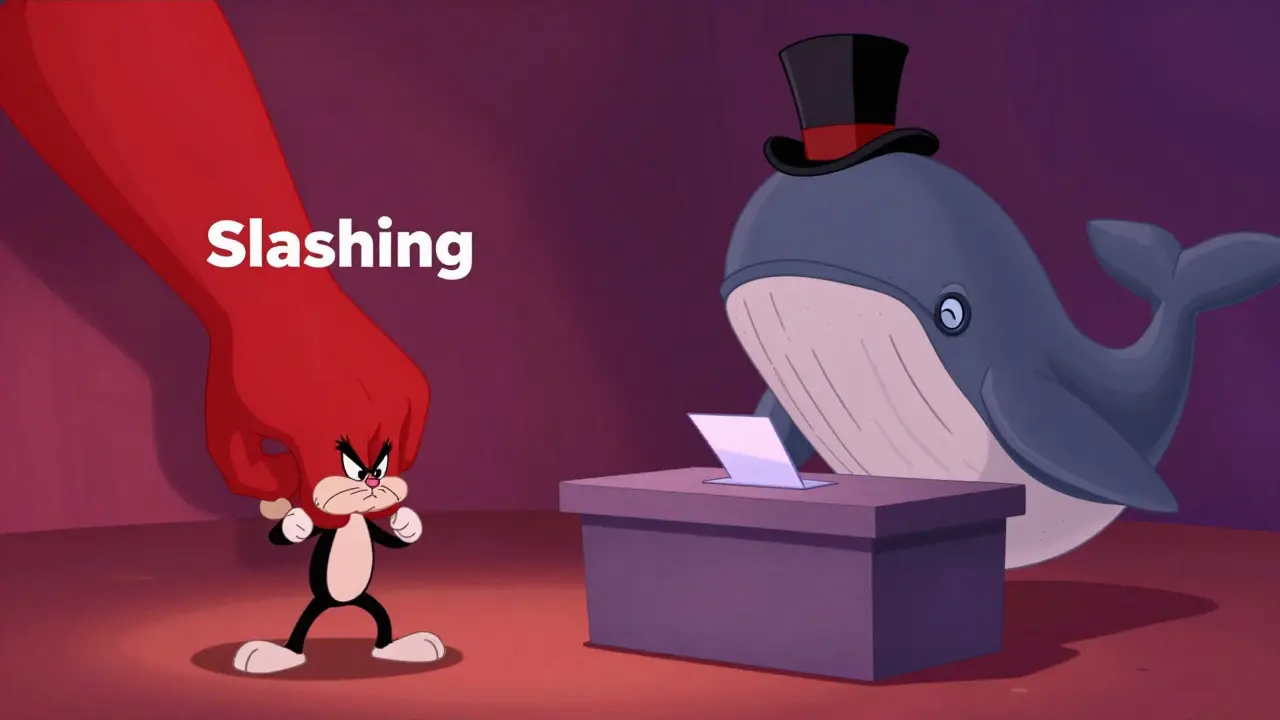
The Risks: Slashing, Impermanent Loss, and Plutocracy
It is easy to focus on the APY, but you must understand what you could lose. There are three main categories of risk in governance staking.
1. Slashing Penalties
In Proof-of-Stake networks like Cosmos or older Ethereum models, "slashing" means the protocol forcibly takes a portion of your staked tokens as punishment. This happens if your validator node goes offline too often or signs invalid blocks. In Cosmos, double-signing (trying to validate two different blocks at the same height) can result in penalties of up to 5% of your stake. Always check if the protocol slashes before you commit.
2. Impermanent Loss
If you are providing liquidity to a pool to earn governance tokens (a practice known as yield farming), you face impermanent loss. This occurs when the price of your deposited tokens changes compared to when you deposited them. If one token pumps hard and you didn't sell, you would have made more money just holding it in your wallet than staking it in the pool. Reddit users frequently discuss this trade-off, with many noting that the APY rarely compensates for significant market swings.
3. Plutocracy and Centralization
This is a structural risk. Governance staking can lead to plutocracy, where the richest holders make all the decisions. In 2023, MakerDAO saw a single entity control 28% of voting power. This raises concerns about whether the "decentralized" governance is truly democratic or just controlled by whales. Newer models are trying to fix this with quadratic voting or reputation systems, but the problem persists.
Is the Reward Sustainable?
Before you stake, ask yourself: "Where is this money coming from?" TokenInsight reported in 2023 that 32% of governance token staking rewards were funded purely by token inflation. This means the protocol is printing new tokens to pay you. While this works in bull markets when token prices rise, it becomes dangerous in bear markets. If the token price drops faster than your APY accrues, you are losing purchasing power.
Look for protocols that fund rewards from actual revenue. For example, Uniswap generates fees from every swap. If they distribute a portion of those fees to stakers, that reward is backed by real economic activity. Delphi Digital's Q2 2024 report highlights a trend toward integrating real-world asset yields to fund sustainable rewards, moving away from pure inflation models.

How to Start Staking: A Step-by-Step Guide
If you decide to proceed, here is how to navigate the process safely.
- Choose Your Wallet: You need a non-custodial wallet like MetaMask, Trust Wallet, or Phantom. Ensure it supports the specific blockchain of the token you want to stake.
- Acquire the Tokens: Buy the governance token on a reputable exchange. Transfer them to your personal wallet. Never leave large amounts on exchanges for staking purposes unless the exchange offers direct staking services (like Coinbase).
- Select the Staking Interface: Go to the official website of the protocol. Verify the URL carefully to avoid phishing sites. Connect your wallet.
- Review the Terms: Look for the lock-up period, current APY, and any slashing conditions. Read the documentation. A 2024 GitBook analysis showed that Ethereum-based protocols have better documentation clarity (4.2/5) than newer Layer-1 chains (3.1/5).
- Approve and Stake: You will first need to "approve" the spending of your tokens by the staking contract. Then, click "Stake." Confirm the transaction in your wallet. Pay attention to gas fees, which can be high on Ethereum during peak times.
- Monitor and Vote: Once staked, you usually gain access to a voting portal. Participate in proposals. Ignoring governance means letting others decide your fate.
For beginners, experts often recommend starting with liquid staking solutions like Lido or Rocket Pool. These allow you to earn rewards without managing complex node operations or worrying about strict lock-ups. As one Reddit user, 'StakeMaster69', advised: "Begin with liquid staking to understand mechanics before committing to governance tokens with longer lockups."
Tax Considerations and Regulatory Landscape
Staking rewards are not free money in the eyes of the tax man. In the United States, the IRS generally treats staking rewards as ordinary income at the fair market value when you receive them. Later, when you sell the tokens, you may owe capital gains tax. CoinTracker data indicates that 73% of US-based users cite tax implications as a major concern.
Regulatory scrutiny is increasing. The SEC's 2023 enforcement action against Uniswap Labs signaled that some governance tokens might be classified as securities under the Howey Test. This adds legal uncertainty. While Algorand and Ethereum have strong communities arguing their tokens are commodities, the landscape remains fluid. Always consult a local tax professional before engaging in large-scale staking activities.
Future Trends: What’s Next for Governance Staking?
The space is evolving rapidly. By 2026, we are seeing three major shifts:
- Liquid Governance: Solutions like Lido's governance-pegged derivatives allow users to maintain voting power while keeping their tokens liquid. This solves the liquidity trap of traditional staking.
- Reputation Systems: Projects like 1Hive are developing reputation-based voting to counter plutocracy. Your vote weight depends on your history of responsible participation, not just your wealth.
- Cross-Chain Governance: With upgrades like Polkadot's XCMv3, users will soon be able to vote across multiple ecosystems using a unified interface, reducing fragmentation.
However, Gartner's 2024 blockchain hype cycle warns that governance staking is currently at the "peak of inflated expectations." Many unsustainable models will fail. The survivors will be those with clear revenue streams and genuine decentralization.
What is the difference between staking and governance staking?
Traditional staking (Proof-of-Stake) primarily secures the blockchain network by validating transactions. Governance staking specifically locks tokens to grant voting rights on protocol decisions, such as fee changes or treasury allocations, while often providing additional financial incentives.
Can I lose my tokens while governance staking?
Yes, through slashing penalties if you operate a validator node and act maliciously or go offline. Additionally, you can lose value if the token price drops significantly (market risk) or if you suffer impermanent loss in liquidity pools. Some protocols, like Algorand, have eliminated slashing to improve user safety.
Is governance token staking taxable?
In many jurisdictions, including the US, staking rewards are considered taxable income at the time they are received. You should keep detailed records of the value of rewards when credited to your wallet. Consult a tax professional for advice specific to your location.
Which platform has the best APY for governance staking?
APYs fluctuate constantly based on market conditions and protocol parameters. As of mid-2024, Curve Finance offered boosted APYs up to 12.7% for long-term lockers, while Uniswap hovered around 3.2%. Higher APYs often come with higher risks, such as longer lock-up periods or reliance on token inflation.
Do I need technical skills to stake governance tokens?
Not necessarily. User-friendly wallets like Coinbase Wallet and Trust Wallet offer one-click staking interfaces. However, running your own validator node (as required in some networks like Algorand for full participation) requires technical knowledge of command-line interfaces and server maintenance.
What is "plutocracy" in the context of DAOs?
Plutocracy refers to rule by the wealthy. In DAOs, this happens when large token holders (whales) dominate voting outcomes, effectively silencing smaller participants. This undermines the decentralized nature of the protocol and is a key criticism of current governance models.
Are governance tokens considered securities?
The regulatory status is unclear and varies by jurisdiction. The US SEC has taken enforcement actions suggesting some governance tokens may be unregistered securities under the Howey Test. This creates legal risk for both issuers and holders. Always stay informed about local regulations.



Categories