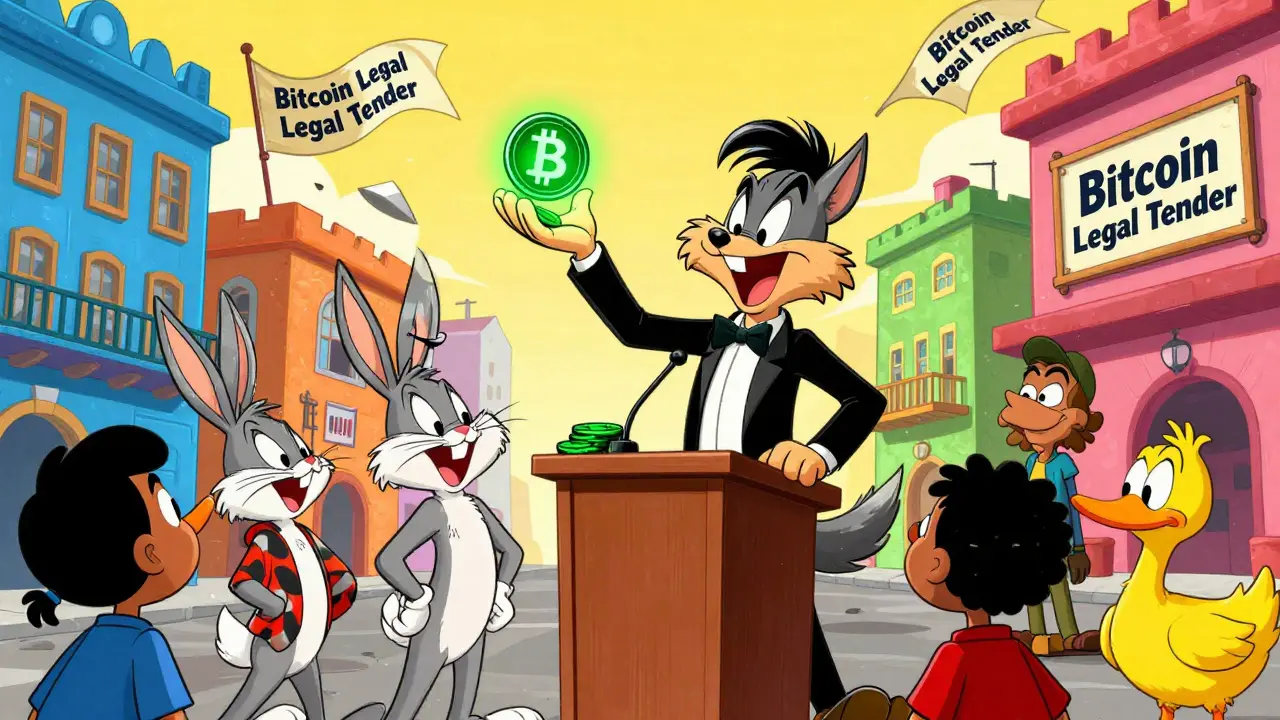
Imagine a country that decides to replace its cash with a digital coin known for wild price swings. That is exactly what El Salvador did when it became the first nation in history to adopt Bitcoin as legal tender alongside the US dollar on September 7, 2021.
President Nayib Bukele sold this move as a way to help the poor, cut remittance fees, and attract foreign investment. It was supposed to be a revolution in financial inclusion. Fast forward to May 2025, and the story has taken a sharp turn. The government effectively ended Bitcoin’s status as mandatory legal tender to secure a lifeline from international lenders. This isn’t just a policy shift; it is a massive real-world experiment that offers critical lessons for anyone interested in blockchain technology or national economics.
The Bold Experiment: Why El Salvador Chose Bitcoin
To understand why this happened, you have to look at the problems El Salvador faced before 2021. The country had already adopted the US dollar as its currency in 2001, which helped stabilize inflation but meant the central bank couldn’t print money to stimulate the economy. More importantly, about 70% of the population was unbanked. Sending money home from abroad-remittances-was expensive, often costing families 7% to 10% in fees.
Bukele argued that Bitcoin could solve these issues. By using the Lightning Network, a second-layer protocol that enables fast, low-cost Bitcoin transactions, the government claimed they could offer near-instant, zero-fee transfers. The goal was simple: make banking accessible to everyone who had a smartphone. The government even offered a $30 bonus to citizens who downloaded the state-sponsored app.
| Goal | Reality by 2024/2025 |
|---|---|
| Reduce remittance costs | Most users still used traditional methods like Western Union due to ease of use. |
| Financial inclusion for the unbanked | IMF reports showed minimal increase in actual banking access for the poorest. |
| Boost tourism and investment | Tourism saw a temporary spike, but long-term investment remained stagnant. |
| Mandatory business acceptance | 92% of businesses did not accept Bitcoin voluntarily after mandates were lifted. |
The Chivo Wallet: A Technical Hurdle
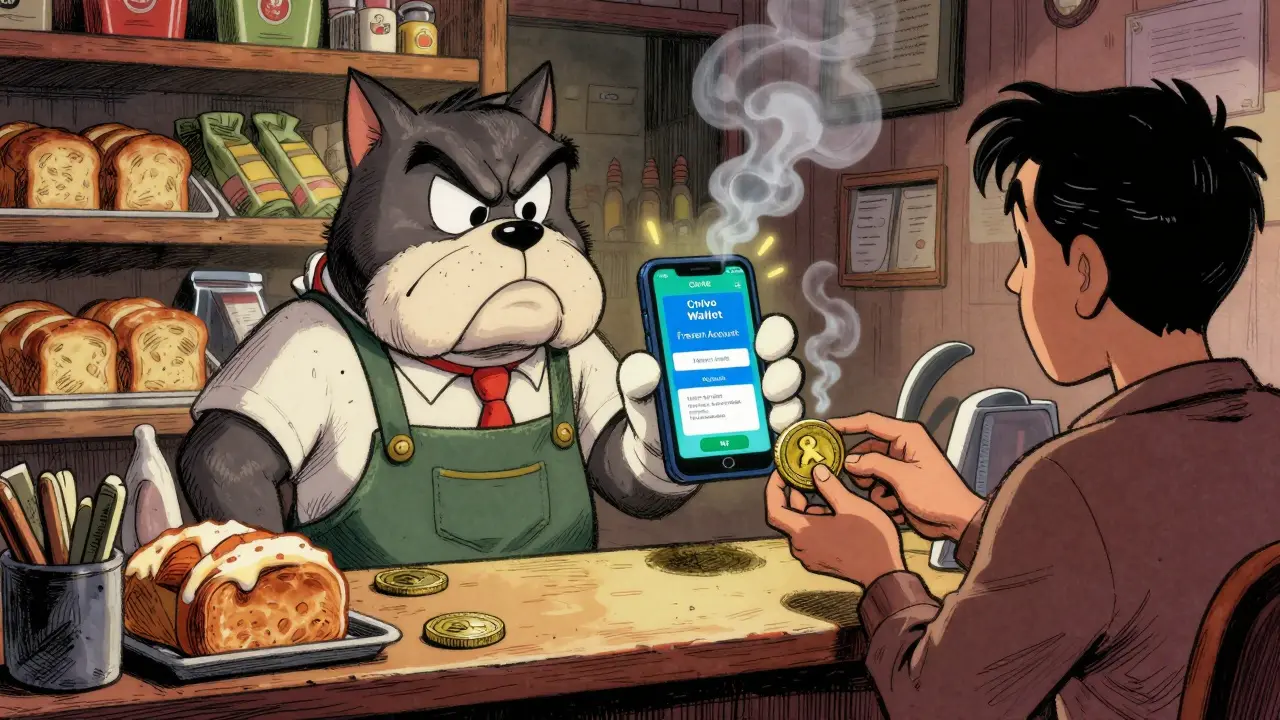
The backbone of this entire operation was the Chivo Wallet, a mobile application developed by the government to facilitate Bitcoin payments. The idea was good: give every citizen a digital wallet so they could buy coffee or pay bills with crypto. But the execution was messy.
When Chivo launched, it was plagued by bugs. Users reported frozen accounts, failed transactions, and security vulnerabilities. In one notable incident, hackers exploited weaknesses in the system, stealing funds and shaking public trust. For a population that was largely skeptical of digital finance, these technical glitches were fatal. You can’t force people to use a tool that doesn’t work reliably. Merchants, especially small shop owners, found it difficult to integrate the wallet into their daily operations. They didn’t have the time or technical knowledge to troubleshoot connection errors during busy hours.
Volatility and the Merchant Problem
Even if the app worked perfectly, there was a bigger issue: Bitcoin’s price volatility. Imagine you run a bakery. Your flour costs $10 today. If you accept Bitcoin, and the price drops 5% tomorrow, you’ve lost money unless you instantly convert it to dollars. Most small businesses in El Salvador didn’t have the infrastructure to hedge against these swings.
This created a paradox. The law required businesses to accept Bitcoin, but it didn’t protect them from market crashes. Many merchants accepted it only because they had to, then immediately converted it back to USD. This added friction rather than removing it. Consumers, seeing that prices fluctuated or that vendors looked confused, simply avoided using Bitcoin for everyday purchases. By 2024, surveys indicated that 92% of Salvadorans were not using Bitcoin for transactions. The "forced adoption" strategy backfired, creating resentment instead of innovation.
The IMF Intervention and Policy Reversal
The turning point came in late 2024. El Salvador needed money. The country’s debt levels were high, and investor confidence was shaky due to the Bitcoin gamble. To get a $1.4 billion loan from the International Monetary Fund (IMF), an international organization that provides loans to countries with balance of payments problems, El Salvador had to make concessions.
In January 2025, the Legislative Assembly voted 55-2 to modify the Bitcoin law. The changes removed the word "currency" from the legislation. Effectively, Bitcoin was no longer legal tender. Businesses were no longer forced to accept it. Taxes and state bills could no longer be paid in Bitcoin. These changes took effect on May 1, 2025. Economist Rafael Lemus summed it up bluntly: "Bitcoin no longer has the strength of legal tender... the government tried to force it into existence, and it didn’t work."
This wasn’t just about saving face. It was about survival. The IMF viewed the Bitcoin policy as a macroeconomic risk. Without transparency in how the government bought and stored Bitcoin, international lenders refused to engage. The deal included a promise that El Salvador would stop buying more Bitcoin, although rumors persisted that secret purchases continued.

What Happened to the Bitcoin Reserves?
One of the most confusing aspects of this case study is the discrepancy in data regarding El Salvador’s Bitcoin holdings. At various points, reports suggested the country held anywhere from 688 to over 6,100 Bitcoin. As of early 2025, estimates placed the value of these reserves around $500 million to $574 million, with some profits realized along the way.
However, this profit didn’t trickle down to the average citizen. The government’s strategy was to hold Bitcoin as a long-term asset, hoping its value would rise. While the price did go up significantly between 2021 and 2024, the opportunity cost was high. The money spent on developing the Chivo wallet, marketing campaigns, and subsidizing transaction fees could have been used for healthcare or education. The disconnect between the government’s treasury gains and the population’s daily struggles highlighted a major flaw in the policy design.
Lessons for Other Countries and Blockchain Developers
So, what do we learn from El Salvador? First, you cannot mandate technology adoption through force. People need to see clear, personal benefits. If a new payment method is harder to use than cash, it will fail, no matter how revolutionary the underlying tech is.
Second, stability matters for daily commerce. Bitcoin is great for store-of-value or large cross-border transfers, but it is terrible for buying bread. Future attempts at crypto integration should focus on stablecoins or centralized bank digital currencies (CBDCs) that don’t fluctuate wildly.
Third, transparency is non-negotiable. When a government mixes public funds with volatile assets without clear accounting, it scares away international partners. The IMF’s involvement shows that global financial institutions still view Bitcoin as too risky for sovereign balance sheets.
Despite the reversal, El Salvador hasn’t abandoned crypto entirely. Bitcoin remains legal for private transactions. The country continues to host events like the PLANB Forum, trying to position itself as a tech hub in Central America. But the dream of a fully Bitcoinized society has cooled significantly. For now, the US dollar remains king, and Bitcoin is back to being a speculative asset rather than a daily tool.
Is Bitcoin still legal tender in El Salvador in 2026?
No. As of May 2025, El Salvador removed Bitcoin's status as legal tender. While it remains legal for private voluntary transactions, businesses are no longer required to accept it, and it cannot be used to pay taxes or state bills.
Why did the IMF oppose El Salvador's Bitcoin policy?
The IMF cited concerns over macroeconomic stability, lack of transparency in Bitcoin purchases, and the potential risks to the country's financial system. They viewed the mandatory adoption as a barrier to broader economic reforms and financial inclusion.
Did the Chivo wallet succeed in bringing financial inclusion?
Initially, many Salvadorans downloaded the Chivo wallet, but usage dropped sharply due to technical issues, security breaches, and user confusion. Reports indicate that the vast majority of the population did not use it for regular transactions.
How much Bitcoin does El Salvador currently hold?
Estimates vary, but as of early 2025, El Salvador held approximately 6,000+ Bitcoin, valued at around $500 million. The government has promised not to purchase more under the IMF agreement, though verification remains challenging.
Can other countries replicate El Salvador's model?
It is highly unlikely. The experiment demonstrated significant challenges in forced adoption, technical implementation, and economic stability. Most experts advise against mandating volatile cryptocurrencies as legal tender.