When you're looking for a crypto exchange that lets you trade digital assets and walk into a physical store to buy Bitcoin with cash, Kanga Exchange stands out - but not for the reasons you might think. Founded in 2018 in Poland, Kanga isn’t trying to beat Binance or Coinbase in trading volume or coin selection. Instead, it’s carved out a niche: making crypto accessible in places where bank transfers are slow, cash is king, and trust in online platforms is low. If you live in Poland, the Czech Republic, or the Baltics and want to turn euros or złoty into crypto without waiting days for a bank wire, Kanga might be your best bet. But if you're an active trader chasing low fees, high leverage, or NFTs, you’ll hit walls fast.
What Makes Kanga Exchange Different?
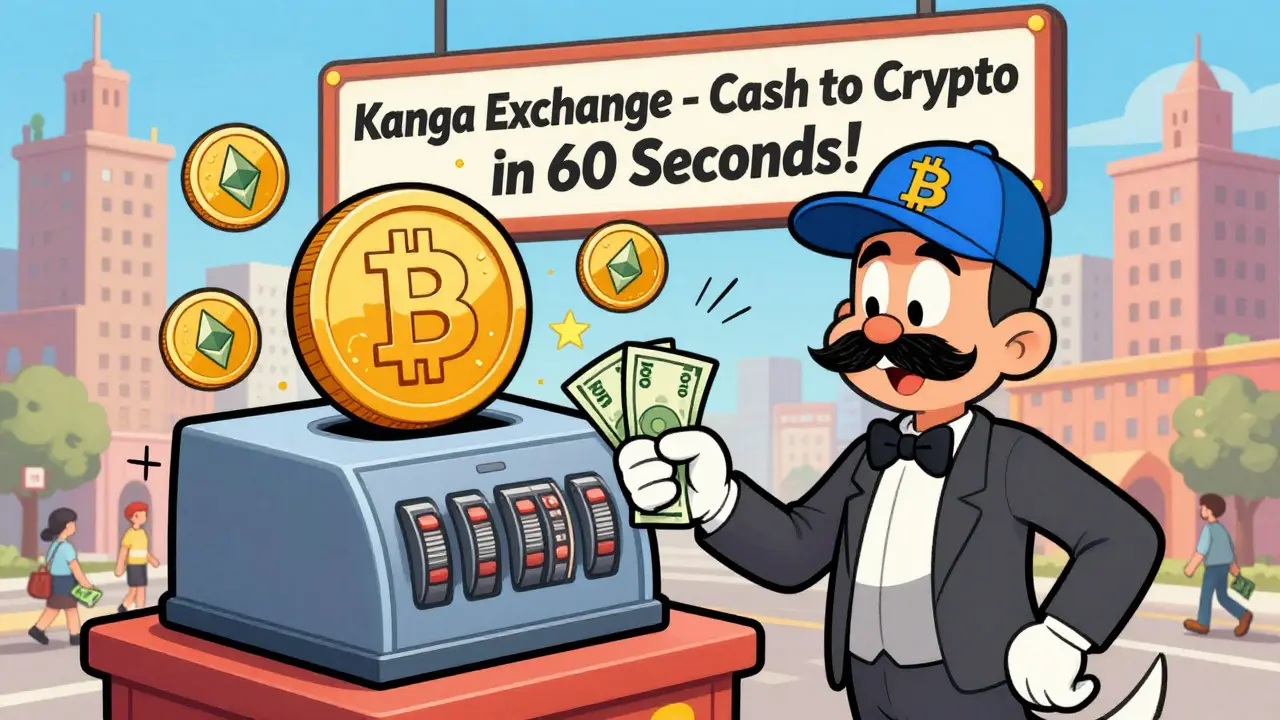
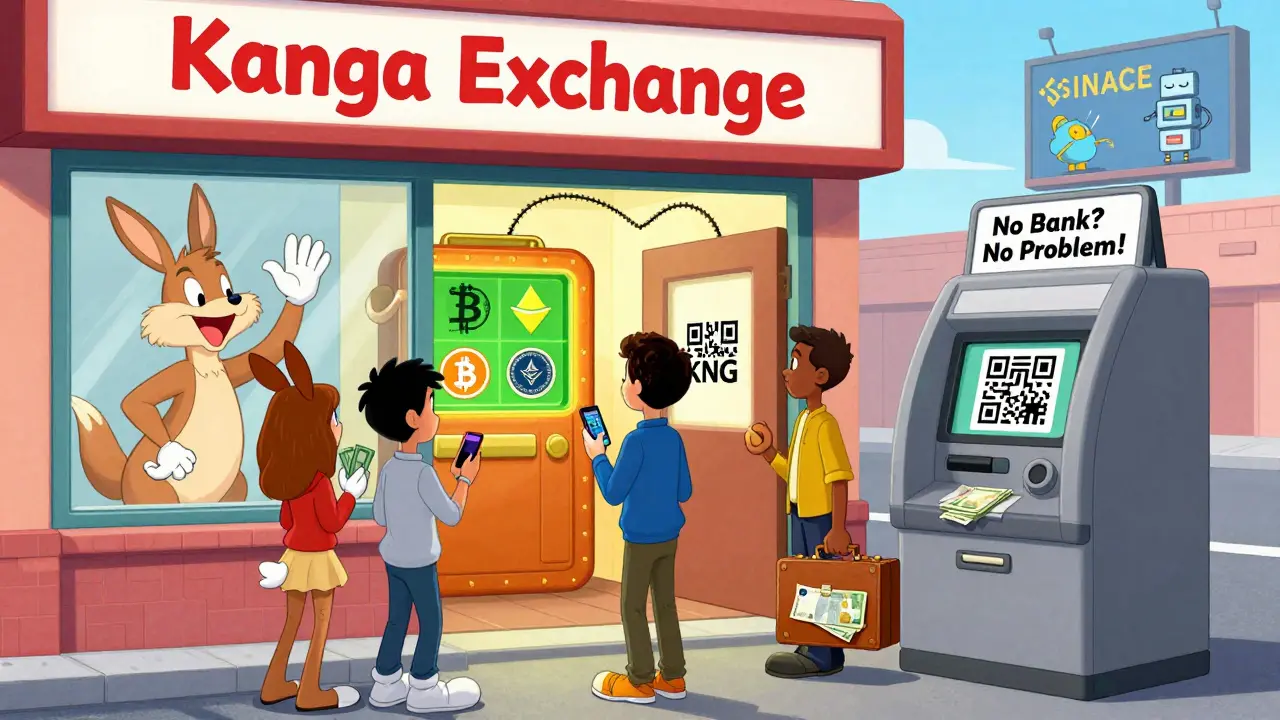
Most crypto exchanges are digital-only. You sign up, verify your ID, deposit funds, and trade. Kanga Exchange adds something most others don’t: over 250 physical exchange points across 12 countries. These aren’t ATMs. They’re real shops with staff who handle cash-to-crypto swaps in person. You walk in with 500 złoty, hand it over, and walk out with Bitcoin or Ethereum in your wallet - no bank account needed. This hybrid model is rare, and it’s exactly why Kanga has stuck around in markets where digital-only exchanges struggle with adoption. The platform supports 140+ cryptocurrencies and 200+ trading pairs. That’s less than half of what Binance offers, but enough for most retail users. Spot trading is straightforward, with a flat fee of 0.2% per trade. Futures trading is available too, with up to 100x leverage - matching top-tier platforms. But here’s the catch: liquidity is thin. If you try to trade large amounts, you’ll notice slippage. Orders don’t fill as fast, and price gaps are wider than on major exchanges.Security and Regulation
Kanga Exchange is licensed by the Republic of Seychelles and operates under the supervision of Poland’s Financial Supervision Authority (KNF). That’s a big deal. Many crypto platforms claim to be “regulated,” but few are supervised by a respected EU financial watchdog. This gives Kanga an edge in Europe, especially in countries where crypto regulations are still evolving. Security features include two-factor authentication (2FA), cold storage for most assets, and multi-chain wallet support. You can store Bitcoin, Ethereum, Solana, and dozens of other coins in the same wallet. No need to juggle multiple apps. The mobile app, available on iOS and Android, is clean and simple - perfect for beginners. But don’t expect advanced charting tools or custom indicators. This isn’t a platform for day traders.Trading Features and Fees
Kanga’s trading interface is minimal. No copy trading. No NFT marketplace. No staking rewards beyond the native KNG token. If you’re used to Binance’s ecosystem, you’ll feel limited. But for casual users, it’s enough. You can place market and limit orders, use OTC services for large trades, and stake KNG tokens to earn passive income. The minimum deposit is just PLN 100 (around $25), making it one of the lowest entry points in Europe. Fees are simple: 0.2% for spot trades. Deposit fees? None for crypto. Withdrawal fees vary by coin - Bitcoin withdrawals cost around $1, while smaller altcoins can cost more. Fiat deposits via bank transfer are free, but credit card deposits carry a 3.5% fee. That’s standard, but not ideal. The real value? OTC trading. If you need to buy $10,000 in crypto, Kanga’s physical locations let you do it in person with cash. No paperwork delays. No KYC headaches. That’s something even Coinbase doesn’t offer.
Mobile App Experience
The Kanga mobile app gets high marks for simplicity. Users call it “the first simple crypto app” on the App Store. It loads fast, has a clean layout, and doesn’t overwhelm you with charts and buttons. But it has serious flaws. One recurring complaint: you can’t edit or cancel limit orders once they’re placed. If you set a sell order at $60,000 for Bitcoin and the price spikes to $65,000, you’re stuck. You can’t adjust it. You can’t cancel it. You have to wait for it to fill or manually close the position through the web platform. That’s a dealbreaker for anyone trading actively. Customer support is another weak spot. Responses can take 24-72 hours. Phone support is available for Polish and UK users, but wait times are long. There’s no live chat. No 24/7 help desk. If you’re in a hurry, you’re on your own.Trust and Reputation
Trustpilot gives Kanga Exchange a 2.8 out of 5 stars. That’s low. Compare that to Binance’s 4.3 or Kraken’s 4.6. Most negative reviews cite slow support, app bugs, and confusion over fees. Reddit users in European crypto groups often say, “It’s fine if you just want to buy crypto with cash,” but “don’t use it if you’re serious about trading.” On the positive side, the founders are public figures. Slawomir Zawadzki is listed on the website, and the company has real offices in Warsaw. That transparency builds trust - especially in markets where anonymous crypto firms have been scams. The BeCryptoVIP club, an NFT-based membership program, offers discounts at physical locations and priority support. It’s a smart move to retain loyal users, but it’s not enough to fix the core issues.Who Is Kanga Exchange For?
Kanga Exchange isn’t for everyone. It’s not built to compete with global giants. It’s built for a specific group:- People in Poland, Czechia, Lithuania, or Latvia who want to buy crypto with cash
- Those without bank accounts or who distrust online-only platforms
- Beginners who want a simple interface and don’t need advanced tools
- Small businesses or individuals needing OTC crypto purchases without delays
What’s Missing?
Kanga lacks features that are now standard:- No copy trading
- No NFT marketplace
- No staking for most coins (only KNG token)
- No API access for automated trading
- No educational content beyond basic guides
Getting Started
Signing up takes less than 5 minutes. You need:- An email address
- A phone number
- A government ID (passport or national ID card)
Final Verdict
Kanga Exchange is not a top-tier crypto exchange. It doesn’t have the liquidity, the coin selection, or the trading tools to compete with Binance or Kraken. But it doesn’t need to. Its strength is localization. In Poland, where 68% of crypto users still prefer cash transactions (2024 EBA report), Kanga fills a real gap. It’s the only exchange that lets you buy Bitcoin in a store, pay with cash, and walk out with your wallet funded - all under EU regulatory oversight. If you’re a casual user in Central or Eastern Europe, Kanga is a solid, safe option. If you’re an active trader, investor, or someone who needs advanced features, look elsewhere. Kanga isn’t trying to be everything. It’s trying to be the best option for people who need crypto without the digital friction.Is Kanga Exchange safe to use?
Yes, Kanga Exchange is one of the safer options in its niche. It’s licensed by the Seychelles and supervised by Poland’s Financial Supervision Authority (KNF), which is rare for crypto platforms. It uses two-factor authentication, cold storage, and multi-chain wallets. However, its Trustpilot rating is low (2.8/5), and users report slow customer service and app bugs. It’s safe for basic use, but not ideal for large or frequent trades.
Can I buy crypto with cash on Kanga Exchange?
Yes. Kanga operates over 250 physical exchange points across 12 countries, mainly in Poland, Czechia, and the Baltics. You can walk in with cash (PLN, EUR, CZK) and exchange it for Bitcoin, Ethereum, or other cryptocurrencies. The transaction is instant, and you don’t need a bank account. This is Kanga’s biggest advantage over purely digital exchanges.
Does Kanga Exchange have a mobile app?
Yes, Kanga has mobile apps for iOS and Android. The interface is simple and beginner-friendly, with easy navigation and quick access to your wallet. However, the app has major limitations: you can’t edit or cancel limit orders, and advanced trading features like futures are not available on mobile. Use the web platform for full functionality.
What are the trading fees on Kanga Exchange?
Kanga charges a flat 0.2% fee for spot trades. There are no deposit fees for cryptocurrency transfers. Withdrawal fees vary by coin - Bitcoin withdrawals cost about $1, while smaller altcoins may cost more. Fiat deposits via bank transfer are free, but credit card deposits carry a 3.5% fee. Futures trading also uses the same 0.2% fee structure.
Is Kanga Exchange good for beginners?
Yes, for users in Central and Eastern Europe. The interface is simple, the minimum deposit is low (PLN 100), and the physical exchange points make buying crypto easy without needing a bank account. However, the lack of advanced features, limited customer support, and inability to edit orders on mobile make it less ideal for anyone planning to trade actively or learn advanced strategies.
Can I stake crypto on Kanga Exchange?
You can only stake the platform’s native token, KNG. Kanga doesn’t offer staking for Bitcoin, Ethereum, or other major coins. If you want to earn interest on your crypto holdings, you’ll need to use another platform. Staking KNG gives you discounts on trading fees and access to the BeCryptoVIP club.
How does Kanga compare to Bitpanda or Coinbase?
Bitpanda and Coinbase are better for users in Western Europe who want a wide selection of coins, advanced trading tools, and strong customer support. Kanga wins only in one area: physical cash-to-crypto exchanges. If you need to buy crypto with cash in Poland, Kanga is the only practical option. Otherwise, Bitpanda and Coinbase offer more features, higher liquidity, and better mobile apps.