
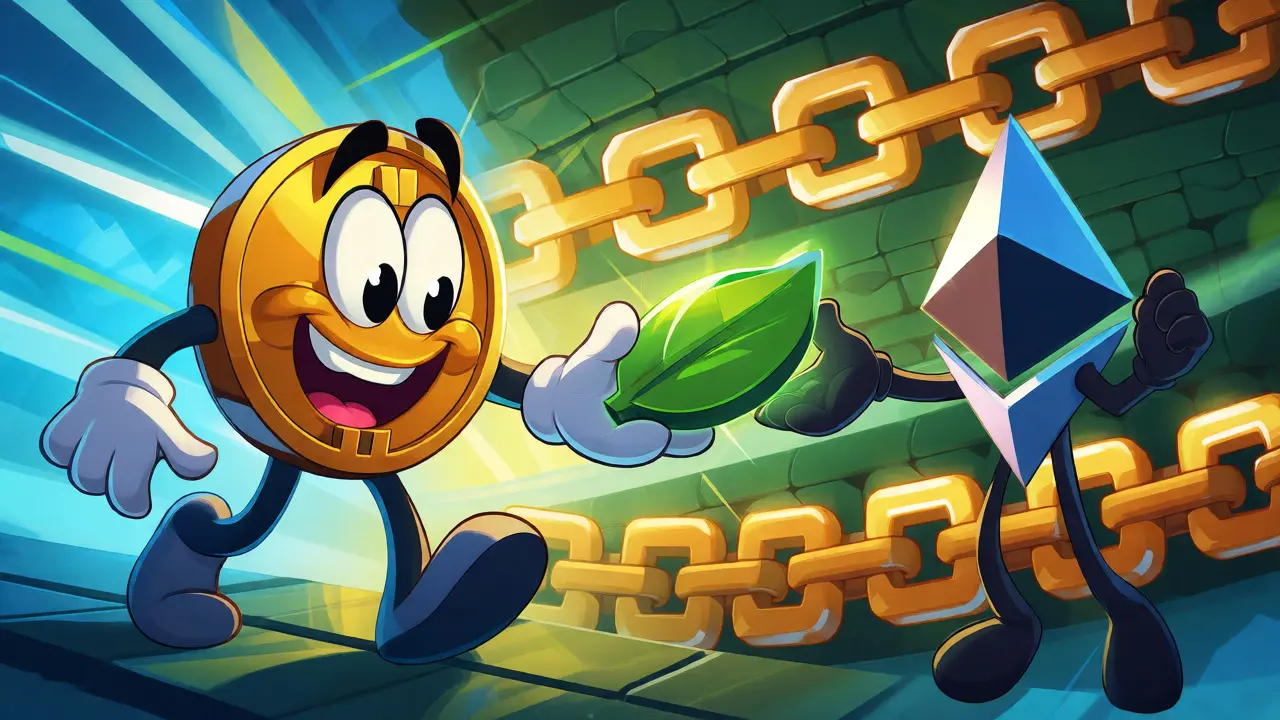
Imagine buying a ton of CO2 offset with the same ease as swapping Bitcoin for Ethereum. No brokers, no paperwork delays, just instant settlement on a blockchain. That is the promise of the carbon crypto exchange. As we move through 2026, these platforms are no longer experimental toys; they are becoming critical infrastructure for global climate finance.
But which ones actually work? Which ones have liquidity, and which ones are just hype? If you are looking to invest in environmental assets or hedge against regulatory changes, you need to understand the difference between decentralized protocols like Toucan Protocol and hybrid exchanges like AirCarbon Exchange (ACX). This review breaks down the top players, their tech stacks, and what you should watch out for before putting money into tokenized carbon.
Why Tokenize Carbon Credits?
The traditional voluntary carbon market has long suffered from opacity. It is hard to verify if a credit represents real emission reductions, and trading often involves slow, manual processes. Blockchain technology solves two major problems here: transparency and accessibility.
When you tokenize a carbon credit, you create a digital representation of one tonne of CO2 equivalent (tCO2e) on a ledger. This token, such as TCO2 from Toucan, carries an immutable record of its origin. You can see exactly which project funded it-whether it was reforestation in Kenya or renewable energy in India. This reduces the risk of double-counting, where the same credit is sold twice.
Moreover, tokenization brings liquidity. In traditional markets, selling a large block of credits might take weeks. On a crypto exchange, you can trade fractional amounts instantly. This democratizes access, allowing smaller investors and even DeFi protocols to participate in climate action without needing institutional capital.
Toucan Protocol: The DeFi Native
Toucan Protocol is a decentralized protocol that bridges traditional carbon credits to the Polygon blockchain, creating programmable carbon assets. Founded in Berlin in 2020, Toucan isn't just an exchange; it's infrastructure. Its core product, the Open Climate Registry, allows users to deposit verified carbon credits from registries like Verra and Gold Standard. Once deposited, these credits are minted as TCO2 tokens.
The genius of Toucan lies in its composability. Because TCO2 tokens exist on a public blockchain, they can interact with other DeFi applications. You can use them as collateral for loans, supply them to liquidity pools to earn fees, or burn them via smart contracts to automatically offset emissions from your transactions. For developers and DeFi power users, this flexibility is unmatched.
However, this comes with complexity. Interacting with Toucan requires a Web3 wallet like MetaMask. You need to understand gas fees, slippage, and smart contract risks. It is not a platform for someone who wants a simple "buy and hold" experience with a user-friendly dashboard. It is for those who want to build or utilize complex financial instruments around carbon.
AirCarbon Exchange (ACX): Institutional Grade Trading
If Toucan feels too technical, AirCarbon Exchange (ACX) offers a different approach. Based in Singapore and launched in 2019, ACX blends traditional commodities trading infrastructure with distributed ledger technology. Think of it as a stock exchange for carbon, but with blockchain under the hood for settlement.
ACX focuses on securitized carbon credits. Instead of individual project tokens, traders often deal in asset classes or standardized bundles. This appeals to institutional investors who prefer familiar trading interfaces. The platform emphasizes low fees and efficient settlement, mitigating the counterparty risk common in over-the-counter deals. Every token on ACX is backed by a verified tCO2e credit held in trust, providing a clear audit trail.
For professionals managing corporate ESG portfolios, ACX provides the compliance tools and reporting features needed to satisfy auditors. It doesn't try to be a DeFi playground; it aims to be the Nasdaq of carbon. This makes it more accessible to traditional finance players who are wary of navigating the wild west of decentralized protocols.
| Feature | Toucan Protocol | AirCarbon Exchange (ACX) |
|---|---|---|
| Primary Audience | DeFi users, Developers, Crypto-native investors | Institutions, Corporate buyers, Traditional traders |
| Technology Base | Polygon Blockchain (Layer 2) | Hybrid DLT + Traditional Matching Engine |
| Asset Type | Individual Project Tokens (TCO2) | Securitized Bundles / Asset Classes |
| User Experience | Wallet-connected, High technical barrier | Custodial options available, Familiar UI |
| Key Advantage | Composability with DeFi protocols | Regulatory compliance and institutional trust |
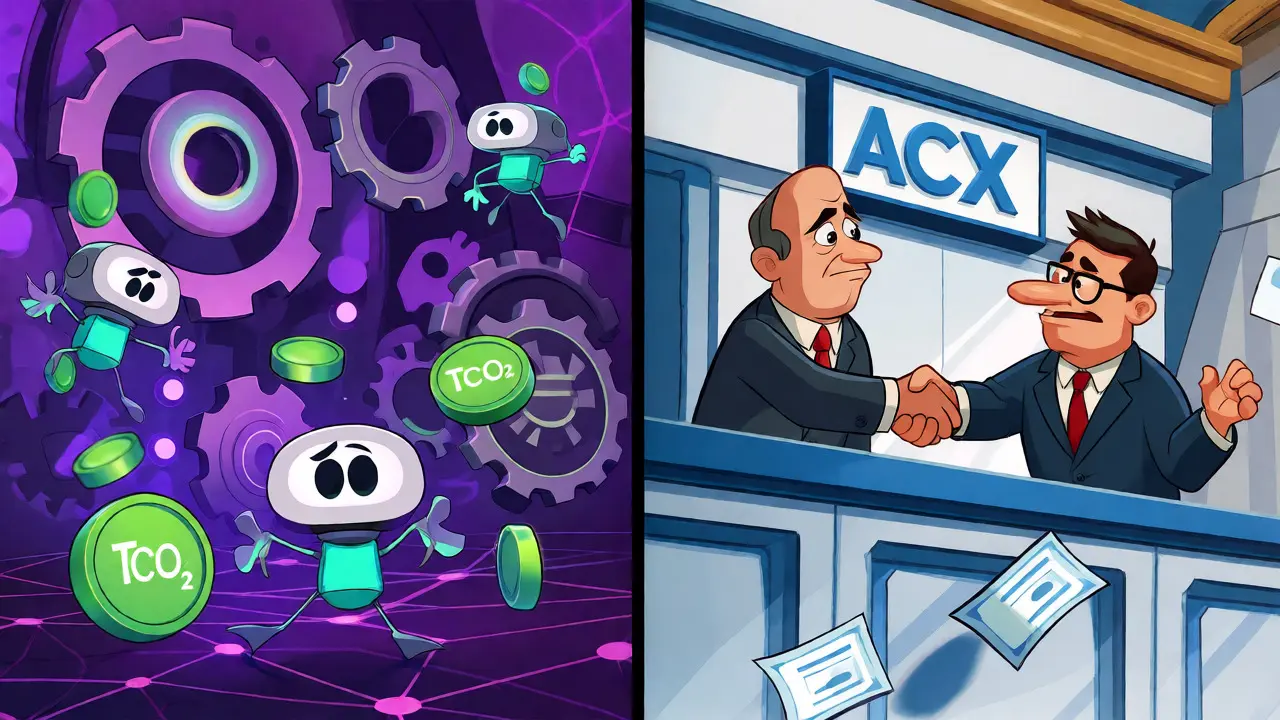
Other Notable Players: CTX and Xpansiv
The market isn't limited to just two giants. Carbon Trade Exchange (CTX) and Xpansiv also hold significant ground. CTX focuses on connecting buyers and sellers directly, often leveraging existing relationships in the physical carbon market. Their strength lies in deep industry connections rather than pure tech innovation.
Xpansiv, on the other hand, operates as a data-driven marketplace. They don't just trade credits; they provide granular data on every transaction. This transparency helps price discovery, ensuring that high-quality credits command a premium. For sophisticated investors who care about the specific vintage and methodology of a credit, Xpansiv’s data-rich environment is invaluable.
Risks and Challenges in Carbon Tokenization
Don't let the green branding fool you. Investing in carbon crypto exchanges carries unique risks. First, there is the issue of quality. A token is only as good as the underlying credit. If the original project failed to deliver promised emission reductions, the token becomes worthless. While registries like Verra conduct audits, scandals regarding "phantom credits" have shaken confidence in the past.
Second, regulatory uncertainty looms large. Governments worldwide are still figuring out how to treat tokenized commodities. Are they securities? Commodities? Utilities? Changes in classification could impact tax treatment and trading legality. Always consult a local financial advisor before making large allocations.
Finally, consider liquidity fragmentation. Unlike Bitcoin, which trades on dozens of exchanges with deep order books, carbon tokens can be illiquid. You might buy a specific vintage of TCO2 easily, but selling it quickly during a market downturn could be difficult. Check the daily volume on any platform before entering a position.

How to Get Started
Ready to dip your toes in? Here is a practical checklist:
- Define Your Goal: Are you offsetting personal emissions, speculating on price appreciation, or building a DeFi strategy? Toucan suits the latter; ACX suits the former two.
- Choose a Wallet: For Toucan, set up MetaMask and add the Polygon network. For ACX, check if they offer custodial accounts or require self-custody.
- Fund Your Account: Buy stablecoins (USDC/USDT) on a major exchange like Coinbase or Binance, then bridge them to the relevant network.
- Due Diligence: Look at the registry source of the credits. Prefer projects with third-party verification from standards like Verra or Gold Standard.
- Start Small: Test the withdrawal process with a small amount before committing significant capital.
The Future Outlook for 2026 and Beyond
We are seeing a convergence of climate policy and blockchain maturity. With stricter ESG reporting requirements hitting corporations in 2026, demand for verifiable, transparent carbon offsets is skyrocketing. Tokenized credits meet this need perfectly. Analysts predict exponential growth as more institutions integrate carbon trading into their treasury operations.
Expect to see more integration between carbon tokens and other DeFi primitives. Imagine lending protocols where your collateral is a basket of verified carbon credits, earning yield while you wait for prices to rise. Or automated insurance products that pay out if a forest fire destroys the underlying asset of your carbon tokens. The possibilities are expanding rapidly.
Are carbon crypto tokens regulated?
Regulation varies by jurisdiction. Generally, they fall under commodity or securities laws depending on local definitions. Platforms like ACX prioritize compliance with established financial regulations, while decentralized protocols like Toucan operate in a more flexible, though sometimes ambiguous, legal space.
Can I redeem a carbon token for physical credits?
Yes, typically by burning the token. When you burn a TCO2 token on Toucan, the corresponding credit is retired in the Open Climate Registry, meaning it cannot be traded again and counts as an offset for your account.
What are the main risks of investing in carbon crypto?
The primary risks include poor quality of underlying credits (greenwashing), regulatory changes, smart contract vulnerabilities, and low liquidity compared to major cryptocurrencies. Always verify the source of the credits.
Is Toucan Protocol safe?
Toucan uses audited smart contracts on the Polygon network. However, all DeFi protocols carry inherent risks. Users should ensure they are interacting with the official website and verify contract addresses to avoid phishing scams.
Do I need a lot of money to start trading carbon tokens?
No. One of the benefits of tokenization is divisibility. You can buy fractions of a carbon credit token, making it accessible for retail investors with smaller budgets compared to traditional bulk carbon purchases.


Categories