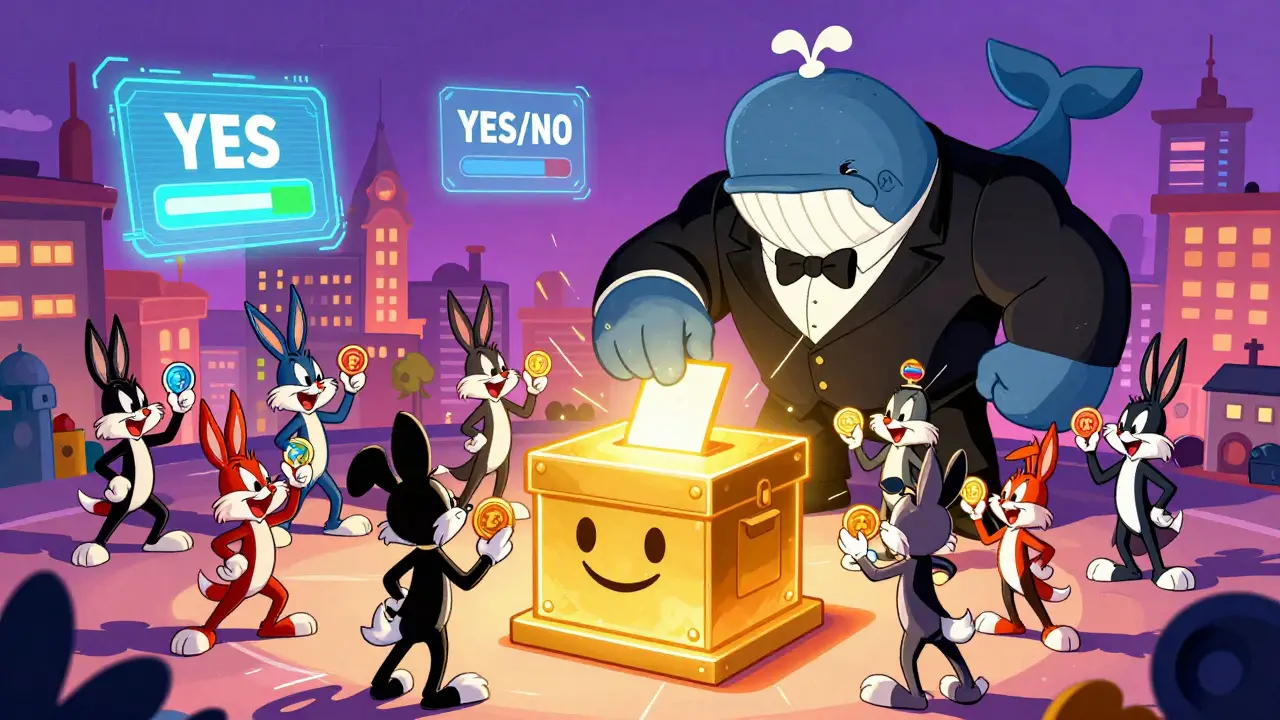
Imagine owning a small piece of a massive financial protocol. You don't just hold an asset; you hold a vote. This is the core promise of Governance Tokens, which are cryptographic assets that confer voting rights within Decentralized Autonomous Organizations (DAOs). Since MakerDAO introduced this concept in December 2017 with its MKR token, these digital keys have become the engine room for thousands of decentralized projects. As of late 2023, over 10,000 active DAOs manage roughly $22.8 billion in treasury assets, all steered by token holders.
But how does it actually work? It’s not as simple as clicking "yes" or "no." The mechanics involve smart contracts, quorum requirements, and complex voting strategies designed to prevent chaos-or worse, malicious takeovers. If you are holding UNI, AAVE, or COMP, understanding these mechanisms is crucial. Your vote might be worth more than you think, or it might be diluted by whales. Let’s break down exactly how governance tokens enable decision-making in the decentralized world.
The Core Mechanism: From Token to Vote
At its simplest, a governance token acts as a ballot. When you hold a token, you possess a specific amount of voting power. The most common model is "one token, one vote." If you hold 10,000 UNI tokens in the Uniswap DAO, you have 10,000 voting units. Someone with 100 tokens has only 1% of your influence. This direct correlation between economic stake and political power was outlined in MakerDAO’s 2017 whitepaper and remains the standard for 68% of DAOs today.
However, raw numbers aren’t enough. For a proposal to pass, it must meet a quorum requirement. This is the minimum number of votes needed to make the result valid. Compound DAO, for example, requires 400,000 COMP tokens (about 4% of supply) to trigger execution. Without meeting this threshold, even a unanimous "yes" vote goes nowhere. Voting periods typically last between 3 to 7 days, giving members time to research proposals before committing their stake.
Once the voting period ends and the quorum is met, the magic happens via Smart Contracts, which are self-executing contracts with the terms of the agreement directly written into code. Ethereum-based DAOs often use Governor Alpha, Beta, or Bravo contracts developed by Compound. These scripts automatically implement approved changes-like adjusting interest rates or allocating treasury funds-without human intervention. This automation ensures transparency and eliminates the need for trusted intermediaries.
Voting Models: Beyond One Token, One Vote
While "one token, one vote" is simple, it creates a plutocracy where the richest holders dictate outcomes. To counter this, many DAOs experiment with alternative mechanisms. Here is how they compare:
| Mechanism | Adoption Rate | Pros | Cons |
|---|---|---|---|
| Token-Based (1:1) | 68% | Simple, easy to understand | Whale dominance, plutocratic |
| Quadratic Voting | 12% | Reduces whale power, reflects intensity | Complex cost function, harder to calculate |
| Reputation-Based | 9% | Rewards contribution, not just wealth | Hard to quantify fairly, reputation farming risks |
| Delegated Voting | 45% | Allows specialization, reduces voter fatigue | Relies on delegate integrity |
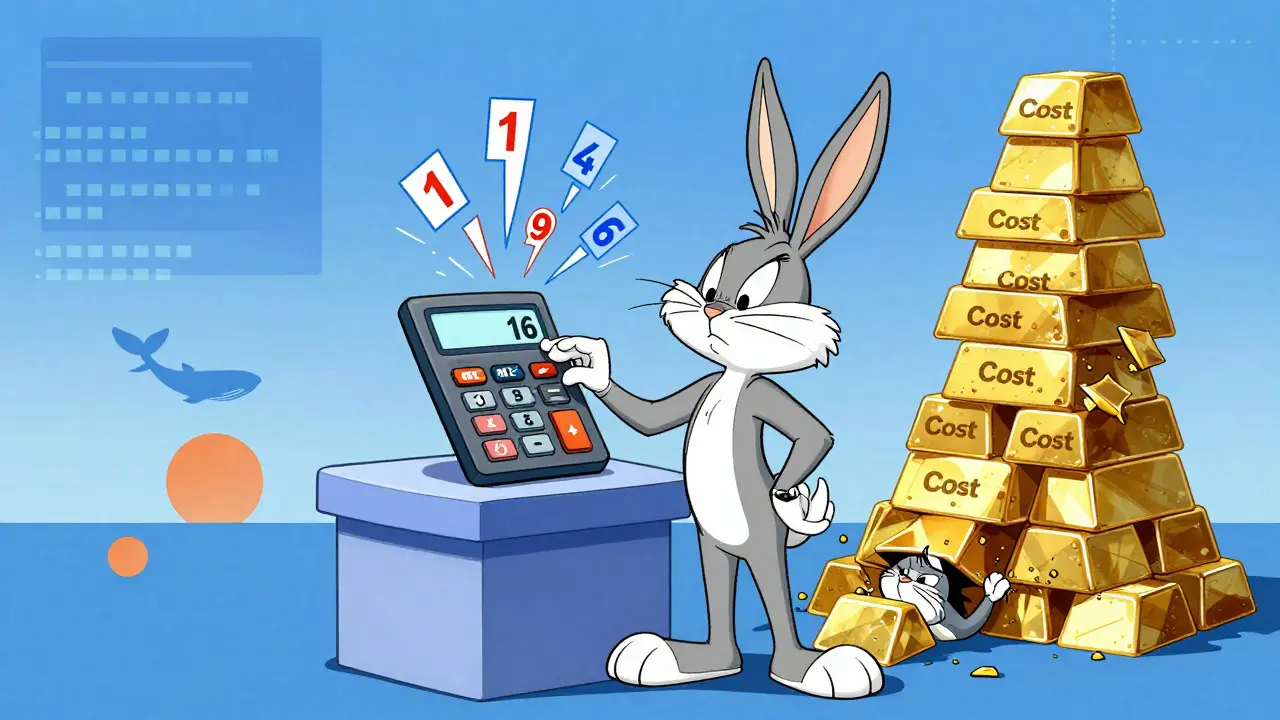
Quadratic Voting is a system where the cost of casting votes increases quadratically, making it expensive for any single entity to dominate. Proposed by Glen Weyl in his book *Radical Markets*, this model means 1 vote costs 1 token, but 2 votes cost 4 tokens, and 3 votes cost 9. Gitcoin Grants uses this approach and reported a 73% reduction in whale dominance after implementation. It forces large holders to pay a premium for extra influence, leveling the playing field for smaller participants.
Another popular method is delegated voting. Instead of voting on every proposal, you assign your voting power to a trusted representative. In Uniswap, 58.3% of voting power is delegated to just 1,200 delegates. This solves the problem of "voter fatigue," where users ignore governance because there are too many proposals. However, it shifts trust from the code to people, introducing new risks if delegates act against community interests.
Real-World Challenges: Whales, Fatigue, and Attacks
The theory looks clean, but practice is messy. The biggest issue is centralization. Chainalysis reported in June 2023 that the top 10 UNI holders controlled 24.7% of voting power. This concentration allows "whales" to override the will of the majority. A stark example occurred during the Aave Improvement Proposal 75 controversy in 2022. While 67.3% of small holders opposed the proposal, it passed with 62.8% approval because large holders backed it. This disconnect between community sentiment and outcome fuels criticism that governance tokens are merely marketing tools rather than genuine democratic instruments.
Security is another major concern. Governance attacks increased by 217% in 2023, costing projects $127 million according to Immunefi. Attackers can borrow tokens to temporarily gain voting power, manipulate proposals, and then return the loans. The Cream Finance hack in 2021 is a classic case where an attacker borrowed tokens to seize control of the protocol. Vitalik Buterin has warned that pure token-based voting creates "plutocratic governance" vulnerabilities unless mitigated by measures like time-locked voting or delegation restrictions.
User experience also plays a role. Many voters suffer from "voter fatigue." One Reddit user noted receiving 27 governance notifications in a single week across different platforms. Researching each proposal takes time-often 15-20 hours weekly for active participants. Consequently, average voter turnout across 500 DAOs is a mere 3.2%. Most holders never vote on complex treasury allocations because the learning curve is too steep. This low participation makes it easier for coordinated groups to sway decisions.

Implementation and Costs for New DAOs
If you are looking to launch a DAO, setting up governance is neither cheap nor instant. According to Consensys’ 2023 DAO Implementation Guide, the average setup takes 4-6 weeks. Costs range from $15,000 to $50,000 for smart contract development and security audits. You cannot skip the audit phase; OpenZeppelin’s GitHub issues show 147 reported problems related to quorum calculation errors between 2020 and 2023 alone. A bug in your voting logic can lead to irreversible fund loss.
To simplify this, many teams use no-code or low-code platforms. Tally offers a basic tier for $499/month, while DAOHaus provides a free open-source version alongside an enterprise plan at $999/month. These tools handle the frontend interface and connect to Ethereum-compatible chains. However, they require technical knowledge to configure correctly. Documentation quality varies wildly; Compound’s docs rate 4.5/5 stars, while OlympusDAO’s scored only 2.8/5. Poor documentation leads to confusion and lower engagement.
Regulatory uncertainty adds another layer of complexity. The SEC’s 2023 enforcement action against Uniswap Labs highlighted the risk of governance tokens being classified as securities. If regulators decide that voting rights imply an expectation of profit derived from others' efforts, traditional governance models could face legal hurdles. This is why some DAOs are exploring hybrid models that separate economic value from voting power.
Future Trends: Hybrid Models and Reputation
The industry is moving away from pure token-weighted voting. By 2025, 61% of DAOs plan to incorporate reputation elements, according to Bankless’ 2023 Governance Trends report. Reputation systems reward contribution history rather than just wallet balance. Projects like Colony use this approach, though quantifying "contribution" fairly remains a challenge due to reputation farming risks.
Vitalik Buterin has proposed "conviction voting," where voting power accumulates over time if you consistently support a cause. This discourages short-term manipulation and rewards long-term commitment. Smaller DAOs like 1Hive have already tested similar concepts. Another trend is modular governance, allowing DAOs to mix mechanisms. For instance, using quadratic voting for public goods funding and delegated voting for protocol upgrades.
Despite these innovations, skepticism persists. Naval Ravikant criticized governance tokens as "valueless" without revenue-sharing rights, pointing to the 68% average price decline from their 2021 peaks. Harvard Business Review warned in October 2023 that without addressing plutocracy, governance tokens risk becoming hollow symbols. The path forward likely involves combining economic stakes with social reputation and time-based locks to create more resilient, fair, and secure decentralized decision-making systems.
What is the difference between a governance token and a utility token?
A utility token grants access to a service or product, such as paying for transaction fees. A governance token specifically confers voting rights within a DAO, allowing holders to influence protocol decisions, treasury allocation, and upgrades. While some tokens serve both purposes, their primary functions differ significantly.
How do I start voting in a DAO?
First, acquire the relevant governance token (e.g., UNI, AAVE) and store it in a compatible wallet like MetaMask. Next, visit the DAO’s governance portal (often built on Snapshot or Tally). Connect your wallet, review active proposals, and cast your vote. Some platforms allow off-chain voting to save gas fees, while others require on-chain transactions for final execution.
Can someone buy my voting power?
Technically, yes. Vote buying is a known issue, detected in 12% of DAOs in 2023. Attackers may offer incentives to transfer tokens or delegate voting power temporarily. To mitigate this, many DAOs implement lock-up periods or reputation checks. Always verify the source of delegated votes and be cautious of unsolicited offers.
Why is voter turnout so low in DAOs?
Low turnout stems from voter fatigue, high complexity, and lack of immediate incentives. With an average of 3.2% participation, many holders feel their individual vote doesn't matter or find the research process too time-consuming. Delegated voting and simplified interfaces aim to address this by reducing the burden on individual participants.
Is quadratic voting better than one-token-one-vote?
It depends on your goals. Quadratic voting reduces whale dominance and better reflects community intensity, making it fairer for diverse groups. However, it is mathematically complex and harder for average users to understand. One-token-one-vote is simpler but prone to centralization. Hybrid approaches often offer the best balance.