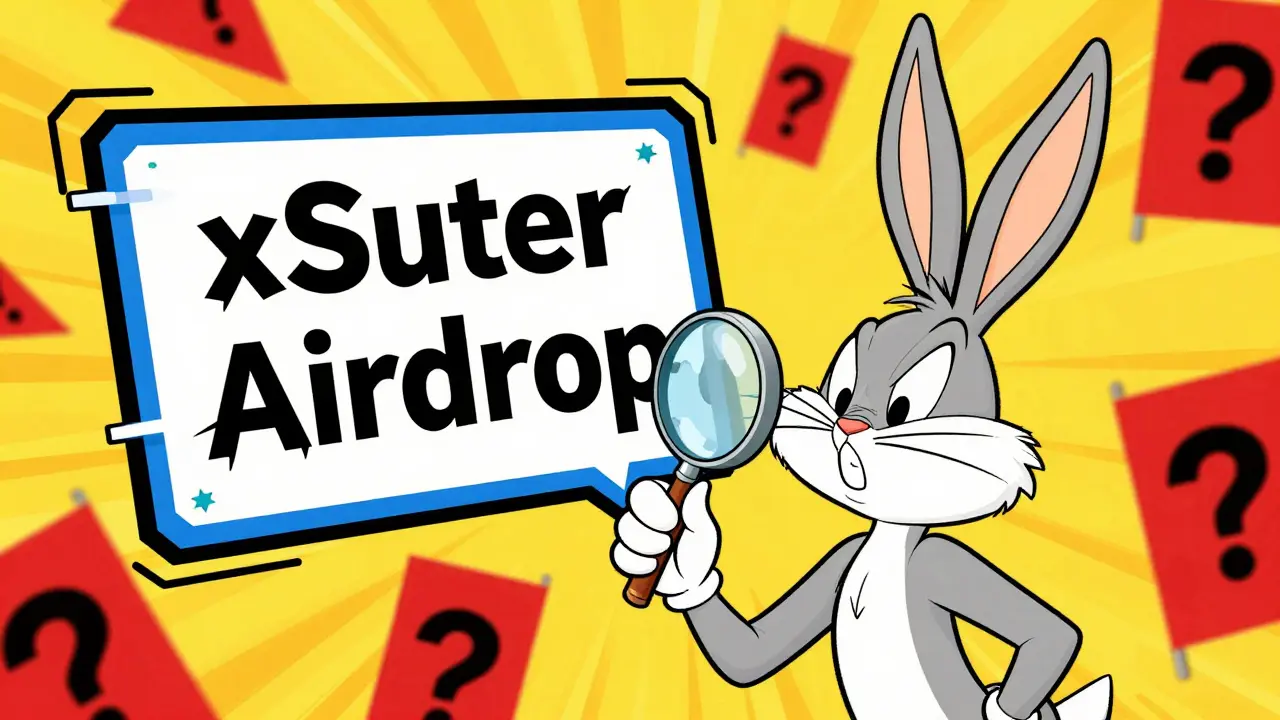
You’ve probably seen the buzz about the xSuter airdrop popping up on social media. Maybe you’re wondering if it’s real, how to claim tokens, or whether you missed out on a chance to make some easy money. The short answer? There is no verified information about an official xSuter airdrop as of mid-2026. In fact, the lack of credible data is itself a major red flag.
In the world of cryptocurrency, especially within the Solana ecosystem, legitimate projects like Jupiter announce their distributions with clear documentation, verified team identities, and transparent tokenomics. When a project name sounds similar to a well-known brand but offers zero verifiable details, it’s often a tactic used by scammers to catch people off guard. This article breaks down why the xSuter airdrop is likely a trap, compares it to real successful campaigns, and gives you a checklist to protect your wallet from phishing attempts.
The Silence Around xSuter Is Loud
If you search for "xSuter airdrop" today, June 19, 2026, you won’t find announcements from reputable news outlets like CoinDesk or The Block. You won’t see posts from the project’s official Twitter account because there isn’t one. There are no whitepapers, no GitHub repositories, and no audit reports from firms like CertiK or Trail of Bits.
This absence of information is critical. Legitimate decentralized finance (DeFi) projects operate in the open. They know that trust is built through transparency. For example, when Jupiter launched its massive token distribution in 2023, they published detailed eligibility criteria, announced the snapshot date, and integrated directly with wallets like Phantom and Solflare. Users could verify their eligibility through official channels before connecting anything.
Contrast this with xSuter. If someone sent you a link claiming you’re eligible for an xSuter drop, where did it come from? Was it a direct message on Telegram? An unsolicited email? A pop-up ad while browsing a meme coin site? These are the primary vectors for scams. Without an official source, any website claiming to be the "xSuter Claim Portal" is almost certainly fraudulent.
How Scammers Use Name Similarity
One of the oldest tricks in the crypto book is mimicking established brands. By adding an "x" prefix or suffix, scammers create names that sound familiar enough to lower your guard but distinct enough to avoid immediate trademark lawsuits until it’s too late. This is known as typosquatting or brand impersonation.
Consider the Solana ecosystem. It’s vibrant, fast, and popular. Projects like Meteora a dynamic liquidity layer on Solana and Hyperliquid a high-performance perpetual exchange have gained real traction. Scammers monitor these trends. They know users are looking for the "next big thing." So, they create fake projects with names that echo success stories.
The "x" prefix has become particularly common in speculative tokens. While some legitimate projects use it, many do not. The key difference lies in verification. Does the project have a Doxxed team? Are their smart contracts audited? Is there a working product? If the answer to all three is "no," you are likely looking at a honeypot or a rug pull setup.
Comparing Real vs. Fake Airdrops
| Feature | Legitimate Project (e.g., Jupiter) | Suspicious Project (e.g., xSuter) |
|---|---|---|
| Official Announcement | Posted on verified Twitter/X, Discord, and Blog | No official channels or only unverified social media |
| Website Domain | Matches project name exactly, HTTPS secured | Misspellings, random domains (.xyz, .top), or expired SSL |
| Smart Contract Audit | Audited by top firms (CertiK, OpenZeppelin) | No audit or fake audit certificate | d>
| Eligibility Criteria | Clear rules (e.g., interacted with protocol before Date X) | Vague promises ("Just connect wallet to get free tokens") |
| Token Utility | Governance, staking, fee discounts | No utility, purely speculative or worthless |
Notice the pattern. Real projects require work or past participation. They reward loyalty and usage. Fake projects ask for nothing but your wallet connection. Why? Because once you connect your wallet to a malicious site, they can drain your assets. They don’t need to send you fake tokens; they just need your signature to approve a transaction that sends your real SOL or USDC to their address.
The Mechanics of a Wallet Draining Scam
Let’s look at what happens when you fall for a fake airdrop like the alleged xSuter campaign. You click a link, land on a sleek-looking website, and see a button that says "Claim Tokens." You connect your Phantom or Solflare wallet. Nothing seems wrong yet.
Behind the scenes, the site triggers a transaction request. It might look like a simple "Approve" action. But read the fine print. Often, it’s an unlimited approval for a specific token or a transfer of your native currency. If you sign it, the scammer’s script executes immediately. Your funds move to their wallet. Within seconds, the transaction is confirmed on the blockchain. There is no customer support, no chargeback, and no way to reverse it.
This is why education is your best defense. Never connect your main wallet to unknown sites. If you must test something, use a burner wallet-a separate wallet with minimal funds that you don’t care about losing. This isolates your risk.
Real Airdrops to Watch Instead
While xSuter appears to be a non-entity or a scam, the Solana ecosystem remains rich with genuine opportunities. However, even real airdrops require caution. Here are examples of how legitimate projects handle distributions:
- Jupiter: Distributed 1 billion JUP tokens to users who had traded on their platform. Eligibility was based on on-chain activity. Users claimed via the official Jupiter interface.
- Meteora: As a liquidity aggregator, Meteora has engaged its community through points systems and early access tiers. Always check their official Discord for updates.
- Abstract & Monad: These newer Layer 2 and EVM-compatible chains have generated hype. They typically announce testnets first. Participating in testnets is a safe way to qualify for potential future rewards without risking real capital.
The common thread here is verification. Before spending time or money on any airdrop, ask yourself: Can I find this project on CoinGecko or CoinMarketCap? Is their code public on GitHub? Do they have a track record?
Your Safety Checklist for Any Airdrop
To navigate the wild west of crypto airdrops safely, follow this step-by-step verification process. Treat every new opportunity as guilty until proven innocent.
- Verify the Source: Did you hear about it from an official channel? Check the project’s verified Twitter handle. Look for blue checks and long-standing accounts. Avoid links from DMs.
- Check the URL: Hover over the link before clicking. Does it match the official domain? Be wary of slight misspellings like "xsuter-airdrop.com" instead of a verified brand site.
- Research the Team: Are the founders public? Do they have LinkedIn profiles? Anonymous teams aren’t always bad, but combined with a vague product, it’s a risk factor.
- Look for Audits: Search for the project name plus "audit report." If you can’t find a PDF from a reputable firm, proceed with extreme caution.
- Use a Burner Wallet: Never connect your primary wallet holding significant assets to a new dApp. Create a secondary wallet for testing.
- Read the Transaction: Before signing, review the details in your wallet interface. If it asks for more permissions than expected, cancel immediately.
Why "Free" Money Is Rare in Crypto
The allure of free tokens is strong. But remember: in DeFi, value comes from utility and network effects. Projects give away tokens to bootstrap their ecosystem, attract developers, and incentivize early adopters. They don’t do it randomly. They target users who will actually use the product.
If a project claims you’re eligible for thousands of dollars in tokens just for clicking a button, think about their motive. Who pays for those tokens? Usually, no one. The tokens are worthless air, created solely to trick you into connecting your wallet. Or worse, the "claim" process involves paying a small gas fee, which goes straight to the scammer.
Focus on building genuine engagement with protocols you believe in. Use exchanges, provide liquidity, stake assets, and participate in governance. These actions naturally position you for legitimate rewards. Chasing phantom airdrops like xSuter wastes time and endangers your capital.
What To Do If You Already Connected
If you suspect you’ve connected your wallet to a suspicious xSuter site, act fast. First, disconnect the wallet from the site in your browser settings. Next, revoke any approvals you may have granted. Tools like Revoke.cash (for Ethereum-based chains) or Solana-specific revocation tools can help you scan for active allowances.
Move your remaining funds to a new, secure wallet immediately. Change your seed phrase storage location if you suspect any malware might have been installed during the interaction. Monitor your transaction history for unauthorized transfers. While you can’t recover stolen funds, quick action can prevent further losses.
Is the xSuter airdrop real?
There is no verified evidence of a legitimate xSuter airdrop. The lack of official documentation, team information, and presence on reputable crypto tracking sites suggests it is likely a scam or a non-existent project.
How can I tell if a crypto airdrop is a scam?
Red flags include unsolicited messages, misspelled URLs, anonymous teams, lack of smart contract audits, and requests to connect your wallet without clear eligibility criteria. Always verify information through official project channels.
What should I do if I clicked a suspicious airdrop link?
Immediately disconnect your wallet, revoke any token approvals using a revocation tool, and move your funds to a new, secure wallet. Monitor your account for any unauthorized transactions.
Are there any legitimate Solana airdrops happening now?
While specific ongoing airdrops change frequently, projects like Jupiter and Meteora have had legitimate distributions. Always check official project announcements and trusted news sources like CoinDesk for current opportunities.
Why do scammers use names similar to real projects?
Scammers use brand impersonation to exploit trust. By mimicking well-known projects, they hope victims won’t double-check the details. This psychological trick lowers skepticism and increases the likelihood of wallet connections.


Categories