

When it comes to cryptocurrency, where you live can mean the difference between building wealth and risking jail time. In 2026, a handful of countries have doubled down on extreme restrictions - not just regulating crypto, but trying to erase it from their economies entirely. These aren’t just inconveniences. They’re full-blown legal traps for anyone holding, trading, or even mining digital assets.
China: The Total Ban
China’s crypto ban is the most complete in the world. Since September 2021, every form of cryptocurrency activity is illegal: trading, mining, even running a crypto-related business. The government doesn’t just block websites - it shuts down entire data centers. Miners who used to power half the world’s Bitcoin network were forced to pack up and leave. Banks are forbidden from handling any crypto transactions. If you’re caught, you could face fines, asset seizures, or even criminal charges.
Why? The Chinese government doesn’t want competition. It’s rolling out its own digital currency, the digital yuan, and it won’t tolerate anything that could weaken its control over money. Even using a VPN to access an overseas exchange is risky. People still trade, quietly, through peer-to-peer apps - but every transaction carries a legal shadow.
Bangladesh: Cash Is King, Crypto Is Crime
In Bangladesh, the central bank doesn’t just discourage crypto - it declares it illegal under anti-money laundering laws. Holding Bitcoin, sending Ethereum, or using Binance? All of it breaks the law. Authorities have prosecuted people for crypto-related activities, and banks are ordered to freeze any accounts linked to digital assets.
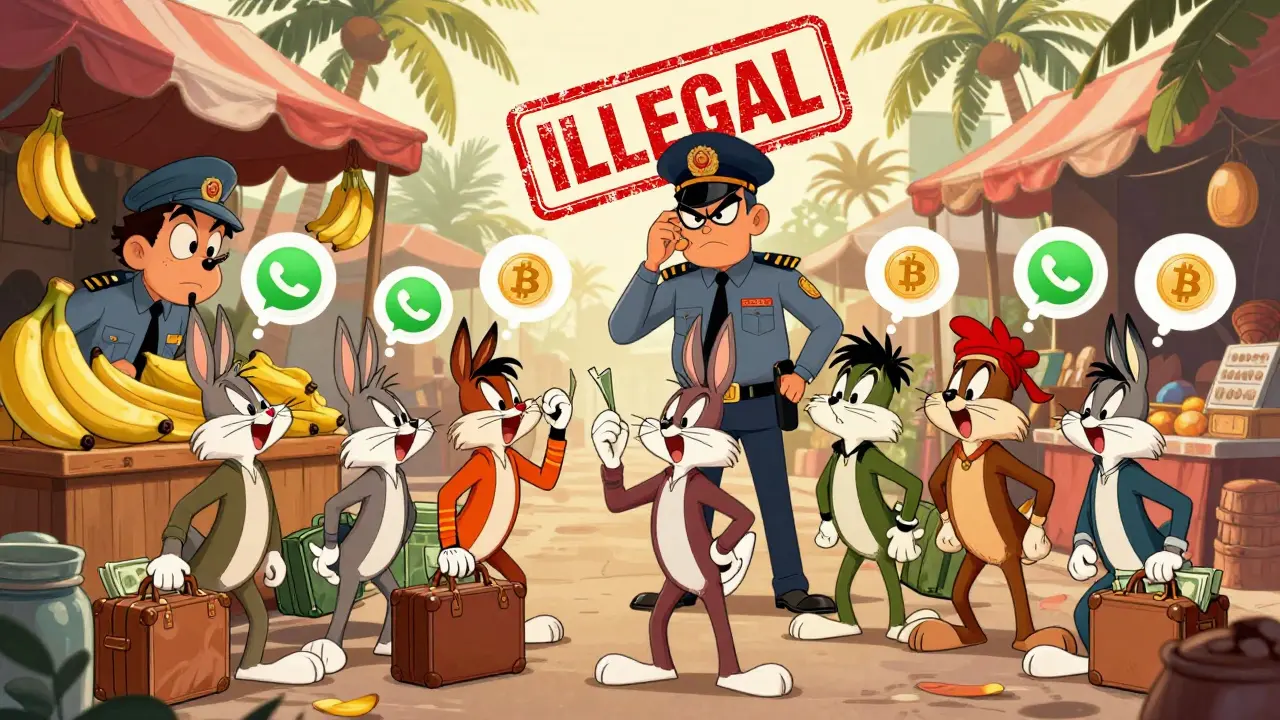
What’s surprising is how active the underground market is. Despite the ban, Bangladesh has one of the highest rates of crypto adoption in South Asia. People trade via WhatsApp groups, local cash exchanges, and mobile wallets. But there’s no safety net. If the police knock on your door, you have no legal protection. The government says it’s protecting financial stability, but many locals see it as denying access to global markets.
Algeria: No Digital Assets Allowed
Algeria’s ban is simple: no crypto, period. The government’s 2018 decree bans everything - buying, selling, holding, mining. Violators can be fined up to 5 million Algerian dinars (about $35,000 USD) or face prison. The reasoning? Fear of capital flight and loss of monetary control.
But here’s the irony: Algeria has one of the highest internet penetration rates in North Africa, and many young people see crypto as a way out of economic stagnation. Still, banks refuse to open accounts for crypto users, and local exchanges are shut down. People trade through Telegram channels and offshore platforms - but if caught, they’re on their own.
Bolivia: A Complete Shutdown
Bolivia’s Central Bank declared cryptocurrencies illegal in 2014 - one of the first countries to do so. The ban covers all transactions, even peer-to-peer. The government argues crypto is a tool for fraud and money laundering. Enforcement is patchy, but when it happens, it’s harsh.
Unlike other countries, Bolivia doesn’t have a strong crypto culture. Most people don’t even know what Bitcoin is. But for those who do, there’s no legal gray area. No banks, no exchanges, no legal recourse. If you’re caught, you’re treated like a financial criminal.
India: The Tax Trap
India didn’t ban crypto - it taxed it into submission. Since 2022, every crypto trade is hit with a 30% tax on profits. That’s higher than the top income tax rate in most countries. On top of that, there’s a 1% tax deducted at source (TDS) on every single transaction - even if you’re just swapping one coin for another.
This isn’t about stopping crypto. It’s about controlling it. The government wants to monitor every move, collect revenue, and discourage casual trading. Many Indian traders now avoid reporting gains, risking audits or penalties. Others simply stop trading. The Supreme Court lifted a banking ban in 2020, but the tax system makes crypto feel like a liability, not an asset.
Afghanistan: Crypto Under the Taliban
In August 2022, the Taliban government banned all cryptocurrency trading. The decree came with no explanation beyond “violating Islamic principles and national economic policies.” No mining, no exchanges, no peer-to-peer transfers. Violators face criminal charges.
Afghanistan’s economy is already isolated. The ban cuts off one of the few remaining ways citizens could access international money. People who used crypto to send remittances from abroad now have no legal option. Some still trade in cash, but the risk is extreme. The government has no infrastructure to enforce this - but the threat is enough to scare most away.
Nigeria: Banking Blockade
Nigeria doesn’t ban crypto ownership - but it bans banks from touching it. Since 2021, the Central Bank of Nigeria has ordered all financial institutions to cut off services to crypto users. No deposits. No withdrawals. No transfers. This doesn’t make crypto illegal - but it makes it nearly impossible to use.
Nigeria has one of the largest crypto markets in Africa. Millions use it to bypass inflation, send money home, and start businesses. But without bank access, users rely on peer-to-peer platforms, cash meetups, and informal networks. It’s risky. If you’re caught with large amounts of cash from crypto sales, you could be questioned by police. The ban hasn’t stopped adoption - it’s just made it messier.

Why Do These Countries Ban Crypto?
There’s a pattern. These governments aren’t worried about scams. They’re worried about losing control. When people can move money across borders without permission, it undermines central banks, tax collection, and capital controls. Countries with weak financial systems or authoritarian governments see crypto as a threat - not a tool.
China wants its digital yuan to dominate. Bangladesh and Algeria fear capital flight. India wants tax revenue. Afghanistan and Bolivia just want to keep everything under tight control.
But here’s the truth: bans rarely work. People still trade. They use decentralized exchanges, privacy coins, and offshore wallets. The bans don’t stop crypto - they just push it underground, where it’s harder to regulate, harder to tax, and more dangerous for users.
What Happens If You Try to Use Crypto in These Countries?
You’re not going to get arrested for buying $100 worth of Bitcoin on a peer-to-peer app. But if you start trading regularly, depositing large sums, or using crypto to pay for imports - you’re asking for trouble.
Some people use VPNs and overseas exchanges. Others trade in cash with strangers. A few even move abroad. But none of these are safe. Authorities monitor internet traffic. Banks report suspicious activity. And if you’re caught, you have no legal rights.
The risk isn’t just legal - it’s financial. If your wallet is seized, you won’t get it back. If you’re fined, you can’t appeal. There’s no consumer protection. No recourse. Just silence.
Is There Any Hope for Change?
Some countries are starting to reconsider. Egypt, Vietnam, and Indonesia are moving toward regulation instead of bans. But China, Bangladesh, Algeria, and Bolivia show no signs of backing down. Their policies are tied to political control, not technology.
For now, if you live in one of these places, crypto isn’t a financial opportunity - it’s a gamble with your freedom. The technology exists. The tools are available. But the law doesn’t care.
Is it illegal to own Bitcoin in China?
Yes. While simply holding Bitcoin isn’t explicitly criminalized, any transaction involving it - buying, selling, trading, or even receiving it as payment - is illegal. Chinese law treats crypto as property that cannot be legally transferred or used. Authorities have prosecuted individuals for using crypto to pay for goods or services, and businesses face heavy fines for accepting digital assets.
Can I mine cryptocurrency in India?
Mining crypto is not banned in India, but it’s heavily discouraged. You can technically run a mining rig, but you’ll need to pay 30% tax on any profits and 1% TDS on every transaction. There’s no official guidance on how to report mining income, making compliance difficult. Many miners operate informally to avoid scrutiny.
Why does Bangladesh ban crypto if so many people use it?
Bangladesh’s central bank fears that crypto could destabilize its financial system by enabling capital flight and bypassing foreign exchange controls. Even though millions use crypto for remittances and savings, the government sees it as a threat to its authority over money. Instead of adapting, it chose to criminalize the activity - despite the reality that enforcement is nearly impossible.
Are there any legal ways to use crypto in Algeria?
No. Algeria’s ban is absolute. There are no exceptions for personal use, remittances, or business. All financial institutions are prohibited from interacting with crypto, and any attempt to use digital assets can lead to prosecution. The government has not issued licenses or regulatory pathways - making any crypto activity legally risky.
Can the Nigerian government track crypto transactions?
The Nigerian government cannot directly track blockchain transactions - but it can track your bank accounts and internet usage. If you deposit crypto proceeds into a bank, or use a local internet connection to access exchanges, authorities can identify you. Most users avoid this by using cash or foreign bank accounts - but that increases risk of being flagged for suspicious activity.