

You’ve probably heard the term "liquidity" thrown around in crypto circles until it lost all meaning. But what happens when a project claims to be the actual plumbing that connects centralized exchanges (CeFi) with decentralized finance (DeFi)? Enter WOO Network, a deep liquidity network founded in 2019 by Kronos Research. Unlike typical tokens that just sit in your wallet hoping for price action, WOO aims to solve a specific problem: fragmented liquidity across different trading platforms.
If you are wondering whether this coin is worth your attention in 2026, or if you are confused about how it differs from Uniswap or Binance, you’re in the right place. We’ll break down exactly what WOO does, how its token works, and why it’s currently trading at a fraction of its former glory. No fluff, just the mechanics and the market reality.
The Core Mission: Bridging CeFi and DeFi
Most traders face a frustrating choice. You can use a centralized exchange like Binance for speed and low fees, but you lose custody of your funds. Or, you can use a decentralized exchange (DEX) like Uniswap for self-custody, but you often deal with high gas fees and slippage. WOO Network attempts to have it both ways. It acts as a liquidity infrastructure layer that aggregates order books from major exchanges and professional market makers.
Think of it as a universal adapter. When you trade on their platform, you aren’t just hitting one pool of money; you’re tapping into a massive aggregated liquidity pool sourced from institutional-grade providers. This structure allows them to offer tighter spreads and lower fees than most standalone DEXs. The goal isn’t just to be another exchange; it’s to be the underlying engine that powers better execution for everyone, whether they are retail traders or hedge funds.
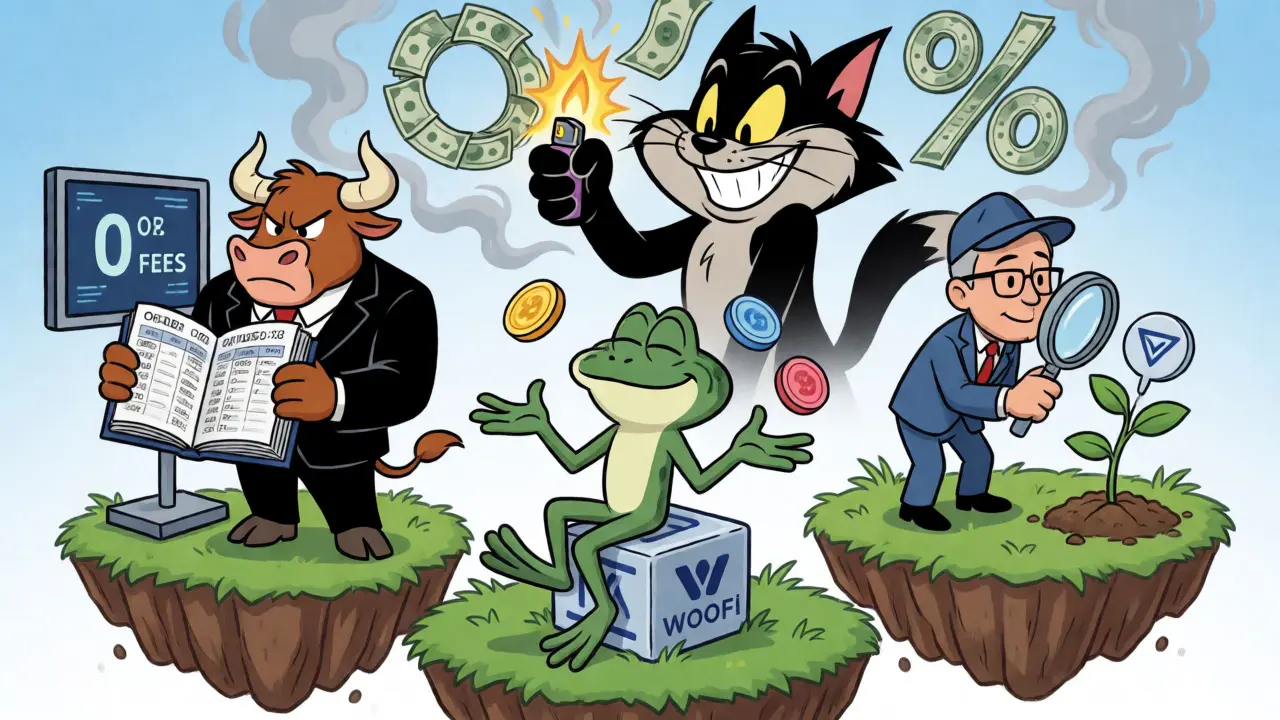
Inside the Ecosystem: WOO X, WOOFi, and Ventures
To understand the token, you have to look at where it lives. The ecosystem has three main pillars:
- WOO X: This is their centralized exchange (CEX). It’s designed for serious traders who want zero-fee trading (if you stake WOO) and deep order books. It handles the bulk of daily volume.
- WOOFi: This is their decentralized exchange (DEX) suite. It uses smart contracts to provide automated market making (AMM) across multiple chains. If you prefer keeping your keys, this is where you go.
- WOO Ventures: The investment arm. They fund early-stage blockchain projects, aiming to bring new assets and users into the WOO ecosystem.
This hybrid approach is rare. Most projects pick a side-either CEX or DEX. WOO tries to serve both, using the same liquidity source for both venues. In theory, this creates a flywheel effect: more users on WOO X mean deeper liquidity, which benefits WOOFi users, attracting more capital back to the network.
How the WOO Token Works: Utility and Deflation
The WOO token is an ERC-20 token (and native on other chains) that serves as the central utility mechanism for the entire network. Its primary functions include governance, staking, and fee discounts.
Here is the critical part for investors: the deflationary model. WOO Network commits to buying back tokens from the open market using 50% of its revenue. These bought-back tokens are then burned, permanently removing them from circulation. Burns happen systematically on the 10th of every month. The maximum supply is capped at 3 billion tokens, with plans to burn up to 50% of the total supply over time.
Why does this matter? In a bear market, fewer tokens in circulation can theoretically support the price if demand holds steady. However, critics point out that the burn rate has been slow relative to the selling pressure. As of late 2025, only about 8.7% of the total supply had been burned, which some analysts argue isn’t enough to counteract the dilution from team unlocks and general market fear.
Technical Architecture and Multi-Chain Reach
WOO doesn’t live on just one blockchain. It deploys across Ethereum, BNB Chain, Avalanche, Polygon, Solana, Arbitrum, Fantom, and NEAR. This multi-chain strategy is powered by bridge technology, allowing assets to move freely between these ecosystems.
The technical backbone relies on advanced market-making algorithms. These algorithms source liquidity from professional providers and platform traders simultaneously. According to data from Q3 2025, the network processes approximately 1.2 million daily transactions with average confirmation times of 2.3 seconds on supported chains. For institutional clients, WOO offers API integration, allowing high-frequency trading firms to plug directly into their order books.
| Feature | WOO Network | Uniswap | Binance |
|---|---|---|---|
| Primary Model | Hybrid CeFi/DeFi | Pure DeFi AMM | CeFi Order Book |
| Fee Structure | Zero-fee (with staking) | Gas + Protocol Fee | Taker/Maker Fees |
| Liquidity Depth | Institutional Aggregated | Community LPs | Exchange Owned |
| TVL / Volume | $187M TVL (DEX) | $850M+ TVL | Highest Global Vol. |
The July 2025 Security Breach: What Went Wrong?
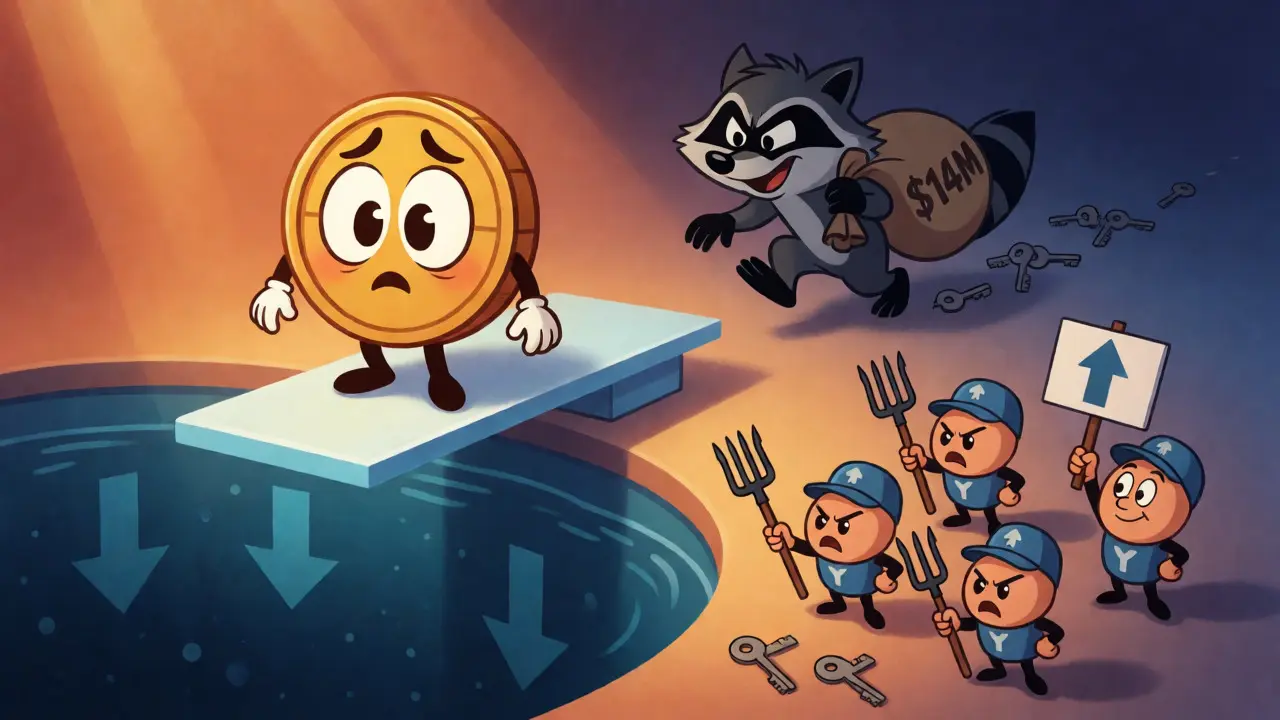
No discussion of WOO is complete without addressing the elephant in the room: the hack. In July 2025, the network suffered a $14 million security breach. Reports from Elliptic indicated that a phishing attack compromised nine developer accounts. This wasn’t a flaw in the blockchain code itself, but rather a human error in access management.
The impact was immediate. User confidence took a hit, and the token price reflected the uncertainty. Trustpilot ratings dropped, averaging 2.1/5 shortly after the incident, with users complaining about unresponsive support during the crisis. While the funds were partially recovered or covered, the event highlighted a significant risk: despite the DeFi branding, parts of the infrastructure rely on centralized points of failure.
Market Performance and Price Predictions
Let’s look at the numbers. WOO launched with high hopes, reaching an all-time high (ATH) of $1.78 in January 2022. Fast forward to August 2026, and the sentiment is much cooler. Recent data shows WOO trading in the range of $0.04 to $0.05, representing a decline of nearly 80% from its peak.
Analysts are split on the future. Bearish forecasts suggest the price could dip further to $0.02 due to continued regulatory pressure and competition. On the other hand, optimistic models predict a recovery to $0.48-$0.88 in the near term, driven by the upcoming AI-powered liquidity prediction algorithms scheduled for launch. Long-term bulls see potential for $2.59 by 2030, assuming the network captures more institutional market share.
The Fear & Greed Index for WOO has hovered around "Extreme Fear" levels recently, indicating that many holders are underwater. However, contrarian investors might view this as an accumulation zone, betting that the deflationary burns will eventually tighten supply significantly.
Pros and Cons: Is WOO Right for You?
Before you buy, weigh these factors carefully:
- Pros:
- Low Costs: Zero-fee trading on WOO X is genuinely attractive for active traders.
- Liquidity Depth: Institutional-grade order books reduce slippage for large trades.
- Multi-Chain Support: Easy access to assets across Ethereum, Solana, and others.
- Cons:
- Centralization Risks: The 2025 hack proved that centralized elements create vulnerabilities.
- Regulatory Uncertainty: The SEC classified WOO as a security in mid-2025, causing volatility.
- Competition: Uniswap and PancakeSwap dominate the DEX space with larger communities.
How to Buy and Use WOO
Getting started is relatively straightforward. You don’t need to be a coder. Here’s the quick path:
- Create an Account: Sign up on WOO X or connect your wallet to WOOFi.
- Fund Your Account: Deposit USDT, ETH, or BTC. If using WOOFi, ensure you have native gas tokens for your chosen chain.
- Stake WOO (Optional): To get zero fees on WOO X, you need to hold and stake WOO tokens. Check the current APY rates, which fluctuate based on network activity.
- Trade: Execute swaps or limit orders. The interface is similar to other major exchanges, so there’s no steep learning curve for basic tasks.
For developers, the API documentation covers 147 endpoints, but setting up institutional integrations can take 6-8 weeks. Average users should expect a 15-minute setup process for standard trading.
Is WOO Network a scam?
No, WOO Network is not a scam. It is a legitimate liquidity infrastructure project backed by Kronos Research. However, like any crypto asset, it carries risks, including market volatility and security breaches, such as the $14 million incident in July 2025.
Can I earn interest on my WOO tokens?
Yes. You can stake WOO tokens on WOO X to earn yield and reduce trading fees. Additionally, providing liquidity on WOOFi allows you to earn trading fees and potential incentive rewards, though APYs vary based on market conditions.
What makes WOO different from Uniswap?
While Uniswap is a pure decentralized exchange relying on community-provided liquidity pools, WOO Network aggregates liquidity from centralized exchanges and professional market makers. This hybrid model often results in tighter spreads and deeper order books compared to traditional AMMs.
Is WOO token deflationary?
Yes, WOO follows a deflationary model. The network uses 50% of its revenue to buy back and burn WOO tokens monthly. Over time, this reduces the circulating supply, potentially increasing scarcity if demand remains constant.
What happened in the July 2025 WOO hack?
A phishing attack compromised nine developer accounts, leading to a theft of approximately $14 million. The breach occurred due to human error in access management rather than a smart contract vulnerability. The network has since enhanced its security protocols.
Final Thoughts
WOO Network is a fascinating experiment in bridging two worlds. It offers real utility through superior liquidity and low costs, but it faces headwinds from regulatory scrutiny and intense competition. If you believe in the future of hybrid financial infrastructure, WOO might deserve a spot in your portfolio. Just remember: do your own research, especially given the recent price declines and security history.



Categories