BCH vs Bitcoin Transaction Fee Calculator
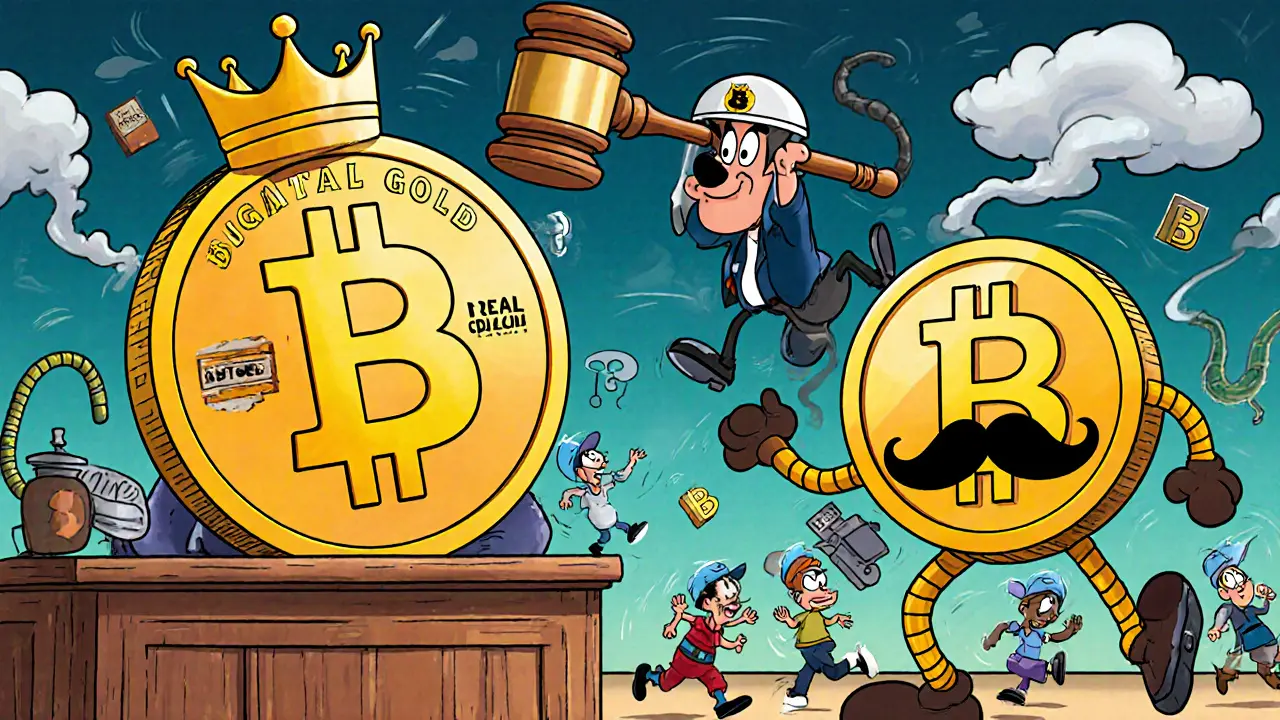
On August 1, 2017, something unusual happened in the crypto world. A group of developers, miners, and users decided to split Bitcoin in two. They weren’t trying to create a better investment. They wanted to fix Bitcoin’s biggest flaw: it wasn’t working as cash anymore. That split gave birth to Bitcoin Cash (BCH). If you’ve ever wondered why BCH exists, what makes it different from Bitcoin, or whether it’s actually usable for everyday payments, this is the straightforward breakdown you need.
Why Bitcoin Cash Was Created
Bitcoin was designed to be peer-to-peer electronic cash. Satoshi Nakamoto’s whitepaper didn’t talk about digital gold or store-of-value assets. It talked about sending money directly from person to person, without banks. But by 2017, Bitcoin transactions were slow and expensive. Fees regularly hit $5-$10 during peak times. Confirmation times stretched to over an hour. People couldn’t use it to buy coffee, pay for groceries, or send money overseas without waiting or paying a fortune.
A group of people believed Bitcoin should stay true to its original purpose. They included developers like Amaury Séchet, investor Roger Ver, and mining company Bitmain. They didn’t want to rely on complex second-layer solutions like the Lightning Network. Instead, they thought the answer was simpler: make the blocks bigger.
So they forked the Bitcoin blockchain. At block 478,559, the Bitcoin Cash network launched. Every Bitcoin holder got an equal amount of BCH - one for one. Your Bitcoin balance on that day became your Bitcoin Cash balance too. The new chain kept the same history up to that point, but from then on, it followed different rules.
How Bitcoin Cash Works Differently
Bitcoin Cash changed three core things to make transactions faster and cheaper:
- Block size: Bitcoin’s block size was capped at 1 MB. Bitcoin Cash started with 8 MB, then jumped to 32 MB in May 2018. That’s 32 times bigger. Bigger blocks mean more transactions fit into each block.
- Transaction speed: Bitcoin processes about 7 transactions per second. Bitcoin Cash handles around 116. That’s nearly 17 times faster.
- Fees: As of Q3 2023, the average Bitcoin Cash transaction fee was $0.0025. Bitcoin’s average fee? Around $1.85. That’s over 700 times more expensive.
Bitcoin Cash also uses a different difficulty adjustment algorithm. Bitcoin changes mining difficulty every 2,016 blocks (roughly two weeks). Bitcoin Cash does it every 144 blocks - about once a day. This helps keep block times steady even if mining power shifts suddenly.
And unlike Bitcoin, which adopted SegWit (a change that moved some data off the main chain), Bitcoin Cash rejected it. Instead, it focused on on-chain scaling. That means everything stays on the main blockchain - no side channels, no complex workarounds.
Bitcoin Cash vs Bitcoin: What’s the Real Difference?
Here’s a simple comparison:
| Feature | Bitcoin Cash (BCH) | Bitcoin (BTC) |
|---|---|---|
| Block size | 32 MB | 1 MB (effective ~1.7 MB with SegWit) |
| Transactions per second | ~116 | ~7 |
| Avg. transaction fee (Q3 2023) | $0.0025 | $1.85 |
| Confirmation time | 2-5 seconds (first confirmation) | ~10 minutes |
| Hashrate (Oct 2023) | 3.9 EH/s | 450+ EH/s |
| Full nodes (Sept 2023) | ~1,800 | 15,000+ |
| Primary use case | Everyday payments | Store of value |
Bitcoin Cash is built for spending. Bitcoin is built for holding. That’s the core divide. If you want to send $10 to a friend in another country with a fee under a penny and a 3-second confirmation, BCH is the better tool. If you’re buying it to hold for years, hoping it becomes digital gold, Bitcoin has the network effect, liquidity, and security.
Who Uses Bitcoin Cash?
Bitcoin Cash isn’t just a theory. People are using it right now - mostly for payments.
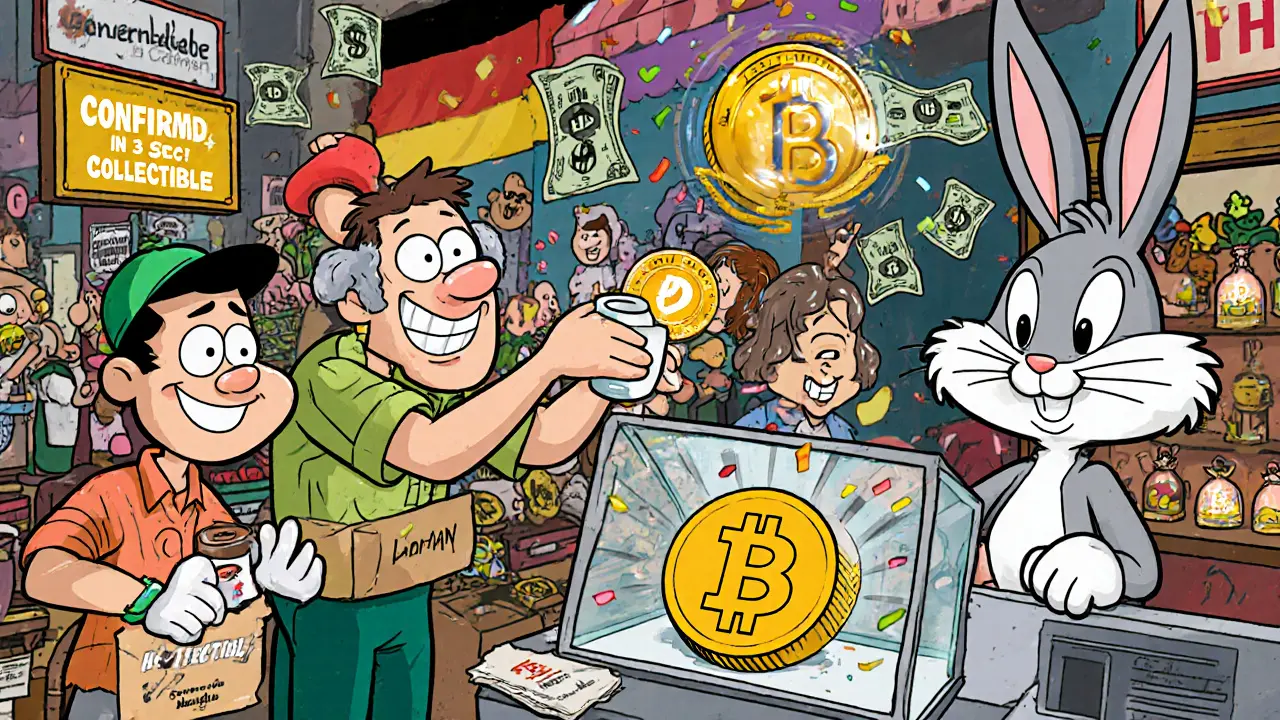
As of September 2023, over 5,200 merchants worldwide accept BCH directly. That’s up from just a few hundred in 2018. The biggest adoption is in Venezuela (1,200 merchants), Germany (850), and the U.S. (720). People use it to pay for coffee, rent, online services, and even utility bills in places where traditional banking is unreliable.
On Reddit, users report real experiences: “Paid for coffee in Berlin with BCH - confirmed in 3 seconds, fee was $0.008. Exactly what Satoshi imagined.”
Payment processors like BitPay handled over $1.2 billion in BCH transactions in 2022. That’s not a drop in the ocean. That’s real economic activity.
And it’s not just individuals. Cross-border remittances are a major use case. People in the Philippines send money to families in Indonesia. Workers in Germany send cash home to Nigeria. BCH cuts out intermediaries, reduces fees, and speeds up delivery.
Is Bitcoin Cash Safe?
Bitcoin Cash runs on proof-of-work, just like Bitcoin. It uses the same SHA-256 algorithm. But there’s a catch: its hashrate is tiny compared to Bitcoin’s.
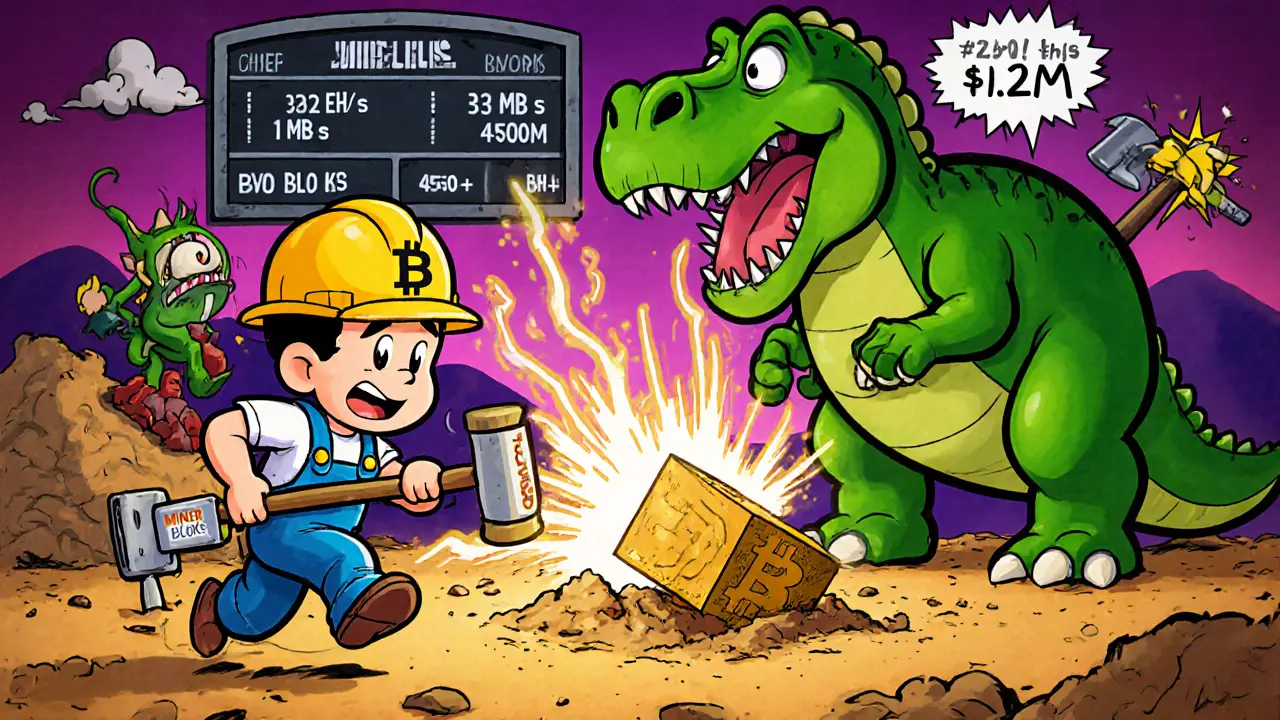
Bitcoin’s hashrate is over 450 exahashes per second. Bitcoin Cash’s? Around 3.9 EH/s. That’s less than 1% of Bitcoin’s security. In theory, that makes BCH more vulnerable to a 51% attack - where someone controls the majority of mining power and can reverse transactions.
But here’s the thing: no such attack has ever happened. The cost to rent enough mining power for a 24-hour attack on BCH is estimated at $1.2 million. For Bitcoin? $65 million. That’s a big difference, but $1.2 million is still a lot of money. Most attackers won’t bother.
Another risk? Fewer full nodes. Bitcoin has over 15,000. BCH has about 1,800. Full nodes are what keep the network honest. Fewer nodes means less decentralization. That’s why critics say BCH sacrifices security for speed.
Still, the network has held up for over seven years. It’s not perfect, but it’s functional.
Can You Buy and Use Bitcoin Cash Today?
Yes. And it’s easy.
You can buy BCH on Coinbase, Binance, Kraken, and most major exchanges. You can store it in wallets like Electron Cash, Exodus, or Trust Wallet. Sending it takes seconds. Receiving it is free.
But there are pitfalls:
- Don’t send BCH to a Bitcoin address. They look similar. If you do, your coins are gone forever. Over $1.2 million in BCH has been lost this way since 2022.
- Use a BCH-specific wallet. Not all wallets support BCH. Some only handle Bitcoin. Always check.
- Watch for scams. Some fake websites pretend to be BCH exchanges. Stick to well-known platforms.
For beginners, the best way to start is to buy a small amount - say $10 worth - and send it to a friend. See how fast it arrives. See how little it costs. That’s the whole point of Bitcoin Cash.
What’s Next for Bitcoin Cash?
The BCH community isn’t standing still. There are planned upgrades through 2024:
- Aserti3-2d (Nov 2023): A new difficulty adjustment to make block times more stable.
- Grumble (May 2024): Increases the size limit for standard transactions, allowing more data per transaction.
- Magnetic Cash (Nov 2024): Improves wallet syncing speed, so your app doesn’t take minutes to load your balance.
They’re also expanding token support. In 2021, they launched the Cash Token Protocol (CTP), which lets anyone create tokens on the BCH blockchain - like digital coupons, loyalty points, or even custom currencies. It’s not as advanced as Ethereum’s smart contracts, but it’s simple, fast, and cheap.
Market analysts are split. Some, like Willy Woo, think BCH could hit $1,000 by 2025 if merchant adoption keeps growing at 12% per quarter. Others, like Fundstrat’s Tom Lee, think $450 is more realistic. Either way, BCH isn’t going away.
Should You Care About Bitcoin Cash?
If you’re looking for a crypto to speculate on, Bitcoin Cash isn’t the top pick. It doesn’t have the brand recognition, liquidity, or institutional backing of Bitcoin or Ethereum.
But if you care about using crypto for what it was meant to do - sending money quickly, cheaply, and directly - then Bitcoin Cash is one of the few options that actually works today.
It’s not perfect. It’s not the biggest. But it’s the most practical. You can use it to pay for things. You can send it to anyone, anywhere, without waiting. And it costs almost nothing.
That’s not just a technical detail. That’s a revolution in payments. And Bitcoin Cash is still running it.
Is Bitcoin Cash the same as Bitcoin?
No. Bitcoin Cash (BCH) is a separate cryptocurrency that split from Bitcoin in August 2017. It shares the same transaction history up to that point, but after the split, it follows different rules - mainly larger block sizes, faster transactions, and lower fees. Bitcoin (BTC) focuses on being digital gold; Bitcoin Cash focuses on being digital cash.
Can I use Bitcoin Cash to buy things?
Yes. Over 5,200 merchants worldwide accept Bitcoin Cash directly, including businesses in Venezuela, Germany, the U.S., and Japan. You can use it to pay for coffee, online services, rent, and even utility bills in some places. Payment processors like BitPay handle millions in BCH transactions every month.
Is Bitcoin Cash cheaper than Bitcoin?
Much cheaper. As of Q3 2023, Bitcoin Cash transaction fees averaged $0.0025. Bitcoin’s average fee was $1.85 - over 700 times more. For small payments, that difference matters. Sending $5 with Bitcoin might cost more than the payment itself.
Is Bitcoin Cash secure?
Bitcoin Cash is secure for everyday use, but it has less mining power than Bitcoin. Its hashrate is about 3.9 EH/s compared to Bitcoin’s 450+ EH/s. This makes it theoretically more vulnerable to a 51% attack, but no such attack has ever succeeded. The cost to launch one is still over $1 million, which deters most attackers.
How do I start using Bitcoin Cash?
Buy BCH on a major exchange like Coinbase or Binance. Download a trusted wallet like Electron Cash or Exodus. Send a small amount to a friend to test it. Always double-check addresses - sending BCH to a Bitcoin address will permanently lose your coins. Start small, learn the basics, then use it for real payments.