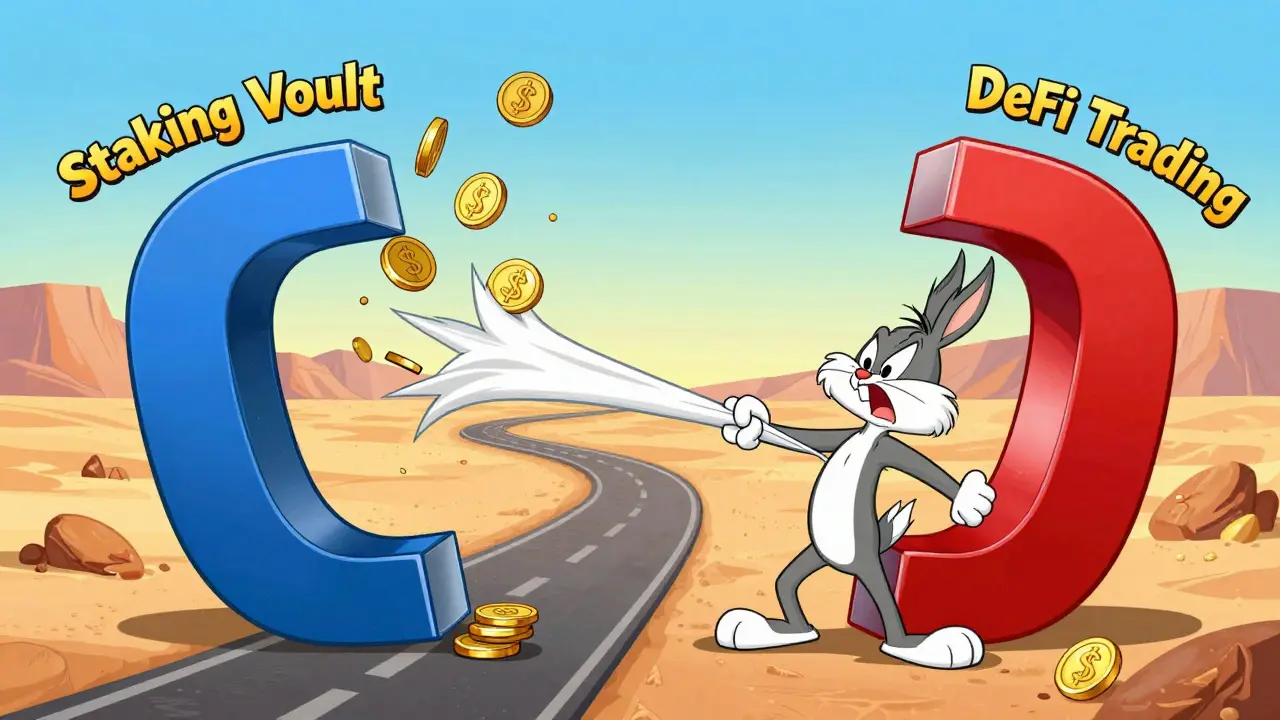
Imagine you have a pile of digital assets that you want to earn interest on, but you also want to use those same assets to trade or provide liquidity in other apps. Normally, in the crypto world, you have to pick one: either you lock your coins in a vault to earn staking rewards (and they stay stuck there), or you keep them liquid to use in decentralized finance (DeFi) but earn nothing. It's a frustrating trade-off. Stride is a Cosmos-native multichain liquid staking platform that solves this exact problem by allowing users to earn staking yields while keeping their assets fluid. Launched in June 2022, it acts as a bridge that lets your money work in two places at once.
The Magic of Liquid Staking and stTokens
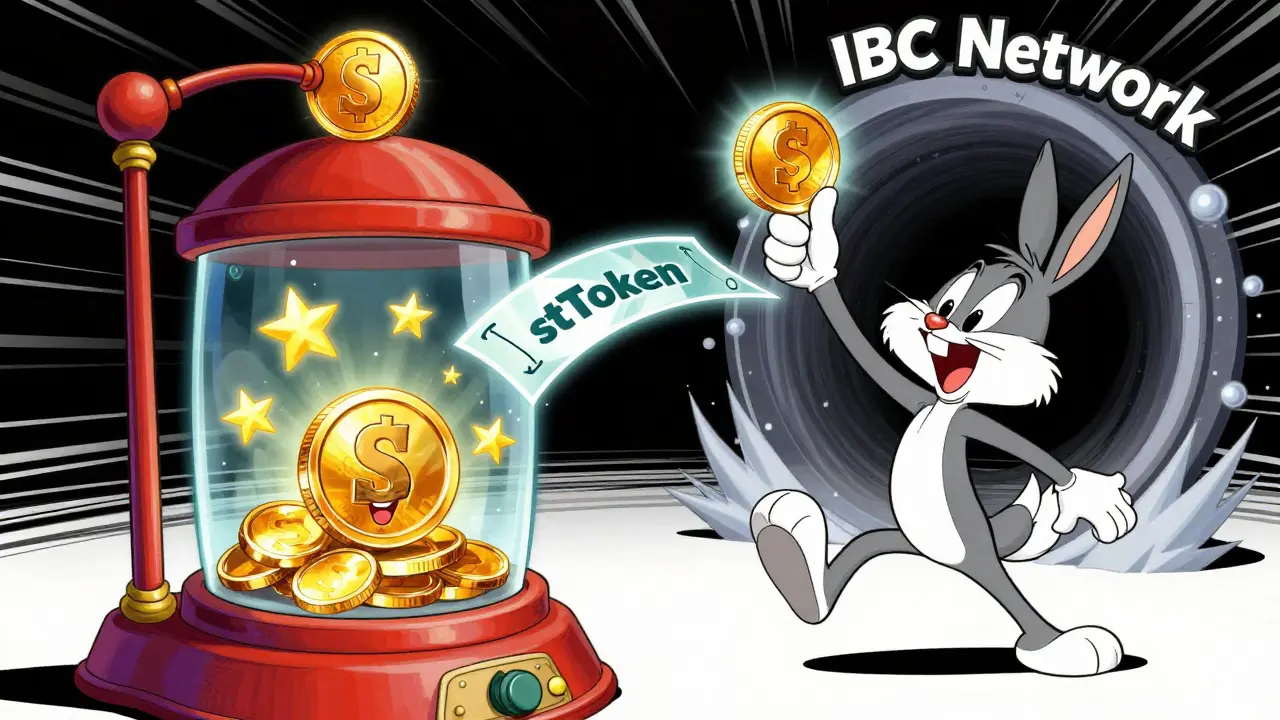
At its core, Stride uses a mechanism called liquid staking. When you stake your assets through Stride, the protocol doesn't just lock your coins away. Instead, it gives you a receipt in the form of a liquid staking derivative, known as an stToken. For example, if you stake ATOM, you receive stATOM.
These stTokens are the real game-changer. They represent your staked position and the rewards accruing to it, but unlike the original tokens, they aren't locked. You can take your stTokens and move them across the Inter-Blockchain Communication (or IBC) network. This means you can lend them, trade them on an exchange like Osmosis, or use them as collateral in other DeFi apps, all while your original coins are still earning staking rewards in the background.
When you're ready to get your original assets back, you have two choices. You can either go through the official unbonding period to redeem your stTokens 1:1, or if you're in a hurry, you can simply swap your stTokens for the original coins on a decentralized exchange. The price of the swap usually reflects the rewards you've earned over time.
Breaking Down the STRD Token
The STRD token is the engine that drives the Stride blockchain. It isn't just a coin you hold for price action; it's a governance tool. Because Stride operates as a Decentralized Autonomous Organization (or DAO), no major changes to the protocol happen without a vote from STRD holders. If the community wants to change the fee structure or select new validators, they use their STRD to make it happen.
Beyond voting, staking your STRD helps secure the network and earns you rewards. Interestingly, STRD stakers don't just get more STRD; they also get a slice of the yield generated by the liquid-staked assets on the platform. To keep the token's value healthy, Stride uses a buy-back-and-burn mechanism. The protocol takes a portion of its revenue from liquid staking fees and uses it to buy STRD (and some ATOM) off the market and destroy it, which reduces the total supply over time.
| Attribute | Value |
|---|---|
| Maximum Supply | 100 Million STRD |
| Current Circulating Supply | ~93 Million STRD |
| Current Price Range | $0.18 - $0.19 |
| Primary Use Case | Governance & Network Security |
| Reward Source | Staking yields & Protocol fees |
Security: Borrowing Power from the Hub
Security is usually the biggest worry with liquid staking. If the protocol is hacked, your underlying assets could be at risk. Stride handles this by using Interchain Security. Instead of relying solely on its own small set of validators, Stride leans on the Cosmos Hub. This gives Stride access to billions of dollars in economic security, instantly placing it among the top 20 most secure proof-of-stake chains in the world.
The technical side is also tight. The blockchain is built on the Cosmos SDK and uses the Tendermint consensus mechanism. To keep things transparent, they've undergone multiple audits from different security firms and maintain a policy of continuous auditing for any new code added to the system.
How the Fees Actually Work
Nothing in crypto is free, and Stride has a very specific way of splitting its earnings to keep the lights on and the community happy. The protocol takes a 10% cut of the staking rewards from the liquid staked tokens. Here is exactly where that money goes:
- 8.5% goes directly to people who have staked their STRD tokens. This creates a direct link between the protocol's success and the token holders' profits.
- 1.5% is sent to staked ATOM on the Cosmos Hub. This is the "payment" for the Interchain Security mentioned earlier-basically, Stride pays the Hub to keep the network safe.

Comparing Stride to Traditional Staking
If you're still wondering whether to use Stride or just stake your tokens normally, it comes down to what you plan to do with your money. Traditional staking is like a fixed-deposit account at a bank; it's safe and earns interest, but your money is locked. Stride is more like a flexible credit line backed by those interests.
For example, a user staking DYDX-which has seen significant locked value on Stride-can keep earning the DYDX staking yield while simultaneously using their stDYDX to provide liquidity on a DEX. This effectively doubles the utility of their capital. However, you do have to consider the small fee the protocol takes, which is the price you pay for that flexibility.
Is Stride (STRD) safe to use?
Stride is considered highly secure because it leverages Interchain Security from the Cosmos Hub, giving it access to massive economic protection. It has also been audited by three separate security firms to ensure the code is robust.
What happens to my tokens if I use liquid staking?
Your original tokens are staked to secure the network, and in return, Stride gives you stTokens. These stTokens act as a proxy for your assets, allowing you to trade or lend them while the original tokens continue to earn rewards.
How do I get my original coins back from Stride?
You can either redeem your stTokens 1:1 for the original asset after the required unbonding period or swap your stTokens instantly on a compatible exchange like Osmosis.
What is the purpose of the STRD token?
STRD is used for governance (voting on protocol changes), securing the Stride blockchain through staking, and capturing value through the protocol's buy-back-and-burn mechanism.
Which assets does Stride support?
Stride supports various IBC-compatible assets, including ATOM, OSMO, DYDX, INJ, and SAGA. The list of supported tokens continues to grow as more chains integrate with the Cosmos ecosystem.
Next Steps for Users
If you're new to the Cosmos ecosystem, your first step should be setting up a compatible wallet that supports IBC transfers. Once you have your assets, you can decide whether you want a "set and forget" strategy (traditional staking) or a "maximize everything" strategy (using Stride).
For those looking to hold STRD, keep an eye on the Stride Swap decentralized exchange. This upcoming piece of infrastructure is designed to make moving between liquid positions and other DeFi protocols even smoother, which could potentially increase the demand for the token by improving overall capital efficiency.