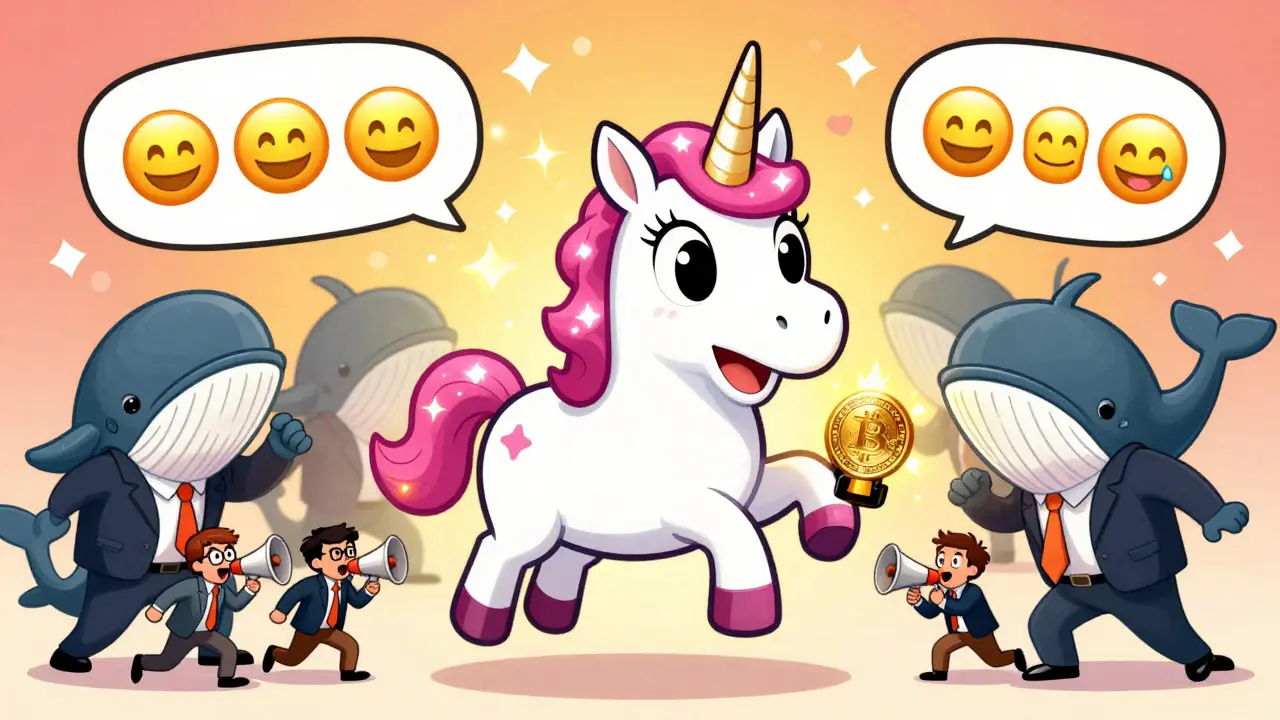
Ever heard of a meme coin that’s not just a joke, but also powered by artificial intelligence? Meet Pippin (PIPPIN) - a quirky, unicorn-themed cryptocurrency built on Solana that’s turning heads in the crypto world. It’s not your typical dog or cat coin. Pippin blends AI-generated storytelling, whimsical branding, and real trading volume into one wild package. If you’ve been wondering what makes this coin different from the hundreds of other meme tokens out there, here’s the straight-up breakdown.
What exactly is Pippin (PIPPIN)?
Pippin isn’t a company, a team, or even a traditional project. It’s more like a digital character - a talking unicorn - brought to life by an AI and backed by the Solana blockchain. The coin was created by a venture capitalist who used ChatGPT to build its entire narrative: lore, personality, even social media posts. Think of it as a meme with a brain. The AI keeps generating content, responding to trends, and keeping the community engaged. It’s not just a token - it’s a living, breathing internet persona.
Unlike most meme coins that die out after a viral tweet, Pippin’s AI keeps the story going. It doesn’t rely on influencers or Elon Musk tweets. Instead, it reacts in real time to market sentiment, social chatter, and even crypto news. That’s why it’s called AI-driven. The coin’s identity is tied to its narrative: a magical unicorn that lives on Solana, helping small traders fight the big whales. It sounds absurd - and that’s the point.
Why Solana? The tech behind the magic
Pippin runs on Solana, not Ethereum. That’s not a small detail. Solana handles transactions at lightning speed - up to 65,000 per second - and costs pennies per trade. For a meme coin that thrives on fast, frequent trading and community interaction, that’s a game-changer.
On Ethereum, sending a meme coin might cost $5-$10 in gas fees. On Solana? It’s less than a cent. That means traders can buy, sell, or swap Pippin dozens of times a day without breaking the bank. It also means wallets can interact with DeFi apps, NFT marketplaces, or AI bots built on Solana without delays.
The Solana network is already home to major meme coins like Bonk and Doge Killer. Pippin fits right in - but with a twist. While others rely on animal memes, Pippin uses fantasy storytelling. That’s why it stands out in a sea of dog coins.
How much Pippin is out there? Supply and trading data
As of March 2026, here’s what the numbers look like:
- Circulating supply: 1 billion PIPPIN tokens
- Current price: Around $0.01976 USD
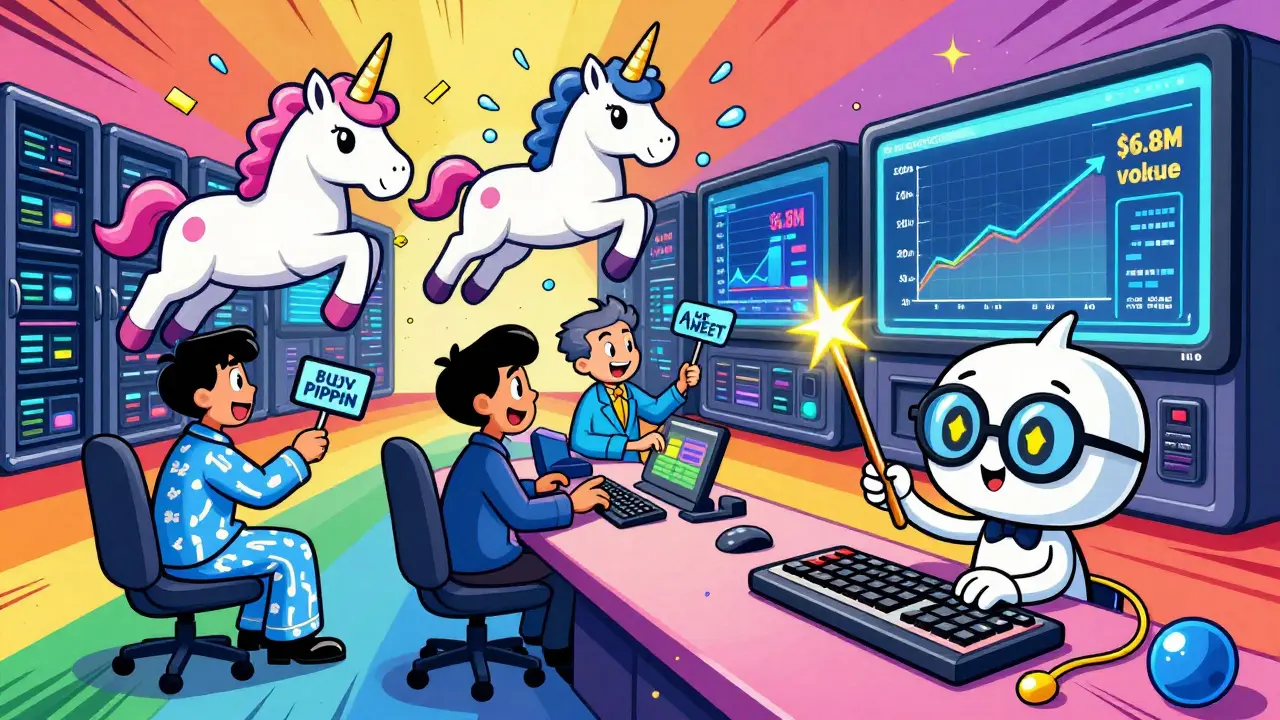
- 24-hour trading volume: Over $6.8 million
- Lowest price ever: $0.005518 (hit on December 30, 2024)
- Price change (last 30 days): +29.08%
That’s not a small coin. A $6.8 million daily volume means there’s real liquidity. You can buy or sell large amounts without crashing the price - at least for now. The price has been volatile, as expected with meme coins. It jumped from $0.012 in January to over $0.02 in February, then pulled back slightly. But it’s still up 50% against Ethereum over the past month.
Where can you trade Pippin?
Pippin isn’t stuck on one exchange. It’s listed on over 10 major platforms, which is unusual for a meme coin with no official team. The biggest trading volumes come from:
- Binance Futures: $12.94 million (highest volume)
- HTX (Huobi): $5.18 million
- Gate.io: $1 million
- MEXC, BitMart, Bitget, Indodax, Digifinex, Bitrue, SuperEx
You won’t find it on Coinbase or Kraken yet - those platforms are stricter about meme coins. But if you’re trading on Binance, MEXC, or HTX, you can buy Pippin with USDT, SOL, or even ETH. Some traders even use TradingView charts to connect directly to their exchange accounts and auto-trade based on AI-generated signals.
How does Pippin compare to other AI meme coins?
Pippin isn’t alone. Other coins like GRIFFAIN, ZEREBRO, FARTCOIN, VINE, and AI16Z are also trying to blend AI with meme culture. But here’s where Pippin wins:
| Feature | Pippin (PIPPIN) | Other AI Meme Coins |
|---|---|---|
| Core Theme | Unicorn + AI storytelling | Animals, robots, or abstract concepts |
| Blockchain | Solana (fast, cheap) | Often Ethereum (slow, expensive) |
| AI Role | Generates narrative, responds to trends | Used for price prediction or chatbots |
| Trading Volume | $6.8M+ daily | Most under $1M daily |
| Community Engagement | High - AI keeps content fresh | Low - mostly static memes |
Most AI meme coins just use AI to predict prices or answer questions. Pippin’s AI writes stories, creates memes, and even replies to tweets like a real person. That’s what keeps people coming back. It’s not just trading - it’s following a digital character’s journey.
What do experts and tools say about Pippin?
Here’s the tricky part: technical analysis is mixed.
On TradingView, most indicators - like RSI, MACD, and Moving Averages - are showing sell signals across 1-week and 1-month timeframes. That means traders are taking profits, and short-term momentum is fading.
Price predictions? All over the place:
- WalletInvestor: Predicts a drop to $0.01759 by mid-2026
- PricePrediction.net: Foresees a rise to $0.023 by end of 2026
- Long-term (2030) projections: Some say $0.023, others say it could hit $0.038 - or crash to $0.009
There’s no consensus. That’s normal for meme coins. No fundamentals. No revenue. No product. Just hype, AI, and community.
But here’s something interesting: Pippin’s price has held above $0.018 for over 45 days now. That’s longer than most meme coins survive. If it breaks $0.025, it could trigger a new wave of buying. If it drops below $0.015, it might get dumped hard.
Should you buy Pippin?
If you’re looking for a stable investment - don’t. Pippin is pure speculation. It’s like betting on a viral TikTok trend that might explode or vanish in a week.
But if you enjoy crypto as a cultural experience - and you understand the risks - Pippin might be worth a small bet. Here’s how to think about it:
- Only risk what you can afford to lose. Meme coins can go to zero.
- Use SOL for fees. You’ll need Solana tokens to move Pippin between wallets or use DeFi apps.
- Watch the AI activity. If the AI stops posting, the hype might fade.
- Don’t FOMO. A 30% jump doesn’t mean it’ll keep rising.
Some traders treat Pippin like a game. They buy small amounts, hold for a few days, and cash out if it hits a target. Others use it as a hedge against more stable coins. It’s not a portfolio cornerstone - it’s a side bet.
What’s next for Pippin?
The future of Pippin depends on two things: community and AI.
If the AI keeps generating fresh, funny, or clever content - and if traders keep showing up - it could stick around for years. If the narrative gets stale, or if Solana’s network gets congested, it could fade fast.
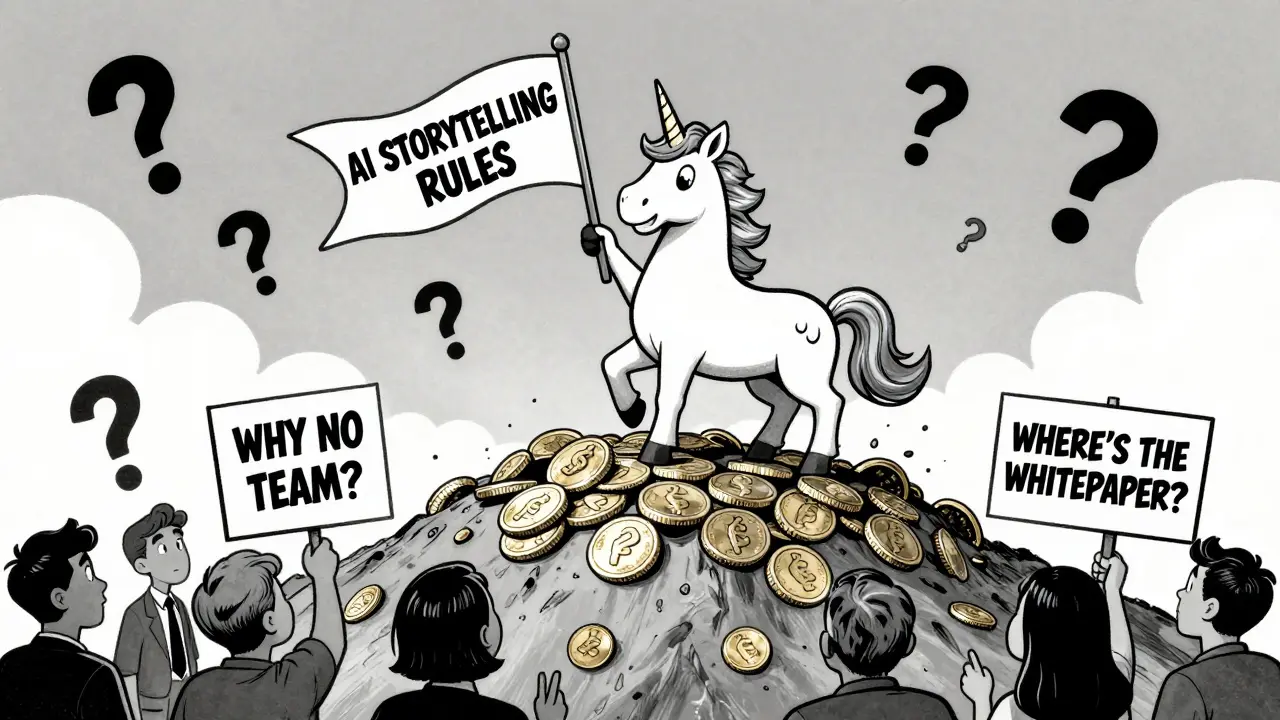
There’s no whitepaper. No roadmap. No team. Just code, a unicorn, and a chatbot.
That’s the beauty - and the danger - of meme coins in 2026. They’re not about utility. They’re about culture. And right now, Pippin is one of the few coins that’s actually living.
Is Pippin (PIPPIN) a good investment?
Pippin is not a traditional investment. It’s a speculative meme coin with no underlying value, revenue, or team. It’s driven purely by hype, AI-generated content, and community sentiment. Only invest what you can afford to lose. It’s better suited for short-term trading or as a fun experiment, not long-term wealth building.
Can I buy Pippin on Coinbase or Kraken?
No, Pippin is not listed on Coinbase or Kraken. These platforms have strict listing rules for meme coins. You can trade Pippin on exchanges like Binance Futures, HTX, Gate.io, MEXC, BitMart, and Bitget. Always check the official Pippin website or social media for the latest exchange list.
Why does Pippin use Solana instead of Ethereum?
Solana offers much faster transactions (65,000 per second) and near-zero fees (under $0.01), which is perfect for meme coins that see heavy trading. Ethereum’s high gas fees make frequent buying and selling expensive. Pippin’s AI-driven trading and community activity rely on speed and low cost - so Solana was the only practical choice.
How is Pippin different from Dogecoin or Shiba Inu?
Dogecoin and Shiba Inu rely on animal memes and celebrity endorsements. Pippin is built around an AI-generated unicorn character that evolves through real-time interactions. It doesn’t need influencers - the AI writes its own stories, responds to trends, and keeps the narrative alive. It’s a meme with a brain, not just a picture.
Can I use Pippin for DeFi or NFTs?
Technically, yes - since it’s on Solana, you can swap Pippin for other tokens on decentralized exchanges like Raydium or Jupiter. But there are no official DeFi apps or NFTs tied to Pippin yet. Any interaction would be community-driven, not project-backed. Use caution - there’s no smart contract security audit available.
Is Pippin’s AI real or just a marketing gimmick?
The AI is real. It generates daily posts, responds to comments, and adapts its tone based on market sentiment. It’s not a chatbot that just repeats phrases - it’s trained on thousands of crypto memes, news articles, and community discussions. While the creator remains anonymous, the AI’s output has been consistent and evolving since launch. Whether it’s sustainable long-term is another question.
Final thought: Meme coins are culture, not companies
Pippin doesn’t solve a problem. It doesn’t pay dividends. It doesn’t even have a CEO. But it’s got a story. And in crypto, stories move markets faster than whitepapers.
By March 2026, Pippin has proven one thing: if you build something fun, weird, and alive - even with AI - people will show up. Whether it lasts is up to the community. And that’s the wild truth about meme coins today.