
Traditional biotech research is broken. It takes billions of dollars and over a decade just to bring one drug to market, leaving patients with rare diseases or those seeking longevity treatments waiting in the dark. Enter Bio Protocol, a platform that uses blockchain technology to fix this bottleneck. If you have heard the ticker symbol BIO popping up in crypto circles, you are looking at the engine behind the Decentralized Science (DeSci) movement. This isn't just another meme coin; it is infrastructure designed to let everyday people fund scientific breakthroughs directly.
In this guide, we break down what Bio Protocol actually does, how the BIO token works, and whether it fits into your investment strategy. We will look past the hype to see if the tech can deliver on its promise to democratize biotechnology.
Quick Summary: Key Takeaways
- Bio Protocol is the foundational layer for Decentralized Science (DeSci), enabling community-funded biotech research.
- The BIO token is an ERC-20 governance token used for voting, funding allocation, and accessing specialized research DAOs.
- It operates alongside companion tokens like Acc for rewards, creating a dual-token ecosystem.
- As of late 2025, the project has expanded to Solana via its V2 upgrade to reduce costs and increase speed.
- Risks include regulatory uncertainty regarding medical research and the complexity of decentralized governance.
What Is Bio Protocol?
To understand Bio Protocol, you first need to understand the problem it solves. In traditional science, funding comes from governments or big pharmaceutical companies. These entities prioritize projects with high commercial returns. That means conditions affecting small populations-like certain genetic disorders-or fields like aging research often get ignored because they aren't "profitable" enough.
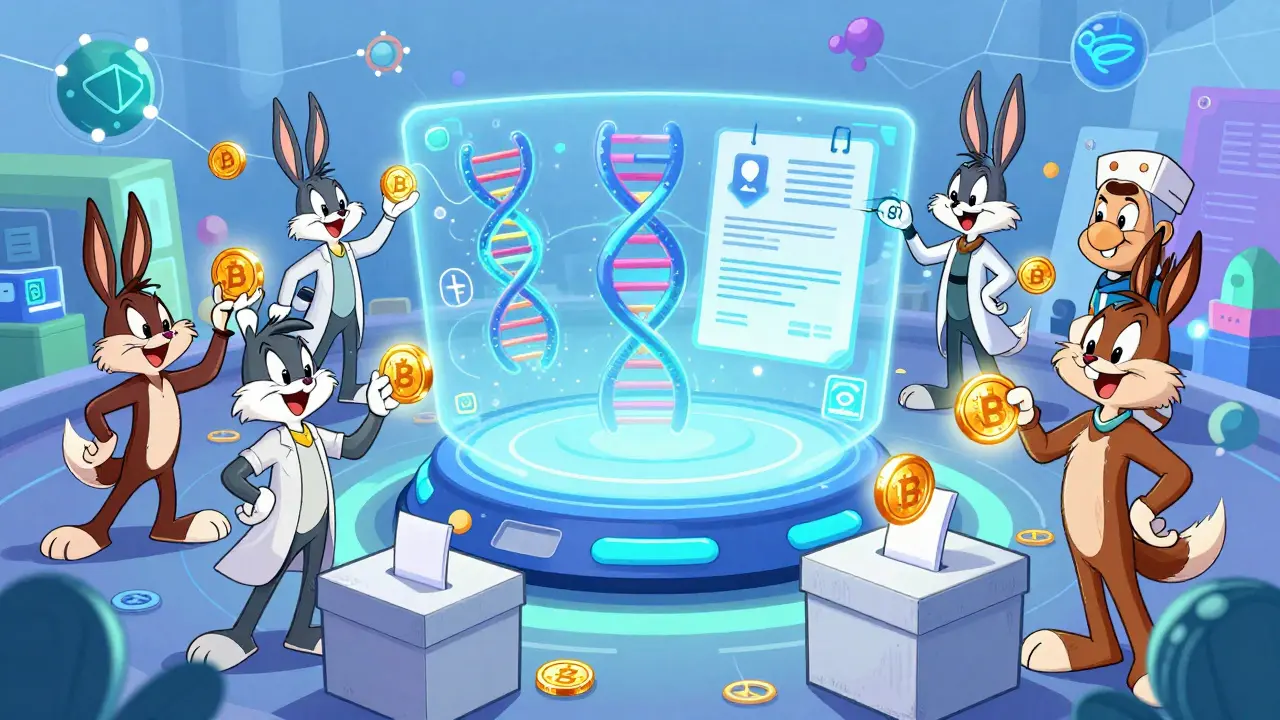
Bio Protocol flips this model. Founded by Paul Kohlhaas and launched in 2024, it creates a marketplace where researchers, patients, and investors connect directly. Instead of waiting for a grant committee, scientists propose projects to the community. The community votes, funds them, and shares in the intellectual property (IP) rights.
Think of it as Kickstarter, but for serious molecular biology, and instead of getting a t-shirt as a reward, you get fractional ownership of the resulting patents. The protocol provides the technical rails-the smart contracts and governance tools-that make this possible.
How Does the BIO Token Work?
The BIO token is the currency of this ecosystem. It is not just a speculative asset; it has specific utility within the network. Here is how it functions:
- Governance: Holding BIO gives you a voice. You vote on which research projects get funded within various BioDAOs (Biotech Decentralized Autonomous Organizations).
- Access: Certain advanced features or early access to new research initiatives require staking or holding BIO.
- Funding Allocation: When a BioDAO decides to fund a study, the treasury often utilizes BIO or assets purchased with it to pay researchers.
It is important to note that Bio Protocol uses a dual-token system. While BIO handles governance and core utility, there is also the Acc token. Acc is primarily used for protocol rewards, incentivizing users who contribute to the network’s growth or participate in curation mechanisms. For most retail investors, BIO is the primary entry point, but understanding the distinction helps clarify why prices might move independently of each other.
The Core Infrastructure: BioDAOs
You cannot talk about Bio Protocol without talking about BioDAOs. These are specialized communities focused on specific health goals. They are the engines that drive actual research. Bio Protocol provides the software; BioDAOs provide the direction.
For example, VitaDAO is one of the most prominent BioDAOs built on this infrastructure. It focuses exclusively on longevity research-extending human healthspan. Another might focus on hair restoration or rare genetic diseases. Each DAO pools resources from its members to fund specific studies.
Here is how the flow works in practice:
- A researcher submits a proposal to a BioDAO.
- Community members curate and vote on the proposal.
- If approved, funds are released from the DAO’s treasury.
- The resulting IP (patents, data) is tokenized. Token holders own a share of that IP.
- If the research leads to a successful drug or therapy, the IP value increases, benefiting the token holders.
This structure ensures that the people funding the research also benefit from its success, aligning incentives in a way traditional models do not.
Tokenomics and Market Data
Let’s look at the numbers. As of October 2025, the BIO token had a circulating supply of approximately 1.66 billion tokens out of a maximum supply of 3.32 billion. This means roughly half of the total tokens were in circulation, with the rest likely locked for team vesting, ecosystem development, or future liquidity needs.
| Metric | Value |
|---|---|
| Circulating Supply | ~1.66 Billion |
| Max Supply | 3.32 Billion |
| Market Cap | $264.86 Million |
| Price Range (7-Day) | $0.08 - $0.13 |
| 24h Volume | $20.15 Million |
The token operates primarily on the Ethereum blockchain as an ERC-20 standard token. However, the ecosystem recently launched a V2 upgrade in October 2025, adding cross-chain functionality with Solana. This move was strategic: Ethereum offers security and deep liquidity, but gas fees can be prohibitive for small transactions. Solana offers speed and low costs, making it easier for smaller contributors to participate in governance and funding rounds.
Bio Protocol vs. Traditional Biotech Funding
Why does this matter? Let’s compare the old way with the new.
| Feature | Traditional Pharma | Bio Protocol / DeSci |
|---|---|---|
| Funding Source | Venture Capital, Public Markets | Community Pools, Token Holders |
| Time to Market | 10-15 Years | Variable (Aims for faster iteration) |
| Cost per Drug | $2-3 Billion | Micro-funding aggregates to millions |
| Ownership | Corporation | Decentralized (Token Holders) |
| Focus Areas | High-profit common diseases | Rare diseases, Longevity, Niche areas |
The key advantage here is agility and inclusivity. Traditional pharma ignores niche markets because the ROI isn't there. DeSci thrives on them. If you are passionate about curing a specific rare disease, you can pool resources with thousands of others globally, bypassing corporate gatekeepers.
Risks and Challenges
No investment is without risk, and DeSci is particularly complex. Here is what you need to watch out for.
Regulatory Uncertainty: This is the biggest hurdle. The FDA and European Medicines Agency (EMA) have clear rules for centralized labs. They are still figuring out how to regulate decentralized, community-owned research. If regulations tighten, it could impact how BioDAOs operate or how IP tokens are valued.
Scientific Validation: Just because a project is popular doesn't mean the science is sound. Critics argue that decentralized governance lacks the rigorous peer-review processes of academic institutions. While Bio Protocol includes curation mechanisms, the risk of funding flawed research remains higher than in traditional settings.
Liquidity and Volatility: Like all crypto assets, BIO is volatile. The trading volume, while healthy at $20 million daily, is tiny compared to major coins like Bitcoin or Ethereum. Large sells can spike price movements. Additionally, the "real-world" value of IP tokens is hard to liquidate quickly. You might own a piece of a promising patent, but turning that into cash requires a buyer for that IP, which may take years to materialize.

How to Get Started with Bio Protocol
If you want to participate, the barrier to entry is moderate. You don’t need a PhD, but you do need some crypto literacy.
- Set Up a Wallet: You’ll need a Web3 wallet like MetaMask. Since the V2 upgrade, ensure your wallet supports both Ethereum and Solana networks if you plan to use the cross-chain features.
- Buy BIO Tokens: Purchase BIO from major exchanges like Binance or Phemex. Transfer them to your self-custody wallet.
- Join a BioDAO: Navigate to the Bio Protocol dApp. Browse active DAOs like VitaDAO. Connect your wallet to join.
- Participate: Start by reading proposals. Vote on governance issues. Consider staking your BIO to earn Acc rewards or to gain voting power in specific funding rounds.
Expect a learning curve. Understanding the difference between governance voting and direct funding allocation takes time. Most experienced users report spending 2-3 hours familiarizing themselves with the interface before feeling comfortable.
Future Outlook: 2026 and Beyond
The DeSci sector is growing fast. In 2024, it saw a 2,640% surge in activity, outperforming even AI-related crypto sectors. Bio Protocol is positioned as a leader, backed by Binance Labs. Their roadmap for 2026 includes deeper integrations with academic institutions, including partnerships with Harvard Medical School’s Innovation Lab and the Max Planck Institute.
If these partnerships yield tangible results-such as peer-reviewed papers or clinical trial approvals-the value proposition of BIO will strengthen significantly. Analysts predict Bio Protocol could capture 15-20% of the decentralized biotech funding market by 2027. However, this depends entirely on navigating the regulatory landscape and proving that decentralized governance can maintain scientific rigor.
Frequently Asked Questions
Is Bio Protocol a safe investment?
No cryptocurrency is "safe" in the traditional sense. Bio Protocol carries additional risks due to its exposure to regulatory changes in healthcare and the experimental nature of decentralized science. Only invest what you can afford to lose.
What is the difference between BIO and Acc tokens?
BIO is the primary governance and utility token used for voting and accessing the platform. Acc is a reward token distributed to users for participating in the ecosystem, such as curating projects or providing liquidity.
Can I buy BIO on Coinbase?
Availability varies by region and exchange updates. As of late 2025, BIO is widely available on Binance and Phemex. Check your local exchange listings for current support.
How does Bio Protocol make money?
The protocol generates revenue through transaction fees on funding rounds and potentially a percentage of IP licensing deals managed through the DAOs. This revenue is often redistributed to token stakers or used for ecosystem development.
What is a BioDAO?
A BioDAO is a Decentralized Autonomous Organization focused on a specific area of biological research. Members pool funds to finance studies and collectively own the resulting intellectual property.




Categories