

You’ve probably seen the name Turbos Finance pop up in your feed or on a crypto forum. It promises speed, low fees, and that elusive high return. But here is the hard truth you need to hear before you send a single cent: there is no legitimate, centralized "Turbos Finance" exchange listed on major regulatory boards like the FCA or ASIC. What exists is a decentralized token called TURBOS on the Ethereum network, wrapped in marketing that often blurs the line between a utility project and a speculative meme coin.
If you are looking for a place to buy Bitcoin or Ethereum with a debit card, this isn’t it. If you are looking to gamble on a volatile altcoin with hopes of a 10x return, you are stepping into deep water. Let’s break down exactly what Turbos Finance is, where the money goes, and why most experts advise extreme caution.
What Actually Is Turbos Finance?
To understand the risk, we first have to clear up a massive misconception. When people search for a "Turbos Finance exchange," they usually expect a website like Coinbase or Binance-a platform where you create an account, deposit funds, and trade. That platform does not exist as a regulated entity.
Turbos Finance is actually a decentralized finance (DeFi) protocol built on the Ethereum blockchain. It revolves around its native token, TURBOS. This means there is no customer support team to call if you lose your password. There is no insurance fund if the smart contract gets hacked. You are interacting directly with code on the blockchain.
The project claims to focus on three things:
- High-speed transactions: Designed to handle volume for gaming and DeFi apps.
- Low fees: Cheaper than standard Ethereum transfers.
- Community governance: Holders vote on future developments.
However, in practice, the trading behavior of TURBOS looks less like a serious financial infrastructure tool and more like a meme coin. The price swings wildly based on social media hype rather than actual usage data. As of late 2025, the token was trading around $0.000866, far below its all-time high of $0.00414 back in December 2023. That is a drop of nearly 80%. For context, even during bad bear markets, established coins rarely lose that much value without a fundamental flaw.
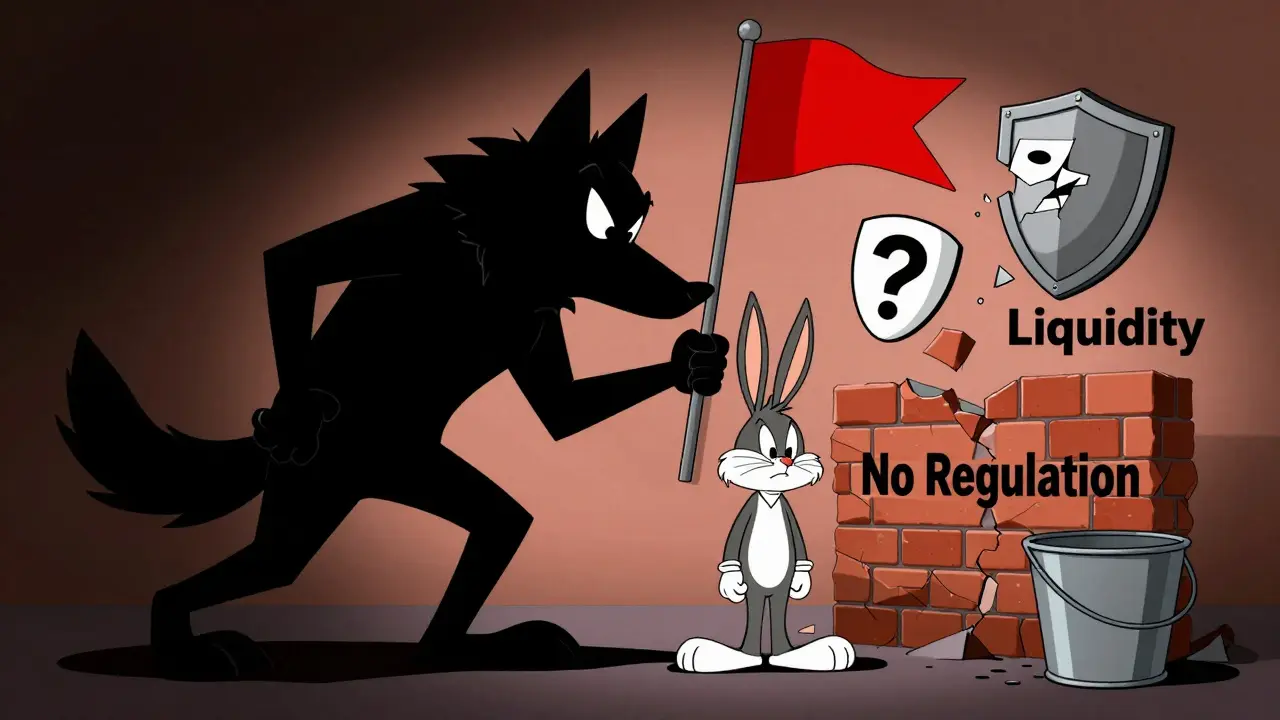
The Safety Verdict: Red Flags Everywhere
Let’s talk about safety. In the world of crypto, "safe" doesn’t just mean "will I get my money back?" It means "is this project legal, audited, and transparent?" Turbos Finance fails several basic checks.
| Safety Factor | Status | Risk Level |
|---|---|---|
| Regulatory License | None found | Critical |
| Smart Contract Audit | Not publicly verified by top firms | High |
| Team Anonymity | Largely anonymous/pseudonymous | High |
| Liquidity Lock | Unclear duration | Medium |
| User Reviews | No credible platforms (Trustpilot/Reddit) | High |
Here is why those red flags matter. Without a regulatory license, you have zero recourse if the developers decide to pull the rug. A "rug pull" is when creators abandon the project and take all the liquidity, leaving the token worth zero. With anonymous teams, you can’t sue anyone because you don’t know who they are. And without a public audit from a reputable firm like CertiK or Hacken, you are trusting unverified code with your wallet connection.
I’ve reviewed dozens of small-cap tokens from my desk in Wellington. The pattern is always the same: projects that hide their identity and lack audits tend to fail within 12 months. Turbos Finance fits this profile perfectly.
Price Analysis: Why Predictions Are Dangerous
If you scroll through crypto forums, you’ll see wild predictions. Some sites claim TURBOS could hit $0.0120 in 2025. Others predict a crash to $0.000608. Which one is right? Neither. These numbers are generated by algorithms looking at past volatility, not future utility.
Look at the technicals. The Relative Strength Index (RSI) hovers around 47, which is neutral but leaning bearish. The token has been trading below its 50-day and 200-day moving averages for months. In traditional trading terms, this is a downtrend. The Fear & Greed Index sits at 49 (Neutral), meaning the market isn’t excited about it.
Consider this scenario: You buy $1,000 worth of TURBOS at $0.000866. To double your money, the price needs to go to $0.001732. That requires a new wave of buyers to enter the market. Who are these buyers? Usually, it’s other retail investors hoping to sell to someone else later. This is known as a Ponzi-like dynamic, common in meme coins. Once the hype dies, the price collapses. We saw this happen in August 2024 when the price dropped from $0.00414 to $0.00112 in a matter of weeks.
How to Trade TURBOS (If You Insist)
If you still want to proceed despite the risks, you cannot do it on a centralized exchange like Coinbase or Kraken. You must use a Decentralized Exchange (DEX). Here is the step-by-step process, and please pay attention to the security warnings.
- Set Up a Web3 Wallet: Download MetaMask or Trust Wallet. Never share your seed phrase with anyone. Ever.
- Buy ETH: Purchase Ethereum on a regulated exchange (like Coinbase or Binance) and withdraw it to your wallet address. You need ETH to pay for gas fees on the Ethereum network.
- Connect to a DEX: Go to Uniswap or SushiSwap. Connect your wallet. Note: Only use the official URLs. Phishing sites look identical but will drain your wallet.
- Find the TURBOS Contract Address: Do not just type "TURBOS." There are hundreds of fake tokens with similar names. Copy the exact contract address from a trusted tracker like CoinGecko or Etherscan. Paste it into the swap interface.
- Adjust Slippage: Because TURBOS is volatile, you may need to set slippage tolerance to 5-10% to ensure the trade goes through. This means you might pay slightly more than the displayed price.
- Execute Swap: Confirm the transaction in your wallet. Wait for the block confirmation.
Warning: Before you connect your wallet to any site associated with Turbos Finance, check if the token has a "honeypot" mechanism. Honeypots allow you to buy a token but prevent you from selling it. Use tools like Honeypot.is to verify the contract address before buying.

Better Alternatives for Crypto Investors
If your goal is exposure to fast, low-cost blockchain technology, there are safer, more established options. Why gamble on an unproven token when you can invest in industry leaders?
- Solana (SOL): Offers incredible speed and low fees, similar to what Turbos Finance promises, but with billions in TVL (Total Value Locked) and institutional backing.
- Polygon (MATIC/POL): A proven Layer-2 solution for Ethereum that reduces costs significantly. It has real partnerships with Disney, Starbucks, and Nike.
- Avalanche (AVAX): Known for high throughput and sub-second finality. It hosts numerous successful DeFi protocols.
These assets have transparent teams, regular audits, and liquid markets. You can buy them on any major exchange with full regulatory protection. If you believe in the concept of "fast crypto," these are the vehicles that have survived multiple market cycles.
Final Thoughts: Protect Your Capital
Turbos Finance is not a scam in the sense that it doesn’t exist-it does. But it is a high-risk, speculative asset with all the hallmarks of a potential failure. The lack of regulation, anonymous development team, and poor price performance make it unsuitable for any serious investment portfolio.
Ask yourself: Would you park your rent money in a token that has already lost 80% of its value and has no customer support? Probably not. Treat TURBOS like a lottery ticket, not an investment. If you buy it, assume you will lose 100% of it. If that thought keeps you awake at night, stick to Bitcoin, Ethereum, or stablecoins.
Is Turbos Finance a scam?
While Turbos Finance is a real token on the Ethereum blockchain, it exhibits many characteristics of high-risk projects that often lead to losses. It lacks regulatory oversight, has an anonymous team, and has shown significant price depreciation. While not definitively labeled a "scam" by authorities, it carries extreme risk similar to fraudulent schemes.
Can I buy TURBOS on Coinbase or Binance?
No. TURBOS is not listed on major centralized exchanges like Coinbase, Binance, or Kraken. You can only purchase it via decentralized exchanges (DEXs) like Uniswap using an Ethereum wallet. This lack of listing on major platforms is a strong indicator of low liquidity and high risk.
What is the current price of TURBOS?
As of late 2025, TURBOS trades approximately between $0.0008 and $0.001. However, prices change rapidly due to high volatility. Always check real-time data on trackers like CoinMarketCap or CoinGecko before making any decisions.
Is Turbos Finance safe for beginners?
Absolutely not. Beginners should avoid DeFi tokens like TURBOS until they fully understand wallet security, gas fees, and smart contract risks. Start with established assets on regulated exchanges to learn the basics safely.
Who owns Turbos Finance?
The ownership structure is opaque. Like many DeFi projects, it claims to be community-governed, but specific details about the founding team or core developers are not publicly verified. This anonymity increases the risk of insider manipulation.