

On September 18, 2025, the landscape of cryptocurrency regulation in Canada shifted dramatically. The Royal Canadian Mounted Police (RCMP) announced the seizure of CAD$56 million (approximately US$40 million) in digital assets from TradeOgre, a privacy-focused cryptocurrency exchange that operated without Know Your Customer (KYC) requirements. This wasn't just another wallet freeze; it was the first time Canadian law enforcement completely dismantled an entire cryptocurrency trading platform. For users who relied on anonymous trading and privacy coins like Monero, this event sent a shockwave through the community.
The shutdown highlights a critical turning point in how authorities handle decentralized finance and privacy-centric platforms. It proves that operating behind the veil of anonymity, even via the Tor network, does not guarantee immunity from regulatory scrutiny. If you are interested in the intersection of blockchain technology, privacy rights, and legal enforcement, understanding what happened to TradeOgre is essential.
What Was TradeOgre?
To understand the significance of this seizure, we need to look at what made TradeOgre different from mainstream exchanges like Coinbase or Binance. Established in 2018 by an unknown founder and registered in the United States, TradeOgre positioned itself as a sanctuary for those seeking financial privacy. Unlike typical exchanges that demand government ID and personal details, TradeOgre allowed users to trade without any identity verification.
This "no-KYC" model attracted a specific demographic: individuals who valued pseudonymity above convenience. The platform specialized in niche altcoins and, most notably, Monero, a cryptocurrency designed specifically for untraceable transactions. By operating as a Tor-based hidden service, TradeOgre circumvented traditional geographic restrictions and regulatory oversight. For many, it represented the purest form of decentralized exchange-free from the prying eyes of financial institutions.
However, this freedom came with significant risks. Because there were no identity checks, the platform became attractive not only to privacy advocates but also to individuals seeking to launder money or move illicit funds. This dual nature set the stage for its eventual downfall.
The Investigation: From Europol Tip to Blockchain Forensics
The road to TradeOgre's closure began long before the September announcement. In June 2024, the RCMP's Money Laundering Investigative Team (MLIT) received a crucial tip from Europol, the European Union Agency for Law Enforcement Cooperation. This international collaboration underscored the global nature of cryptocurrency crime and the increasing coordination between agencies worldwide.
Over the next year, investigators worked closely with Arkham Intelligence, a leading blockchain analytics firm. Arkham provided the technical tools necessary to trace illicit transactions through TradeOgre's complex infrastructure. Despite the use of privacy-enhancing technologies, blockchain data is immutable. Every transaction leaves a footprint, and sophisticated analytics can often de-anonymize users by analyzing patterns, timing, and counterparty interactions.
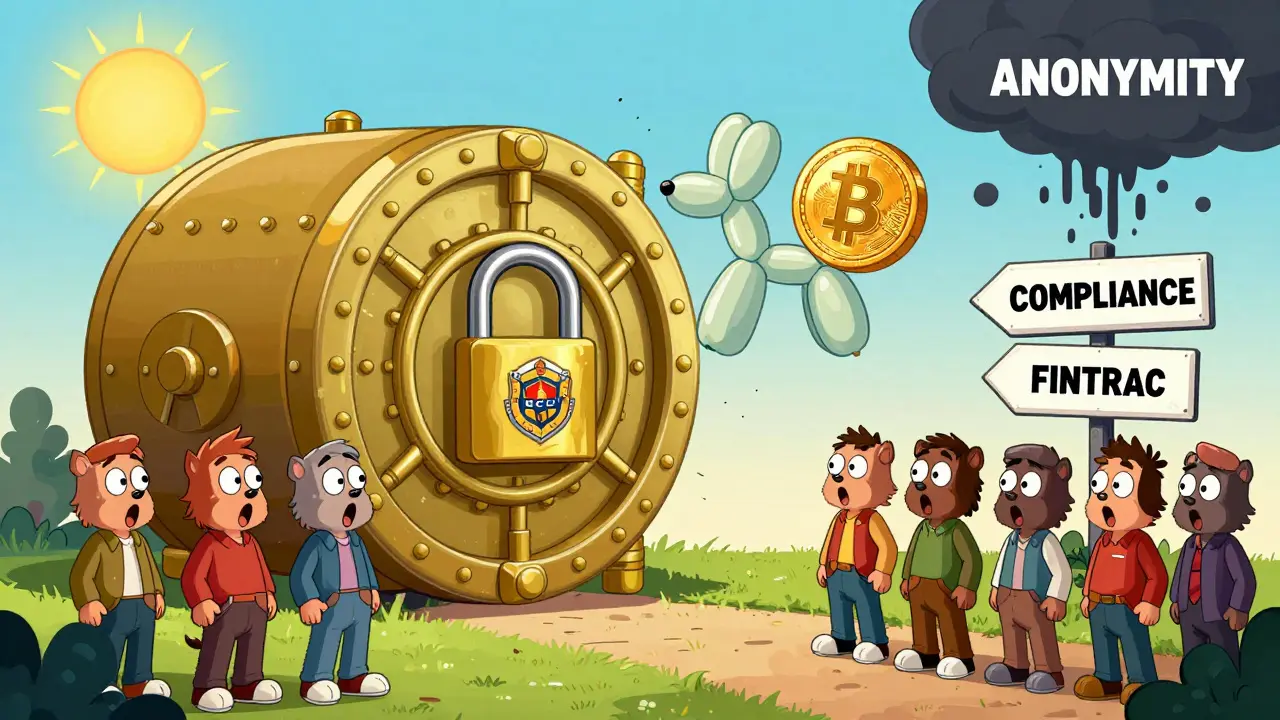
The investigation revealed that TradeOgre had completely bypassed mandatory registration requirements with FINTRAC (Financial Transactions and Reports Analysis Centre of Canada). As a money services business operating within or serving Canadian users, TradeOgre was legally required to implement Anti-Money Laundering (AML) protocols and register with FINTRAC. Its failure to do so constituted a serious violation of Canadian federal law.

The Shutdown: Signs of Impending Collapse
The end for TradeOgre did not come without warning signs. In July 2025, users noticed something unusual: the exchange's website and social media presence suddenly went dark. There was no explanation, no maintenance notice, and no communication from the operators. For a platform that prized transparency in its code but opacity in its ownership, this silence was deafening.
Blockchain analysts quickly detected significant fund movements from wallets linked to the exchange. These transfers were not random; they contained embedded messages declaring RCMP control of the assets. This public declaration on the blockchain served multiple purposes: it documented the seizure transparently, warned remaining users, and demonstrated the technical sophistication of the operation. By September 18, 2025, the official announcement confirmed the complete seizure of CAD$56 million, effectively ending TradeOgre's operations.
Why This Matters: Regulatory Precedents and Industry Impact
The TradeOgre case is more than just a news headline; it establishes a new precedent for cryptocurrency regulation in Canada and beyond. Historically, enforcement actions targeted individual wallets or mixing services. Dismantling an entire exchange infrastructure marks a significant escalation in regulatory approach.
Here are the key takeaways for the industry:
- No Safe Haven: Operating via Tor or registering in other jurisdictions does not protect platforms serving Canadian users from Canadian law enforcement.
- KYC is Non-Negotiable: Exchanges must comply with FINTRAC regulations. Privacy-focused models that ignore KYC/AML requirements are now high-risk targets.
- Blockchain Analytics are Powerful: Tools like Arkham Intelligence enable authorities to trace funds across complex networks, challenging the notion of absolute privacy on public blockchains.
- International Cooperation: Collaboration between agencies like Europol and RCMP shows that cross-border intelligence sharing is becoming standard practice in crypto investigations.
For legitimate businesses, this signals a clearer path forward: compliance is essential. For those operating in the gray areas, the message is stark-the window for non-compliant operations is closing rapidly.
| Feature | TradeOgre | Regulated Exchanges (e.g., Coinbase) |
|---|---|---|
| Identity Verification | None (No KYC) | Mandatory (KYC/AML) |
| Regulatory Status | Unregistered with FINTRAC | Fully Licensed & Registered |
| Privacy Focus | High (Tor-based, Monero support) | Low (Transparent reporting) |
| Risk Profile | High (Seizure risk, fraud exposure) | Lower (Insured, regulated) |
| Legal Compliance | Non-compliant | Compliant |
Implications for Privacy Coins Like Monero
TradeOgre's specialization in Monero raises questions about the future of privacy coins. While Monero itself remains a valid technological innovation offering enhanced transaction privacy, its association with non-compliant exchanges has drawn increased scrutiny. Authorities are not banning privacy technology outright, but they are aggressively targeting platforms that facilitate its misuse for illicit activities.
Users should note that holding or using Monero is not illegal. However, accessing it through unregulated channels like TradeOgre carries substantial legal and financial risks. The seizure demonstrates that even privacy-focused assets can be traced when connected to centralized points of failure, such as exchange hot wallets.
What Happens Next?
As of May 2026, TradeOgre remains silent. There have been no public statements from the platform's operators or legal representatives. This lack of response contrasts with typical enforcement cases where platforms attempt to challenge seizures legally. The silence may indicate the comprehensive nature of the evidence compiled by Canadian authorities.
For investors and traders, the lesson is clear: due diligence is paramount. Always verify that your exchange is registered with relevant financial authorities. In Canada, this means checking FINTRAC registration. In the US, it means confirming FinCEN compliance. The allure of anonymity is fading as regulatory frameworks mature and enforcement capabilities advance.
How much money did the RCMP seize from TradeOgre?
The RCMP seized CAD$56 million, which is approximately US$40 million, in digital assets from TradeOgre.
Why was TradeOgre shut down?
TradeOgre was shut down because it failed to register with FINTRAC and did not implement required Know Your Customer (KYC) and Anti-Money Laundering (AML) protocols, allowing anonymous trading that facilitated potential illicit activities.
Is Monero illegal in Canada?
No, Monero is not illegal in Canada. However, exchanges facilitating its trade must comply with regulatory standards. The issue lies with non-compliant platforms like TradeOgre, not the cryptocurrency itself.
Who helped the RCMP investigate TradeOgre?
The investigation involved collaboration with Europol, which provided initial intelligence, and Arkham Intelligence, a blockchain analytics firm that helped trace transactions.
Can I still access my funds if I used TradeOgre?
It is highly unlikely. With the exchange's infrastructure dismantled and assets seized by law enforcement, recovery of funds is extremely difficult and depends on ongoing legal proceedings.



![What Is Pi [IOU] (PI)? Understanding the Difference Between IOUs and Real Pi Coin](/uploads/2026/06/thumbnail-what-is-pi-iou-pi-understanding-the-difference-between-ious-and-real-pi-coin.webp)
Categories