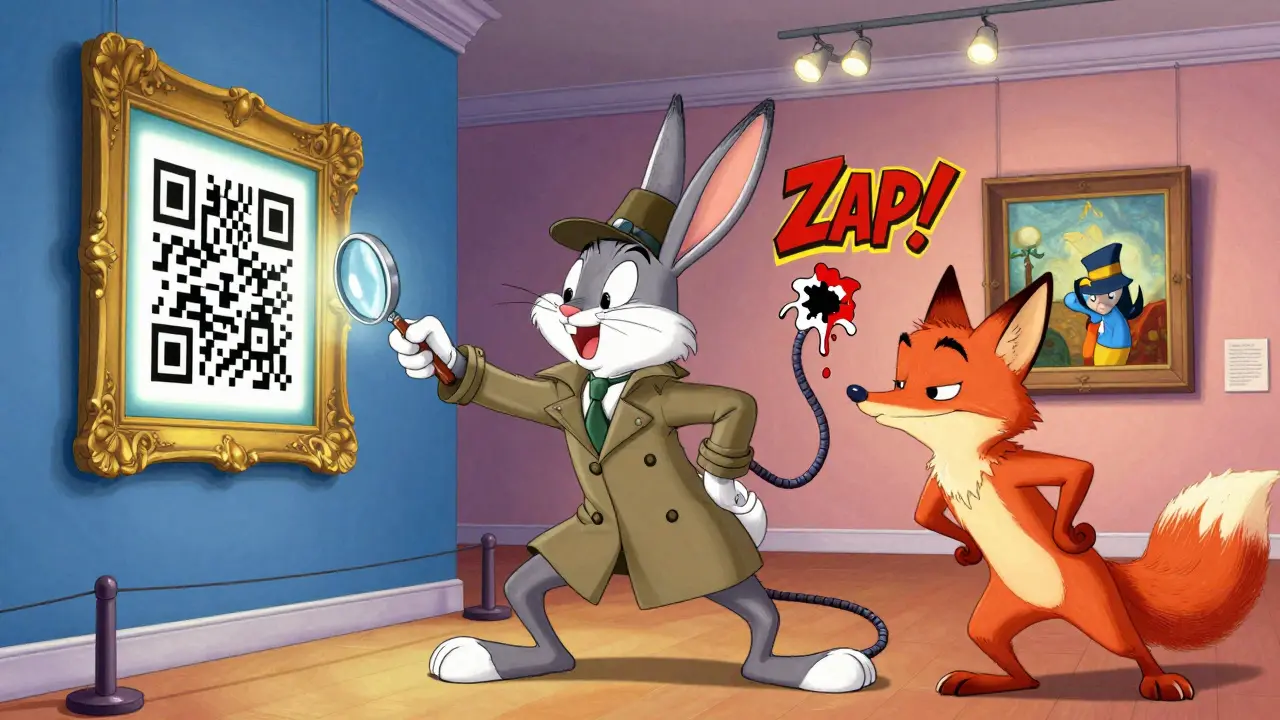
For centuries, proving that a painting or sculpture was real meant trusting a signed piece of paper. That paper could be copied, lost, or forged. Today, that paper is gone. In its place? A digital token locked onto a blockchain - unchangeable, public, and verifiable by anyone with a smartphone. This isn’t science fiction. It’s what’s happening right now in galleries, studios, and auction houses around the world. Digital art authentication with NFTs is no longer a trend. It’s becoming the new standard.
What Exactly Is an NFT in Art?
An NFT, or Non-Fungible Token, isn’t the artwork itself. It’s the proof that you own the original. Think of it like a digital certificate of authenticity, but one that can’t be faked. Unlike Bitcoin or Ethereum, where every coin is identical and interchangeable, each NFT is one-of-a-kind. It carries unique data - who made it, when, who owned it before, and where it’s been sold. All of that is recorded on a public ledger called a blockchain. Once it’s there, it can’t be erased or altered.
This matters because art forgery is a massive problem. The FBI estimates that fake art costs the global market over $6 billion every year. Many of those fakes are digital - copied, altered, and sold as originals. NFTs fix that by giving every piece a permanent digital fingerprint. Even if someone downloads a copy of the image, they don’t own the NFT. And without the NFT, they can’t prove they’re the real owner.
How NFTs Verify Artwork - Three Proven Methods
There’s no single way to link an NFT to a physical or digital artwork. But by 2025, three methods have become the industry standard.
- QR Codes - Tiny, hidden codes printed on the back of a frame or canvas. Scan it with your phone, and you instantly see the full history of the artwork: who created it, every past owner, sale prices, and the NFT’s unique blockchain ID. No app needed. Just your camera.
- NFC Chips - These are tiny, secure chips embedded directly into the frame or backing. They work like contactless payment cards. Tap your phone to the artwork, and it reads encrypted data only the original owner can access. These chips are tamper-proof. If someone tries to remove or replace them, the system flags it as suspicious.
- Digital Watermarks - Invisible patterns embedded into the digital file itself. These aren’t visible to the eye, but specialized apps can detect them. They’re especially useful for purely digital art - like generative pieces or animations. If someone tries to copy and sell the image, the watermark still points back to the original NFT.
Each method ties directly to the NFT on the blockchain. That means no matter how many times the artwork is copied, traded, or displayed, the original ownership trail stays intact.
Why Blockchain Is the Key
What makes NFTs so powerful isn’t just the token - it’s the blockchain underneath. Blockchains like Ethereum, Solana, and Polygon are decentralized networks. No single company or government controls them. That means no one can delete, alter, or hide a record. Once a sale is recorded, it’s permanent.
Smart contracts - self-executing code on the blockchain - handle transfers automatically. When you buy an NFT, the ownership changes hands instantly. No middleman. No paperwork. No risk of a clerk misfiling a document. And because everything is public, you can check the history yourself. Just type the NFT’s ID into a blockchain explorer, and you’ll see every transaction since the day it was created.
This system is why 92% of collectors who used QR or NFC verification in 2024 said they felt more confident about their purchases. One Reddit user, u/ArtCollector87, summed it up: “I scanned the NFC chip at the gallery. The whole chain - from the artist to me - showed up on my phone. That’s peace of mind you can’t get with a paper certificate.”
Who’s Using This? Artists, Galleries, and Big Brands
It’s not just digital artists. Traditional painters, sculptors, and printmakers are adopting NFTs too. About one-third of NFT-authenticated art in 2025 came from physical works with embedded verification. Galleries are catching on fast. By early 2025, 41 of the top 100 galleries worldwide had integrated NFT authentication into their sales process.
Even luxury brands are jumping in. Louis Vuitton launched its “LV Vault” collection in 2023, using NFC chips to authenticate handbags and accessories. Each item links to an Ethereum-based NFT that proves its origin and ownership history. This isn’t just about art anymore - it’s about protecting brand value across industries.
And the big auction houses? Christie’s and Sotheby’s helped launch the Universal Art Authentication Protocol (UAAP) in January 2025. This isn’t a tech startup. It’s a coalition of the most respected names in art, working together to set a global standard. That’s how you know this isn’t going away.
What’s Missing? The Human Touch
But here’s the catch: NFTs verify ownership, not authenticity. That’s a crucial difference.
A blockchain can prove that you own the NFT linked to a painting. But it can’t tell you if the painting is real. If someone paints a fake Rembrandt and attaches an NFT to it, the blockchain will still record the transfer. It doesn’t know what’s under the paint.
This is where human experts still matter. Techniques like infrared imaging can reveal hidden sketches beneath the surface. X-ray radiography shows changes in materials or layers that don’t match the artist’s known methods. Machine learning can compare brushstrokes to verified works. But none of that replaces the trained eye of an art historian who’s spent decades studying technique, pigments, and historical context.
As Dr. Emily Watson, an art authentication expert, put it in 2024: “Blockchain verifies digital ownership records. But it can’t confirm physical artwork authenticity without expert human verification.” The best systems combine both: the precision of digital tools and the judgment of human experts.
Challenges and Real-World Problems
It’s not perfect. There are still big hurdles.
- Wallet security - 31% of users reported losing access to their NFTs because they lost their private keys or fell for phishing scams. If you lose your wallet, you lose your art. No one can recover it.
- Gas fees - On Ethereum, transaction costs can spike unexpectedly. Some artists have paid hundreds of dollars just to mint a single NFT.
- Compatibility - Not all phones read NFC chips. Older models or budget phones might not work with the verification system.
- Legacy art - A 19th-century oil painting? There’s no way to attach an NFT to it without physically modifying the frame. That’s why the tech works best for new works or pieces that can be upgraded.
And while blockchain is secure, the platforms that sell NFTs aren’t always. OpenSea, for example, offers detailed guides. But smaller marketplaces? Some have no verification at all. That’s why experts recommend always cross-checking metadata on at least two blockchain explorers.
The Future: Standardization and Integration
By 2027, Gartner predicts that 75% of high-value art transactions will involve blockchain authentication. That’s not a guess. It’s based on adoption trends, regulatory changes, and industry investment.
The European Union’s MiCA regulation, which took effect in December 2024, now requires NFT marketplaces to verify user identities - just like banks do. That means more accountability. More trust. More legitimacy.
Energy use, once a major criticism, has dropped 99.95% since Ethereum switched to a more efficient system in 2022. That’s no longer a valid excuse to ignore the technology.
The future isn’t about replacing traditional methods. It’s about layering them. A physical certificate of authenticity? Still useful. But now, add a QR code. Add an NFC chip. Add the blockchain record. Suddenly, you’ve got multiple layers of proof - not one.
Artists who learn to use this system now will have a huge advantage. Digital artists can mint their work directly. Traditional artists can partner with framing companies that embed NFC chips. Galleries can offer buyers full transparency. Collectors get confidence. Everyone wins.
What You Need to Do - Step by Step
If you’re an artist or collector, here’s how to start:
- Create a digital wallet - Use MetaMask, Phantom, or Trust Wallet. Keep your private key safe. Write it down. Store it offline.
- Choose a blockchain - Ethereum is still the leader for high-value art. Solana and Polygon are cheaper and faster if you’re selling lower-priced pieces.
- Mint your NFT - Upload your artwork to a platform like OpenSea, Foundation, or SuperRare. Add metadata: title, artist name, creation date, description.
- Link it to your artwork - For physical pieces: embed a QR code or NFC chip. For digital art: use an invisible watermark. Make sure the NFT’s metadata matches the physical or digital file exactly.
- Verify everything - Use a blockchain explorer like Etherscan to check that your NFT’s history is correct. Cross-check with at least one other platform.
It takes 10 to 40 hours to learn, depending on your experience. But once you do, you’re part of a system that’s changing how art is owned, sold, and protected.
Can I authenticate an old painting with an NFT?
You can’t attach an NFT directly to a centuries-old painting without modifying it. But you can create an NFT that links to a high-resolution scan and documentation of the piece. Add an NFC chip to the frame or QR code to the backing. This doesn’t prove the painting is original - that still needs expert analysis - but it does prove that this specific record, scan, and certificate belongs to you and can’t be copied.
Do I need to be tech-savvy to use NFT authentication?
You don’t need to be a developer. For buyers, scanning a QR code or tapping an NFC chip takes seconds. For artists, setting up a wallet and minting an NFT takes a few hours of learning. Most platforms have step-by-step guides. The hardest part is keeping your private key safe - not the tech itself.
What happens if I lose my NFT?
If you lose access to your digital wallet - meaning you lost your private key or forgot your password - you lose your NFT forever. There’s no recovery. No customer service can help. That’s why storing your key offline (on paper or a hardware wallet) is critical. Treat it like the title to your house.
Are NFTs the only way to stop art forgery?
No. Traditional methods like expert analysis, infrared imaging, and provenance research still matter. NFTs don’t replace those. They enhance them. Think of NFTs as the digital receipt and ID card. The expert is still the detective who checks if the painting matches the signature, style, and materials of the time. Together, they’re stronger.
Can I sell NFT-authenticated art without using blockchain?
You can sell the physical artwork without an NFT. But without the blockchain record, you lose the verifiable proof of ownership and history. Buyers will have less confidence. And in a market where NFT authentication is becoming standard, you’ll be at a disadvantage. It’s like selling a car without a title.