Understanding Impermanent Loss in DeFi: Risks, Calculations, and Mitigation
Posted On June 26, 2025 15Learn what impermanent loss is, how it happens in DeFi AMM pools, how to calculate it, and practical ways to reduce the risk while earning fees.

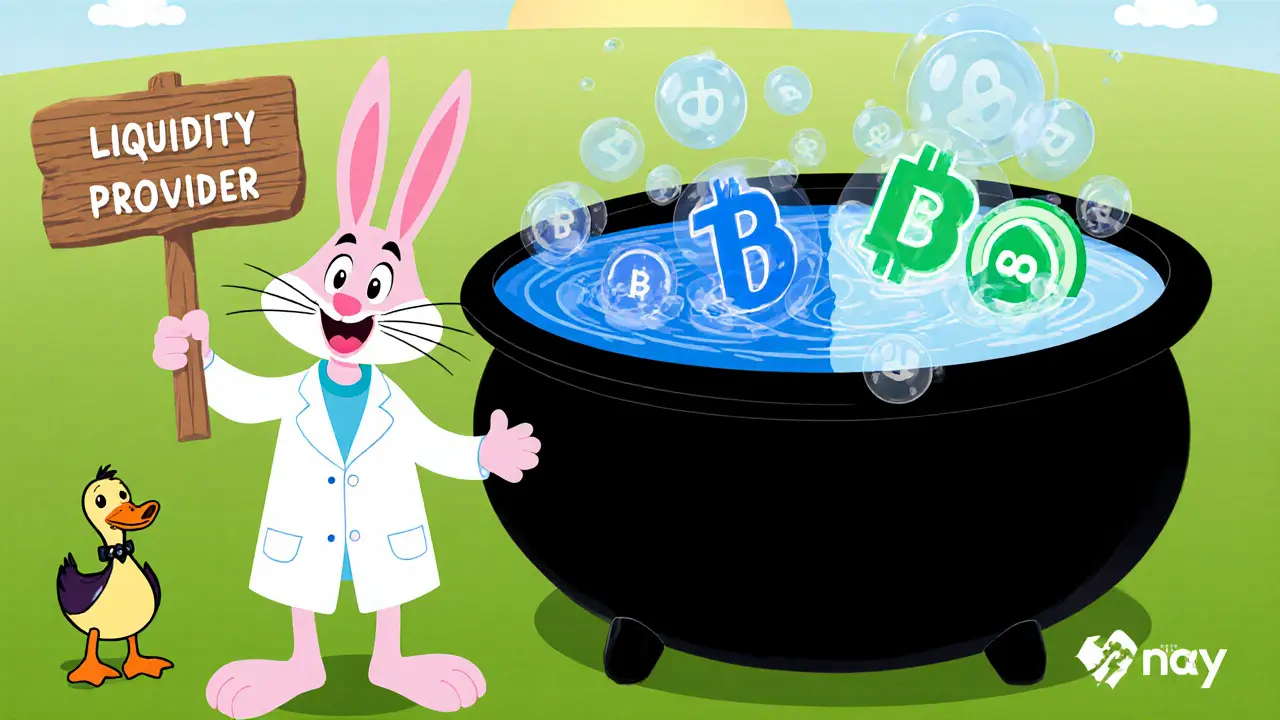
When working with Liquidity Provider, an individual or entity that deposits crypto assets into a shared pool to keep markets fluid. Also known as LP, it enables continuous buying and selling on Decentralized Exchange, a platform that matches trades without a central order book and fuels Liquidity Pool, a smart‑contract vault that holds paired tokens for swaps. Many LPs also participate in Yield Farming, a strategy that earns extra tokens as rewards for supplying liquidity. Together these components keep the DeFi ecosystem moving.
The core job of a Liquidity Provider is simple: supply assets, earn fees. In practice, an LP deposits two tokens—say ETH and USDC—into a Liquidity Pool. The pool’s automated market maker (AMM) then uses a mathematical formula to price swaps, so traders can exchange ETH for USDC instantly. Because the pool always has both sides of the pair, the AMM can fulfill orders without waiting for a counter‑party. This relationship—Liquidity Provider supplies assets to Liquidity Pool, Liquidity Pool powers Decentralized Exchange—creates a self‑sustaining loop that fuels daily trading volume.
Beyond the basic deposit, LPs need to understand three linked ideas. First, Automated Market Maker, the algorithm that determines token prices based on pool balances dictates how much slippage you’ll face on large trades. Second, impermanent loss—when the relative price of the two tokens shifts—can erode earned fees, so many LPs track price movements closely. Third, reward programs such as Yield Farming sprinkle extra tokens (often the platform’s native coin) on top of normal swap fees, turning liquidity supply into a mini‑investment strategy.
Choosing the right platform matters. On Uniswap v2 (Base) you get a straightforward fee structure, while Switcheo Network offers cross‑chain swaps that let you provide liquidity on both Harmony and Binance Smart Chain. Sterling Finance on Arbitrum adds extra incentives but comes with higher smart‑contract risk. Comparing these options helps you balance fee returns, token rewards, and security exposure.
Risk management is another pillar. Smart‑contract bugs, sudden token price crashes, or a sudden influx of capital that skews pool ratios can all hurt returns. Many seasoned LPs set maximum exposure limits, diversify across multiple pools, and keep a portion of assets in stablecoins to cushion volatility. Monitoring tools—like LedgerBeat’s real‑time pool analytics—make it easier to spot abnormal swings before they bite.
Armed with this overview, you can now dive into the specific guides below. Whether you’re curious about Wrapped Harmony (WONE), want to review the latest Uniswap v2 fees, or need a step‑by‑step on how to claim a DeFi airdrop, the articles ahead cover the practical details you’ll need to become an effective Liquidity Provider.
Learn what impermanent loss is, how it happens in DeFi AMM pools, how to calculate it, and practical ways to reduce the risk while earning fees.


Categories