
Imagine you want to trade Ethereum for a token on the Solana network. On most platforms, this is a headache. You have to bridge your assets, wait for confirmations, and pay gas fees twice. OpenOcean is a decentralized exchange (DEX) aggregator that solves this problem by finding the best swap routes across multiple blockchains automatically. Instead of juggling bridges and wallets, you connect once, click swap, and let their algorithm handle the rest. But does it actually save you money? Or is it just another flashy interface in a crowded market? Let’s look at the numbers, the tech, and the real-world experience of using OpenOcean in 2026.
What Is OpenOcean Really?
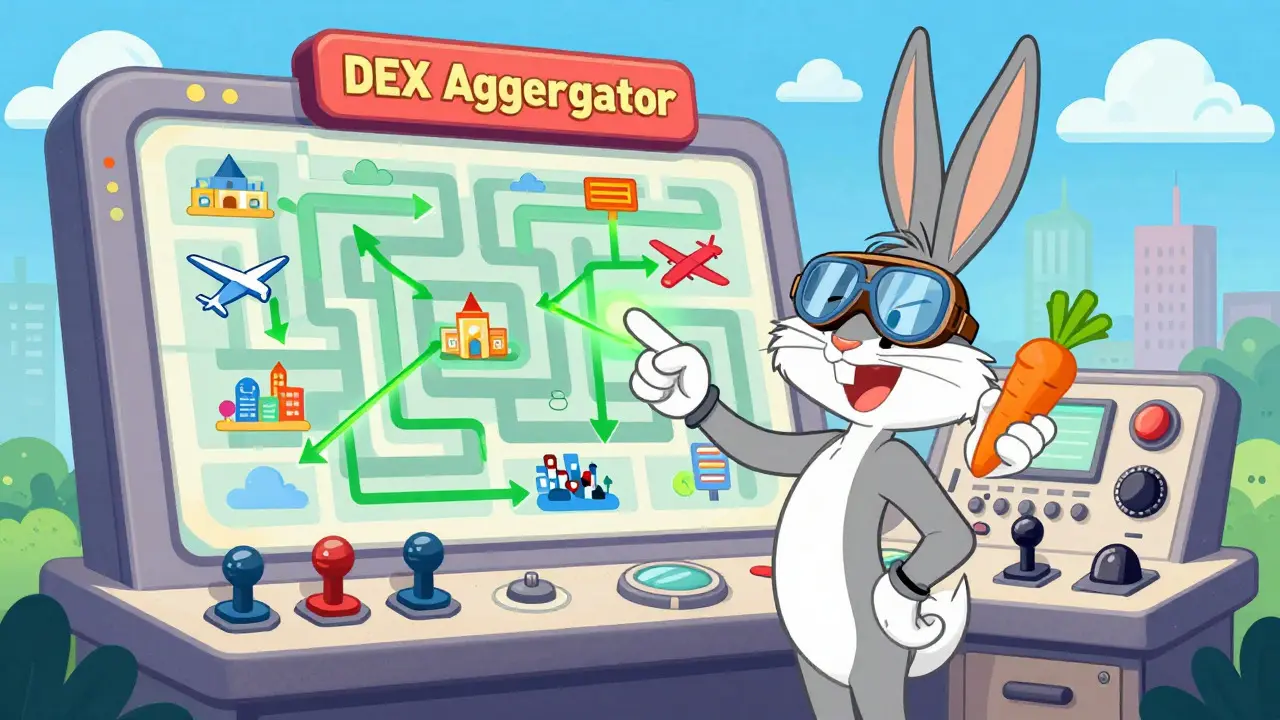
OpenOcean isn’t a traditional exchange where you deposit funds into an account. It’s a non-custodial tool. That means your crypto never leaves your wallet unless you explicitly approve a transaction. Founded in 2020, the platform aggregates liquidity from both centralized exchanges (CEXs) and decentralized protocols. Think of it like a flight comparison site. Skyscanner doesn’t own the planes; it checks every airline to find you the cheapest ticket. OpenOcean checks dozens of liquidity pools and order books across 19+ blockchain networks-including Ethereum, Binance Smart Chain, Solana, Polygon, and zkSync-to execute your trade at the lowest possible cost. The core technology here is an optimized version of the Dijkstra algorithm. This pathfinding logic scans thousands of potential routes in milliseconds. If swapping directly from Token A to Token B is expensive, but swapping A to C then C to B saves 5% in slippage, OpenOcean will take the latter route without you needing to do anything.
Fees, Costs, and the OOE Token Perk
Cost is usually the dealbreaker in DeFi. Gas fees can eat up small trades entirely. Here is how OpenOcean stacks up:
- Trading Fee: The platform charges a consistent 0.1% fee on spot trades. This is competitive with major DEXs like Uniswap but slightly higher than some aggressive aggregators that charge 0.05%.
- Gas Fees: These are paid to the blockchain network, not OpenOcean. However, OpenOcean offers a unique perk: if you stake their native OOE token, you can get up to 30% of your gas fees refunded.
- Slippage: Because of its smart routing, OpenOcean often achieves lower slippage than single-pool DEXs. CoinGecko data from early 2025 showed average bid-ask spreads around 0.15%, which is tight for cross-chain swaps.
User Experience: Simple Setup, No Account Needed
One of the biggest barriers to entry in crypto is KYC (Know Your Customer) verification. OpenOcean skips this entirely. There are no accounts, no emails, and no ID uploads. To start trading, you need:
- A compatible web3 wallet (MetaMask, WalletConnect, etc.).
- The OpenOcean website (openocean.finance).
- A few dollars worth of the native chain’s currency (like ETH for Ethereum) to pay for gas.
How Does It Compare to Competitors?
The DEX aggregator space is dominated by giants like 1inch and Matcha. How does OpenOcean fit in?
| Feature | OpenOcean | 1inch | Matcha |
|---|---|---|---|
| Supported Chains | 19+ | 15+ | 10+ |
| Daily Volume (Approx.) | $25.6M | $1.2B | $500M+ |
| Fee Structure | 0.1% + Gas | Variable (0.05%-0.3%) | 0.05% |
| Cross-Chain Capability | Yes (Native) | Yes (Via Bridges) | Limited |
| Regulatory Status | Unregulated | Unregulated | Unregulated |
Risks and Regulatory Reality
Let’s address the elephant in the room: regulation. As of mid-2026, OpenOcean operates without oversight from major authorities like the SEC or FCA. FxVerify’s 2025 assessment confirmed this unregulated status. In DeFi, this is normal. But it also means:
- No insurance on lost funds.
- No customer support hotline to call if a transaction gets stuck.
- Total responsibility rests on your shoulders to verify contract addresses.

Who Should Use OpenOcean?
This platform isn’t for everyone. Here is who benefits most:
- Cross-Chain Traders: If you hold assets on multiple chains (e.g., ETH on Ethereum and SOL on Solana) and want to move value between them efficiently, OpenOcean’s routing is superior to manual bridging.
- DeFi Beginners: The simple UI and lack of KYC make it an easy entry point into decentralized trading.
- Small-to-Medium Traders: For trades under $10,000, the slippage protection and gas refunds provide tangible value.
Final Verdict
OpenOcean delivers on its promise: it simplifies cross-chain swaps and optimizes costs through intelligent routing. With support for over 19 blockchains and a user-friendly interface, it removes much of the technical friction associated with DeFi. However, it lags behind industry leaders in trading volume and brand recognition. The lack of regulatory oversight remains a risk factor for conservative investors. If you are comfortable managing your own keys and understand the basics of gas fees, OpenOcean is a solid, reliable tool in your crypto toolkit. Just remember to check the route details before confirming any large transactions.
Is OpenOcean safe to use?
OpenOcean is non-custodial, meaning you retain control of your funds via your wallet. However, it is unregulated. Always double-check contract addresses and ensure you are connecting to the official openocean.finance domain to avoid phishing sites.
Does OpenOcean require KYC?
No. OpenOcean requires no identity verification. You only need a compatible cryptocurrency wallet like MetaMask to connect and trade.
What is the minimum deposit on OpenOcean?
There is no formal minimum deposit. You can trade as little as $1, provided you have enough native currency (like ETH or MATIC) to cover the network gas fees.
Can I earn rewards by holding OOE tokens?
Yes. Staking OOE tokens allows users to receive up to 30% gas fee refunds on their trades. This is the primary utility benefit of holding the token.
Which blockchains does OpenOcean support?
OpenOcean supports over 19 networks, including Ethereum, Binance Smart Chain, Solana, Polygon, Avalanche, TRON, Cardano, and zkSync.



Categories