Imagine buying a concert ticket and knowing for sure it’s real - no fake QR codes, no last-minute cancellations, no scalpers flipping it for triple the price. That’s what NFT ticketing promises. In 2026, this isn’t science fiction anymore. It’s happening. Events from small indie gigs to major music festivals are turning to blockchain-powered tickets to fix the broken system we’ve lived with for decades.
Why NFT Tickets Are Different
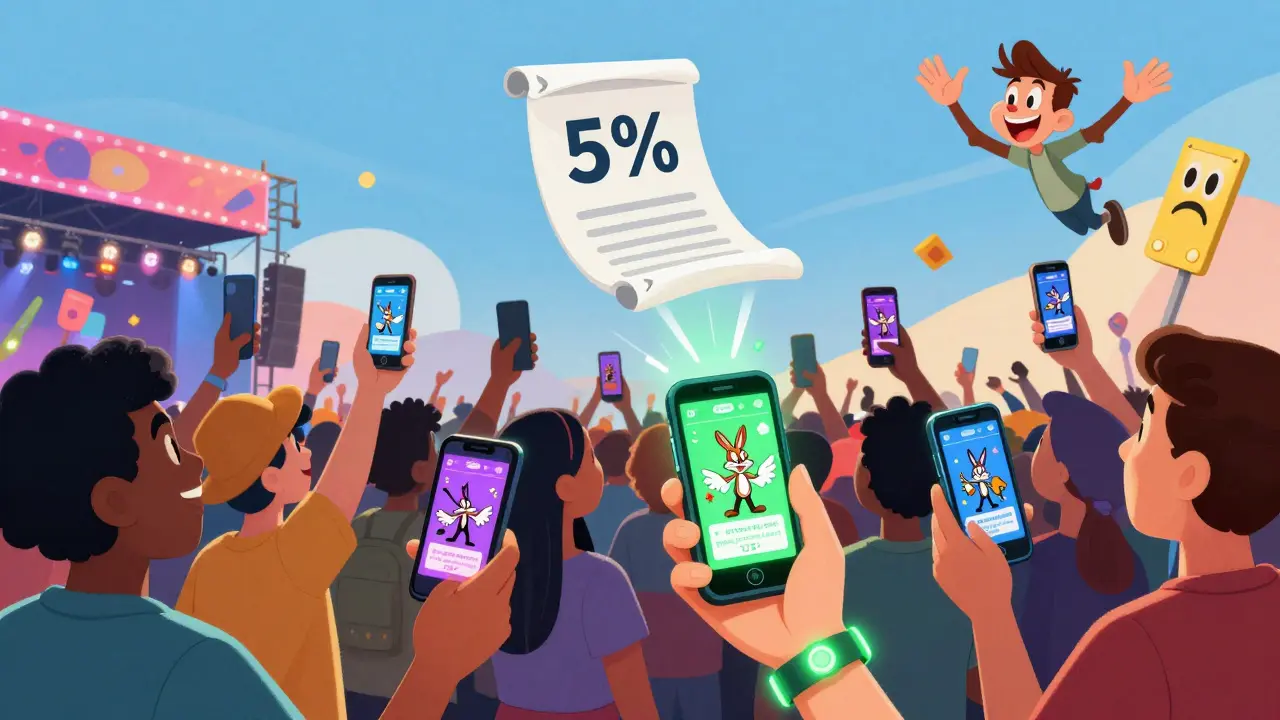
Traditional tickets - paper or mobile - are easy to copy. A screenshot can be shared, a PDF printed, or a QR code cloned. Scalpers exploit this. They use bots to buy hundreds of tickets the moment they go on sale, then resell them at insane markups. Organizers lose control. Fans get ripped off. And there’s nothing you can do about it. NFT tickets change that. Each ticket is a unique digital asset stored on a blockchain. Think of it like a one-of-a-kind collectible card, but instead of showing a player’s stats, it proves you own entry to an event. Because every transaction is recorded on a public ledger, you can trace who owned the ticket before you. No duplicates. No fraud. Smart contracts - self-executing code on the blockchain - make this even smarter. They can automatically limit resale prices. Say you bought a $100 ticket. The smart contract can say: “Resale only allowed at $120 or less.” That stops scalpers cold. And if the artist or organizer wants to earn a cut every time the ticket changes hands? They get 5%, 10%, or whatever they set. It’s automatic. No middlemen.How NFT Ticketing Works in Practice
Here’s how it actually plays out for someone attending an event:- You buy a ticket using your credit card or crypto wallet. Some platforms let you pay in both.
- The ticket is sent to your digital wallet - like MetaMask, Phantom, or a platform-specific one.
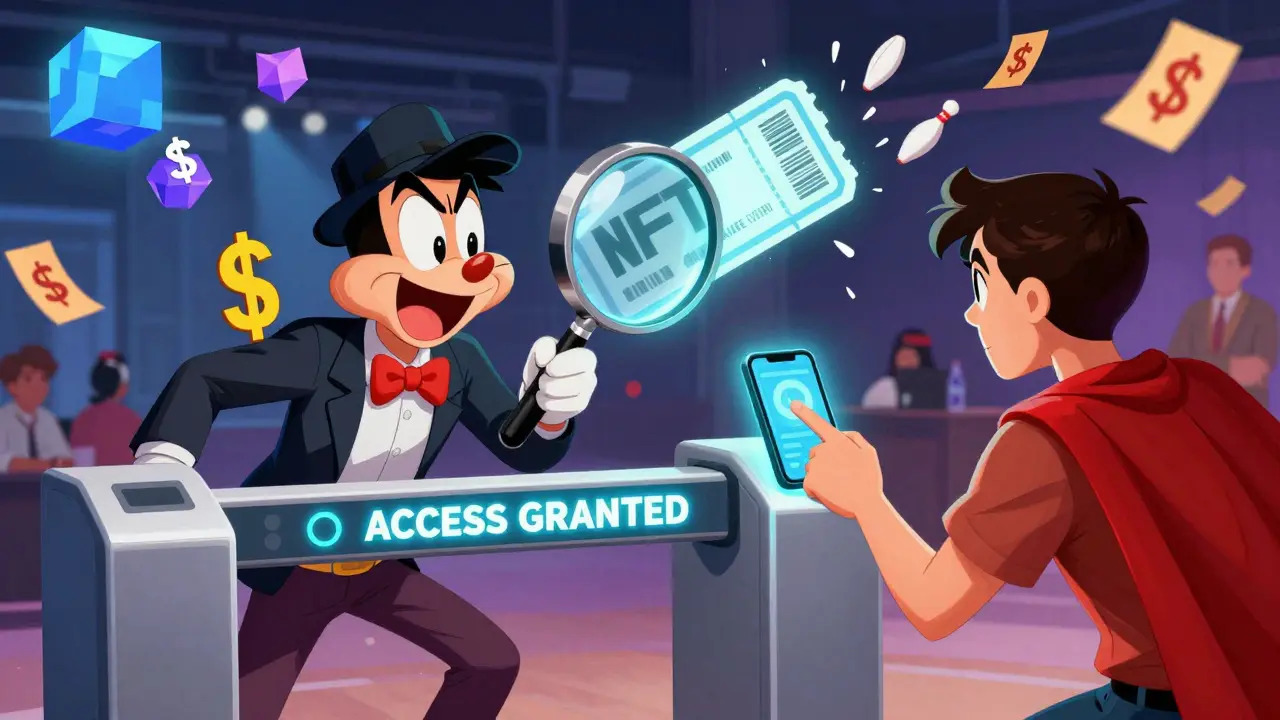
- At the event, you open your wallet and show a dynamic QR code or tap your phone against an NFC reader. No printing. No scanning old screenshots.
- The system checks the blockchain in real time: Is this ticket valid? Has it been transferred? Is it within resale limits? All answered in under a second.
Top Platforms in 2026
Not all NFT ticketing platforms are the same. Here’s how the main ones stack up:| Platform | Blockchain | Key Feature | Fees (Ticket + Resale) | Best For |
|---|---|---|---|---|
| SeatLabNFT | NEAR Protocol | NFC verification + $SEAT rewards | 1% minting fee, 10% resale royalty | Collectible experiences, artist-driven events |
| WICKET | GET Protocol | Dynamic QR codes, Italy-focused | 2.5% transaction fee, 8% royalty | High-risk scalping markets |
| Oveit | Multi-chain (Ethereum, Polygon) | Smart wristbands, multi-gate check-in | 2% minting, 4.5% resale fee | Large venues, hybrid access systems |
| TicketMint | Custom SmartLedger | Metaverse integration, NFT creation tools | 3% fee + payment processing | Digital concerts, fan communities |
| SquadUP + Sidechain | Sidechain (Ethereum L2) | Convert traditional tickets to NFTs | Free conversion, 5% resale royalty | Organizers switching from legacy systems |
Each platform has a different sweet spot. SeatLabNFT is great if you want your ticket to feel like a rare collectible. WICKET is built to crush scalping - especially in markets where tickets are resold at 10x the price. Oveit works best for big venues that need to handle thousands of entries smoothly. TicketMint is for artists who want to build a whole digital ecosystem around their shows. And SquadUP + Sidechain helps traditional event companies dip their toes in without ditching their existing system.
Who Benefits the Most?
NFT ticketing isn’t for every event. It shines in specific scenarios:- High-value events - Think VIP concerts, exclusive art shows, or limited-edition theater runs. When tickets cost $500+, fraud becomes a huge risk. NFTs eliminate that.
- Artist-fan connections - Musicians and creators use NFT tickets to reward loyal fans. Maybe you get a digital poster, a voice note from the artist, or early access to their next album.
- Community events - Local festivals, crypto meetups, or DAO gatherings use token-gated access. Only people who hold a certain NFT can enter. It builds real belonging.
- Events with resale problems - If your tickets keep ending up on StubHub or Viagogo at 3x price, NFTs lock resale to fair prices.
On the flip side, it’s overkill for a $20 movie ticket or a local church fundraiser. The setup cost, learning curve, and tech friction don’t make sense there. NFT ticketing works best when the value of the event justifies the tech.
The Real Challenges
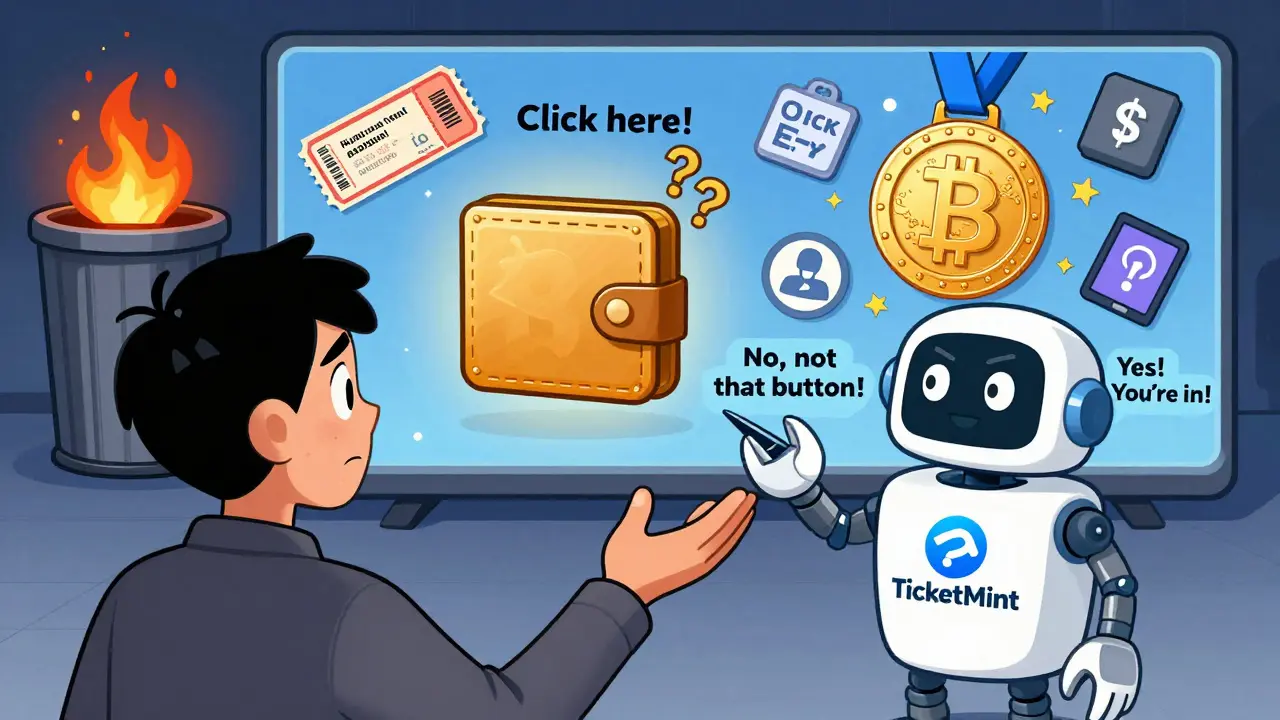
Let’s be honest - this isn’t perfect yet.- Wallet setup is still confusing - If you’ve never used a crypto wallet, the idea of “connecting your wallet” feels like a foreign language. Many users drop out at this step.
- Fees add up - Minting a ticket might cost $1.50. Reselling it? Another 5%. Paying with crypto? Gas fees on Ethereum can spike to $10 during peak times.
- Platform stability matters - If the blockchain network slows down or crashes during ticket sales, people miss out. NEAR and Polygon handle this better than older chains.
- No mobile apps everywhere - Some platforms still rely on web browsers. For a generation that lives on phones, that’s a dealbreaker.
Organizers aren’t off the hook either. They need to explain this to their audience. A simple email saying “Your ticket is now an NFT” isn’t enough. You need videos, FAQs, live Q&As. You need to make it feel simple - not technical.
The Future Is Here - But It’s Still Growing
In 2026, NFT ticketing is no longer a experiment. It’s a working solution. Major events in Europe, North America, and Asia are using it. The Italian market, where WICKET was built to fight 1,000% price gouging, is now a model for others. The tech is maturing: better mobile apps, easier wallet onboarding, support for Apple Pay and Google Pay alongside crypto. The next big leap? Interoperability. Right now, a ticket on NEAR can’t be used on Ethereum. But platforms are starting to build bridges. Imagine buying a ticket on one chain and transferring it to another - or using the same ticket to enter a real-world event and a virtual concert in the metaverse. And as more people get used to digital wallets for everything - from transit passes to loyalty cards - the barrier to NFT tickets will drop. It won’t be about crypto anymore. It’ll just be about better, safer, more rewarding access.For now, if you’re an event organizer tired of scalpers stealing your revenue - or a fan sick of paying inflated prices - NFT ticketing isn’t just an option. It’s the best answer we’ve had in years.
Can I use NFT tickets if I don’t have a crypto wallet?
Yes. Most platforms now let you buy NFT tickets using credit cards. The ticket gets automatically sent to a wallet created for you - you don’t need to set one up yourself. But to resell or transfer it later, you’ll need to claim it into your own wallet. Think of it like booking a flight: you can pay with a card, but to change your seat, you need to log in.
Are NFT tickets more expensive than regular tickets?
The base ticket price is usually the same. But there are extra fees: minting (often $1-$4.50), resale royalties (2-10%), and sometimes gas fees if you pay in crypto. For most users, the total cost is still lower than buying from a scalper. Plus, you’re not paying inflated prices - you’re paying what the artist intended.
Can I resell my NFT ticket for more than I paid?
It depends on the smart contract. Some platforms allow free resale, but others cap the price - say, 10% above original. This stops scalpers. If you try to list it for $500 on a ticket that cost $100, the system will block it. The artist or event organizer sets these rules upfront.
What happens if the blockchain goes down?
The ticket data is stored on the blockchain, but access is handled through apps and gate systems. If the network slows, most platforms have backup systems - like cached QR codes or offline verification modes. Your ticket won’t vanish. You’ll still get in. But new sales or transfers might be delayed until the network recovers.
Do I need to understand blockchain to use NFT tickets?
No. Most platforms hide the complexity. You click “Buy,” enter your email, get a link, and open it on your phone. The blockchain part? It runs in the background. You only need to understand it if you want to resell, trade, or explore collectible features. For just attending the event? It’s as simple as a mobile ticket.