

When you hear "crypto compliance," you might think of endless paperwork, frozen accounts, and slow customer onboarding. But the truth is, the best crypto companies aren’t drowning in red tape-they’re using something smarter: a risk-based approach. This isn’t just a buzzword. It’s the only way to keep up with crypto’s speed while stopping real crime.
Why Rules Don’t Work in Crypto
Traditional banking uses one-size-fits-all rules. If you deposit $10,000, you get flagged. If you send money to Country X, you need extra docs. It’s simple, but it’s also broken for crypto. Why? Because crypto moves differently. A $5,000 transfer to a DeFi protocol might be totally clean. A $500 swap through a privacy mixer? That’s a red flag. Applying the same checks to both is like using a net to catch fish and sharks-too much noise, too little precision. The Financial Action Task Force (FATF), the global watchdog for financial crime, figured this out years ago. In 2012, they introduced the idea: don’t treat every user the same. Instead, look at the actual risk. By 2023, this became mandatory for all 206 FATF member countries. If you’re running a crypto exchange, wallet, or DeFi service and you’re not using a risk-based approach, you’re not just behind-you’re breaking the law.The Four Pillars of a Crypto Risk-Based Approach
A real risk-based system isn’t magic. It’s built on four clear steps:- Risk Identification - You start by asking: What are we dealing with? Who are our customers? What assets do they trade? Where are the transactions going? A user in New Zealand buying Bitcoin on a verified exchange is low risk. A user in Myanmar sending ETH to an unhosted wallet? That’s high risk.
- Risk Assessment - Not all risks are equal. FATF and regulators like AUSTRAC have built scoring models. For example, transactions involving Politically Exposed Persons (PEPs) carry a 3.2x higher risk score. Cross-border transfers? 2.8x higher. Using anonymous mixers? Automatically high risk. These aren’t guesses-they’re data-backed weights.
- Mitigation Measures - This is where you adjust your controls. High-risk customers get Enhanced Due Diligence (EDD): deeper ID checks, source-of-funds reviews, and 72-hour transaction monitoring. Medium-risk? Standard checks with 14-day reviews. Low-risk, pre-verified users? Quarterly reviews. You’re not adding friction everywhere-you’re adding it where it matters.
- Continuous Monitoring - Crypto changes fast. New tokens, new protocols, new scams. Your risk model can’t sit on a shelf. FATF requires updates at least quarterly. Top firms use AI tools that scan 15,000+ risk indicators daily, adjusting scores in real time.
What’s Actually Risky in Crypto?
You can’t just copy a bank’s risk list. Crypto has its own dangers:- Unhosted wallets - These are wallets you control, not ones run by an exchange. They’re legal, but they’re also where 78% of laundering happens. FATF’s Travel Rule now requires VASPs to track transfers to these wallets. That means collecting sender and receiver info-even if the receiver isn’t on a platform.
- Crypto mixers - Tools like Tornado Cash are designed to hide transaction trails. They’re classified as high-risk under FATF Annex A. Even if a user says they’re just "protecting privacy," the system flags them.
- DeFi protocols - Liquidity pools, yield farming, flash loans. These aren’t just complex-they’re invisible to old-school AML tools. Kraken reduced DeFi-related suspicious reports by 68% by focusing monitoring on transactions over $10,000 in liquidity pools.
- High-risk jurisdictions - Countries like South Sudan, Myanmar, and North Korea are on FATF’s high-risk list. Any transaction tied to them triggers 100% Enhanced Due Diligence. No exceptions.
- NFTs and gaming assets - A $20,000 NFT sale might be a collector’s purchase… or a way to launder money. New research shows NFT marketplaces need 47% more risk parameters than regular exchanges.

How Tech Makes RBA Work
You can’t do this manually. A human can’t monitor 10,000 transactions a day and spot patterns. That’s where tech steps in.- Blockchain analytics tools - Chainalysis Reactor and Scorechain are used by 82% of top 50 exchanges. They trace funds across chains, flag mixing services, and map wallet clusters. A minimum contract? $120,000/year.
- AI risk engines - These tools analyze patterns: transaction frequency, timing, amounts, and wallet relationships. Chainalysis’s Risk Model 3.0, launched in September 2023, identifies mixing service use with 89.7% accuracy.
- Customer onboarding platforms - Tools like Sumsub help smaller VASPs verify users fast. They handle ID checks, liveness detection, and risk scoring-all for $0.75 to $3.50 per verification.
Real Results: What Happens When You Get It Right?
Coinbase cut compliance costs by 38% after switching to RBA in 2021. Binance improved the quality of their suspicious activity reports (SARs) by 52%. Ripple reduced manual reviews by 72% while increasing high-risk detection by 53%. Why? Because they stopped wasting time on false alarms. Traditional systems flag 100 alerts for every real crime. RBA cuts that to 37. That’s not just efficiency-it’s survival. With 167 of 188 global regulators now prioritizing RBA, the ones who ignore it are the ones getting shut down.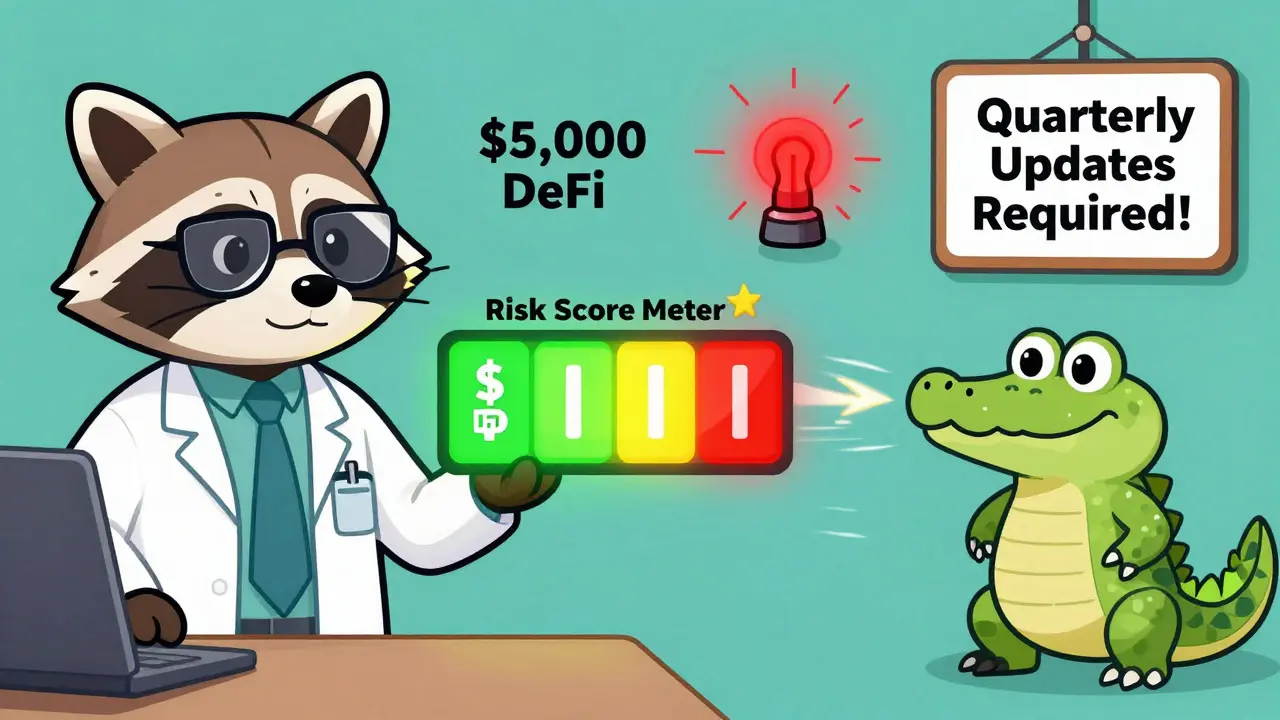
Where RBA Still Fails
It’s not perfect. Even the best systems struggle with:- Zero-knowledge proofs (ZKPs) - Privacy tech like zk-SNARKs hides transaction details. The Blockchain Intelligence Group found a 41% higher false negative rate when these are used. Regulators are still figuring out how to monitor them without breaking privacy.
- Inconsistent scoring - Bitstamp’s 2023 audit found 22% of risk ratings varied between compliance officers. One person calls a user medium risk. Another calls them high. That’s a legal risk.
- Emerging DeFi risks - The Axie Infinity hack in 2022 cost $611 million. Why? The risk model didn’t account for bridge transaction patterns. It was a blind spot.
What You Need to Do-Step by Step
If you’re running a crypto business, here’s how to start:- Map your risk exposure - List every customer type, asset, and transaction flow you handle. Don’t skip NFTs, DeFi, or cross-chain swaps.
- Adopt a tiered model - Create 3-5 risk levels: low, medium, high. Define what each looks like (e.g., high = unhosted wallet + cross-border + crypto mixer).
- Integrate blockchain analytics - Start with one tool. Chainalysis or Scorechain. Don’t try to build your own.
- Train your team - EU MiCA requires 20 hours of annual training. Make sure your staff knows how to interpret alerts, not just react to them.
- Update quarterly - Add new tokens, new jurisdictions, new scam patterns. If your risk model hasn’t changed in six months, it’s outdated.
The Future Is Dynamic
By 2026, Gartner predicts 75% of crypto compliance budgets will go to dynamic risk tech-up from 42% today. The EU’s MiCA regulation, effective December 2024, makes RBA mandatory for all crypto service providers. The U.S. Treasury is pushing the same. Even ISO is building a global standard: ISO 22739, due in Q2 2024. The message is clear: RBA isn’t going away. It’s becoming the baseline. The companies that survive are the ones treating compliance not as a cost center, but as a competitive edge. You don’t just avoid fines-you build trust. And trust turns users into customers.Is a risk-based approach mandatory for crypto businesses?
Yes. Since 2023, all FATF member countries (206 jurisdictions) require Virtual Asset Service Providers (VASPs) to implement a risk-based approach to AML/CFT. Failure to comply can result in being "grey-listed," which blocks access to global banking systems. The EU’s MiCA regulation, effective December 2024, enforces this globally for all crypto service providers.
How is risk scored in crypto compliance?
Risk is scored using weighted factors. For example: transactions involving Politically Exposed Persons (PEPs) carry a 3.2x higher risk score; cross-border transfers increase risk by 2.8x; and use of crypto mixers automatically triggers high-risk status. Tools like Chainalysis and Scorechain use AI to analyze over 15,000 indicators-including wallet behavior, transaction timing, and geographic links-to assign real-time risk scores.
What’s the difference between Simplified, Standard, and Enhanced Due Diligence?
Simplified Due Diligence (SDD) applies to low-risk users-pre-verified retail customers with stable, small transaction patterns. Reviews happen quarterly. Standard Due Diligence (SDD) is for medium-risk cases, like domestic transfers under $1,000, with 14-day monitoring. Enhanced Due Diligence (EDD) is for high-risk scenarios-like large transfers to unhosted wallets or high-risk countries. EDD requires full source-of-funds verification and 72-hour transaction reviews.
Can crypto mixers ever be legal?
Technically, yes-some jurisdictions allow them. But under FATF guidelines, they are classified as high-risk by default. Any VASP that processes transactions involving mixers must apply Enhanced Due Diligence. Most compliant exchanges block them outright because the regulatory and reputational risk outweighs any customer demand.
Why do DeFi protocols need special risk controls?
Traditional AML tools can’t track DeFi activity because there’s no central entity. Liquidity pools, flash loans, and governance tokens operate peer-to-peer. That’s why VASPs must monitor transaction volumes above $10,000, track token concentration in pools, and flag unusual liquidity movements. Kraken reduced DeFi-related SARs by 68% by focusing on these patterns.
What happens if my risk model is wrong?
If your model misses real crime, you risk fines, enforcement actions, or being grey-listed. If it flags too many false positives, you waste resources and frustrate users. The key is continuous testing. Top firms audit their models quarterly and compare results against real enforcement data. A 2023 audit of 89 VASPs showed those with dynamic, updated models had 47% higher detection rates than those using static rules.