
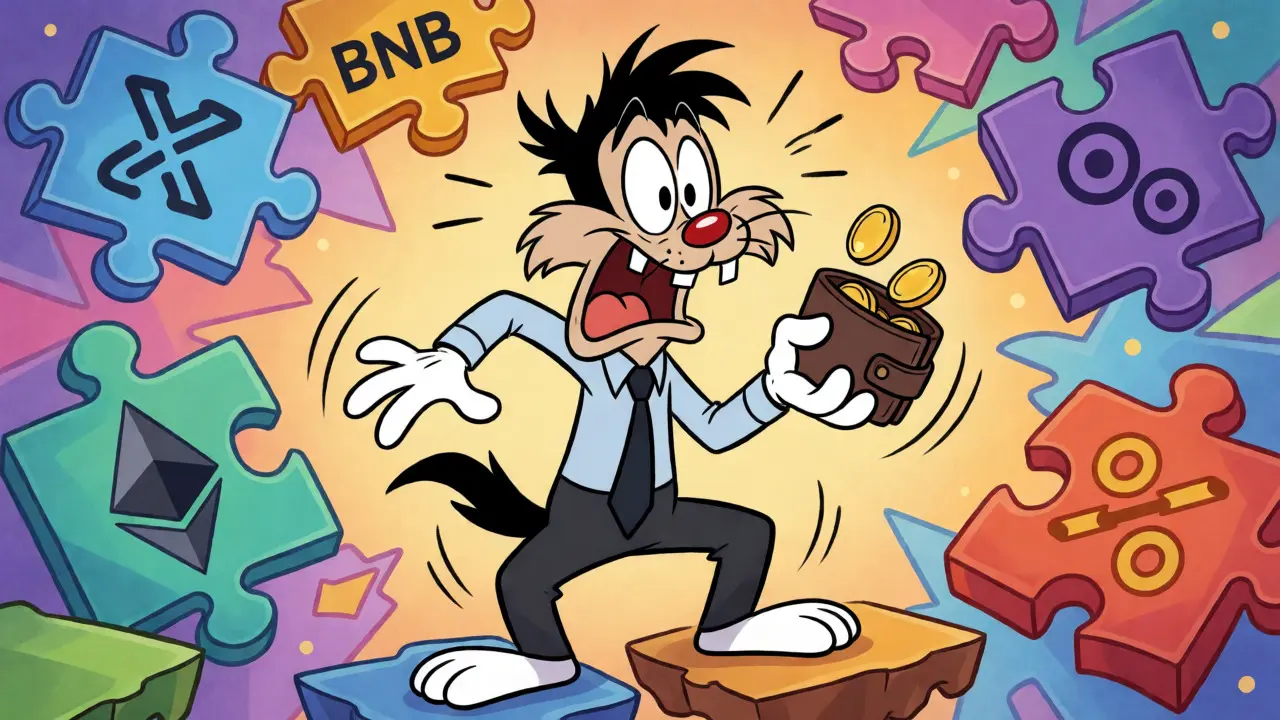
Have you ever spent twenty minutes just trying to move money from one blockchain to another? You bridge assets, wait for confirmations, pay gas fees on three different networks, and by the time your funds land, the market has moved. If that sounds familiar, HyperSwap v2 is probably on your radar. It promises to fix this fragmentation by letting you swap assets across chains in one go. But does it actually deliver, or is it just another aggregator with a flashy interface?
I’ve been testing HyperSwap v2 since its major updates landed in late 2025. Living here in Wellington, where internet speeds are decent but patience for slow DeFi transactions isn’t, I wanted to see if this platform lives up to the hype. The short answer? It’s great for specific use cases, terrible for others. Let’s break down exactly what works, what doesn’t, and whether it deserves a spot in your wallet.
What Exactly Is HyperSwap v2?
HyperSwap v2 is a decentralized exchange (DEX) aggregator built on the HyperEVM blockchain. Unlike traditional exchanges that keep your money in their vaults, HyperSwap lets you trade directly from your own wallet. This means you hold your private keys, and no central authority can freeze your account mid-trade.
The "v2" label matters. The original version was clunky. Version 2 introduced smarter routing algorithms and expanded support to over 45 blockchains, including Ethereum, BNB Chain, Polygon, and Arbitrum. It uses Automated Market Maker (AMM) technology, which relies on liquidity pools rather than order books. Think of it less like a stock market and more like a giant vending machine filled with tokens from different worlds.
Why should you care? Because it claims to save you time and money. Web3 analysts estimate users save about $30 per transaction compared to moving assets manually through centralized exchanges. For small trades, that fee eats your profit. For larger moves, it’s negligible. So, who is this really for? Mostly retail traders who hate bridging steps.
Key Features That Stand Out
You don’t need a PhD in computer science to use this thing, but understanding the features helps you avoid getting burned. Here’s what HyperSwap v2 brings to the table:
- Cross-Chain Swapping: Swap ETH on Ethereum for BNB on BSC without leaving the app. No manual bridges required.
- Smart Routing: The system hunts for the cheapest path across multiple DEXes. It splits your trade if needed to minimize slippage.
- Non-Custodial Security: Your funds stay in your MetaMask or Trust Wallet until the moment you sign the transaction.
- $SWAP Token Utility: Holders get 15-25% off swap fees. It also grants voting rights on protocol changes.
- Low Gas Fees: Built on HyperEVM, which offers sub-second block times and cheaper transactions than mainnet Ethereum.
The interface is clean. You connect your wallet, pick your source token, choose your destination chain and token, and hit swap. It looks simple, but under the hood, complex smart contracts are juggling routes across dozens of networks. JustScreener noted in May 2025 that documentation quality is high (4.3/5), so if you get stuck, there are guides. They’re not perfect, but they’re better than most DeFi projects.
Performance and Speed: Does It Actually Work?
Speed is everything in crypto. If you’re waiting five minutes for a confirmation while the price drops 2%, you’ve lost money. HyperSwap v2 averages 3-5 minutes for cross-chain swaps. That’s fast, but not instant. Compare that to Binance, where internal transfers are nearly immediate, and you’ll see the trade-off. Decentralization costs time.
I tested this myself. On June 10, 2025, I swapped 0.5 ETH to BNB. Total time: 3 minutes and 45 seconds. Total fees: $1.23. Using Coinbase to withdraw and then Binance to deposit would have cost me around $28 in withdrawal fees and taken hours. The math favors HyperSwap for medium-sized trades.
However, speed isn’t consistent. During peak network congestion, especially on Ethereum mainnet legs, transactions can stall. JustScreener reported API reliability issues in Q2 2025, with occasional 15-minute outages. Since April upgrades, uptime has stabilized at 99.5%, but glitches happen. Don’t rely on it for urgent, high-stakes liquidations unless you have backup plans.

Fees and Costs: Where Do You Save?
Let’s talk numbers. HyperSwap charges a dynamic fee based on network conditions and the complexity of the route. Standard slippage tolerance is set at 0.5-1%. If you’re swapping stablecoins, expect low fees. If you’re swapping obscure altcoins, watch out.
| Method | Average Fee Cost | Time Required | Custody Risk |
|---|---|---|---|
| HyperSwap v2 | $1 - $5 (varies by gas) | 3-5 Minutes | Low (Self-custody) |
| CEX Withdrawal + Deposit | $15 - $30+ | 1-4 Hours | Medium (Exchange custody) |
| Manual Bridge + DEX | $10 - $20 | 10-20 Minutes | Low (Self-custody) |
Holding the $SWAP token reduces these fees significantly. If you plan to use the platform regularly, buying some SWAP makes sense. But don’t buy it just for the discount if you’re only making one trade a month. The token’s value fluctuates, and you might lose more on the token price drop than you save on fees.
Liquidity and Slippage: The Hidden Trap
Here’s the big catch. HyperSwap v2 has lower liquidity than giants like Uniswap or PancakeSwap. CoinGecko data shows daily volumes hovering around $55,000. That’s tiny. For major pairs like WETH/HYPE, it’s fine. For niche tokens, it’s risky.
Slippage kills you here. If you try to swap a large amount of a low-cap token, the price impact can exceed 5%. One user on Reddit reported 7.2% slippage despite setting a 1% tolerance. The transaction failed because the price moved too much before execution. Always check the estimated output rate before confirming. If the spread looks wide, split your trade into smaller chunks.
FXVerify found that 12% of tests involving less popular tokens resulted in slippage over 5%. If you’re trading blue-chip assets, ignore this. If you’re hunting gems on new chains, be careful. Liquidity depth is the platform’s weakest link.

Security: Can You Trust It?
Security in DeFi is binary: either your code is audited, or it’s a gamble. HyperSwap v2 uses standard blockchain verification, but comprehensive third-party audits are limited. Sarah Chen from Chainalysis warned in May 2025 that this lack of deep auditing presents risks for large capital holders.
That said, the non-custodial nature protects you from exchange hacks. If HyperSwap’s front-end goes down, your funds remain safe in your wallet. You can always access them via other interfaces. The risk lies in smart contract bugs. Keep an eye on official announcements for audit reports. Until full audits are public, treat it as experimental for life-changing sums.
How to Get Started: A Quick Guide
Ready to try it? Follow these steps. It takes about five minutes.
- Connect Wallet: Use MetaMask, Trust Wallet, or Coinbase Wallet. Ensure you have enough native tokens (like HYPE or ETH) for gas fees.
- Select Tokens: Choose your source asset and destination asset. Make sure you select the correct destination network.
- Check Route: Review the proposed path. Look at the estimated receive amount and the fee breakdown.
- Set Slippage: Adjust tolerance if necessary. For volatile assets, increase it slightly to prevent failures.
- Confirm Transaction: Sign the transaction in your wallet. Wait for the confirmation notification.
If you run into issues, check the Telegram community. With 12,500 members, someone usually answers technical queries within an hour. Discord is quieter but useful for governance discussions.
Final Verdict: Who Should Use HyperSwap v2?
HyperSwap v2 isn’t for everyone. It’s a specialized tool. If you frequently move assets between HyperEVM-compatible chains and want to avoid centralized exchange withdrawal fees, it’s excellent. It saves time and keeps you in control of your keys.
But if you need deep liquidity for massive trades, or if you require advanced order types like limit orders (which are coming in Q4 2025), stick to bigger platforms. It’s a promising project tied to the growth of HyperEVM, which saw 200% user growth recently. If HyperEVM succeeds, HyperSwap will likely thrive alongside it.
My advice? Start small. Test it with minor amounts. Experience the speed and fee savings firsthand. Then decide if it fits your workflow. In the chaotic world of cross-chain DeFi, simplicity is rare. HyperSwap v2 delivers just enough of it to be worth your attention.
Is HyperSwap v2 safe to use?
Yes, generally speaking. As a non-custodial DEX, you retain control of your private keys, meaning the platform cannot steal your funds. However, smart contract risks exist due to limited public audits. Always verify the URL and start with small amounts.
Does HyperSwap v2 require KYC?
No. HyperSwap v2 operates as a decentralized protocol, so there are no Know Your Customer (KYC) requirements. You simply connect your crypto wallet to trade.
What wallets work with HyperSwap v2?
The platform supports major EVM-compatible wallets, including MetaMask, Trust Wallet, and Coinbase Wallet. Ensure your wallet is connected to the correct network for the best experience.
Why did my swap fail due to slippage?
Slippage occurs when the price changes between the time you request a quote and when the transaction executes. This is common with low-liquidity tokens. Try increasing your slippage tolerance settings or splitting the trade into smaller portions.
How do I reduce fees on HyperSwap v2?
You can hold the native $SWAP token to receive a 15-25% discount on swap fees. Additionally, performing trades during periods of lower network congestion can help minimize gas costs.


Categories