
Buying or selling a house used to mean weeks of waiting-paperwork piling up, banks taking days to confirm wires, title companies playing phone tag, and every step needing a physical signature. The whole process? Usually 30 to 60 days. But what if you could close in under a week? Or even less than 72 hours? That’s not science fiction anymore. Blockchain is making it real.
Why Real Estate Transactions Are So Slow
Traditional real estate deals are built on layers of manual checks. Title searches alone can take 7 to 10 days. Mortgage approvals? Another 15 to 21 days. Escrow and fund transfers? Add 5 to 7 more. And that’s before you count the delays from seven or more intermediaries: agents, lawyers, inspectors, banks, title insurers, county recorders, and more. Each one holds the deal hostage until their part is done. It’s not that these steps aren’t necessary. They are. But they’re all done manually, one after another, with no automation. A document gets emailed, printed, signed, scanned, mailed, filed, verified again, and repeated. Every delay compounds. That’s why the average U.S. home closing still takes over 45 days.How Blockchain Changes the Game
Blockchain replaces those paper trails with digital ledgers that everyone can see-and no one can alter. It’s not just about storing data. It’s about automating trust. At the heart of this shift are smart contracts. These are self-executing pieces of code that run on a blockchain. Once you set the rules-like “release funds when title is clear”-the contract does the rest. No human needs to approve each step. No waiting for someone to open their email. The system checks everything automatically. Here’s how it works in practice:- Digital identity verification: Buyers and sellers verify their identities using blockchain-based credentials. This used to take 3 to 5 days with notaries and background checks. Now it’s done in under 24 hours.
- Automated title search: The blockchain pulls data from county records, lien databases, and past transfers. Instead of waiting 7 to 10 days for a title company to manually check records, the system finds and verifies everything in under 4 hours.
- Instant fund transfer: Money moves directly from buyer to seller through blockchain wallets. No more waiting for bank wires to clear over 3 to 5 days. Settlement happens in under an hour.
Speed Numbers That Matter
Real data shows the difference:- Traditional closing: 30-60 days
- Blockchain closing: 2-7 days
- Fastest recorded blockchain close: 58 hours (Propy, 2023)
- Time saved on fund verification: 11 business days (JLL case study)
- Smart contract steps: Reduced from 12-15 manual tasks to just 3-4 automated ones
Which Blockchains Are Used?
Not all blockchains are built the same. Two dominate real estate:- Ethereum: The most common platform. It’s secure, widely supported, and runs smart contracts reliably. Transaction confirmations take about 15-30 seconds per block.
- Bitcoin SV (BSV): Designed for high-volume transactions. It can handle up to 50,000 transactions per second and settles nearly instantly. Used by companies like ShelterZoom and Harbor for speed-critical deals.
Where Blockchain Works Best
Blockchain doesn’t fix everything. Its biggest wins happen where manual steps used to slow things down:- Multi-state or international sales: Traditional cross-border deals take 60-90 days. Blockchain cuts that to 5-10 days by removing currency conversion delays and international bank delays.
- Commercial real estate: Institutional buyers and developers are leading adoption. MSCI predicts 68% of commercial deals will use blockchain by 2025.
- High-volume markets: Cities like Austin, Nashville, and Miami have seen the fastest adoption because their local recorders are more tech-friendly.
The Big Catch: Regulations Still Lag
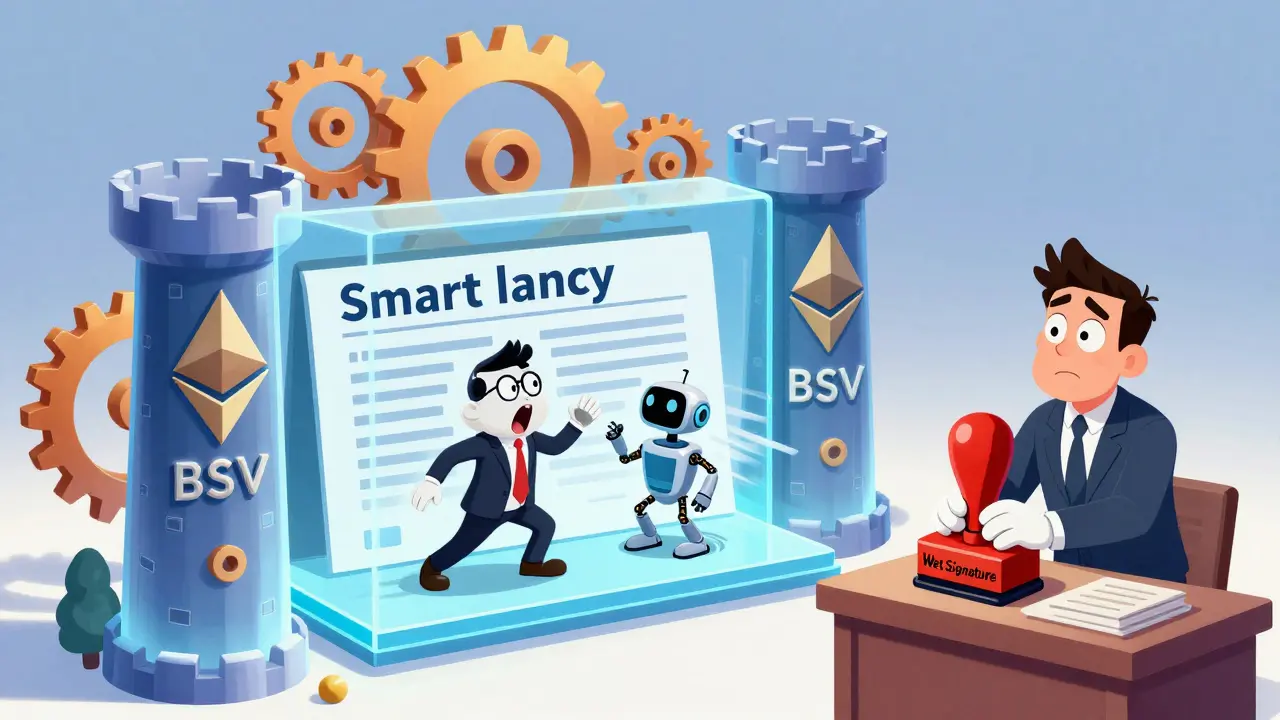
Here’s the problem: blockchain can move fast, but the law doesn’t always keep up. In 49 U.S. states, electronic signatures are legally recognized under the ESIGN Act. That means blockchain signatures are valid. But in 22 states, deeds still require a “wet signature”-a physical ink signature on paper. If the county recorder’s office won’t accept a digital deed, then the whole blockchain process hits a wall. One buyer in Texas reported closing in 4 days using Propy-until the county demanded a printed copy. The buyer had to print, sign, and mail documents, adding 5 extra days. That’s not blockchain’s fault. It’s the system’s. Professor Michael Barr from the University of Michigan put it bluntly: “Blockchain can settle in minutes. But legal rules force 3-day waiting periods. That’s the bottleneck, not the tech.”
What’s Needed to Make It Work
For blockchain to deliver on its speed promise, three things must align:- County recorder offices must accept digital deeds and blockchain-based title records. Only a few, like South Burlington, Vermont, have fully adopted it-and they process transactions 87% faster than paper.
- Title insurance companies need to update their systems. Right now, most still require traditional title searches even when blockchain confirms clear title.
- Real estate agents and lawyers need training. The National Association of Realtors found it takes 80-120 hours to get certified in blockchain platforms. Most agents still don’t know how to use them.
- Verify identity digitally (under 24 hours)
- Run smart contract for title search (under 4 hours)
- Transfer funds instantly (under 1 hour)
What’s Next? The Road to 24-Hour Closings
The future is coming fast. Propy’s 2023 update cut average closing times to 58 hours. BSV Blockchain now settles compliant transactions in under 30 seconds. The biggest breakthrough? Integration with central bank digital currencies (CBDCs). The Federal Reserve’s Project Hamilton showed that combining a digital dollar with a blockchain deed could settle a real estate sale in under 15 seconds. No wires. No banks. No waiting. The Real Estate Standards Organization is pushing for a universal blockchain protocol by 2026-with the goal of making sub-24-hour closings standard across the U.S.Is It Right for You?
If you’re buying or selling:- Do it with blockchain if: You’re in a state with digital deed acceptance, your title company supports it, and you’re not in a rush for a paper copy.
- Stick with traditional if: You’re in a rural county that still requires wet signatures, or your lender hasn’t updated their systems.
Blockchain won’t eliminate real estate agents, lawyers, or inspectors. But it will make them faster. It will cut the waiting. It will turn weeks into days-and soon, maybe even hours.
Can blockchain really close a real estate deal in 24 hours?
Yes, but only under ideal conditions. In places where digital signatures are legally recognized and county recorders accept blockchain-based deeds, transactions have closed in as little as 58 hours. The fastest recorded settlement using blockchain and CBDC integration was under 15 seconds in a Federal Reserve test. However, in most areas, delays from local government systems still add days. Full 24-hour closings are expected to become common by 2026.
What’s the difference between blockchain and traditional title insurance?
Traditional title insurance relies on manual searches of public records, often taking 7-10 days. The insurer then guarantees the title is clear. Blockchain replaces manual searches with automated, real-time verification from verified public and private databases. Smart contracts confirm ownership history, liens, and encumbrances instantly. While blockchain reduces the risk of errors, most buyers still need title insurance to cover legal claims that blockchain can’t predict-like fraud or unknown heirs. The future may combine both: blockchain for verification, insurance for legal protection.
Do I need a cryptocurrency wallet to use blockchain in real estate?
You don’t need Bitcoin or Ethereum to buy a house on blockchain. You need a blockchain wallet-but it can hold regular U.S. dollars. Platforms like Propy and Harbor use stablecoins (digital coins tied to the U.S. dollar) or integrate directly with banks. The wallet is just a secure digital key to sign documents and release funds. You won’t see crypto prices fluctuating. Your money stays in dollars the whole time.
Why aren’t more people using blockchain for real estate?
Three main reasons: First, many county offices still require paper deeds. Second, title companies and lenders haven’t updated their systems to work with blockchain. Third, most real estate agents haven’t been trained on the platforms. Adoption is growing fast in tech-friendly states and commercial markets, but widespread use needs coordination between tech providers, regulators, and industry players.
Is blockchain real estate safe from hackers?
Blockchain itself is extremely secure-data is encrypted, distributed across thousands of computers, and nearly impossible to alter. The biggest risks aren’t technical. They’re human: stolen login credentials, fake digital identities, or phishing scams targeting users. Platforms use multi-factor authentication and government-issued digital IDs to reduce this risk. As long as you protect your private keys and use trusted platforms, blockchain is safer than paper records, which can be lost, forged, or destroyed.