Imagine trying to use a smartphone that only lets you make calls - no apps, no photos, no internet. That’s what using a traditional blockchain wallet feels like today. You need a seed phrase. You need ETH to pay for gas. You can’t recover your wallet if you lose that phrase. And if you want to send tokens from another chain? Good luck juggling five different wallets. Account Abstraction changes all of that. It turns your wallet from a simple keyholder into a smart, customizable, self-managing account that works the way you expect - not the way blockchain tech forces you to adapt.
Why Your Wallet Shouldn’t Feel Like a Lockbox
Traditional wallets - like MetaMask or Ledger - are called Externally Owned Accounts (EOAs). They’re simple: one private key, one way in. If you lose it, your funds are gone forever. No help. No backup. No recovery. And every transaction needs gas - ETH on Ethereum, MATIC on Polygon. If you don’t have the right token, you can’t send anything. It’s like needing cash to pay for a bus ride, but only having credit cards. Account Abstraction fixes this by turning your wallet into a smart contract. Instead of a static key, you get a programmable account. This means you can add rules. You can set up recovery. You can let someone else pay your gas. You can even let your phone’s fingerprint unlock your wallet. It’s not magic - it’s code. And it’s already live on Ethereum, Polygon, and Arbitrum.Gas Fees? Gone. Or at Least Invisible
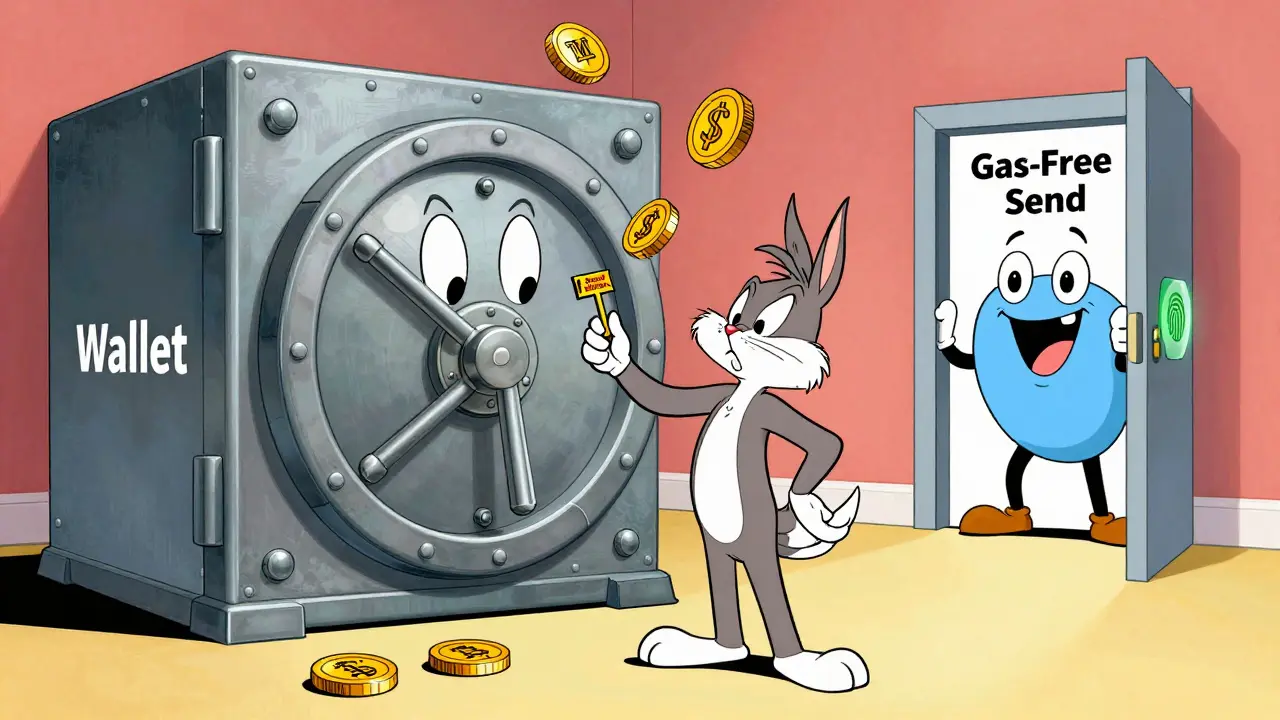
One of the biggest complaints about crypto? Gas fees. You need ETH to send ETH. You need MATIC to send USDC. You need to check prices, swap tokens, wait for approvals - all before you can do anything. It’s a barrier for new users. It’s a headache for everyone else. Account Abstraction removes this. Developers can sponsor gas fees. That means you can send tokens without owning the blockchain’s native currency. Want to pay gas with USDC? Done. Want to send a transaction without even thinking about gas? Also done. Wallets like Argent and Biconomy already let users send transactions with tokens they already hold. No swaps. No conversions. Just click and go. This isn’t just convenient - it’s essential for mass adoption. You don’t need to be a blockchain expert to use an app. You just need to be able to tap a button.No Seed Phrases. No Panic.
Losing your seed phrase is the digital equivalent of losing your house keys - and your bank account - at the same time. There’s no customer service. No reset button. No recovery option. Account Abstraction replaces seed phrases with social recovery. You pick trusted friends, family, or devices as "guardians." If you lose access, you ask three of them to approve your recovery. No memorizing 12 words. No risking a photo of your phrase on your phone. Just like resetting a password on Gmail - but secure and decentralized. Gnosis Safe already uses multi-signature recovery. But it’s clunky. Account Abstraction makes it smooth. Argent’s social recovery works in the background, quietly. You don’t need to understand blockchain to use it. You just need to know who to call.
One Wallet. Every Chain.
Right now, you need a different wallet for Ethereum, Solana, Polygon, and Avalanche. Each has its own keys, its own gas tokens, its own rules. It’s messy. It’s confusing. And it’s why most people stick to exchanges - because they’re easier. Account Abstraction unifies this. Your smart contract wallet can interact with any chain that supports it. You don’t need to bridge assets manually. You don’t need to switch wallets. You just send - and the system handles the rest. This isn’t theoretical. Projects like Starknet and zkSync are building AA-native wallets that work across L2s and L1s from day one. Think of it like having one bank account that works in every country. No currency conversions. No fees. Just money.Security That Actually Makes Sense
Traditional wallets are vulnerable because they’re simple. One key. One point of failure. Hack a phone. Steal a backup. Done. Smart contract accounts change that. You can set up multi-signature rules. You can require two-factor authentication. You can lock down withdrawals for 24 hours. You can create session keys - temporary permissions that let a game or app spend a limited amount of your tokens for a few hours, then expire automatically. You can even set up a "dead man’s switch." If you don’t log in for 30 days, your wallet automatically sends your funds to a trusted person. No lawyers. No wills. Just code. These aren’t features for crypto nerds. They’re features for parents, retirees, small business owners - anyone who wants to hold crypto safely without becoming a security expert.
What This Means for Everyday Users
You don’t need to understand EIP-4337 to benefit from Account Abstraction. Here’s what you’ll actually notice:- You can log in with Google, Apple, or your phone’s biometrics - no seed phrase.
- You can send tokens without buying ETH first.
- You can recover your wallet if you lose your phone - without calling a support line.
- You can set up recurring payments: auto-buy BTC every Friday, or auto-sell when it hits $70K.
- You can use one wallet for games, DeFi, NFTs, and payments - no switching.
What’s Holding It Back?
It’s not perfect. Some developers still struggle with the learning curve. Deploying a smart contract wallet costs a little more upfront than a regular wallet. Not every DApp supports AA yet. And some users still prefer the "raw" control of private keys - even if it’s riskier. But the trend is clear. Every major wallet provider is moving toward AA. Every new blockchain is building it in. And every user who tries it never wants to go back. The old way of managing crypto wallets was designed for developers, not people. Account Abstraction flips that. It puts control, safety, and simplicity in the hands of the user - without requiring them to become engineers.What Comes Next?
In the next two years, Account Abstraction will become the default. New users won’t learn seed phrases. They’ll log in with their email. They’ll pay with their stablecoins. They’ll recover with their friends. They’ll use one wallet for everything. The blockchain industry has spent years trying to make crypto easier. Most attempts failed because they added layers on top of broken foundations. Account Abstraction isn’t a layer. It’s a rewrite. It’s the first time the system itself adapts to the user - not the other way around. This isn’t just an upgrade. It’s the moment blockchain stops feeling like a technical experiment - and starts feeling like a tool anyone can use.What is Account Abstraction in simple terms?
Account Abstraction turns your crypto wallet from a simple keyholder into a smart, programmable account. Instead of needing a seed phrase and ETH for gas, you can use your phone’s fingerprint, let someone else pay your fees, recover your wallet with trusted contacts, and use one wallet across all blockchains.
Does Account Abstraction mean I don’t need a seed phrase anymore?
Yes - you can choose to remove seed phrases entirely. With social recovery, you assign trusted people or devices as guardians. If you lose access, you ask them to help you regain control. No memorizing 12 words. No risky backups. Just like resetting a password, but decentralized and secure.
Can I still use my old MetaMask wallet with Account Abstraction?
Not directly. MetaMask is still an EOA wallet. But you can now connect your MetaMask to AA wallets like Argent or Biconomy to manage your assets with smarter features. Many new wallets are AA-native, meaning they’re built from the start to work this way - no migration needed.
Does Account Abstraction make crypto more secure?
Yes - because it removes single points of failure. Instead of one private key, you can use multi-signature rules, time-locked withdrawals, biometric logins, and session keys. Even if one device is hacked, your funds stay protected. You control the rules - not the other way around.
Do I need ETH to use an Account Abstraction wallet?
No. Developers can pay your gas fees for you - so you can send tokens using USDC, DAI, or any other token you already hold. Some wallets even let you pay gas with tokens from other chains. You never need to buy ETH just to make a transaction.
Which blockchains support Account Abstraction today?
Ethereum leads with EIP-4337. But Polygon, Arbitrum, zkSync, Starknet, and Base also support it. Many Layer 2 networks now build AA into their core protocol. This means you can use one smart contract wallet across multiple chains without bridges or swaps.
Is Account Abstraction safe for beginners?
Yes - if you use a well-built wallet like Argent or SafePal. These wallets hide the complexity. You get all the power of smart contracts - without needing to understand them. They guide you through recovery, gas payments, and permissions. For new users, AA is actually safer than traditional wallets because it removes the risk of losing a seed phrase.
Will Account Abstraction replace all other wallets?
It’s already replacing them. New users are choosing AA wallets because they’re easier. Existing users are switching because they’re safer. Even big players like Coinbase and Ledger are building AA support. Within two years, most new crypto wallets will be smart contract accounts. The old model is becoming obsolete.