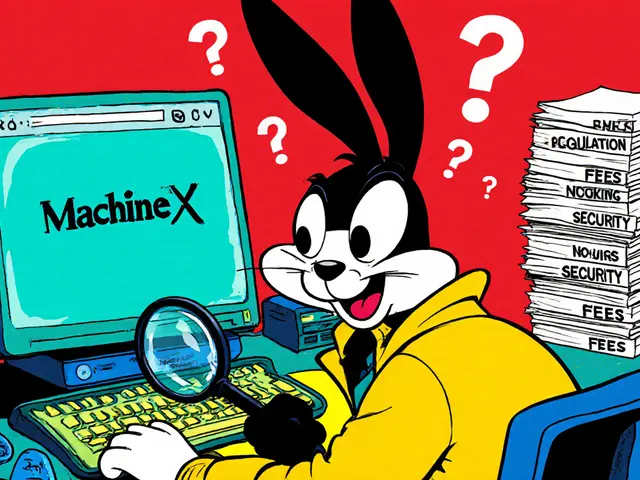

You want to trade crypto without losing your shirt to hidden fees or shady operators. You see CrossTower is a Bermuda-registered cryptocurrency trading platform founded in 2020 with a focus on institutional capital markets and mainstream adoption. It promised to bridge the gap between Wall Street and digital assets. But does it actually deliver? Or is it just another name that sounds impressive until you dig into the details?
The short answer is worrying. While CrossTower started with high-profile backing and regulatory licenses, its recent history tells a story of declining credibility. If you are thinking about depositing funds here, you need to know exactly what happened behind the scenes before you click 'sign up'.
The High-Flying Start That Faded Fast
CrossTower didn't launch as some random startup in a garage. In October 2020, they received an operational license from the Bermuda Monetary Authority. This gave them immediate legitimacy. They raised $6 million in seed funding and hired Greg Bunn as Chief Strategy Officer. Bunn wasn't a newbie; he spent over 16 years at Deutsche Bank and served as global head of counterparty strategy at Citadel. That is serious financial pedigree.
In January 2021, they launched a capital markets desk specifically for institutions. The goal was clear: make crypto trading feel like traditional prime brokerage. They targeted clients with assets under management up to $500 million. For a moment, it looked like CrossTower might become the go-to place for serious money entering the crypto space. They offered spot trading, digital asset lending, trade financing, and structured products. On paper, this was a comprehensive platform designed for both retail beginners and institutional whales.
The Red Flag: Losing Institutional Trust
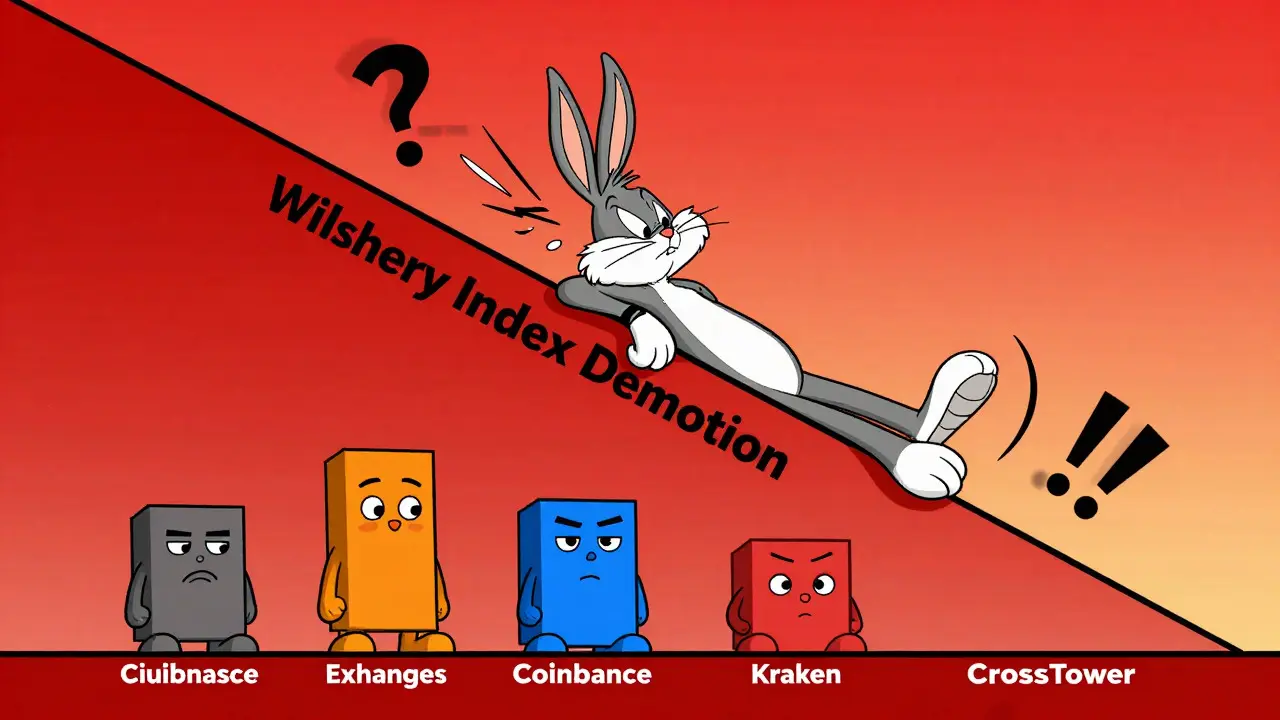
Here is where things get tricky. In May 2023, Wilshire Indexes, a leading global index provider, demoted CrossTower. They removed it from the list of contributing exchanges. Why? Because CrossTower failed to meet established standards for two consecutive reviews. This isn't a minor technical glitch. Wilshire uses CC Data's Exchange Benchmark to rate over 150 exchanges. To stay on the list, you need robust liquidity, reliable pricing, and institutional-grade security. CrossTower didn't have it.
When an exchange gets demoted by Wilshire, it signals deep problems. It means their trading volume was too low, their market depth was thin, or their data reliability was questionable. Other major players like Coinbase, Kraken, Bitstamp, and Gemini kept their status. CrossTower was left behind. This demotion effectively told the institutional world: "We don't trust your data enough to build indexes around it."
Fees, Features, and the Retail Experience
For regular traders, CrossTower positioned itself as an entry-level exchange. You could deposit fiat via wire transfer or credit/debit cards. They had mobile apps for iOS and Android. The fee structure looked competitive on the surface: Market Maker fees were 0.05%, and Market Taker fees were listed as 0.00% in some reports. That sounds great until you realize that low fees often come with hidden costs like wide spreads or poor execution during volatile markets.
They also offered a referral program paying 25% commission on trading fees from referred users. This is standard across the industry, but it highlights a key issue: CrossTower needed to aggressively acquire users because organic growth was weak. Reviews from independent sites like ICORankings describe CrossTower as having "low retail pull." Despite offering easy fiat deposits, few people actually traded there. Low volume means worse prices for everyone. If you try to sell a large amount of Bitcoin on an exchange with low liquidity, you will likely get a much worse price than on Coinbase or Binance.
Is CrossTower Still Operational?
This is the most critical question. In January 2024, The Royal Gazette, a respected Bermuda newspaper, ran a headline calling CrossTower Bermuda the "latest crypto casualty." While the full context requires digging deeper, this phrasing strongly suggests significant operational downsizing or potential collapse. Combined with the 2023 Wilshire demotion, the trajectory is clear: CrossTower struggled to maintain the scale needed to compete.
There are no recent announcements of new features, partnerships, or positive developments after early 2024. In the fast-moving crypto world, silence usually means trouble. Major exchanges constantly update their roadmaps, list new tokens, and announce security audits. CrossTower has gone quiet.
| Feature | CrossTower | Coinbase / Kraken (Industry Standard) |
|---|---|---|
| Regulatory Status | Bermuda Licensed (2020) | Multi-jurisdictional (US, EU, Asia) |
| Institutional Credibility | Demoted by Wilshire Indexes (2023) | Top-tier contributing exchanges |
| Liquidity & Volume | Low (per ICORankings) | High (billions daily) |
| Retail Adoption | Low pull, limited user base | Millions of active users |
| Current Viability | Questionable ("Crypto Casualty" label) | Strong and growing |
Who Should Avoid CrossTower?
If you are a beginner looking for a safe place to buy your first Bitcoin, look elsewhere. CrossTower's "entry-level" marketing is misleading if the underlying infrastructure is crumbling. You want an exchange with deep liquidity so you can buy and sell instantly at fair prices. CrossTower's low volume means you might struggle to execute trades efficiently.
If you are an institutional investor, the Wilshire demotion should be a dealbreaker. Your compliance team will likely flag CrossTower as a high-risk venue due to its failure to meet institutional quality standards. Stick to exchanges that remain on the FT Wilshire Digital Asset Index Series, such as Bitfinex, LMAX, or Gemini.
Even if you love the idea of supporting a Bermuda-based innovation hub, remember that in finance, survival depends on scale and trust. CrossTower lost both.

Better Alternatives for Traders
Don't settle for a platform with uncertain viability. Here are safer options depending on your needs:
- For Beginners: Use Coinbase or eToro. They have intuitive interfaces, strong regulatory oversight, and massive user bases ensuring good liquidity.
- For Advanced Traders: Kraken or Binance offer advanced charting tools, lower fees for high-volume traders, and extensive coin selection.
- For Institutions: Stick to Coinbase Prime, Fidelity Digital Assets, or Galaxy Digital. These firms have proven track records and remain top contributors to major indices.
Final Verdict: Proceed with Extreme Caution
CrossTower had a promising start with strong leadership and regulatory approval. However, the crypto market punishes stagnation. By failing to attract sufficient retail volume and losing institutional credibility through the Wilshire demotion, CrossTower found itself squeezed out. The 2024 media characterization as a "casualty" suggests the ship may already be sinking.
Unless you have a specific reason to use CrossTower (like a unique product not available elsewhere), it is safer to choose an exchange with proven longevity, high liquidity, and ongoing institutional trust. Your capital deserves better than a platform fighting for relevance.
Is CrossTower still operating in 2026?
As of mid-2026, CrossTower's operational status is highly uncertain. Following its demotion by Wilshire Indexes in 2023 and being labeled a "crypto casualty" by The Royal Gazette in early 2024, there have been no significant positive updates. Users should verify current functionality directly on their website before depositing any funds, but expect limited support and liquidity.
Why was CrossTower demoted by Wilshire Indexes?
Wilshire Indexes demoted CrossTower in May 2023 because it failed to meet robust institutional quality standards for two consecutive semi-annual reviews. This typically indicates issues with trading volume, market depth, or data reliability, making it unsuitable as a contributing source for major digital asset indexes.
Are my funds safe on CrossTower?
Safety is questionable. While CrossTower held a Bermuda license, regulatory approval does not guarantee solvency. The lack of institutional confidence and low retail activity suggest financial strain. For maximum safety, keep assets in self-custody wallets or use top-tier regulated exchanges with proven reserve audits.
What are the trading fees on CrossTower?
Reported fees include 0.05% for Market Makers and 0.00% for Market Takers. However, these nominal rates may be offset by wider bid-ask spreads due to low liquidity, meaning you could pay more in slippage than in explicit fees compared to larger exchanges.
Who founded CrossTower?
CrossTower was founded in 2020 by capital markets veterans, including Greg Bunn, who served as Chief Strategy Officer. Bunn previously worked at Deutsche Bank and Citadel, bringing traditional finance expertise to the crypto space.