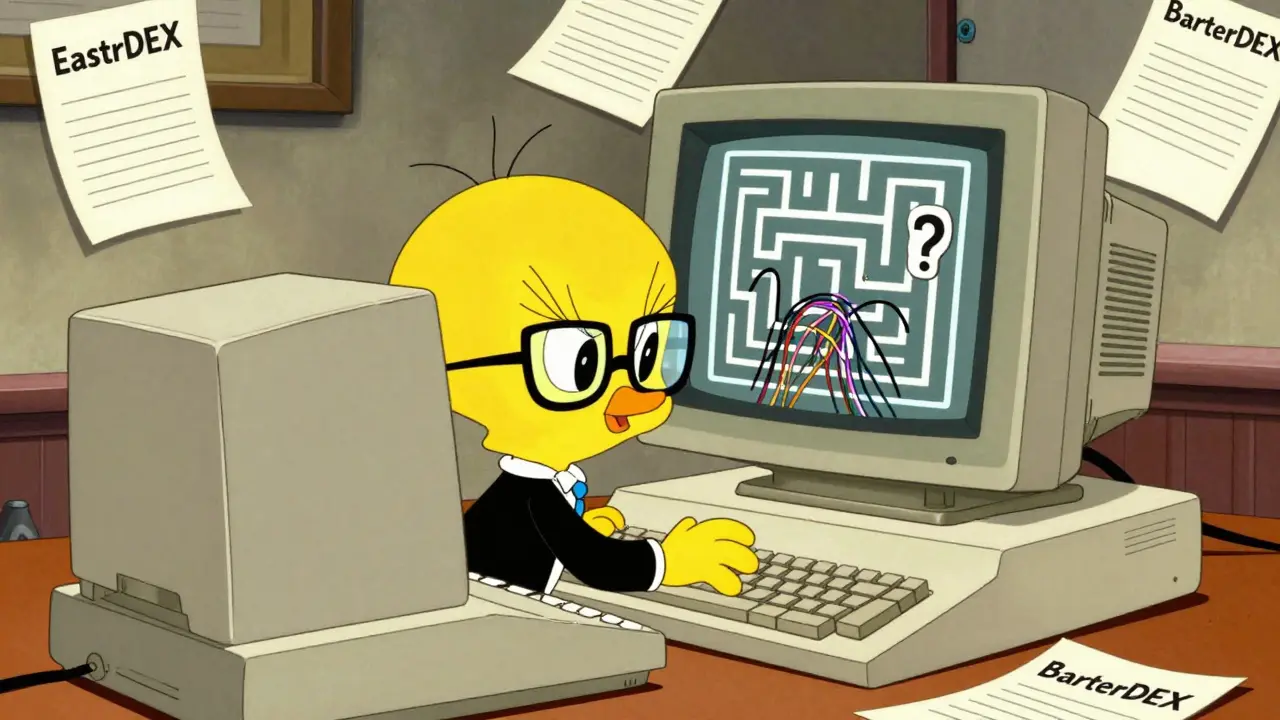
You’ve likely stumbled upon the name BarterDEX while digging into crypto history or looking for a specific decentralized trading tool. Here is the short version of what you need to know right now: BarterDEX does not exist anymore as an active product. It was rebranded and evolved into AtomicDEX, which is the current decentralized exchange built on the Komodo Platform. If you are trying to download BarterDEX today, you will hit a dead end. The codebase stopped receiving updates in mid-2019, and the community and developers moved entirely to AtomicDEX.
But why did this platform matter? And if you are researching it for a project, a historical analysis, or to understand the roots of cross-chain trading, you are in the right place. BarterDEX was a pioneer in using atomic swaps to let users trade cryptocurrencies directly without trusting a central authority. It solved real problems that still plague centralized exchanges today, like custody risk and privacy invasion. Let’s break down what BarterDEX was, how it worked, and what replaced it.
The Evolution from EasyDEX to AtomicDEX
To understand BarterDEX, you have to look at its timeline. It didn’t start with that name. The project began as EasyDEX, a precursor decentralized exchange launched in 2016 by the team behind Komodo Platform. In July 2017, they rebranded it to BarterDEX to better reflect its function of bartering assets directly between users. This was during a time when most people were used to sending their coins to exchanges like Coinbase or Binance, losing control of their private keys.
BarterDEX operated as a non-custodial wallet and trading interface. That means your money never left your device. You held the keys. This was a huge selling point for privacy-focused users who were tired of KYC (Know Your Customer) requirements. However, technology moves fast. In July 2019, the team announced another rebranding. BarterDEX became AtomicDEX, the successor platform offering expanded cryptocurrency support and improved liquidity mechanisms. This wasn’t just a name change; it was a technical overhaul. AtomicDEX kept the core atomic swap technology but added new features to fix the bugs and usability issues that plagued the original BarterDEX interface.
If you are reading old tutorials from 2018 or 2019, keep in mind that the screenshots and menu layouts are outdated. The underlying tech is similar, but the user experience has shifted significantly since the transition.
How BarterDEX Actually Worked: Atomic Swaps
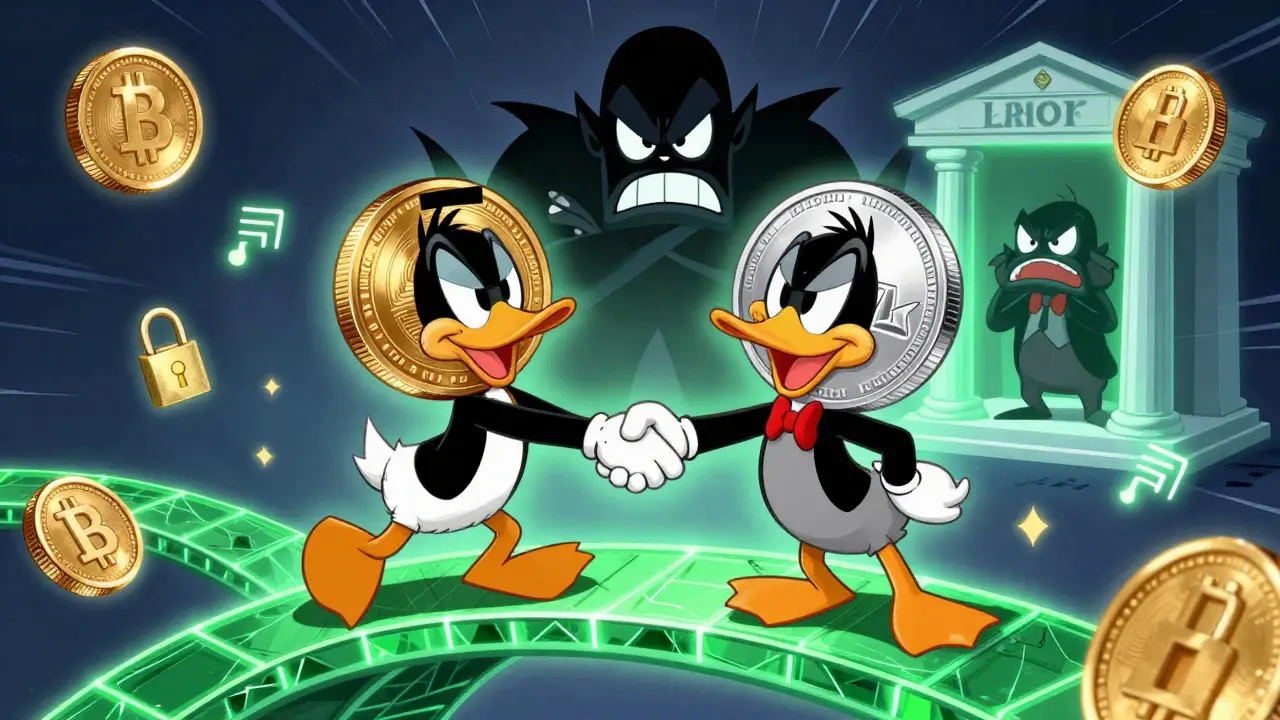
The magic behind BarterDEX was a technology called atomic swaps, which are trustless peer-to-peer transactions that allow direct exchange of cryptocurrencies across different blockchains. Most exchanges work like a bank. You deposit Bitcoin, they credit your account with a balance, and you use that balance to buy Ethereum. The exchange holds the actual coins. If the exchange gets hacked or goes bankrupt, you lose everything.
BarterDEX removed the middleman. Using atomic swaps, two parties could agree to trade Bitcoin for Litecoin, for example. The transaction was executed via smart contracts on both blockchains simultaneously. If one side failed, the other side automatically reversed. Nothing was lost. It was truly peer-to-peer. This eliminated counterparty risk, which is the biggest danger in traditional finance and centralized crypto trading.
This approach had major advantages:
- No Custody Risk: Your funds stayed in your wallet until the exact moment of the swap.
- Cross-Chain Capability: You could trade coins that lived on completely different networks (like Bitcoin and Litecoin) without needing a wrapped token or a bridge.
- Privacy: Since there was no central server recording your trades, no company could sell your data or force you to provide ID documents.
However, this technology came with trade-offs. Atomic swaps require both parties to be online and coordinated, or for the system to rely on automated nodes to facilitate the trade. This made the process slower and more complex than clicking "Buy" on a centralized app.
Fees, Liquidity, and Supported Coins
When BarterDEX was active, it prided itself on low fees. According to analyses from Cryptowisser in 2025, the fee structure was straightforward. Takers (users who execute a trade against an existing order) paid 0.15%, while makers (users who provide liquidity by placing orders) paid 0%. This was competitive compared to the industry average of around 0.25% at the time, and much lower than the hidden spreads often found on retail-friendly centralized exchanges.
One of BarterDEX’s biggest claims to fame was its coin support. Because it relied on the Komodo Platform’s architecture, it theoretically supported about 95% of all existing cryptocurrencies at its peak. This was far more than any centralized exchange could offer. Most big exchanges only list the top 100-200 coins by market cap. With BarterDEX, you could trade obscure altcoins directly if there was enough interest.
Liquidity was always the weak point for decentralized exchanges back then. To solve this, BarterDEX introduced Liquidity Nodes, which are automated systems that stabilize prices by buying and selling assets in the order books. These nodes acted like market makers, ensuring that there were always buy and sell orders available so traders wouldn’t face empty order books. While innovative, early users reported that slippage (the difference between expected price and execution price) could still be high for large trades.
| Feature | BarterDEX / AtomicDEX | Centralized Exchanges (e.g., Coinbase) |
|---|---|---|
| Custody | Non-custodial (You hold keys) | Custodial (Exchange holds keys) |
| KYC Required | No | Yes (Mandatory) |
| Fee Structure | 0% Maker / 0.15% Taker | Variable (0% - 3.99%) |
| Coin Support | ~95-99% of all coins | Top 200-350 coins |
| Fiat On-Ramp | No (Crypto-only) | Yes (USD, EUR, etc.) |
User Experience and Learning Curve
Let’s be honest: BarterDEX was not easy for beginners. If you were used to the slick, simple interfaces of apps like Robinhood or Coinbase, BarterDEX felt clunky. It required you to download the Komodo Wallet, a multi-platform desktop and mobile application serving as the interface for BarterDEX and AtomicDEX. Setup took about 15-20 minutes, but becoming proficient took hours.
Data from Komodo’s support tickets in 2018 showed that 31% of inquiries were about understanding how atomic swaps worked. Another 24% were about wallet synchronization issues. For a complete beginner, it could take 8-10 hours to feel comfortable. Experienced crypto users needed about 2-3 hours. This steep learning curve was the main reason many users abandoned the platform for simpler, albeit less secure, centralized alternatives.
There was also no customer support hotline. Help came from the community via Discord and GitHub. While the community was passionate and helpful, waiting 24-48 hours for a developer to respond to a critical bug was frustrating for some. This lack of hand-holding was intentional-it preserved decentralization-but it alienated mainstream users.
Why BarterDEX Was Discontinued
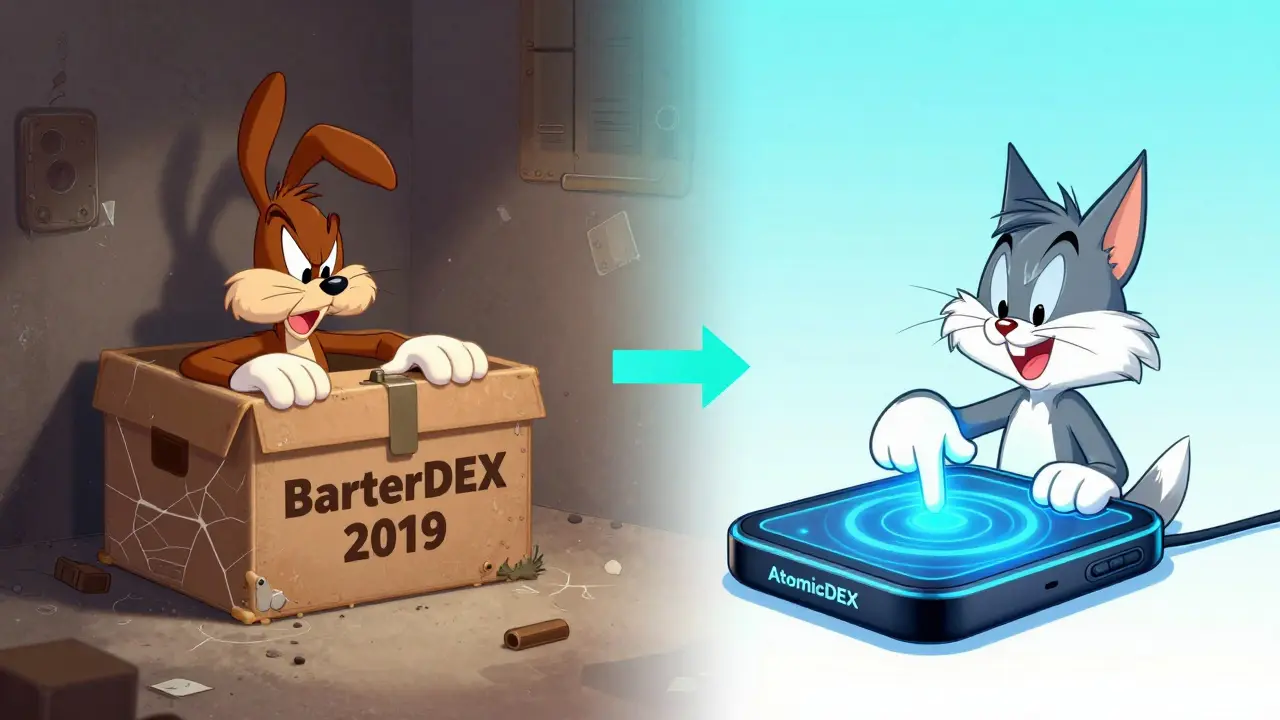
So, why did BarterDEX disappear? It wasn’t a failure; it was an evolution. By 2019, the team realized that the initial implementation had limitations. The user interface was dated, and the liquidity mechanism needed refinement. Instead of patching the old code, they rebuilt it under the name AtomicDEX.
The last commit to the BarterDEX-specific codebase was on June 15, 2019. After that, all development resources went to AtomicDEX. This new version aimed to fix the UX issues, improve mobile functionality, and expand fiat on-ramp capabilities in the future. Today, AtomicDEX supports even more coins (up to 99%) and integrates better with modern blockchain standards.
If you are looking for the benefits BarterDEX offered-privacy, non-custodial trading, wide coin selection-you should be looking at AtomicDEX now. But remember, the challenges remain. Decentralized exchanges still lag behind centralized ones in speed and ease of use. They are tools for people who value sovereignty over convenience.
Is AtomicDEX Still Worth Using in 2026?
In 2026, the crypto landscape has changed dramatically. Layer-2 solutions and bridging protocols have made cross-chain trading easier on other platforms. However, AtomicDEX still holds a unique niche. It remains one of the few true non-custodial options that doesn’t require you to trust a third party with your assets.
For advanced users, developers, and privacy advocates, it is still relevant. For the average person who just wants to buy Bitcoin with a credit card, it is not the right tool. You would be better off with a regulated centralized exchange. But if you want to trade obscure tokens without KYC and keep your keys, AtomicDEX inherits the legacy of BarterDEX effectively.
Can I still download BarterDEX?
No, BarterDEX is no longer actively developed or supported. The last update was in mid-2019. You should download the Komodo Wallet, which now includes AtomicDEX, to access the updated technology.
What happened to my BarterDEX account?
BarterDEX was non-custodial, meaning you never had an "account" on a server. Your funds were always in your local wallet. If you still have your seed phrase and private keys, your assets are safe and accessible through the current Komodo Wallet/AtomicDEX interface.
Does AtomicDEX require KYC?
No, AtomicDEX does not require Know Your Customer (KYC) verification. It maintains the privacy-focused, non-custodial nature of the original BarterDEX platform.
How do atomic swaps differ from regular trades?
Regular trades on centralized exchanges involve depositing funds to the exchange, which acts as a middleman. Atomic swaps allow two parties to trade directly across different blockchains using smart contracts, eliminating the need for a trusted third party and reducing counterparty risk.
What are the fees for trading on AtomicDEX?
The fee structure inherited from BarterDEX typically charges 0% for makers (those providing liquidity) and 0.15% for takers (those executing trades). Network fees may also apply depending on the blockchain being used.



Categories