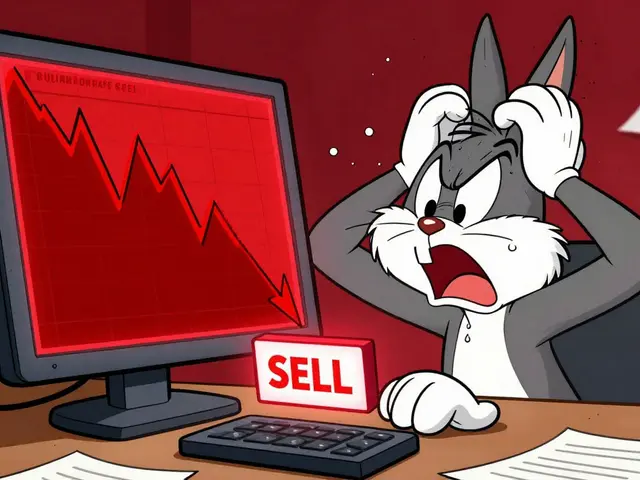

Imagine you have $1,000 to invest in Bitcoin, the world's leading cryptocurrency and digital store of value. In a standard spot trade, if the price goes up by 10%, you make $100. Simple enough. But what if that same 10% move turned your $1,000 into $5,000? That is the promise-and the peril-of Margin Trading, a financial strategy where traders borrow funds to increase their position size beyond their actual capital. Margin trading allows you to use borrowed money from an exchange to amplify your exposure to Bitcoin’s price movements. It is not magic; it is leverage. And while leverage can supercharge your profits during a bull run, it acts as an accelerant for losses when the market turns against you. By mid-2026, the landscape has shifted significantly from the wild west days of early crypto. Regulations are tighter, platforms are more sophisticated, and the risks are just as real, if not more nuanced. This guide cuts through the jargon. We will look at how margin trading actually works, the difference between the two main types of margin, how to calculate your liquidation price, and the step-by-step process to execute your first trade safely.
Understanding the Core Mechanics of Leverage
At its heart, margin trading is about borrowing power. When you open a margin account on an exchange like Binance, one of the largest cryptocurrency exchanges globally offering spot and margin trading services or Bitfinex, a prominent crypto exchange known for its advanced trading features and high leverage options, you are essentially taking out a short-term loan. Your existing crypto holdings serve as collateral for this loan. The key metric here is the leverage ratio. This number tells you how much bigger your position is compared to your own money. If you choose 10x leverage, every $1 of your money controls $10 worth of Bitcoin. Let’s break down the math with a concrete example:
- Your Capital: $1,000
- Leverage: 10x
- Total Position Size: $10,000 ($1,000 + $9,000 borrowed)
Isolated Margin vs. Cross Margin: Choosing Your Risk Profile
Before you place a single order, you must decide how you want to manage risk. Exchanges generally offer two modes: Isolated Margin and Cross Margin. This choice is critical because it determines how much of your account is at risk during a single trade.
| Feature | Isolated Margin | Cross Margin |
|---|---|---|
| Risk Scope | Limited to the specific trade | Uses entire account balance as collateral |
| Liquidation Impact | Only loses allocated funds | Can drain entire wallet if not managed |
| Best For | Beginners and strict risk managers | Experienced traders with large buffers |
| Complexity | Lower | Higher (requires monitoring total balance) |
Step-by-Step: How to Execute Your First Trade
Ready to try it? Here is how the process looks on a typical platform in 2026. Note that interfaces vary, but the logic remains consistent across reputable exchanges like Binance, Kraken, or Bybit.
- Activate Your Margin Account: Log in to your exchange. Navigate to the "Trade" or "Finance" section and select "Margin." You may need to complete a risk assessment quiz or verify your identity (KYC) to unlock these features. Click "Enable" to sign the user agreement.
- Transfer Funds: Move USDT (Tether) or BTC from your Spot Wallet to your Margin Wallet. Keep separate wallets for clarity. For beginners, keeping USDT as your base currency simplifies calculations.
- Select Your Mode: Choose between Isolated and Cross margin. As discussed, start with Isolated to cap your potential loss.
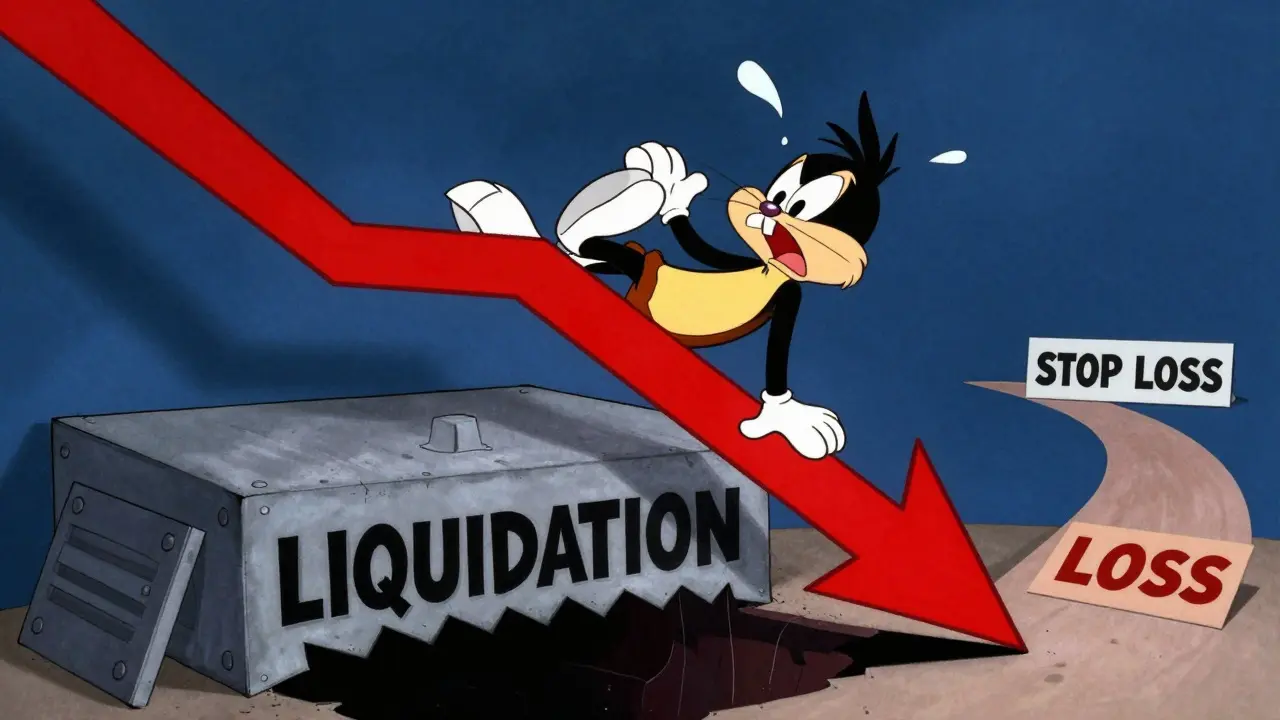
- Set Leverage: Select your multiplier. Do not jump to 20x or 50x. Start with 2x or 3x. Higher leverage means a smaller price movement triggers liquidation. For example, with 10x leverage, a 10% drop wipes you out. With 2x, you can withstand a 50% drop before liquidation (minus fees).
- Place the Order:
- Long: Buy if you think Bitcoin will go up. You borrow USDT to buy BTC.
- Short: Sell if you think Bitcoin will go down. You borrow BTC to sell now, hoping to buy it back cheaper later.
- Set Stop-Loss and Take-Profit: This is non-negotiable. Before confirming the trade, add a stop-loss order slightly below your entry price (for longs). This automatically closes your position if the market moves against you, preventing a total wipeout.
The Hidden Costs: Fees and Interest
New traders often focus on price action and forget about the cost of doing business. Margin trading introduces two additional layers of fees that eat into your profits. Trading Commissions: Just like spot trading, you pay a maker/taker fee when you open and close the position. On many exchanges, margin trading fees are slightly higher than spot fees. Check the schedule; taker fees (market orders) are typically more expensive than maker fees (limit orders). Borrowing Interest: This is the rent you pay for the leveraged funds. Interest accrues continuously. If you hold a position for weeks, these costs can add up significantly. For example, if you borrow $10,000 at an annualized rate of 10%, you pay roughly $27 per month in interest. While small, it compounds against you in choppy markets where the price doesn’t move much. Always factor these costs into your break-even analysis. If you expect a 1% gain, but fees and interest cost you 0.5%, your effective return is halved.

Risk Management: Surviving Volatility
Bitcoin is volatile. It is common for the price to swing 5-10% in a single day. Without discipline, margin trading is a fast track to losing your capital. Here are three rules to follow: 1. Use Low Leverage Resist the temptation of 50x or 100x leverage offered by some platforms. These are effectively gambling tools, not investing strategies. Professional traders rarely use more than 3x to 5x leverage. Lower leverage gives the market room to breathe without triggering your liquidation. 2. Always Use a Stop-Loss Never enter a trade without a predefined exit point if things go wrong. A stop-loss order is your safety net. Set it at a level where your thesis is proven wrong. If you bought because you believed support held at $60,000, set your stop-loss at $59,500. If it breaks, get out. Do not hope it comes back. 3. Diversify Your Collateral Avoid using only Bitcoin as collateral if possible. Using stablecoins like USDT or USDC reduces the complexity of calculating your health factor. If your collateral asset also drops in value while your trade is underwater, you face a double whammy. Stablecoins provide a predictable baseline for your risk calculations.
Regulatory Landscape in 2026
The regulatory environment for crypto margin trading has matured considerably since the early 2020s. In 2026, many jurisdictions have implemented stricter rules to protect retail investors. In Europe, under the updated MiCA (Markets in Crypto-Assets) framework, leverage limits for retail traders are capped at 2x for major cryptocurrencies like Bitcoin. Professional traders, who must prove significant experience and capital, may access higher levels. In the United States, the CFTC and SEC continue to scrutinize unregistered derivatives offerings, pushing many users toward regulated futures exchanges rather than offshore spot-margin platforms. Always check the compliance status of your exchange. Using an unregulated platform might give you higher leverage, but it exposes you to counterparty risk-the risk that the exchange itself fails or freezes withdrawals. Stick to well-known, audited platforms to ensure your funds are secure.
What is the safest leverage for Bitcoin margin trading?
For most traders, 2x to 3x leverage is considered safe. It amplifies gains moderately while providing a substantial buffer against normal market volatility. Higher leverage (10x+) requires precise timing and strict stop-losses, making it suitable only for experienced traders.
Can I lose more than my initial investment?
In isolated margin, no. You can only lose the funds allocated to that specific trade. In cross margin, yes. If your entire account balance is used as collateral and the market gaps down rapidly, you could lose all funds in your margin wallet. Some extreme cases with auto-deleveraging might even result in negative balances, though modern exchanges usually prevent this via insurance funds.
How do I avoid liquidation?
Avoid liquidation by using lower leverage, setting tight stop-loss orders, and maintaining a healthy margin level. Never trade with money you cannot afford to lose, and always monitor your positions during high-volatility events like news releases or macroeconomic data announcements.
What is the difference between long and short margin trading?
A long position profits when Bitcoin’s price rises. You borrow funds to buy Bitcoin, expecting to sell it later at a higher price. A short position profits when the price falls. You borrow Bitcoin to sell it immediately, then buy it back later at a lower price to repay the loan, keeping the difference.
Are there taxes on margin trading profits?
Yes. In most countries, profits from margin trading are treated as taxable income or capital gains. You must report both the realized gains from closing positions and potentially the interest paid on loans. Consult a local tax professional to understand your specific obligations in 2026.