
You look at a Bitcoin chart and see numbers climbing. You wonder, why does this string of code cost thousands of dollars? It’s not printed by a government. You can’t hold it in your hand like a dollar bill. So what gives it weight? The answer isn't magic. It's a mix of math, trust, and utility that differs completely from how we value paper money.
Cryptocurrency is a digital or virtual form of currency that uses cryptography for security and operates independently of a central bank. Unlike the US Dollar or Euro, which derive their status from government decree (legal tender laws), cryptocurrency derives its value from decentralized consensus. The Reserve Bank of Australia puts it bluntly: these assets have no legislated or intrinsic value. They are worth exactly what people agree to pay for them. This might sound circular, but it’s the same principle behind gold, art, or even fiat money itself-just without the government safety net.
Scarcity Is Hard-Coded Into The Code
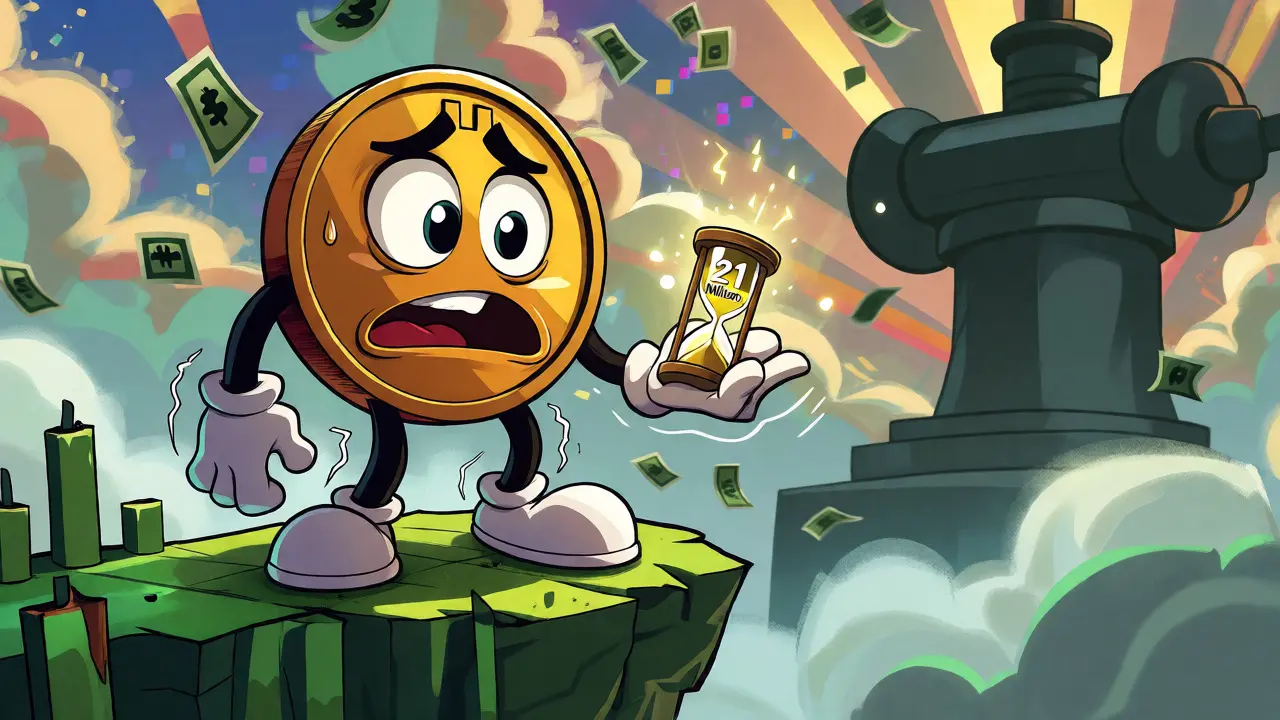
Think about why diamonds are expensive. It’s partly because they’re hard to find. Cryptocurrencies replicate this through algorithmic scarcity. Take Bitcoin. Its creator, Satoshi Nakamoto, wrote a rule into the code: there will never be more than 21 million bitcoins. No politician can print more. No central bank can debase it with quantitative easing.
This fixed supply creates a powerful economic dynamic. When demand rises-whether from institutional investors buying ETFs or regular folks hedging against inflation-the price goes up because the supply cannot expand to meet it. Ethereum works differently; it has no fixed cap, but it burns tokens during transactions, creating deflationary pressure. This contrast highlights a key point: value isn't just about having less stuff. It’s about predictable monetary policy enforced by code rather than human whim.
Utility Drives Real Demand
If scarcity were the only factor, a rare rock on Mars would be valuable. But you can’t buy coffee with it. Utility matters. Why do people actually use these networks?
- Decentralized Finance (DeFi): Platforms built on Ethereum allow users to lend, borrow, and trade without banks. If you want to earn interest on stablecoins, you need ETH to pay gas fees. That demand supports the price.
- Cross-Border Payments: Sending money internationally via traditional banks takes days and costs high fees. Stablecoins on networks like Solana or Tron settle in seconds for pennies. For remittances, this speed is worth real money.
- Smart Contracts: These self-executing contracts automate agreements. Insurance payouts, royalty distributions, and supply chain tracking happen automatically. This reduces administrative overhead, saving businesses time and cash.
When a network solves a real problem better than existing solutions, its token gains value. If Ethereum stops being the primary layer for DeFi apps, its utility-and thus its value proposition-shifts. It’s not static.
The Trust Layer: Security And Transparency
Traditional finance relies on trusting institutions. You trust Chase won’t lose your money. You trust the Fed manages inflation. In crypto, you don’t trust a person. You trust the blockchain.
A blockchain is a distributed ledger. Every transaction is recorded publicly and permanently. Once a block is added, changing it requires re-doing all subsequent blocks, which demands massive computational power. This makes fraud nearly impossible. The security model removes the "counterparty risk" found in traditional banking. If the bank fails, your deposits might be at risk (though FDIC insurance helps). If the blockchain fails, it’s usually due to a software bug, not a CEO embezzling funds.
This transparency builds trust among strangers. You don’t need to know who you’re trading with. The protocol verifies the trade. For many, this neutrality is valuable in itself, especially in countries with unstable governments or corrupt financial systems.

Network Effects Amplify Value
There’s a concept in tech called Metcalfe’s Law. It states that the value of a network is proportional to the square of the number of connected users. A telephone is useless if you’re the only one who has one. It becomes invaluable when everyone else has one too.
Cryptocurrencies follow this pattern. More developers building on a chain means more apps. More apps attract more users. More users increase liquidity, making it easier to buy and sell. This flywheel effect explains why established chains like Bitcoin and Ethereum command higher valuations than newer competitors. They have larger communities, more robust tooling, and greater institutional support.
Social sentiment plays a huge role here too. Twitter trends, Reddit discussions, and news headlines drive short-term price movements. While fundamental analysis looks at code and adoption, market psychology often dictates daily volatility. A tweet from a prominent figure can spike prices, proving that perception is a tangible component of value.
Comparing Crypto To Traditional Assets
To understand where crypto fits, let’s compare it to things you already know. How does it stack up against Gold, Stocks, and Fiat Currency?
| Feature | Fiat Currency | Gold | Stocks | Cryptocurrency |
|---|---|---|---|---|
| Supply Control | Central Banks | Mining Output | Company Issuance | Algorithmic/Code |
| Portability | High | Low | Medium | Very High |
| Divisibility | High | Low | High | Very High |
| Volatility | Low | Medium | Medium-High | Very High |
| Primary Value Driver | Government Decree | Store of Value | Earnings Growth | Adoption & Scarcity |
Notice the trade-offs. Crypto offers unmatched portability and divisibility. You can send $0.01 across the world instantly. But you pay for that convenience with volatility. Gold is stable but hard to move. Stocks represent ownership in companies, generating cash flow. Crypto doesn’t generate dividends (unless staked), so its value relies entirely on future adoption expectations.

Risks That Can Wipe Out Value
Value isn’t guaranteed. Several factors can destroy it quickly.
- Regulatory Crackdowns: If major economies ban mining or trading, liquidity dries up. China’s 2021 mining ban caused immediate price drops.
- Technological Obsolescence: If a faster, cheaper, more secure blockchain emerges, older networks may lose relevance. Remember MySpace vs. Facebook? Tech moves fast.
- Security Breaches: Hacks of exchanges or smart contract bugs can erode trust. If users lose confidence in the safety of their funds, they flee.
- Lack of Utility: Many altcoins launch with hype but no real use case. When the hype fades, the price collapses to near zero.
Investors must weigh these risks. High potential returns come with high uncertainty. Diversification helps, but understanding the specific risks of each asset class is crucial.
The Future Of Digital Value
We are still early. Total market capitalization has grown from zero in 2009 to hundreds of billions today. Institutional adoption is accelerating. BlackRock and Fidelity now offer Bitcoin ETFs. Corporations like Tesla and MicroStrategy hold Bitcoin on their balance sheets.
As integration with traditional finance deepens, volatility may decrease. Better custody solutions make holding crypto safer. Regulatory clarity reduces legal uncertainty. These factors stabilize value over time.
But remember, the core driver remains human agreement. We agree that this digital ledger represents value. As long as enough people believe in the technology and its benefits, cryptocurrency retains its worth. It’s not backed by gold. It’s backed by mathematics and community consensus.
Is cryptocurrency backed by anything physical?
No, most cryptocurrencies are not backed by physical commodities like gold or silver. Their value comes from scarcity, utility, and market demand. Some stablecoins are pegged to fiat currencies or backed by reserves, but native coins like Bitcoin and Ethereum rely on network consensus and technological merit.
Why is Bitcoin considered digital gold?
Bitcoin is called digital gold because of its limited supply (21 million coins) and difficulty to produce. Like gold, it serves as a store of value and hedge against inflation. However, unlike gold, Bitcoin is easily divisible, portable, and verifiable without physical assay.
Does government regulation affect cryptocurrency value?
Yes, significantly. Positive regulations, such as approval for spot ETFs, increase accessibility and legitimacy, boosting value. Negative regulations, like bans on mining or trading, create uncertainty and reduce liquidity, often lowering prices.
Can cryptocurrency become worthless?
Theoretically, yes. If a major security flaw is discovered, or if regulatory environments turn hostile globally, demand could vanish. Additionally, if a superior technology replaces current blockchains, older assets may lose relevance and value.
How does utility impact cryptocurrency prices?
Higher utility drives demand. For example, if Ethereum is used heavily for DeFi applications, users must buy ETH to pay transaction fees. Increased usage leads to increased buying pressure, which raises the price. Networks with few real-world applications often struggle to maintain value.



Categories