Ring Protocol isn’t another Uniswap clone. It doesn’t have billions in locked value, millions in daily trades, or a household name. But it does have something unusual: nearly $33 million of its $68 million total value locked on Blast, a relatively new Layer 2 blockchain that promises native yield. If you’re looking for a high-volume, reliable crypto exchange, this isn’t it. But if you’re betting on Blast’s future and want to be early, Ring Protocol might be worth a closer look - if you’re willing to accept serious risks.
What Is Ring Protocol?
Ring Protocol is a decentralized exchange (DEX) that launched in June 2024. It’s not built on just one blockchain. Instead, it works across Ethereum, Blast, Base, Arbitrum, and Polygon. Its goal? To fix a problem most DeFi users don’t even notice: billions of crypto assets sitting idle while new projects struggle to get liquidity. Ring tries to connect those two sides - people with unused tokens and projects needing capital - by letting users earn yield while providing liquidity. Its native token, RING, has a total supply of 1 billion. You’ll see different prices depending on where you look: $0.048 on DefiLlama, $0.083 on RootData. That’s not a glitch - it’s a sign of confusion. The token trades on few exchanges, and volume is tiny. One day it shows $2 in trading volume. The next, $7,000. That inconsistency alone should raise red flags.How Does Ring Protocol Work?
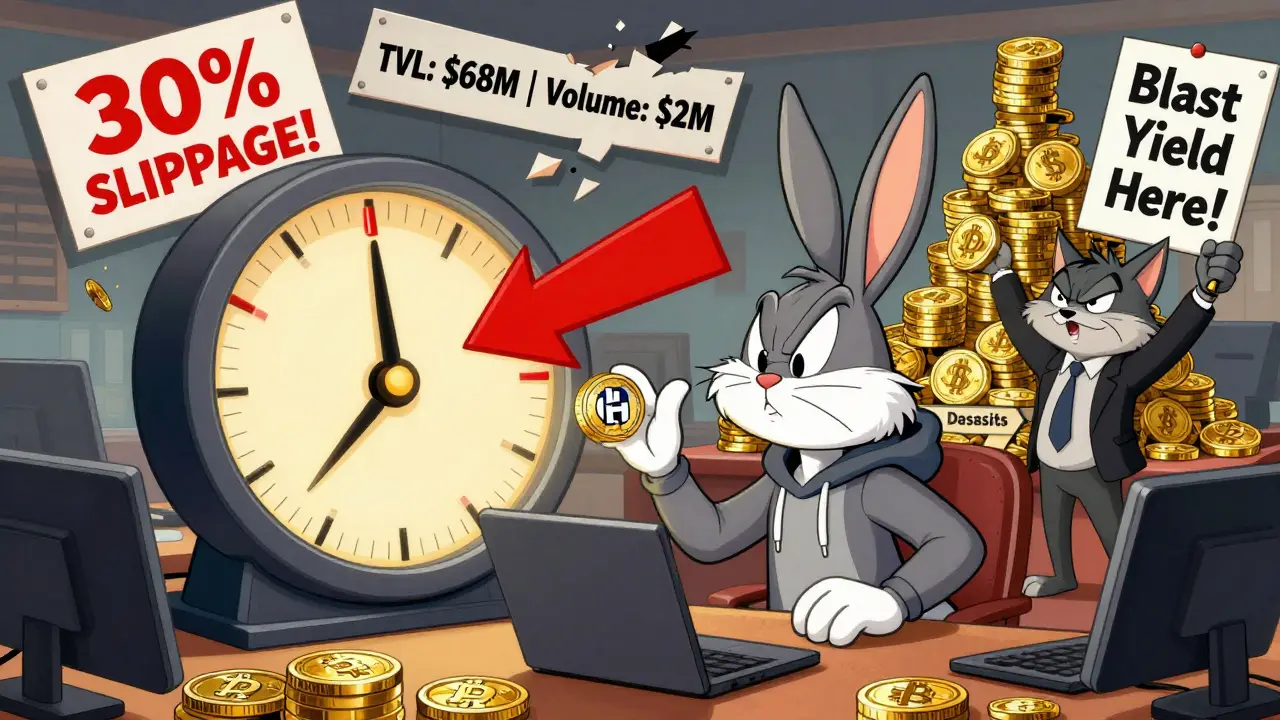
Ring uses a standard DEX interface - think Uniswap. You connect your MetaMask or Trust Wallet, pick a token pair, and swap. But there’s a twist: it’s designed to work best on Blast. That’s where most of its liquidity lives. If you deposit ETH or USDT on Blast, Ring converts it into fwUSDB (a wrapped version of Blast’s native stablecoin) and lets you earn yield just by holding it. That’s the main draw. You can also provide liquidity to trading pairs like RING/USDB or RING/ETH. In return, you get RING tokens as rewards. But here’s the catch: the pools are shallow. Try swapping $1,000 worth of ETH for RING, and you might get 30% slippage. That means your trade moves the price so much you end up with far less than expected. One Reddit user wrote: "Tried to swap 1 ETH worth of tokens and got 30% slippage - unusable for anything but tiny transactions."Performance Metrics: The Numbers Don’t Lie
Let’s break down the real data:| Metric | Value | Industry Benchmark |
|---|---|---|
| Total Value Locked (TVL) | $68.63 million | Uniswap: $10B+, PancakeSwap: $2B+ |
| 24-Hour Trading Volume | $2.12 million (DefiLlama) | Healthy DEXs: 1-10% of TVL |
| Volume-to-TVL Ratio | 0.003% | Typical: 1-10% |
| TVL by Chain (Blast) | $32.79 million (47.8%) | N/A |
| Developer Activity (Weekly Commits) | 1 | Top DEXs: 10-50+ |
| Token Price (RING) | $0.048 | All-Time High: $0.0865 |
The volume-to-TVL ratio is the most telling number. A healthy DEX should have at least 1% of its TVL trading daily. Ring Protocol has 0.003%. That’s not just low - it’s broken. In DeFi, when volume is this far below TVL, it usually means one of two things: either the TVL is inflated (fake deposits), or no one is actually trading. Neither is good.
Is Ring Protocol Safe?
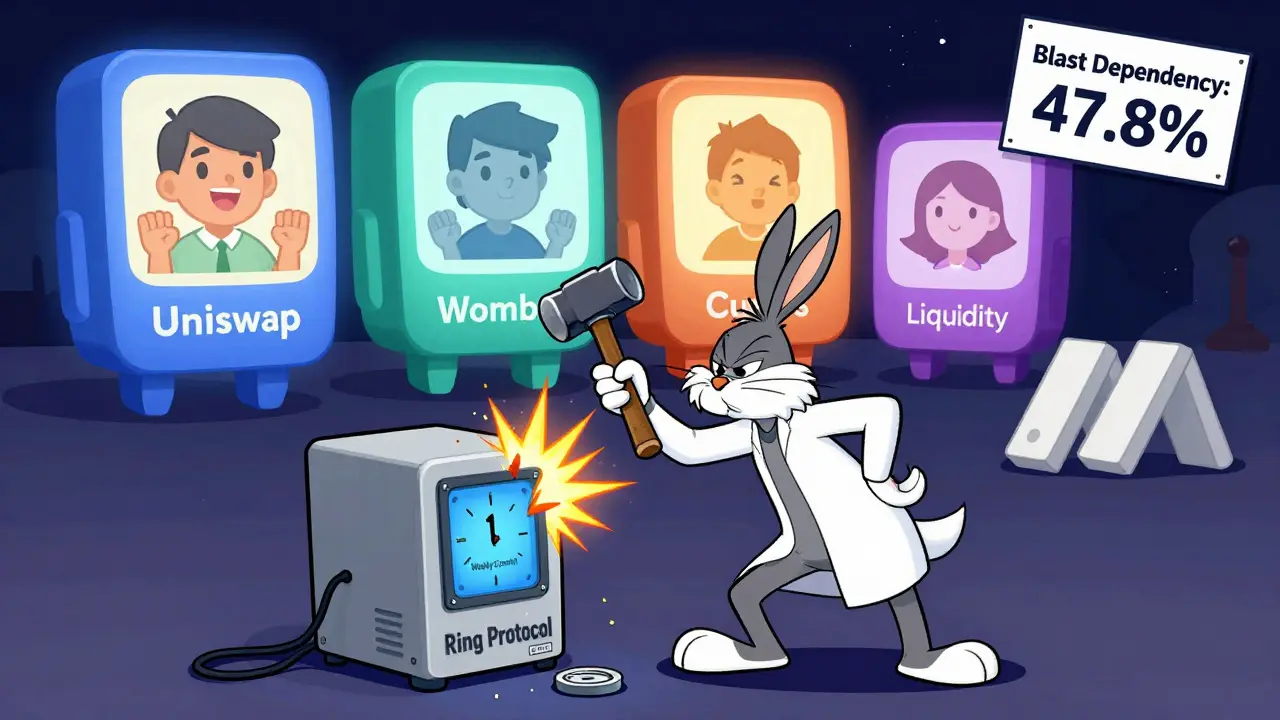
There’s no official audit report from a top-tier firm like CertiK or SlowMist. The project’s GitHub shows only one commit in the last month. That’s not a sign of active development - it’s a sign of dormancy. In DeFi, code changes are constant. Bugs get patched. New features get added. If a project stops moving, it becomes a sitting duck for exploits. Users report frequent downtime, slow interfaces, and failed transactions. On DeFiYield, 9 out of 14 users complained about "frequent downtime." Customer support? Average response time is 72 hours. That’s not acceptable for a platform handling your crypto. The biggest risk? Blast. Nearly half of Ring’s TVL is tied to Blast. If Blast’s popularity drops - if users leave, if yield disappears, if the team behind it loses steam - Ring Protocol collapses with it. There’s no backup plan. No fallback. Just one bet on one chain.Who Should Use Ring Protocol?
You should only use Ring Protocol if:- You understand DeFi well enough to handle high slippage and failed trades
- You’re already active on Blast and want to earn yield on your assets
- You’re comfortable losing your entire investment - this isn’t a "buy and hold" token
- You’re not trying to trade large amounts. Stick to under $100 per swap
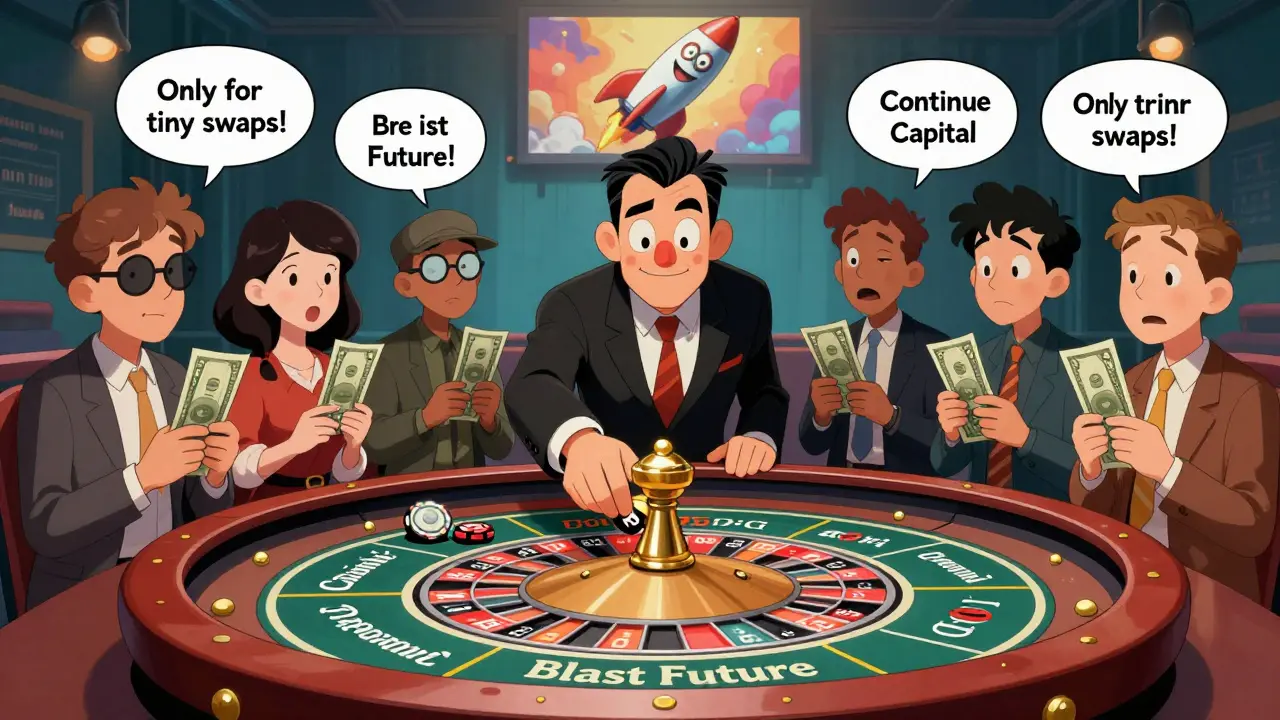
If you’re looking for a reliable place to swap ETH for USDC, use Uniswap. If you want to trade on a fast, low-fee chain, use PancakeSwap or dYdX. Ring Protocol isn’t for trading. It’s for speculation.
What Are the Alternatives?
If you’re interested in Blast-based DeFi, there are better options:- SpookySwap - The original DEX on Blast. Higher volume, better liquidity, proven track record.
- Wombat Exchange - Focused on stablecoin swaps on Blast. Much more stable than Ring.
- Uniswap v3 on Ethereum - The gold standard. Deep liquidity, low slippage, trusted by millions.
- Curve Finance - Best for stablecoin trading with minimal price impact.
Ring Protocol doesn’t offer anything these platforms don’t - and it offers far less. It’s not faster. It’s not cheaper. It’s not more secure. It’s just newer.
Final Verdict: High Risk, Low Reward
Ring Protocol is a high-risk experiment. It’s not a scam - the team raised money from known investors like Continue Capital and Synergis Capital. But that doesn’t mean it will succeed. The numbers don’t lie: low volume, slow development, weak liquidity, and total dependence on a single, unproven chain. If you want to support an early-stage DeFi project and can afford to lose your money, go ahead. Deposit a small amount. See how it feels. But don’t expect returns. Don’t expect reliability. And don’t assume this will be the next big thing.Most DeFi projects fail. Ring Protocol is one of them - unless Blast explodes in the next six months. And even then, it’ll need to fix its liquidity problem fast.
Is Ring Protocol a scam?
No, Ring Protocol is not a scam. It’s a real project with real funding and a working interface. But it’s extremely risky. The team hasn’t stolen funds - but they’ve built a product with almost no users trading. That’s not fraud - it’s neglect. The risk isn’t theft. It’s obsolescence.
Can I make money with RING tokens?
Possibly, but not reliably. The RING token price dropped from $0.086 to $0.048 in just a few months. Liquidity mining rewards are small, and the token trades on almost no exchanges. If you buy RING, you’re betting that Blast will grow and that Ring Protocol will suddenly attract massive trading volume - both unlikely without a major upgrade or partnership.
Why is the trading volume so low compared to TVL?
Because very few people are actually trading. The TVL comes from users depositing tokens to earn yield, not from active swapping. In healthy DEXs, most TVL comes from traders locking up assets to provide liquidity for others. In Ring Protocol, it’s mostly passive deposits. That’s why volume is so low - there’s no demand to trade.
Should I bridge my assets to Blast to use Ring Protocol?
Only if you’re already comfortable with Blast. Bridging assets carries risks - failed transactions, high fees, or even loss if the bridge is exploited. Ring Protocol’s interface doesn’t make bridging easier. You’ll need to use Blast’s official bridge or third-party tools like Across or Synapse. Don’t bridge more than you’re willing to lose.
Is Ring Protocol better than Uniswap?
No. Uniswap has over 100 times more liquidity, 10,000 times more volume, and a proven track record. Ring Protocol offers nothing Uniswap doesn’t - and plenty Uniswap does better. The only reason to use Ring is if you’re specifically targeting Blast’s yield, and even then, other Blast DEXs like SpookySwap are more reliable.
What’s the future of Ring Protocol?
Most analysts give it less than a 40% chance of surviving past 2026. Without a surge in real trading volume or a major partnership, it will fade into obscurity. The team hasn’t shown the ability to grow or adapt. If Blast’s popularity declines, Ring Protocol will likely collapse. It’s a high-risk, low-reward bet on an unproven ecosystem.