Imagine a savings account that pays you interest without a bank. That is the promise behind REX, also known as XRX. It is a cryptocurrency token on the BNB Chain designed to function like a traditional Certificate of Deposit (CD). Instead of locking your money in a vault for years, you lock your tokens to earn rewards. But before you rush to buy, you need to know exactly what this asset is, how it works, and why its price has dropped dramatically since its early days.
REX (XRX) markets itself as the first blockchain-based CD on the Binance Smart Chain (now called BNB Chain). The idea is simple: you stake your tokens for a set period, anywhere from 7 days to nearly 10 years, and the protocol rewards you with more REX tokens. It sounds like passive income heaven. However, the reality involves complex smart contracts, extremely low liquidity, and significant data discrepancies across major exchanges. Let’s break down what you are actually holding when you buy XRX.
How the REX Staking Mechanism Works
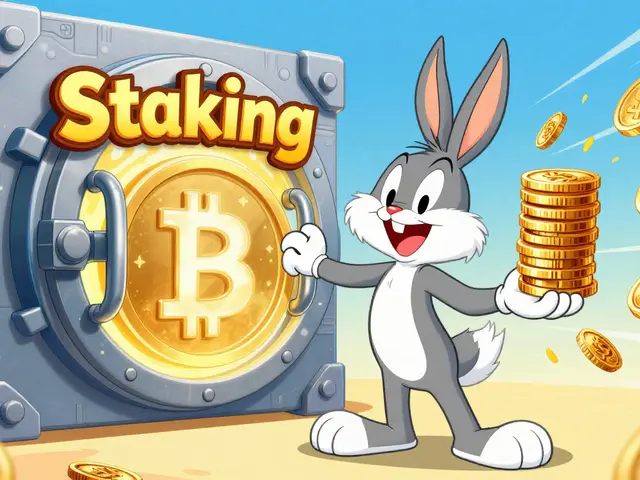
The core feature of REX is its time-locking system. In traditional finance, a Certificate of Deposit requires you to leave your cash untouched for a fixed term to earn a higher interest rate. REX mimics this on-chain. When you deposit XRX into the staking contract, you choose a duration. The longer you commit, the higher the potential reward multiplier.
Here is how the process typically flows:
- Acquire XRX: You buy the token using BNB (Binance Coin) via a decentralized exchange (DEX) on the BNB Chain.
- Select Lock Period: You decide how long to lock your tokens. Options range from a short 7-day stint to a massive 3,653-day commitment (about 10 years).
- Earn Rewards: The smart contract distributes additional REX tokens to your wallet based on the length of your lock-up. This is essentially inflationary yield; new tokens are created to pay existing holders.
- Transfer or Wait: One unique claim of REX is that these stakes can be transferred. Unlike a traditional CD where you are stuck until maturity, REX attempts to make these locked positions tradable assets within its ecosystem.
The protocol also introduces gamified elements to boost engagement. These include BOOST tokens, which may enhance yield rates, and Daily Auctions where users compete for distributions. There is also a feature called BigPayDays, described as a lottery-style event over 222 days where participants might win back their investment multiple times. While these features sound exciting, they add complexity to an already niche product.
Technical Foundation: BNB Chain and Smart Contracts
REX operates entirely on the BNB Chain (Binance Smart Chain). It is deployed as a BEP-20 token, meaning it follows the same technical standards as thousands of other assets on this network. The specific contract address for XRX is 0xb25583e5e2db32b7fcbffe3f5e8e305c36157e54.
The project claims its ecosystem is built on "decentralized, immutable smart contracts." In theory, this means no single person or company can change the rules or steal funds once the code is live. However, transparency here is limited. Major data aggregators do not list third-party audit reports, auditor names, or governance structures. Without independent security audits, users are trusting the code blindly-a risky proposition in the DeFi world where bugs often lead to total loss.
Tokenomics and Supply Confusion
If you look up REX (XRX) online, you will find conflicting information about how many tokens exist. This lack of clarity is a major red flag for any investor.
| Data Point | KuCoin (Aug 2025) | CoinMarketCap | LiveCoinWatch | Coinbase |
|---|---|---|---|---|
| Circulating Supply | 99,999,999 XRX | 1.21 Billion XRX | Unknown / 0 | 0 |
| Max Supply | 99,999,999 XRX | None Listed | N/A | N/A |
| Market Cap | $20,158 USD | Not Calculated | $0.00 USD | N/A |
| All-Time High (ATH) | $0.0.0387 USD | N/A | $0.000796 USD | $0.000011 USD |
Notice the drastic differences. KuCoin suggests a hard cap of roughly 100 million tokens, while CoinMarketCap lists over a billion in circulation. Coinbase even shows zero circulating supply. These discrepancies could stem from contract migrations, re-denominations (changing the decimal places), or simply poor data tracking by exchanges. For a serious investor, this uncertainty makes valuation impossible. How can you assess risk if you don’t know the total supply?
Price Performance and Market Reality
Let’s talk numbers. As of mid-2025, REX (XRX) is trading at fractions of a cent. Prices hover around $0.000011 USD. This is a catastrophic drop from its historical highs. Depending on which source you trust, the token has lost between 98% and 99.97% of its value.
KuCoin records an all-time high of approximately $0.0387, meaning the current price is less than 0.03% of its peak. LiveCoinWatch shows a slightly lower ATH of $0.000796, but the conclusion remains the same: the asset has crashed. Furthermore, liquidity is virtually non-existent. LiveCoinWatch reported a 24-hour trading volume of just $10. Yes, ten dollars. This means if you tried to sell a significant amount of XRX, you would likely crash the price further due to thin order books.
This status classifies REX as a micro-cap cryptocurrency with extremely low market capitalization and liquidity. It ranks outside the top 10,000 cryptocurrencies by market cap. At this stage, it is not an investment vehicle for wealth preservation; it is a speculative asset with high volatility and minimal active user base.
Risks and Security Concerns
Investing in REX (XRX) carries substantial risks that go beyond normal crypto market fluctuations.
- Liquidity Risk: With daily volumes near zero, exiting your position quickly is difficult. You might hold tokens worth $100 on paper but only be able to sell $5 worth without slippage destroying your value.
- Smart Contract Risk: The lack of clear documentation regarding the founding team, corporate entity, or development history raises questions about accountability. If the developers abandon the project, there is no central authority to contact.
- No Audits: Without public security audits from firms like CertiK or Hacken, you cannot verify if the staking contracts have hidden vulnerabilities or backdoors.
- Complex Tokenomics: Features like BOOST tokens and BigPayDays add layers of complexity that are poorly explained. Complex systems often hide dilution mechanisms that hurt long-term holders.
Additionally, REX is not listed on major centralized exchanges like Binance or Coinbase for direct spot trading. You must use Web3 wallets and decentralized exchanges (DEXs) like PancakeSwap to interact with it. This adds a layer of technical friction and exposes you to phishing risks if you visit fake websites.
Who Should Consider REX (XRX)?
Given the current state of the token, REX (XRX) is not suitable for beginners or conservative investors. It lacks the stability, transparency, and liquidity required for serious portfolio allocation.
It might appeal to:
- DeFi Experimenters: Users who want to test BNB Chain staking mechanics and understand how CD-like protocols work, provided they are willing to lose their entire investment.
- High-Risk Speculators: Traders looking for extreme upside potential from dead coins, hoping for a community-driven revival or marketing pump.
For everyone else, established DeFi platforms with audited contracts, clear tokenomics, and deep liquidity offer safer ways to earn yield on the BNB Chain.
Conclusion
REX (XRX) presents an interesting concept: bringing the familiarity of bank CDs to the blockchain. However, execution matters more than ideas. With conflicting supply data, negligible trading volume, and a near-total collapse in price, REX currently fails to deliver on its promise of secure, high-yield value storage. It serves as a cautionary tale in the crypto space-where innovative marketing can launch a token, but only robust fundamentals and community trust sustain it. Proceed with extreme caution, verify the contract address yourself, and never invest more than you can afford to lose completely.
What is the current price of REX (XRX)?
As of mid-2025, REX (XRX) trades at approximately $0.000011 USD. However, prices vary significantly between data sources due to low liquidity and inconsistent tracking.
Is REX (XRX) a safe investment?
No. REX is considered a high-risk, micro-cap asset. It lacks third-party security audits, has extremely low liquidity (daily volumes around $10), and has lost over 99% of its all-time high value. Only experienced DeFi users should interact with it.
Where can I buy REX (XRX)?
REX is not listed on major centralized exchanges for spot trading. You must use a Web3 wallet (like MetaMask or Trust Wallet) connected to the BNB Chain and swap BNB for XRX on a decentralized exchange (DEX) such as PancakeSwap. Always verify the contract address: 0xb25583e5e2db32b7fcbffe3f5e8e305c36157e54.
How does the REX staking mechanism work?
Users lock their XRX tokens in a smart contract for a chosen period, ranging from 7 to 3,653 days. In return, they earn additional REX tokens as rewards. The longer the lock-up, the higher the potential yield. Some stakes may be transferable within the protocol.
Why is there conflicting data about REX supply?
Different aggregators report vastly different circulating supplies (from 0 to 1.21 billion). This may be due to contract migrations, re-denominations, or errors in data collection. This inconsistency makes accurate valuation and risk assessment difficult.