

You might have seen the ticker USA popping up in your crypto feed and wondered: what exactly is this? Is it a government-backed digital dollar? A new meme coin riding the patriotic wave? Or just another low-cap project on Solana? If you’re trying to figure out if this token has real utility or just hype, you’re in the right place. As of September 2026, the landscape for small-cap altcoins is messy, and Official USA Token sits squarely in that gray area where marketing meets blockchain mechanics.
The Core Identity of Official USA Token
Official USA Token (USA) is a decentralized digital asset launched on January 28, 2025. It operates on the Solana blockchain network, leveraging its high-speed transaction capabilities to facilitate seamless transfers within its ecosystem. Unlike stablecoins pegged to fiat currency, USA is a volatile market asset with a fixed supply model. The project positions itself as a bridge between legacy finance and the open economy, using patriotic branding to attract community engagement rather than relying solely on complex technical innovation.
Think of it less like Bitcoin’s store-of-value proposition and more like a community-driven utility token. The developers emphasize accessibility. They want users who might be intimidated by gas fees or complex DeFi protocols to feel comfortable trading on Decentralized Exchanges (DEXs). But here’s the catch: while the messaging is about "America’s digital future," the actual technology is standard SPL-token functionality on Solana. There is no proprietary Layer-1 chain here; it rides Solana’s rails.
Key Attributes and Supply Mechanics
When evaluating any crypto asset, you need to look under the hood at the tokenomics. For Official USA Token, the structure is simple but restrictive. The total supply is capped at 20 million tokens. This is a hard cap-meaning no new coins will ever be minted. This contrasts sharply with inflationary models like Ethereum or Bitcoin’s halving schedule, offering a deflationary pressure potential if demand rises, though current liquidity suggests demand is still finding its footing.
- Blockchain: Solana (SPL Token Standard)
- Total Supply: 20,000,000 USA
- Circulating Supply: ~20,000,000 USA (Fully circulating)
- Launch Date: January 28, 2025
- Primary Use Case: Community transactions and speculative trading
Because the supply is fully circulating, there are no locked team allocations waiting to dump on retail investors later. That’s a positive signal for transparency. However, full circulation also means early adopters hold significant power over price action. If whales decide to exit, the thin liquidity can cause sharp price drops, a phenomenon we’ve seen repeatedly in the 2025-2026 micro-cap cycle.
Price Volatility and Market Reality
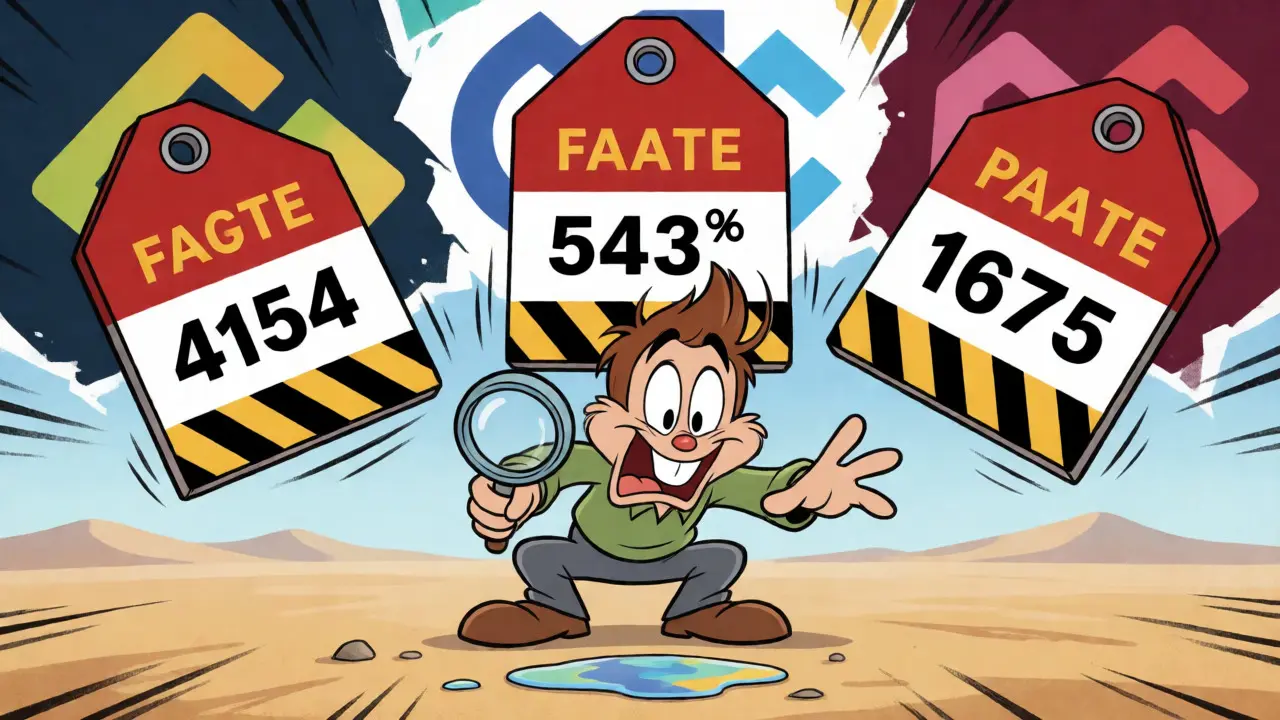
Let’s talk numbers, because they tell a story of extreme volatility and fragmented data. Depending on which tracker you check, the price of USA varies significantly. This isn’t necessarily manipulation; it’s often due to low trading volume across different exchanges. One platform might show $0.011, while another shows $0.002. Why? Because a single large sell order on a low-volume exchange can crash the local price without affecting others immediately.
| Data Source | Reported Price (USD) | 24h Change | Market Cap Rank |
|---|---|---|---|
| CoinGecko | $0.01119 | +6.9% | N/A (Est. #6000+) |
| CoinPaprika | $0.012571 | Data Varies | #6196 |
| Bybit | $0.009821 | Data Varies | #5727 |
| Binance | $0.002494 | -15.34% | N/A |
| LiveCoinWatch | $0.000436 | Data Varies | #8921 |
Notice the spread? From $0.012 down to $0.0004. That’s an order-of-magnitude difference. For a trader, this means arbitrage opportunities exist, but also huge risk. You cannot rely on a single price feed. The all-time high recorded was around $0.000447 on some trackers, yet CoinGecko reports prices ten times higher. This discrepancy usually points to stale data on smaller aggregators or specific pair liquidity issues. Always verify the price on the exchange where you actually plan to trade.
Liquidity and Exchange Availability
Here is the biggest red flag for institutional investors: Official USA Token is illiquid. As of mid-2026, it is listed on very few centralized exchanges. CoinPaprika notes only one active market with minimal volume. Binance lists it, but with low activity. Crypto.com explicitly states it is not currently tradable on their main spot interface, despite listing the asset for tracking.
This limited availability creates a barrier to entry. If you buy USA on a DEX via Solana, you’re fine. But moving those funds to a major CEX like Coinbase or Kraken might be impossible directly. You’d likely need to swap back to SOL or USDC first. This friction discourages casual investors who prefer the simplicity of buying with a credit card on a major app. The 24-hour trading volume ranges from a mere $2 to roughly $3,300 depending on the source. For context, top-tier tokens trade billions daily. This confirms USA is a niche, speculative play, not a mainstream payment method yet.

Utility vs. Hype: What Does It Do?
The project website claims to offer "purpose-built, onchain products." In practice, this translates to standard DeFi interactions: swapping, providing liquidity, and holding. There is no unique smart contract feature that distinguishes USA from thousands of other Solana memes. Its value proposition relies heavily on community sentiment and brand recognition.
Patriotic themes work well in marketing. During election cycles or periods of nationalistic fervor, tokens with names like USA, Liberty, or Freedom tend to see spikes. However, without a clear roadmap for real-world adoption-like partnerships with merchants accepting USA for goods-the utility remains theoretical. Most holders today are speculators betting on social media trends rather than users paying for coffee.
Risks and Considerations for Investors
If you’re considering adding USA to your portfolio, weigh these factors carefully:
- Volatility Risk: With such low market cap, a $10,000 sell order can move the price 20%. Be prepared for wild swings.
- Exchange Fragmentation: Prices differ wildly across platforms. Ensure you know the true market rate before executing trades.
- Lack of Transparency: Detailed information on the development team is scarce. Who maintains the code? Are updates regular? These answers are hard to find.
- Fixed Supply Limitation: While good for scarcity, it limits flexibility for treasury management or incentive programs compared to dynamic supply models.
Is it a scam? Probably not in the traditional sense, given the verifiable on-chain history and fixed supply. But it is highly speculative. Treat it as entertainment money, not savings.
Is Official USA Token backed by the US Government?
No. Despite the name and patriotic branding, Official USA Token is a private, decentralized cryptocurrency. It has no official affiliation with the United States government, the Federal Reserve, or any state agency. It is a community-led project built on the Solana blockchain.
Where can I buy Official USA Token (USA)?
You can primarily purchase USA on Decentralized Exchanges (DEXs) on the Solana network, such as Raydium or Jupiter. Some centralized exchanges like Bybit and Binance may list it, but liquidity there is often lower than on DEXs. Always check the specific trading pair available.
Why do prices for USA vary so much across websites?
Price discrepancies occur due to low trading volume and fragmented liquidity. Small exchanges may have outdated data or insufficient order book depth, causing the last traded price to deviate significantly from the global average. Aggregators update at different frequencies, leading to temporary mismatches.
What is the maximum supply of Official USA Token?
The maximum supply is fixed at 20,000,000 tokens. All tokens are currently in circulation, meaning there is no additional mining or staking emission planned to increase the supply further.
Is Official USA Token a good investment for 2026?
This depends on your risk tolerance. It is a high-risk, high-volatility micro-cap asset. It lacks the robust utility and adoption metrics of established projects. It may appeal to traders seeking short-term speculative gains based on market sentiment or patriotic trends, but it carries significant downside risk.




Categories