
Ever wonder why your favorite artist only gets a fraction of a cent per stream on Spotify? The music industry is notorious for middle-men who take the lion's share of profits. Gala Music is a decentralized music streaming platform that uses blockchain technology to strip away those intermediaries, giving power back to creators and rewards to the listeners. By turning songs into digital assets, it changes music from something you just rent via a subscription into something you can actually own and profit from.
The Core Concept: How Gala Music Works
At its heart, Gala Music isn't just an app; it's an ecosystem built on GalaChain , a Layer 1 blockchain tailored specifically for entertainment. Instead of a central company owning the database of songs, the platform uses ERC-1155 tokens to host music. When an artist uploads a track, it is engraved on the blockchain as a series of NFTs.
Here is the interesting part: a single song can be minted into up to 100 individual NFTs, called tracks. This means a community of fans or investors can essentially "co-own" the distribution of a song. These tracks aren't just digital collectibles; they are functional assets that can be paired with network nodes to generate a stream of income.
Understanding the MUSIC Token
If GalaChain is the road, MUSIC is the fuel. The Gala Music MUSIC token is the native currency of this ecosystem, with a hard cap of 1 billion tokens. You can't run the economy without it, as it handles every financial interaction on the platform.
You'll use MUSIC tokens for several specific things:
- Buying Song NFTs: Directly supporting artists by purchasing their tracks.
- Node Operations: Acquiring licenses to help run the network.
- Upgrading Capacity: Increasing how many tracks your node can host.
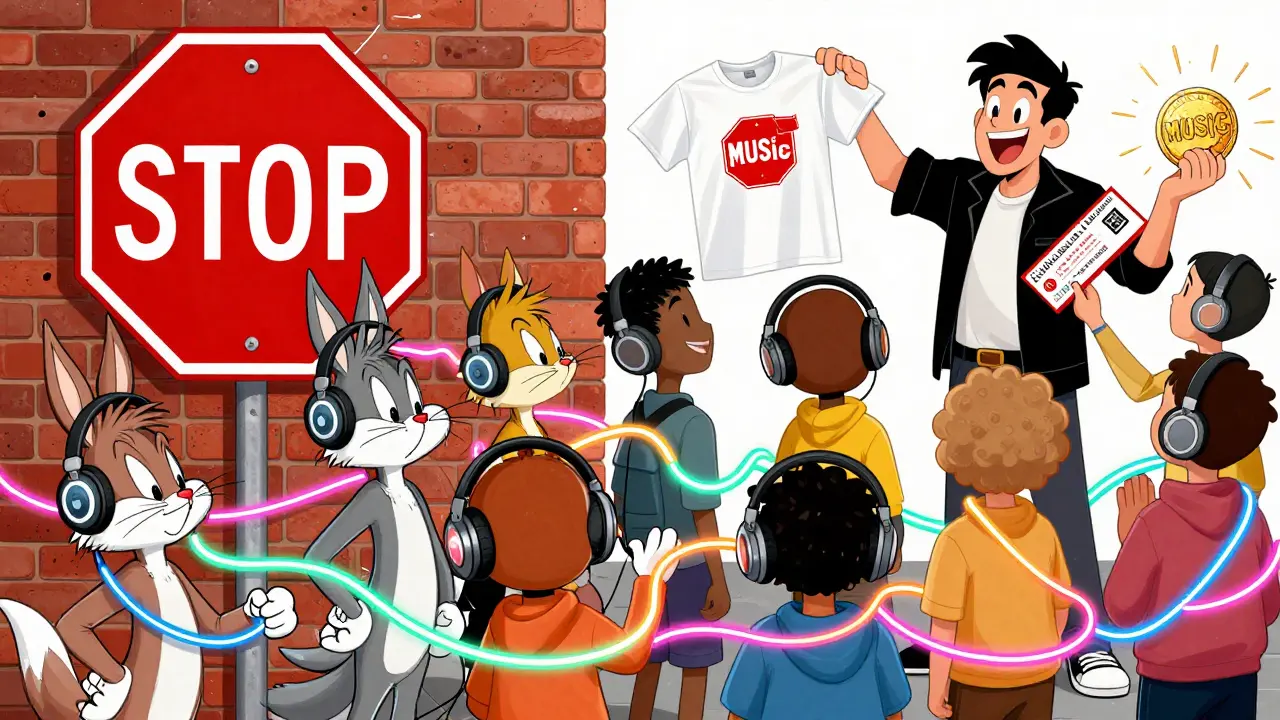
- Shopping: Buying physical merchandise, apparel, or event tickets through the All-Access store.
Because it bridges to the Ethereum network, the MUSIC token isn't trapped in a silo; it can be traded on major exchanges or moved into other DeFi protocols.
The Three-Way Economy: Nodes, Track Holders, and Fans
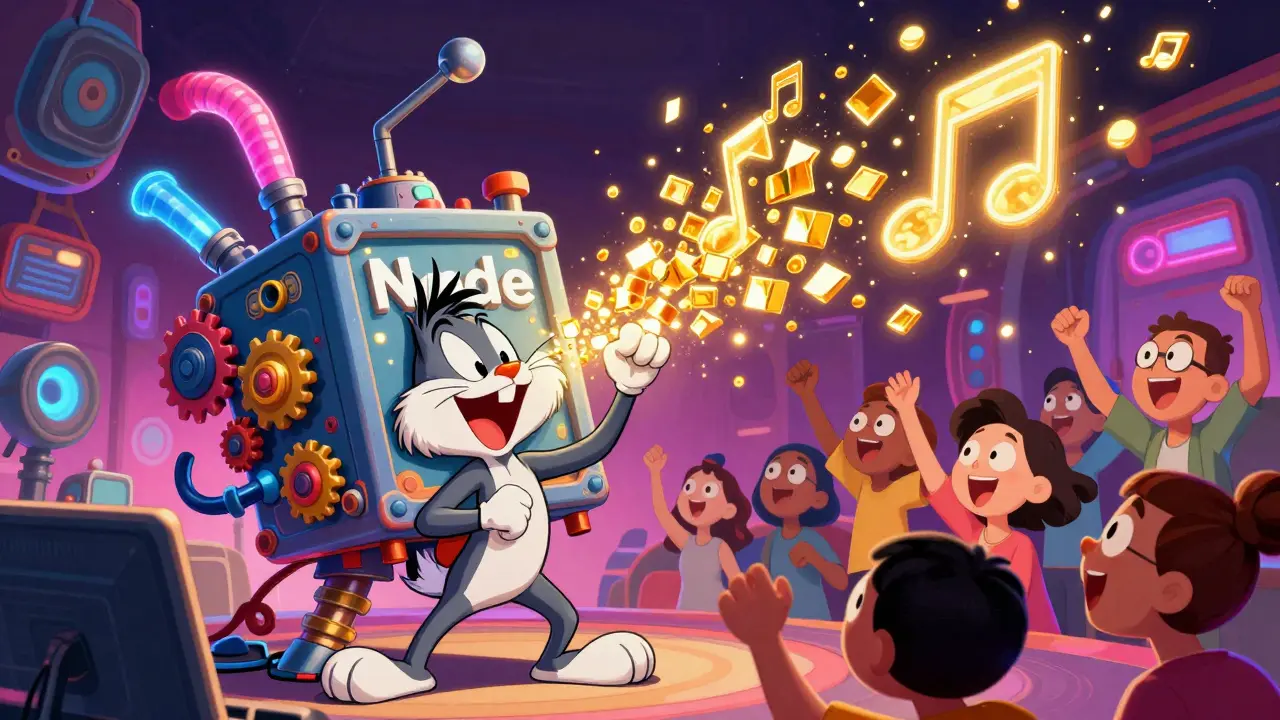
Gala Music doesn't treat everyone the same. It splits users into three distinct roles, each with their own way of making or spending tokens. This creates a circular economy where the platform's growth benefits everyone involved.
First, we have the Node Operators. These are the backbone of the network. A node license costs roughly 11,704 MUSIC tokens. By maintaining a 20-hour daily uptime, these operators keep the network secure and are rewarded with MUSIC tokens for their service. They essentially act as the "servers" for the music.
Next are the Track Holders. If you own one of the 100 NFTs associated with a song and host it on a node, you earn revenue. The logic is simple: the more a song is played by the public, the more rewards are generated for the person hosting that track. It turns music discovery into a financial incentive.
Finally, there are the Fans. For the average listener, the experience feels like a traditional streaming app, but with a twist. Fans can listen to artists for free and participate in loyalty programs. While the reward structure for listeners is still evolving compared to node operators, the goal is to let fans earn tokens simply by engaging with the music they love.
| Role | Primary Action | Reward/Cost | Key Benefit |
|---|---|---|---|
| Node Operator | Maintains network uptime | Cost: ~11,704 MUSIC | Network participation rewards |
| Track Holder | Owns/Hosts song NFTs | Varies by NFT price | Revenue based on play counts |
| Fan | Streams music | Free / Low cost | Loyalty rewards & exclusive access |
Breaking Borders and Industry Barriers
One of the biggest headaches in the music world is regional licensing. Have you ever tried to watch a video or listen to a track only to see "This content is not available in your country"? Gala Music attempts to solve this using borderless blockchain payments.
By using cryptocurrency, the platform bypasses traditional banking systems that often block users in certain global regions. If you have a digital wallet, you have access. This opens up a massive global market for artists to reach fans who were previously locked out by financial red tape.
Furthermore, the platform is built on transparency. Unlike traditional record labels that might hide streaming numbers or payout formulas, Gala Music is open-source. Anyone can audit the smart contracts to see exactly how much an artist is being paid and how many people are actually listening. This "truth machine" aspect is designed to end the era of deceptive royalty statements.
Real-World Adoption and the Bigger Picture
This isn't just a theoretical project. High-profile artists like Snoop Dogg , Jordin Sparks, and Earl Sweatshirt have already jumped on board. These artists aren't just promoting the coin; they are using the platform to test new ways of building communities and selling merchandise directly to fans.
It's also important to realize that Gala Music isn't acting alone. It's a pillar of a larger entertainment empire that includes Gala Games and Gala Movies. The long-term vision is a unified entertainment hub. Imagine playing a game where the soundtrack is powered by Gala Music, and owning the NFT for that song gives you a special item in the game. That kind of cross-platform synergy is where the real value lies.
Potential Pitfalls to Consider
While the vision is bold, it's not without risks. The current economic model heavily favors node operators and track holders. For the average fan, the "earn-while-listening" aspect is less developed than the professional hosting side. There is also the inherent volatility of the MUSIC token; if the token price swings wildly, the cost of running a node or buying a track changes instantly.
Additionally, the success of the platform depends entirely on artist adoption. While Snoop Dogg is a huge win, the platform needs a critical mass of mid-tier and indie artists to truly compete with the giants of the streaming world.
How do I earn MUSIC tokens?
The most consistent way to earn tokens is by becoming a Node Operator or a Track Holder. Node operators earn rewards for keeping the network running, while track holders earn MUSIC based on how many times their hosted songs are played. Fans can also earn tokens through loyalty programs and streaming activities, though these rewards are generally smaller than node earnings.
Is the MUSIC token the same as the GALA token?
No, they are different. GALA is the broader ecosystem token used across games and movies, while MUSIC is the specific utility token for the music platform. However, both operate within the Gala ecosystem and utilize GalaChain for their infrastructure.
What happens to the BEAMS token?
BEAMS was the testnet version of the token. Users can exchange BEAMS for MUSIC at a 1:1 ratio, though there was a specific conversion capacity limit of 75 million tokens for this process.
Can I use MUSIC tokens to buy real-world items?
Yes. The All-Access store allows users to spend MUSIC tokens on artist-related merchandise, clothing, and concert tickets, bridging the gap between digital assets and physical goods.
How does the NFT system benefit the artist?
Artists gain total control over their intellectual property. Instead of signing away rights to a label, they mint their songs as NFTs. This allows them to see transparent data on their popularity and receive payments directly and instantly without waiting for monthly or quarterly royalty checks from a distributor.