AI Compute Cost Calculator
Compare estimated costs for running AI tasks using Chutes (SN64) versus traditional cloud providers. Based on current market data for SN64 ($27.56) and typical cloud rates ($0.01-$0.10 per hour).
Disclaimer: This calculation is based on current SN64 price ($27.56) and assumes Chutes offers 20% savings compared to cloud providers. Actual savings may vary significantly due to SN64 price volatility and network performance.
Chutes (SN64) isn’t just another crypto coin. It’s a bet on the future of artificial intelligence - but instead of running on big tech servers, it runs on a decentralized network of computers around the world. If you’ve heard of blockchain for money transfers or smart contracts, Chutes takes that idea further: it’s using blockchain to rent out unused computing power for AI tasks. Think of it like Uber for AI brainpower.
What Chutes (SN64) Actually Does
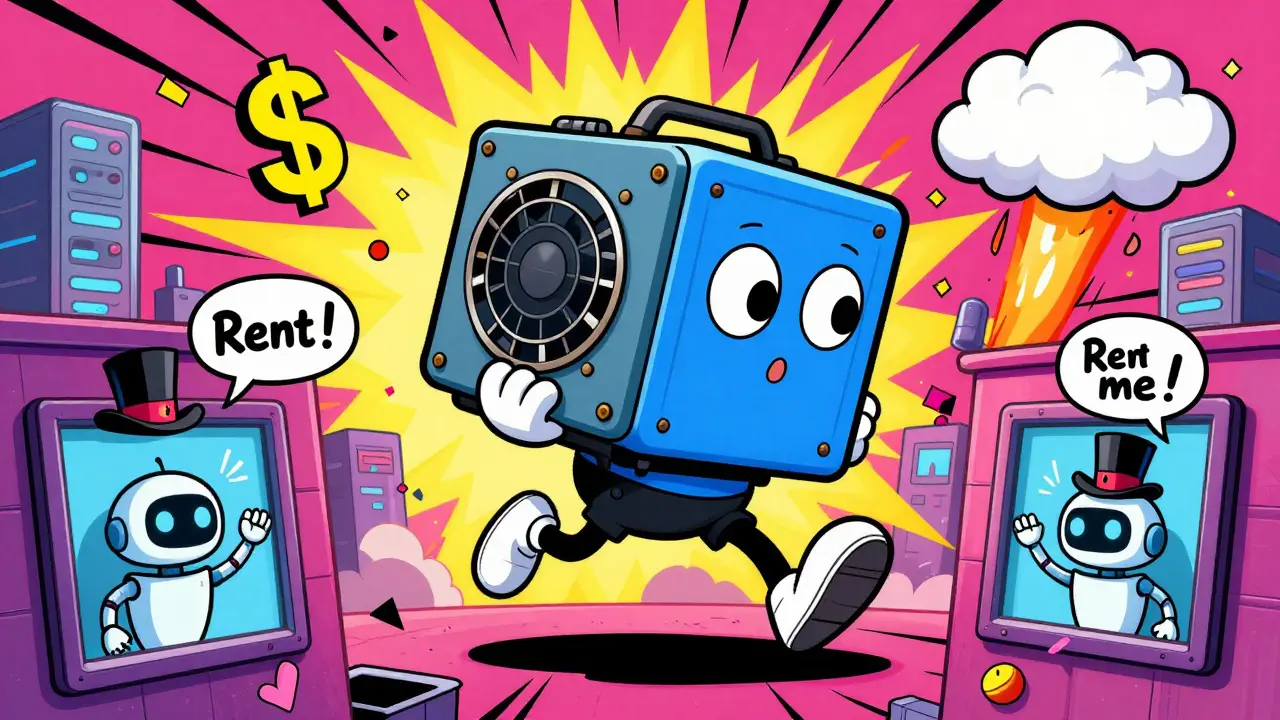
Chutes lets people rent out their idle GPUs - the same chips used in gaming and AI training - to run complex AI models. These models need serious computing muscle. Running them on cloud services like AWS or Google Cloud can cost thousands of dollars a month. Chutes offers a cheaper, decentralized alternative. Users who contribute computing power get paid in SN64 tokens. Developers who need AI processing power pay in SN64 to run tasks like image generation, language model inference, or data analysis.
The project calls itself a serverless AI compute provider. That means you don’t have to manage servers. You just send a request - like ‘run this AI model on 1000 images’ - and Chutes finds the right machines on its network to do it. The whole thing happens automatically, without you needing to know where the computing power comes from.
Why SN64 Is Different from Other Crypto Coins
Most crypto coins are either digital money (like Bitcoin) or tools for decentralized apps (like Ethereum). SN64 is tied directly to real-world computing. Its value doesn’t just come from speculation - it comes from actual usage. If more people start using Chutes to run AI tasks, demand for SN64 goes up. That’s the core idea behind DePIN - Decentralized Physical Infrastructure Networks.
Chutes sits in a growing space alongside projects like Render Network and Akash Network, but it’s one of the few focused purely on AI inference. That’s the stage where AI models answer questions or generate images after being trained. It’s where most real-world AI applications live - and it’s also where cloud costs are highest. Chutes is trying to cut those costs by tapping into underused hardware.
Price Volatility and Market Confusion
As of early December 2025, SN64’s price is all over the place. CoinMarketCap says it’s around $27.56. Other platforms show $38, $50, even $76 - the all-time high hit in July. The low? $25.80, just weeks ago. This isn’t normal market noise. It’s a sign of a very young, thinly traded asset with inconsistent data reporting.
Some trackers even show a circulating supply of zero, which makes no sense if people are trading it. This suggests the data pipelines feeding these platforms aren’t reliable yet. That’s common for new DePIN projects. The token is still early, and exchanges or data aggregators haven’t fully synced up.
What’s clear is that SN64 is extremely volatile. A 193% spike in trading volume in 24 hours doesn’t mean it’s going up - it just means people are buying and selling fast. That’s risky for anyone not prepared for wild swings.

Technical Signals: Bullish or Bearish?
Technical analysts are split. BeInCrypto’s one-week chart shows a bearish MACD signal - meaning short-term momentum is downward. That could mean more price drops before a rebound. But long-term forecasts are wildly optimistic. WalletInvestor predicts SN64 could hit $52.95 by 2031. CoinDataFlow goes further, saying it might hit $288 if adoption explodes.
Here’s the catch: these predictions are based on assumptions - not real usage data. No one knows how many people are actually using Chutes to run AI jobs. Without real-world adoption, price forecasts are just guesses dressed up as math.
Is Chutes Working? The Missing Proof
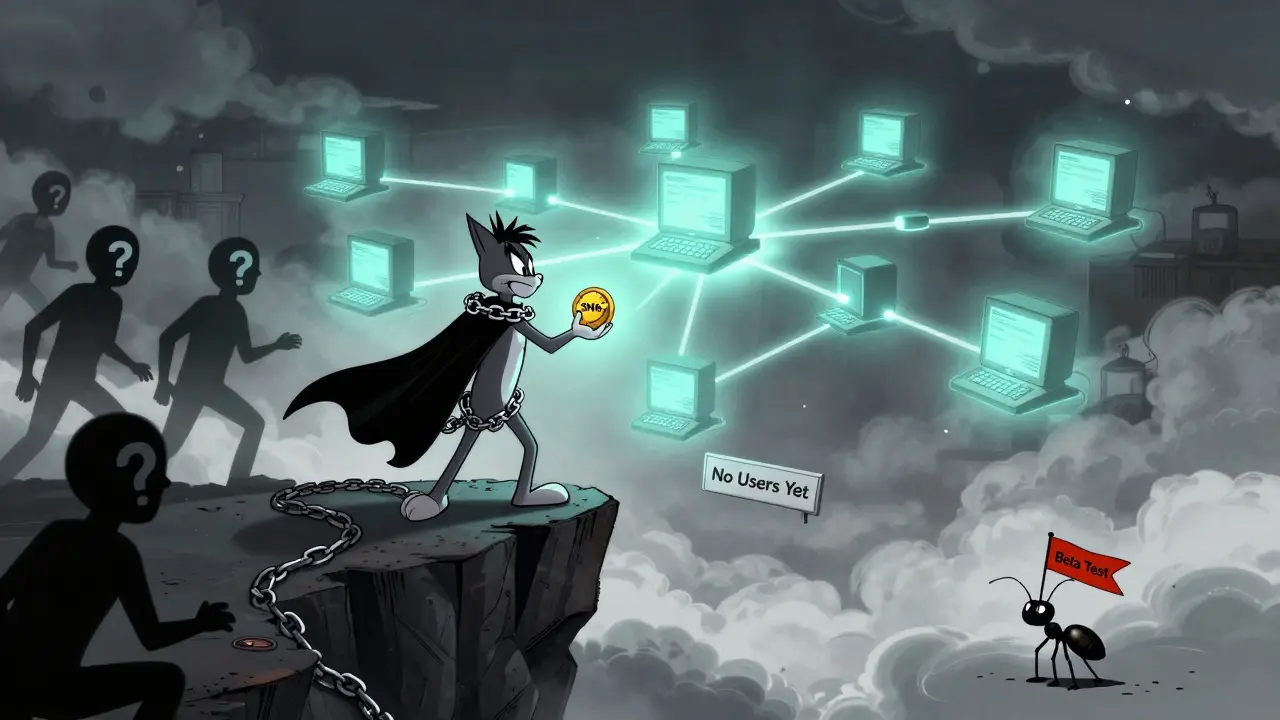
The biggest red flag? There’s almost no public proof the platform is being used. No case studies. No user testimonials. No Reddit threads discussing how it saved someone $500 on AI costs. No GitHub commits showing active development. The project’s website talks about upcoming features like “Chutes Long Jobs,” but there’s no timeline, no beta access, no demo.
Compare that to Render Network, which has been around for years and lets you test GPU rentals with a few clicks. Chutes feels like a pitch deck with a token attached. That’s not necessarily a scam - many projects start this way. But it’s a huge risk if you’re investing based on hope, not results.
Who Is Behind Chutes?
There’s no public team page. No LinkedIn profiles of founders. No interviews. No whitepaper with technical specs on latency, throughput, or how nodes are rewarded. That’s not normal for a serious infrastructure project. Even early-stage DePIN projects usually share at least a few names and backgrounds to build trust.
Without knowing who’s building this, you can’t assess their experience. Did they build AI systems before? Have they run decentralized networks? Or are they just launching a token hoping to ride the AI hype?
Where Does Chutes Fit in the Bigger Picture?
The AI computing market is exploding. Companies are spending billions on cloud GPUs. By 2030, global AI infrastructure spending could top $500 billion. If Chutes can capture even 0.1% of that, SN64 could be worth a lot.
But it’s not the only player. Akash, Render, and even Filecoin are also offering decentralized compute. Chutes needs to prove it’s better - faster, cheaper, easier - or it’ll vanish into the noise.
Right now, it’s competing with giants who have billions in funding and proven track records. Chutes has a token, a website, and a lot of hope.
Should You Buy SN64?
If you’re looking for a safe investment - don’t. SN64 is high-risk, high-speculation. It’s not a currency. It’s not a utility token with proven demand. It’s a bet on a team, a product, and a future that hasn’t been built yet.
If you’re willing to gamble - and you understand that you could lose everything - then treat it like a lottery ticket. Only invest what you can afford to burn. Don’t use savings. Don’t borrow money. Don’t expect it to pay your rent.
And if you’re interested in the space, look at projects with live networks, real users, and public teams. Chutes might become something big. But right now, it’s just a name on a chart.
What’s Next for Chutes?
The next big milestone? When someone actually uses it to run an AI job - and posts about it publicly. When a developer says, ‘I saved $200 this month using Chutes instead of AWS.’ That’s when the story changes from speculation to substance.
Until then, SN64 is a coin with no clear use case, no verifiable adoption, and a price that changes by the hour. It’s a fascinating idea. But ideas don’t pay bills. Real products do.