
Have you ever stumbled upon a cryptocurrency with a name that sounds familiar but a price that looks like a glitch in the matrix? That’s exactly what happens when you look up BitBall. On paper, it promises to be an "All in One Decentralized Cryptocurrency" bridging digital assets and real-world payments. In reality, as of mid-2026, it trades for fractions of a penny with market capitalizations that barely register on major trackers. If you are wondering whether this is a hidden gem or a cautionary tale, you need to look past the marketing slogans and dig into the actual data.
This guide breaks down what BitBall actually is, how its tokenomics work, where you can trade it, and why it remains one of the most obscure tokens on the Ethereum network today.
The Basics: What Is BitBall?
BitBall is an ERC-20 utility token built on the Ethereum blockchain, designed to facilitate transactions within its proprietary ecosystem including trading fees, staking, and governance. It was launched around August 2018, though some data providers list a 2020 origin, creating a bit of confusion about its exact birth date. The project positions itself as a bridge between exchanges, clients, and digital currencies, using the ticker symbol BTB.
At its core, BTB is just another standard token on the Ethereum network. This means it doesn’t have its own blockchain; instead, it rides along with Ethereum’s security and infrastructure. You interact with it using the same tools you use for other Ethereum-based assets. However, unlike major coins like USDT or LINK, BTB does not have widespread adoption. Its primary function, according to its whitepaper, is to serve as a base currency for trading other assets within the BitBall ecosystem and to provide rewards to holders.
The project also touts a companion token called BitBall Treasure (BTRS), which is marketed as a store of value. While BTRS has a capped supply of 1 million tokens, BTB itself has a much larger maximum supply. Understanding the relationship between these two is key to grasping the project's ambitious, yet largely unfulfilled, vision.
Tokenomics and Supply Details
When evaluating any crypto asset, the numbers tell the true story. For BitBall, those numbers reveal a classic micro-cap structure with significant discrepancies across different data sources. Here is the breakdown of the key attributes:
- Maximum Supply: 999,999,999 BTB (often rounded to 1 billion).
- Circulating Supply: Estimates vary wildly, ranging from roughly 607 million to over 641 million BTB as of early 2026.
- Decimals: 18 (standard for ERC-20 tokens, allowing for precise fractional ownership).
- Contract Address: 0x06e0feB0D74106c7adA8497754074D222Ec6BCDf
The circulating supply represents about 60-64% of the total maximum supply. This implies that roughly 360 to 400 million tokens are still locked, held by the team, or reserved for future development. However, there is no transparent breakdown of who holds these locked tokens. Without clear vesting schedules or public audits, investors are left guessing about potential sell pressure from insiders.
It is worth noting that while the maximum supply is fixed, the lack of consistent reporting on circulating supply suggests that liquidity events or unlocks may not be communicated clearly to the public. This opacity is common in smaller projects but adds a layer of risk for anyone looking to buy in.
Price History and Market Performance
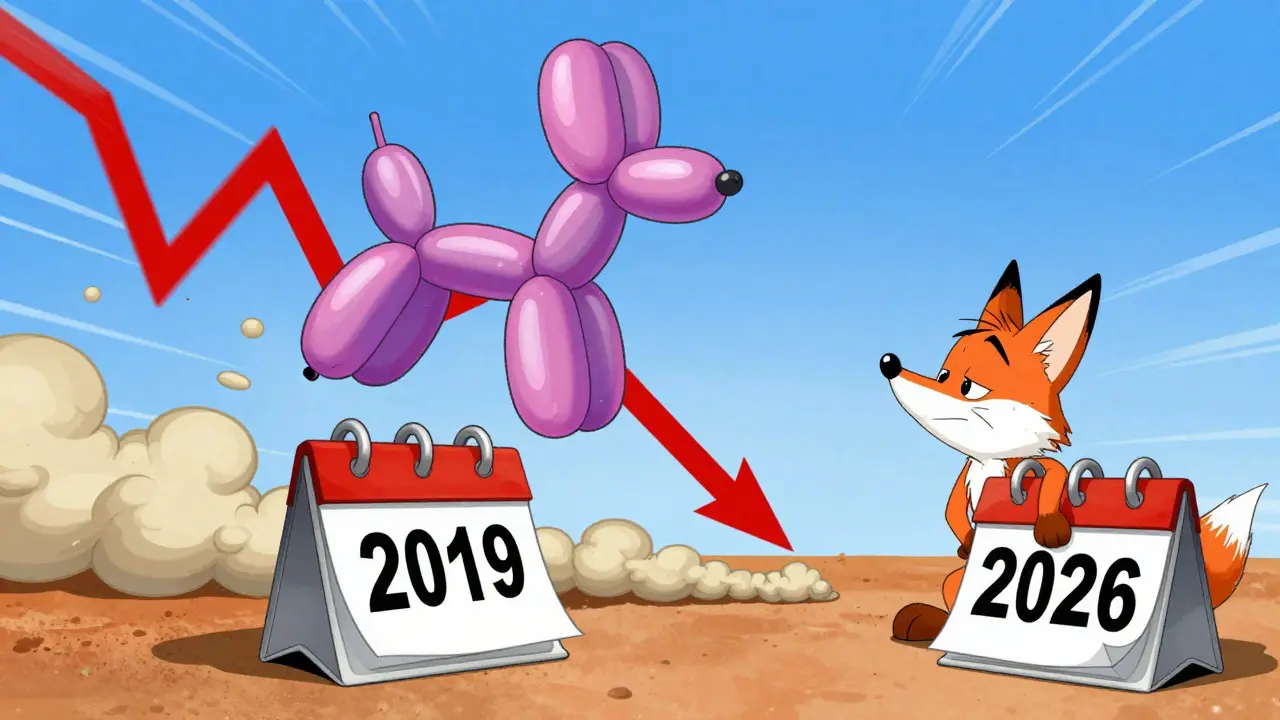
If you check the chart for BitBall, you will see a dramatic decline from its peak. This is not a subtle dip; it is a collapse typical of many altcoins that failed to maintain momentum after their initial launch hype.
| Metric | Value | Date/Context |
|---|---|---|
| All-Time High (ATH) | $0.074525 | October 25, 2019 |
| All-Time Low (ATL) | $0.000034 | February 7, 2019 |
| Current Price Range | $0.000021 - $0.000022 | Mid-2026 Average |
| Market Cap | $13,000 - $32,000 | Varies by exchange |
| Global Rank | #3,472 - #4,336 | By Market Capitalization |
Look at that ATH from 2019. At $0.07, the token had a tangible value. Today, it trades at approximately $0.000022. That is a drawdown of more than 99%. To put this in perspective, if you had invested $1,000 at the all-time high, your investment would now be worth less than $3. This extreme volatility is characteristic of micro-cap cryptocurrencies that lose community interest and developer support over time.
Volatility isn't just downward, either. In October 2025, Binance reported a 24-hour price change of -87.77% for BTB. Such massive swings happen because the trading volume is so low that a single large sell order can crash the price. Conversely, a small buy order can spike it temporarily. This makes technical analysis nearly useless for BTB, as price movements are driven more by random liquidity shocks than by fundamental news.
Liquidity and Where to Trade
One of the biggest challenges with BitBall is finding a place to actually trade it. Many major exchanges list the price but do not offer active trading pairs. For example, Binance and Crypto.com track the price of BTB but explicitly state that it is "not listed" for trading on their platforms. This creates a confusing situation where users see a price but cannot easily act on it.
The primary venue for trading BTB appears to be smaller centralized exchanges like LATOKEN and decentralized platforms like Uniswap. However, even here, liquidity is thin. Snapshots from CoinGecko show 24-hour trading volumes on LATOKEN as low as $1.79. Yes, you read that right-less than two dollars in a day. With such low volume, the bid-ask spread can be enormous. In one instance, the spread on LATOKEN was recorded at over 60%, meaning you could lose more than half your value instantly just by executing a trade.
This illiquidity is a critical factor to consider. If you manage to buy BTB, selling it later without suffering significant slippage might be difficult. You are essentially entering a market with very few participants, which increases the risk of being stuck with tokens you cannot sell at a fair price.
How to Store BitBall Safely
Since BTB is an ERC-20 token, you don’t need a special wallet. Any wallet that supports Ethereum and ERC-20 tokens will work. The most common choice for users is MetaMask, a browser extension and mobile app. Hardware wallets like Ledger or Trezor are also excellent options for long-term storage.
However, because BTB is not a default token in most wallets, you often have to manually add it. Here is how you do it:
- Open your MetaMask wallet and ensure you are connected to the Ethereum Mainnet.
- Go to the "Assets" tab and click "Import Tokens".
- Select "Custom Token".
- Paste the contract address:
0x06e0feB0D74106c7adA8497754074D222Ec6BCDf - The token symbol (BTB) and decimals (18) should auto-fill. Click "Add".
Always double-check the contract address before importing. Scammers often create fake tokens with the same name but different addresses. Since BTB has a legitimate history, verifying the address against official sources or trusted aggregators like CoinMarketCap is essential to avoid sending your funds to a dead end.

Risks and Considerations
Before you allocate any funds to BitBall, it is crucial to understand the risks. This is not an investment for the faint of heart, nor is it suitable for conservative portfolios. Here are the main red flags:
- Micro-Cap Status: With a market cap under $35,000, BTB is highly susceptible to manipulation and sudden death. A small amount of capital can move the price drastically.
- Lack of Transparency: There are no public smart contract audits from reputable firms mentioned in recent documentation. Security relies entirely on the underlying Ethereum network, but the token contract itself hasn't been verified by third parties in a visible way.
- Inconsistent Data: Different trackers report vastly different prices, volumes, and ranks. This inconsistency makes it hard to get a true picture of the asset's health.
- No Major Adoption: Despite claims of being a payment method, there is no evidence of widespread merchant acceptance or enterprise partnerships. Usage remains speculative.
Expert opinions on BitBall are virtually non-existent. Major research firms and institutional analysts ignore it, focusing instead on top-tier assets with proven utility. The absence of independent coverage means you are relying solely on the project's self-published materials, which naturally lean towards the positive.
Is BitBall Worth It in 2026?
For the average investor, the answer is likely no. The opportunity cost of tying up capital in a token with negligible liquidity and a 99% historical loss is high. However, for niche collectors or those interested in the specific BitBall ecosystem mechanics, it might hold some curiosity value.
If you decide to proceed, treat it as a high-risk speculation rather than an investment. Buy only what you can afford to lose completely. Use limit orders to avoid bad fills due to wide spreads, and always keep your private keys secure. Remember that in the world of micro-cap cryptos, the trend is usually downward unless there is a massive catalyst-and for BitBall, no such catalyst has appeared in years.
What is the current price of BitBall (BTB)?
As of mid-2026, BitBall trades at approximately $0.000022 USD. Prices vary slightly between exchanges due to low liquidity, with ranges seen between $0.000021 and $0.000023.
Where can I buy BitBall (BTB)?
You can trade BTB on smaller centralized exchanges like LATOKEN and potentially on decentralized exchanges like Uniswap. Note that major platforms like Binance and Coinbase track the price but do not currently offer active trading pairs for BTB.
Is BitBall a scam?
There is no definitive proof that BitBall is a scam, as it has a valid Ethereum contract and a history of trading since 2018/2019. However, it exhibits many characteristics of abandoned or zombie projects, including extreme illiquidity, lack of development updates, and massive price depreciation. Treat it with extreme caution.
What is the maximum supply of BTB?
The maximum supply of BitBall is 999,999,999 tokens. Approximately 60-64% of this supply is currently in circulation, with the rest presumably held in reserves or by the development team.
Which wallet should I use for BitBall?
Any ERC-20 compatible wallet works, such as MetaMask, Trust Wallet, or Ledger. You will need to manually import the token using its contract address (0x06e0feB0D74106c7adA8497754074D222Ec6BCDf) to view and send BTB.

Categories