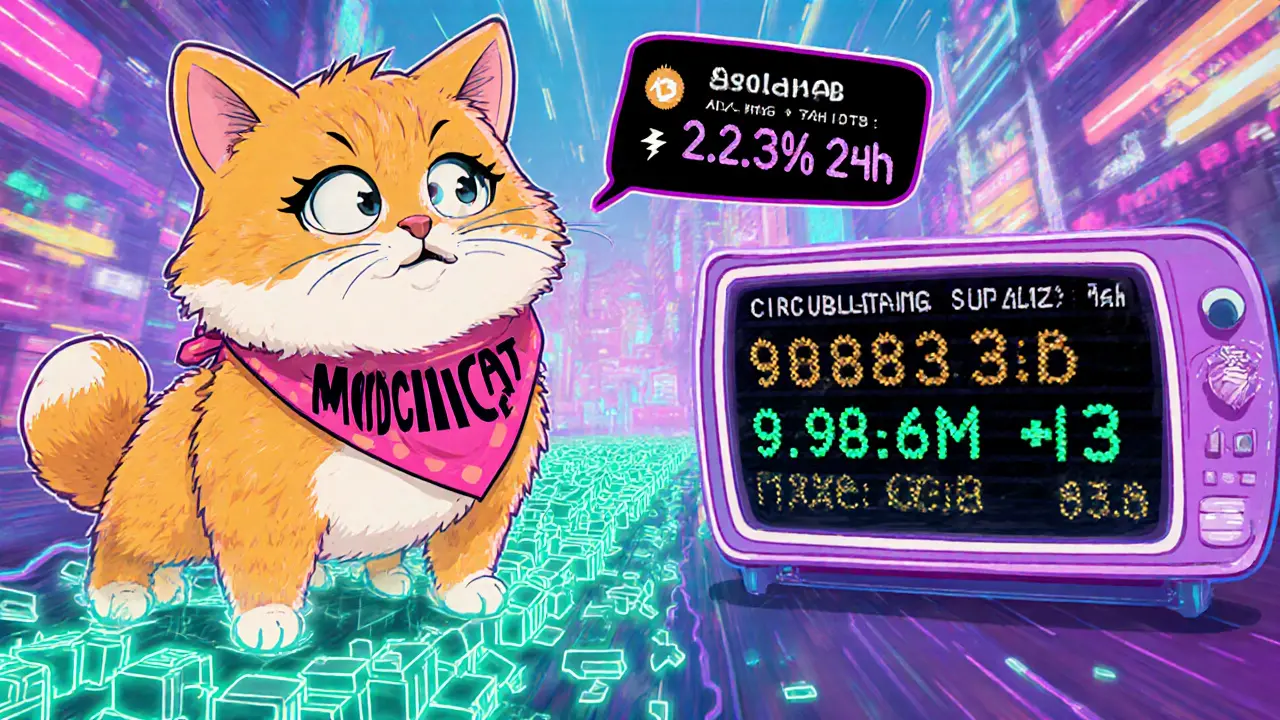
MochiCat (MOCHICAT) Crypto Coin Explained - Price, Tokenomics & Risks
Posted On April 29, 2025 14Learn what MochiCat (MOCHICAT) crypto coin is, its price, tokenomics, trading venues, and the risks of this Solana‑based meme token.

When working with MochiCat crypto, a meme‑style blockchain token that blends gaming, NFTs, and community rewards on the Binance Smart Chain. Also known as MochiCat Coin, it aims to create a playful DeFi experience while rewarding holders. It belongs to the broader category of crypto token, digital assets that represent value or utility on a blockchain. MochiCat frequently launches airdrop, free token distribution events that boost community growth and lives within DeFi, decentralized finance platforms that let users earn, trade, and stake without banks.
The token encompasses three core ideas: meme appeal, utility via gaming NFTs, and financial incentives through staking. Understanding MochiCat requires a look at tokenomics – supply caps, burn mechanisms, and reward rates – because these attributes dictate price dynamics. The project’s airdrop strategy influences user acquisition; every free claim creates a new wallet, expands the network, and fuels liquidity on decentralized exchanges. Meanwhile, its DeFi integration lets holders stake MochiCat in liquidity pools, earn fees, and participate in governance votes that shape future releases.
For anyone eyeing an entry point, the first step is to assess exchange listings. MochiCat appears on both centralized platforms like Binance and emerging DEXes such as PancakeSwap. Each venue offers different fee structures, slippage controls, and security models. Picking the right exchange ties directly to risk management – a crucial attribute for meme‑coins that can swing wildly. Once you own the token, you can join the airdrop calendar, which often ties eligibility to staking amounts or NFT ownership, blending token utility with community engagement.
Another important facet is the bridge between gaming and finance. MochiCat’s NFT collection provides in‑game avatars, skins, and power‑ups that can be swapped for token rewards. This creates a feedback loop: more NFTs drive token demand, and higher token demand funds NFT development. The loop exemplifies how DeFi concepts like yield farming can be gamified, turning passive holders into active participants. In practice, users stake MochiCat, earn a share of transaction fees, and use earned tokens to mint new NFTs, which then appreciate in value.
Regulatory awareness also plays a role. While meme tokens sit in a gray area, many jurisdictions classify them as securities if they promise profits from the efforts of others. Keeping tabs on crypto regulations in major markets – India, South Korea, Nigeria – helps you avoid compliance pitfalls when moving large amounts or using on‑ramp services. The same principle applies to airdrop participation; some airdrops require KYC verification to stay within legal bounds.
All these pieces – tokenomics, exchange choice, airdrop mechanics, gaming NFTs, and regulatory context – form a web that defines MochiCat crypto’s potential. Get the latest insights on MochiCat crypto and how it fits into the broader crypto world. Below you’ll find a curated set of articles that break down each aspect, from wrapped token guides to exchange reviews, regulation overviews, and airdrop walkthroughs. Dive in to sharpen your strategy and stay ahead of the curve.
Learn what MochiCat (MOCHICAT) crypto coin is, its price, tokenomics, trading venues, and the risks of this Solana‑based meme token.
Categories