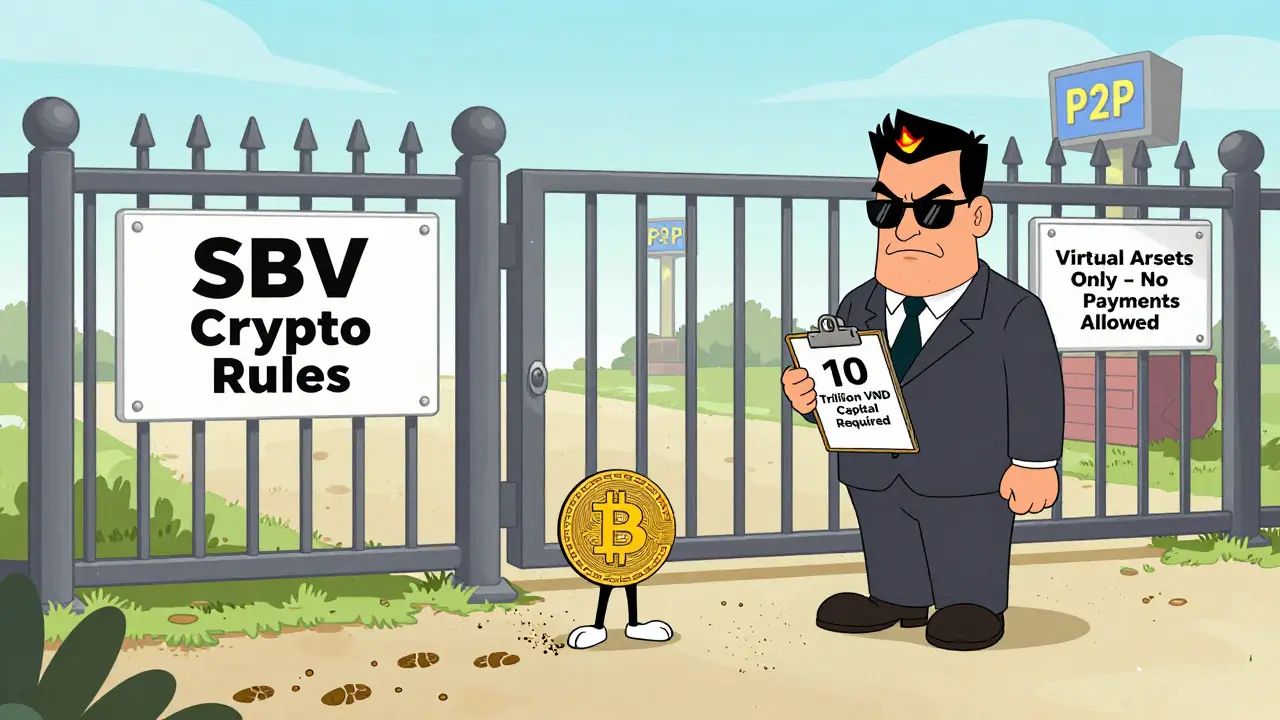
When Vietnam officially legalized cryptocurrencies in June 2025, it didn’t throw open the doors. Instead, it built a high fence with a single gate - and only a few people are allowed through. The State Bank of Vietnam (SBV) didn’t ban crypto like it did five years ago. But it didn’t embrace it either. What it did was create one of the most tightly controlled crypto environments in Southeast Asia - and it’s working exactly as planned.
From Ban to Regulation: The Big Shift
Back in 2020, the SBV made it clear: using Bitcoin or Ethereum to pay for coffee was illegal. Banks couldn’t touch crypto. Exchanges were shut down. The message was simple - digital assets were too risky, too unpredictable, and too uncontrolled. That changed in June 2025 with the Law on Digital Technology Industry. For the first time, Bitcoin and Ethereum were recognized as virtual assets - not money, not securities, not currency. Just property. That’s huge. It means you can own them, sell them, inherit them, and sue someone who steals them. But you still can’t use them to buy a car, pay rent, or tip your barista. The SBV didn’t want crypto to replace the Vietnamese dong. It wanted crypto to exist alongside it - under strict rules. So they didn’t just legalize it. They engineered it.The Five-Year Pilot: How It Actually Works
The real engine of this new system is Resolution No. 05/2025/NQ-CP, issued on September 9, 2025. It launched a five-year pilot program that’s not a trial run - it’s a controlled experiment. Only five crypto exchanges in all of Vietnam are allowed to operate. And they’re not just any exchanges. To get a license, a company needs:- At least 10 trillion Vietnamese dong in capital - that’s about $379 million USD
- At least two shareholders from approved sectors: banks, securities firms, insurers, fund managers, or tech companies
- Two full years of profitable operations before even applying
- Trading pairs must be in Vietnamese dong only - no USDT, no BTC/USD, no ETH/EUR
Why No One Has Applied Yet
You’d think with 20% of Vietnam’s tech-savvy population owning crypto, the market would be screaming for licensed exchanges. But the reality is more complicated. Most Vietnamese crypto users don’t use exchanges. They use Binance P2P or local Telegram groups. They trade directly with each other. No KYC. No regulation. Just cash in hand for BTC. That’s how Vietnam ranks fourth globally in crypto adoption, according to Chainalysis 2025. The licensed exchanges aren’t meant to compete with P2P. They’re meant to channel institutional money - pension funds, insurance companies, corporate treasuries - into a government-monitored system. But those institutions are waiting. Why? Because the capital requirement is insane. $379 million isn’t just a barrier. It’s a wall. Most local banks aren’t even sure they can meet it without risking their own balance sheets. And then there’s the currency rule. Trading only in VND? That’s a nightmare for investors who want to hedge against inflation or move money internationally. It locks crypto into Vietnam’s domestic economy - exactly what the SBV wants.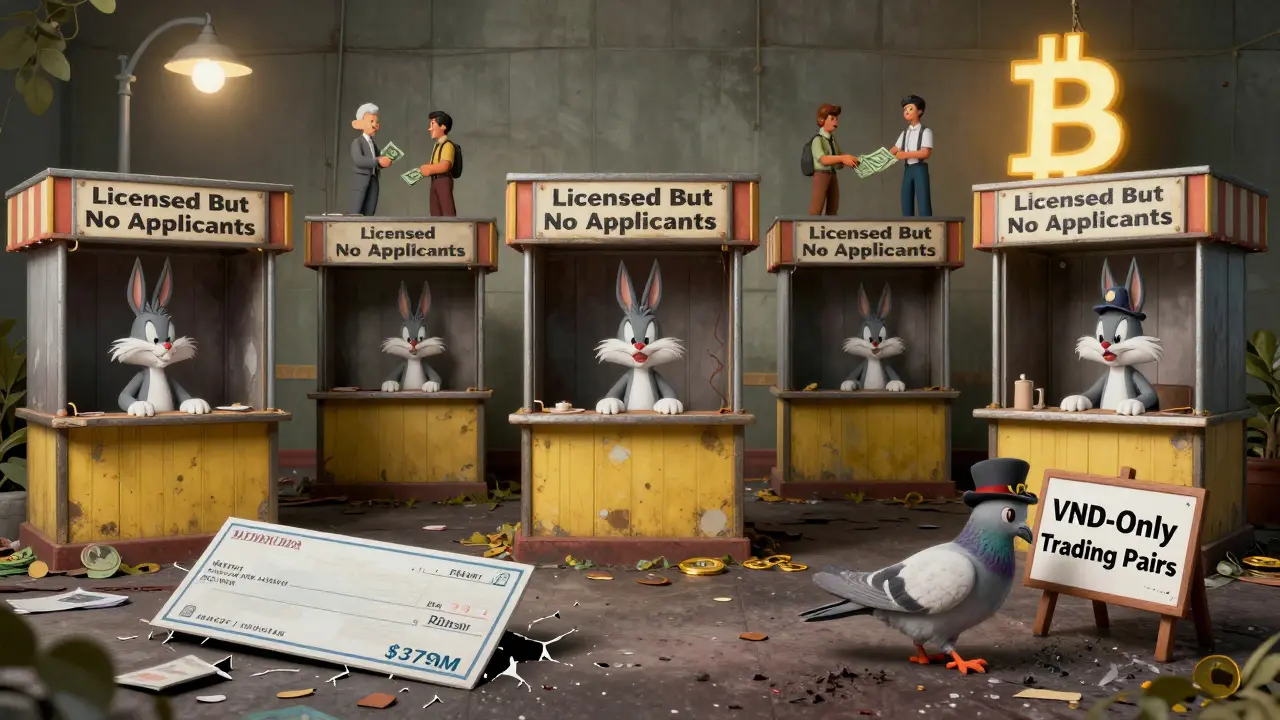
NDAChain: The Government’s Own Blockchain
While the exchange license sits unused, the government quietly launched NDAChain in July 2025. It’s not a public blockchain. It’s not decentralized. It’s a permissioned, state-controlled network built to tokenize bonds, carbon credits, and land titles. Think of it as Vietnam’s internal blockchain - a way to test how digital assets can improve government efficiency without letting crypto leak into the wider economy. No one can trade NDAChain tokens. But government agencies can use them to track emissions, manage debt, or verify ownership. This is the SBV’s real strategy: use blockchain for public systems, keep crypto trading locked behind high walls, and never let digital assets interfere with monetary policy.What This Means for Investors
If you’re a retail investor in Vietnam, you’re still free to buy crypto on P2P platforms. No one’s stopping you. But if you’re trying to invest through a fund, pension plan, or bank product - you’re out of luck. Not because it’s illegal. But because no licensed entity exists to offer it. Foreign investors? They can only access crypto through Crypto Asset Service Providers (CASPs) approved by the Ministry of Finance. And even then, they can only trade in VND-denominated pairs on the five licensed exchanges - if any ever launch. The SBV isn’t trying to stop crypto. It’s trying to domesticate it. Every rule - the capital requirement, the VND-only trading, the shareholder restrictions - is designed to keep crypto’s power contained. To make sure it doesn’t destabilize the banking system. To ensure tax revenue flows into state coffers. To prevent capital flight.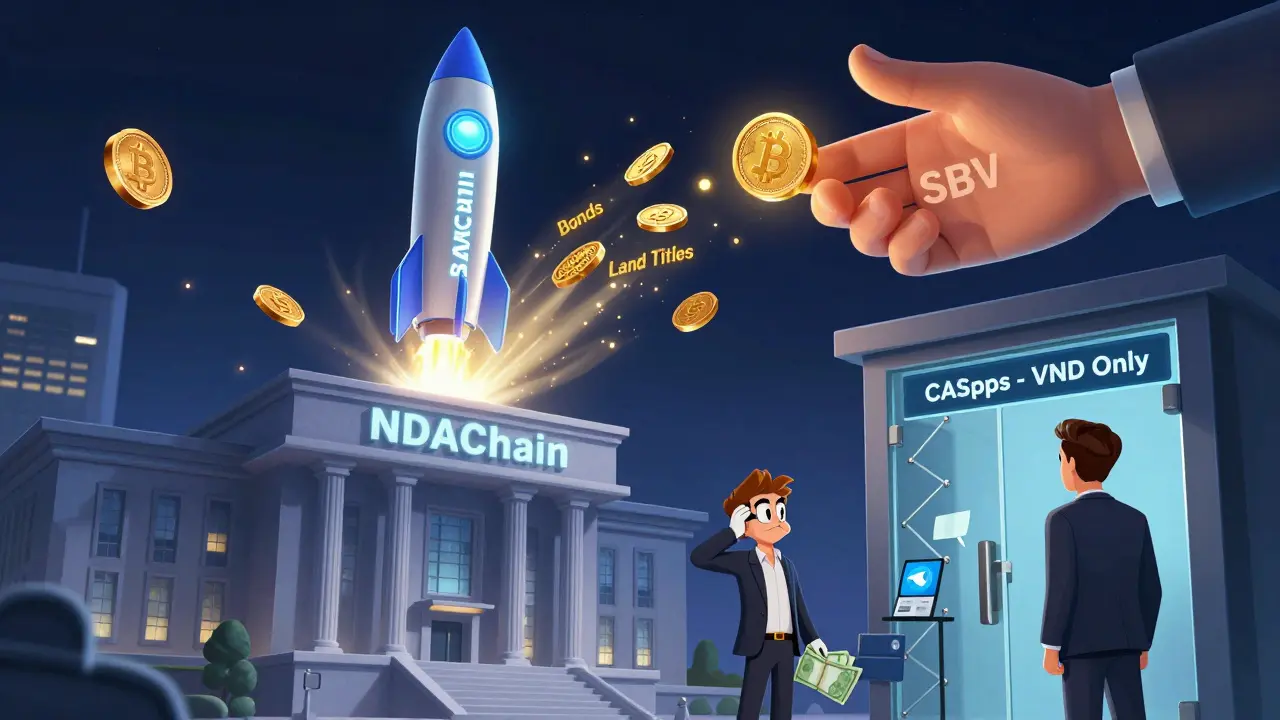
How Vietnam Compares to Its Neighbors
Singapore lets stablecoins operate with minimal oversight. The Philippines lets banks offer crypto custody. Thailand has a clear regulatory sandbox. Vietnam? It’s the opposite. Its approach is more like China’s pre-2021 model - strict, centralized, and slow. But unlike China, Vietnam isn’t trying to eliminate crypto. It’s trying to make it work for the state. The trade-off is clear: you get legal clarity and investor protection - but you lose speed, innovation, and global access.The Future: What Comes Next?
The five-year pilot ends in 2030. That’s when we’ll know if this experiment worked. Will the SBV lower the capital requirement? Will it allow USD pairs? Will it let foreign exchanges enter? Probably not - not until the pilot proves that crypto doesn’t threaten the dong’s dominance. For now, the message is consistent: you can own crypto. You can trade it. But only on our terms. Only in our currency. Only under our watch. The State Bank of Vietnam didn’t just change its policy. It rewrote the rules of crypto adoption - not for users, not for investors, but for the state.Is cryptocurrency legal in Vietnam in 2026?
Yes, but only as a virtual asset - not as currency. You can own, buy, sell, and inherit Bitcoin and Ethereum. But you cannot use them to pay for goods or services. Using crypto as payment remains illegal.
Can I open a crypto exchange in Vietnam?
Technically, yes - but only if you meet extreme requirements: at least 10 trillion VND ($379M) in capital, two approved shareholders, two years of profits, and you must trade only in Vietnamese dong. As of late 2025, no company has applied. The process is designed to be extremely difficult.
Why is Vietnam’s crypto adoption so high despite strict rules?
Because most trading happens outside the system. Over 20% of Vietnam’s tech population owns crypto, mostly through peer-to-peer platforms like Binance P2P. People trade directly using cash or bank transfers - no regulation, no oversight. The official system hasn’t caught up with how people actually use crypto.
Can foreign investors trade crypto in Vietnam?
Only through Ministry of Finance-approved Crypto Asset Service Providers (CASPs), and only on the five licensed Vietnamese exchanges - if any launch. All trades must be in Vietnamese dong. No USDT, no BTC/USD. Foreign investors have very limited access.
What is NDAChain?
NDAChain is Vietnam’s government-run, permissioned blockchain launched in July 2025. It’s not for public trading. It’s for tokenizing bonds, carbon credits, and land titles - helping agencies track assets securely while keeping full control. It’s the central bank’s way of using blockchain without letting crypto loose.
Will Vietnam ever allow USD crypto trading pairs?
Not anytime soon. The current framework requires all trades to be in Vietnamese dong to protect monetary sovereignty. The SBV sees USD pairs as a risk to financial stability. Any change would require a major policy shift - likely after the five-year pilot ends in 2030.
Are stablecoins like USDT legal in Vietnam?
No. The law explicitly excludes fiat-backed stablecoins from the definition of legal virtual assets. While people still trade them via P2P, they have no legal protection. Any platform offering USDT as a tradable asset is operating outside the law.
Does the State Bank of Vietnam support crypto innovation?
Not in the way most countries do. The SBV supports blockchain technology for government use - like NDAChain - but treats private crypto as a controlled financial product. Innovation is allowed only if it serves state interests: tax collection, financial stability, and monetary control.