Crypto Tax Calculator for Indian Users
Calculate Your Crypto Taxes in India
India's 30% capital gains tax on crypto profits and 1% TDS on transactions can be confusing. This tool helps you understand your tax liability based on actual market values.
India doesn’t have legal crypto. Not really. No ban, but no official approval either. Just a 30% tax on gains, a 1% TDS on every trade, and regulators watching every transaction like a hawk. And yet-India is the number one country in the world for cryptocurrency adoption.
Chainalysis’ 2025 Global Crypto Adoption Index doesn’t lie. India topped every single category: retail, centralized finance, decentralized finance, and even institutional use. More people in India bought, traded, and used crypto than anywhere else on Earth. Not because it was easy. Not because the government helped. But because people didn’t wait for permission.
Why India’s Crypto Market Defies Logic
Most countries grow crypto adoption when regulations are clear. In the U.S., Bitcoin ETFs opened the floodgates. In Switzerland, clear licensing rules attracted institutions. But India? The rules are punishing. A 30% tax on profits means if you turn $1,000 into $1,500, you pay $150 in taxes-no deductions, no offsets. Then there’s the 1% TDS: every time you buy or sell crypto, your exchange withholds 1% of the transaction value and sends it to the government. Even if you break even. Even if you lose money.
And still, between July 2024 and June 2025, Indian users moved over $4.6 trillion in fiat into Bitcoin alone. That’s more than double the next country. Stablecoins like USDT and USDC flowed in even faster, used to bypass slow bank transfers and avoid rupee volatility. People didn’t stop because of taxes. They adapted.
The Digital Infrastructure That Made It Possible
India didn’t build crypto on top of old banking systems. It built it on top of UPI.
Unified Payments Interface-India’s real-time mobile payment system-is used by over 900 million people. You can send money to anyone with just a phone number. No bank account needed. No paperwork. No waiting. Crypto exchanges didn’t need to reinvent the wheel. They just plugged into UPI. Now, you can buy Bitcoin in under 90 seconds using your phone, same way you pay for chai or a bus ticket.
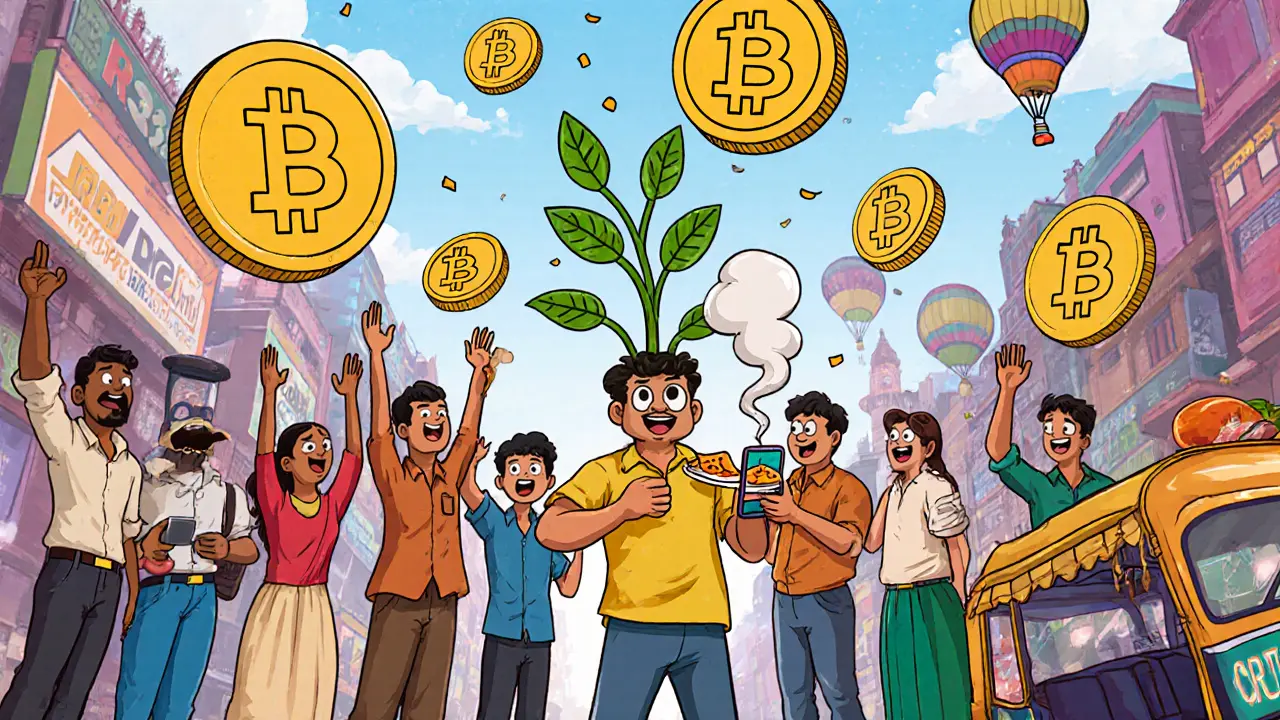
And it’s not just urban techies. In small towns, farmers use crypto to get paid for crops. Students in rural colleges mine Ethereum on old smartphones. Women’s self-help groups in Odisha and Bihar pool money in USDC to buy seeds, sell produce, and send remittances without relying on banks that charge 5% fees. Crypto isn’t a luxury here-it’s a workaround for broken systems.
Grassroots Adoption: Students, Gig Workers, and Street Vendors
Forget hedge funds. The real crypto story in India is happening on WhatsApp groups and Instagram reels.
College students in Bangalore and Pune are learning Solidity not in classrooms, but in Discord servers. They build simple DeFi apps to lend crypto to friends, earn interest, and pay rent in USDT. One 19-year-old from Jaipur started a Telegram bot that lets his classmates convert rupees to USDT and send it to relatives in Dubai. No bank. No KYC. Just a QR code.
Gig workers on Swiggy and Zomato get paid in crypto from international clients who can’t send USD to Indian bank accounts. Freelancers on Upwork and Fiverr use crypto to avoid 4-8% wire fees. Even street vendors in Mumbai accept USDT for snacks-because it’s instant, irreversible, and doesn’t need a POS machine.
This isn’t speculation. It’s survival. And it’s happening at scale.

Institutional Adoption: Banks, Startups, and the Quiet Shift
While retail users were buying Bitcoin on UPI, institutions were quietly building infrastructure.
Indian fintech startups like CoinSwitch Kuber and ZebPay now process over 10 million crypto transactions monthly. They’re not just exchanges-they’re financial platforms. Some offer crypto-backed loans. Others let users earn interest on stablecoins, just like savings accounts. The Bharat Web3 Association, a coalition of 200+ crypto firms, has been meeting with regulators for two years, pushing for clarity-not legalization, but recognition.
Even banks are testing the waters. State Bank of India and ICICI have filed patents for blockchain-based trade finance systems. They’re not holding crypto, but they’re building rails to move value on-chain. Why? Because their customers are already doing it. And if you can’t stop them, you might as well join.
The biggest signal? India is reportedly considering creating a national Bitcoin reserve. Not to trade it. Not to speculate. But to hold it as a strategic asset-like gold. If that happens, it won’t be because the government changed its mind. It’ll be because the people forced it to.
Why the Rest of the World Is Watching
The U.S. ranks second in crypto adoption. But its growth is mostly institutional-ETFs bought by pension funds and Wall Street. India’s growth is everywhere: students, farmers, gig workers, small shops, and now, banks.
Asia-Pacific as a whole saw a 69% jump in crypto transaction volume in 2024-2025. India drove 80% of that. Pakistan, Vietnam, and Brazil are close behind, but none come close to India’s breadth. In Brazil, crypto is used for inflation hedging. In Vietnam, it’s for remittances. In India, it’s for everything.
And the tech is ready. India has the world’s second-largest internet user base. Over 700 million smartphones. 90% 4G coverage. Developers in Hyderabad and Bengaluru are building the next wave of DeFi protocols-faster, cheaper, and designed for low-income users. They don’t need high-end hardware. Just a phone and a data plan.
The Tax Paradox: The More They Tax, the More People Use
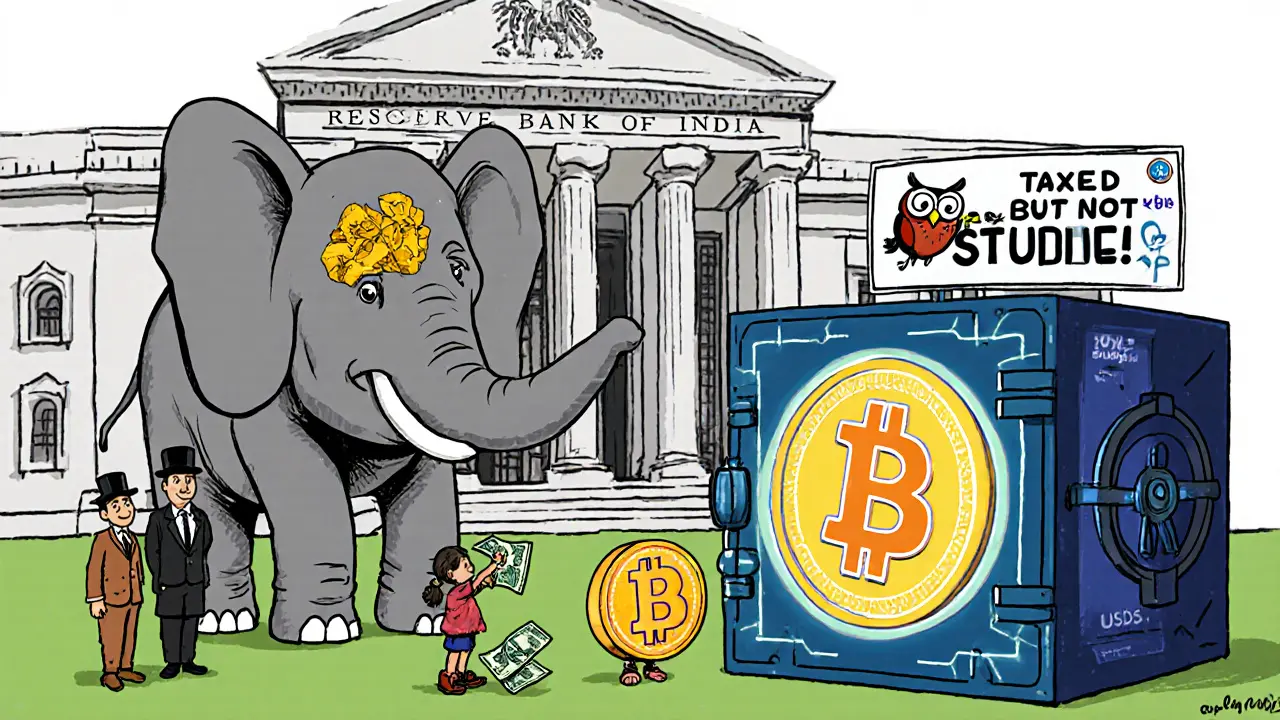
Here’s the twist: India’s harsh crypto tax policy might be the reason adoption is so high.
When the government slapped on the 30% tax in 2022, many expected a collapse. Instead, people doubled down. Why? Because they realized: if the government is taxing it, it’s real. If they’re tracking it, it’s here to stay. The tax turned crypto from a fringe idea into a financial asset worth reporting.
And the 1% TDS? It’s a forced audit trail. Every transaction is recorded. That’s good for regulators. And for users who want to prove they’re not laundering money. It’s a strange kind of legitimacy.
Compare that to countries with no taxes but no clarity. In Nigeria, crypto is used heavily-but the government keeps banning exchanges. In Argentina, inflation drives adoption, but there’s no legal framework. India? The rules are strict, but they’re consistent. People know what they’re getting into.
What’s Next for Crypto in India?
The next five years will decide if India becomes the world’s first crypto-native economy.
Two paths are open. One: regulators double down on control. More taxes. More reporting. More restrictions. That could push adoption underground, into peer-to-peer networks and decentralized wallets.
The other: the government recognizes crypto as a financial tool and creates a sandbox for regulated innovation. A Bitcoin reserve would be the biggest signal yet. It wouldn’t mean crypto is legal tender. But it would mean it’s official.
Either way, the people have already decided. Crypto isn’t going anywhere in India. It’s not a trend. It’s infrastructure.
From the streets of Lucknow to the startup hubs of Bangalore, crypto isn’t about getting rich. It’s about getting paid. Getting access. Getting freedom from broken systems. And that’s why no tax, no ban, no regulation will stop it.