Getting a free token or NFT is a rush, but the crypto world is littered with "too good to be true" offers. If you've spotted a mention of the BlockSwap Network permissionless web3 infrastructure layer designed for multichain composable ETH and modular Ethereum blockspace and its StakeHouse NFT airdrop, you're likely wondering if it's a legitimate goldmine or just more noise. The reality is that while BlockSwap is building some heavy-duty tech for Ethereum staking, their airdrop history is a bit fragmented. You won't find a simple "click here to claim" button because this project focuses more on infrastructure and stress-testing than flashy marketing.
The Core of BlockSwap Network and CBSN
Before hunting for NFTs, you have to understand what you're actually interacting with. BlockSwap Network isn't just another token project; it's an infrastructure play. They want to make Ethereum Proof of Stake (PoS) accessible to people who aren't blockchain engineers. Their native token, CBSN, had its Token Generation Event back in April 2021. Despite that, the token's market presence has been quiet, with limited circulating supply and a focus on internal ecosystem growth rather than aggressive trading.
The network's primary goal is to provide a public benefit infrastructure. This means they are building the "pipes" that allow Ethereum staking to be more flexible. Instead of your ETH being locked away and useless while it earns rewards, BlockSwap aims to make that liquidity composable, meaning you can use your staked position in other DeFi apps without waiting for a long unstaking period.
Understanding StakeHouse and the NFT Connection
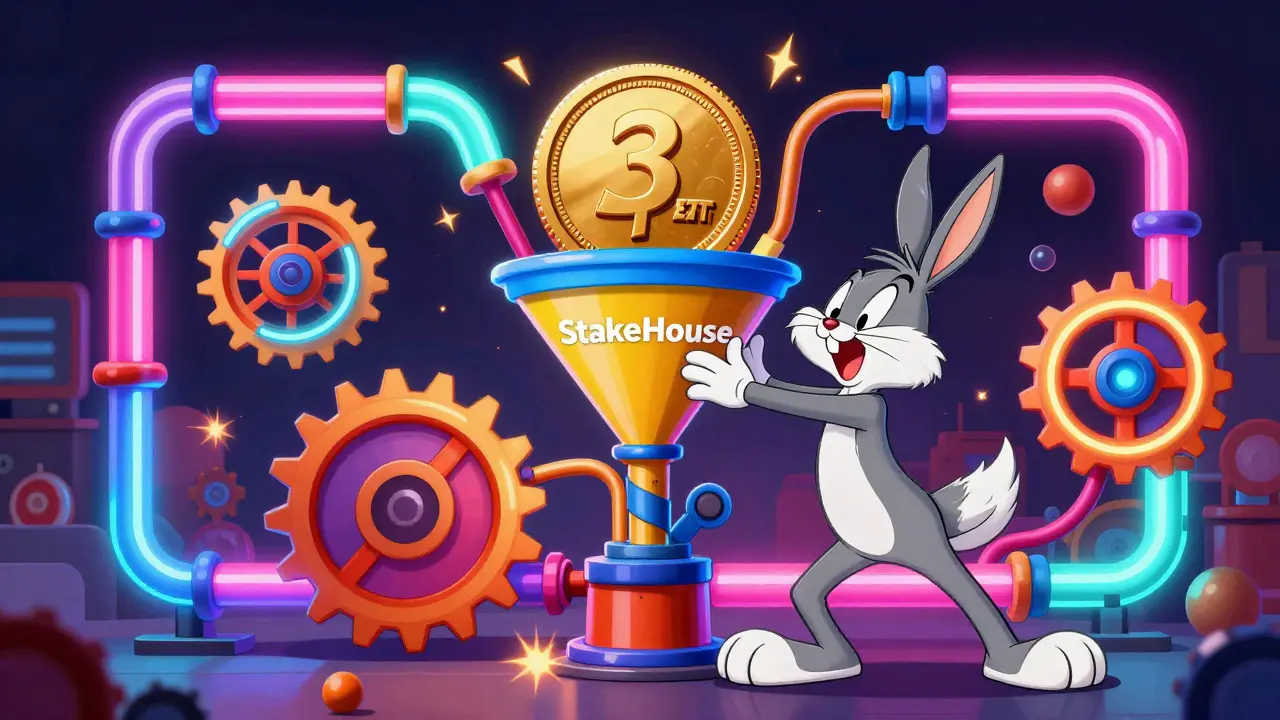
The most interesting part of their ecosystem is the StakeHouse a decentralized liquid staking platform that uses smart contracts to coordinate staked ETH2 liquidity. Think of a StakeHouse as a decentralized hub where ETH is pooled and managed. To make this work, they introduced StakeHouse Batch (SHB) tokens. These aren't your typical utility tokens; they act as "minters" that allow users to create batches representing 32 ETH deposits.
When people talk about a StakeHouse NFT airdrop, they are usually referring to the rewards given to participants in the CommunityNet. BlockSwap has used airdrops to reward those who help stress-test their contracts. By simulating the 32 ETH deposit process through SHB tokens, users help the protocol find bugs and optimize performance before a full-scale mainnet launch. These rewards have historically included cBSN tokens and specific digital assets for those who contributed to the network's stability.
How the Airdrop Mechanism Actually Works
Unlike a typical "social media task" airdrop where you just follow a Twitter account, the BlockSwap approach is tied to actual network utility. To be eligible for their distributions, you typically need to engage with the CommunityNet. This involves interacting with their smart contract suite and participating in the liquid staking simulations.
| Entity | Primary Function | Role in Airdrops |
|---|---|---|
| CBSN Token | Native network utility | Primary reward asset |
| SHB Token | Batch minting and simulation | Entry requirement for testing |
| StakeHouse | Liquid staking hub | The environment where activity is tracked |
| OpenSaver | Universal Basic Saving (7% yield) | User onboarding tool |
If you are looking for a current, active NFT claim page, be careful. Most legitimate BlockSwap distributions happen through their official CommunityNet channels. If a random website asks for your seed phrase to "unlock" a StakeHouse NFT, close the tab immediately. Real airdrops from this project are based on on-chain activity, not private key requests.
The Tech Behind the Rewards: Security and Stability
One thing that sets BlockSwap apart is that they didn't just launch a token and hope for the best. They've put their code through the ringer. They've employed top-tier security firms like Halborn, Certora, and Runtime Verification to audit their contracts. This is crucial because liquid staking involves handling large amounts of ETH; one bug could lead to a total loss of funds.
The airdrops are essentially a payment for the risk and time users take to test these audited contracts in a real-world environment. By using the SHB tokens to simulate deposits, the community acts as a final layer of verification, ensuring the "modular blockspace" and "composable ETH" promises actually hold up under pressure.

Potential Pitfalls and Reality Checks
Let's be honest: the information around these airdrops can be sparse. You might see reports of a $2,500 prize pool or 100-coin distributions, but these are often small, targeted events for early testers rather than massive public giveaways. If you are joining now, don't expect a life-changing windfall overnight. Instead, view it as an entry into a sophisticated DeFi toolset.
Another hurdle is liquidity. As of now, many of these internal tokens (like SHB) aren't widely traded on major exchanges like CoinGecko or Binance. This means your airdrop rewards might be "paper gains" until the project reaches a certain level of maturity and opens up centralized exchange (CEX) trading.
Getting Involved in the BlockSwap Ecosystem
If you want to position yourself for future rewards or simply use the tech, there are a few concrete paths. First, look into their OpenSaver tool. It's designed to provide a stable 7% USD yield, acting as a gateway for people who find traditional DeFi too complex. It's a low-risk way to get a foot in the door.
For the more technical crowd, the StakeHouse protocol allows you to engage as either a solo staker or through a pool. Developers can also use the project's SDKs to build new apps on top of the modular blockspace. The more value you add to the ecosystem-whether through liquidity, testing, or building-the more likely you are to be flagged for future reward distributions.
How do I qualify for the BlockSwap Network airdrop?
Qualification typically requires active participation in the BlockSwap CommunityNet. This involves using SHB tokens to mint batches that simulate 32 ETH deposits, helping the network stress-test its liquid staking contracts. Always follow official announcements from BlockSwap Labs for specific eligibility criteria.
What is the purpose of the SHB token?
StakeHouse Batch (SHB) tokens are specialized tools used within the BlockSwap CommunityNet. They allow users to act as "batch minters," creating simulations of Ethereum deposits. This process is essential for testing the protocol's market fit and ensuring the smart contracts can handle real-world staking scenarios.
Is the CBSN token safe to hold?
While BlockSwap has invested heavily in security audits by firms like Halborn and Certora, all DeFi assets carry inherent risks. This includes smart contract vulnerabilities, market volatility, and regulatory shifts. You should only allocate funds that you can afford to lose, regardless of the audit status.
What does "composable ETH" actually mean in this context?
Composable ETH refers to the ability to use your staked Ethereum in other financial applications without having to withdraw it from the staking contract. BlockSwap achieves this through liquid staking, where your staked assets are represented by tokens (like ERC20s) that can be moved, lent, or traded while the original ETH continues to earn rewards.
Where can I trade CBSN or SHB tokens?
At present, SHB tokens are not widely available on major centralized exchanges listed on CoinGecko. CBSN has a limited circulating supply. Trading is primarily confined to specific decentralized environments or internal community exchanges until the project expands its liquidity partnerships.
What is OpenSaver and how does it relate to the airdrop?
OpenSaver is a tool that offers a 7% USD yield on native currency, leveraging the StakeHouse Automated Asset Market Maker. While not an airdrop itself, using OpenSaver introduces users to the BlockSwap ecosystem, making them a part of the community that may be eligible for future promotions or rewards.