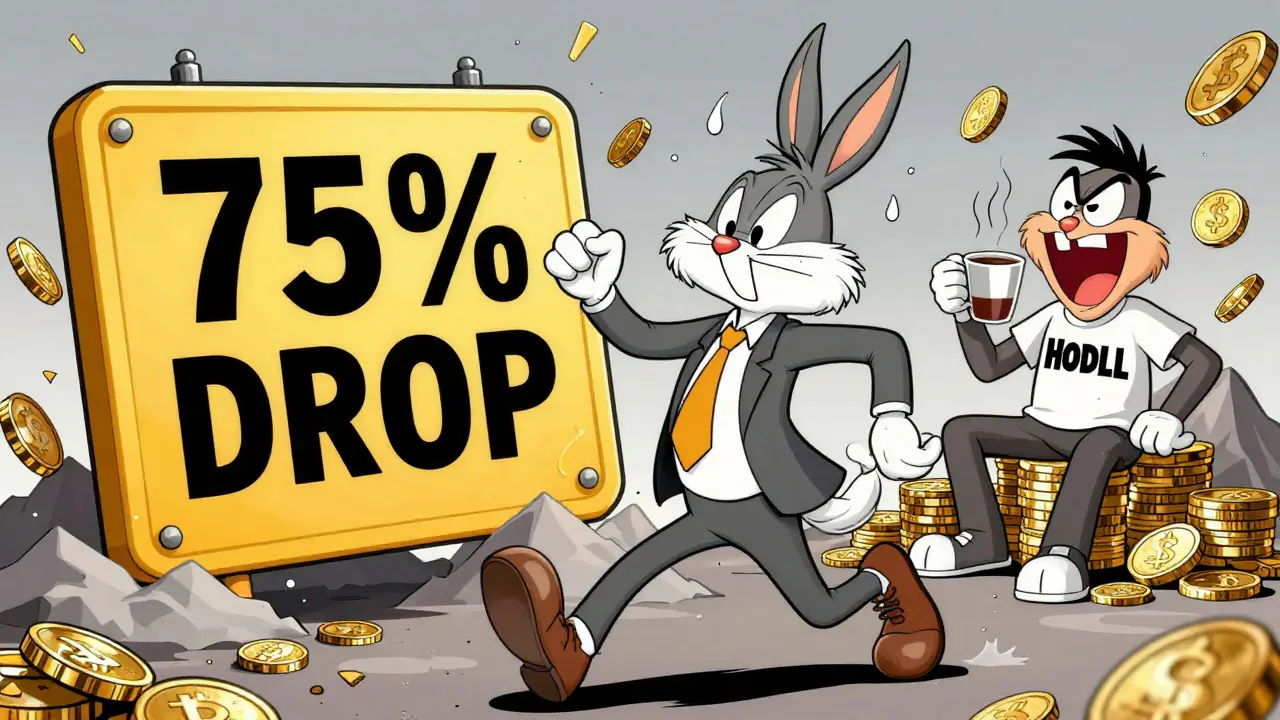
When Bitcoin crashed 75% in 2022, some people sold in panic. Others stayed put. Those who held on didn’t just survive-they often ended up richer than ever. This is the story of HODLing crypto: not a tactic, not a trend, but a mindset. And like any high-stakes bet, it comes with rewards that look like magic and risks that can wipe you out.
What HODLing Actually Means
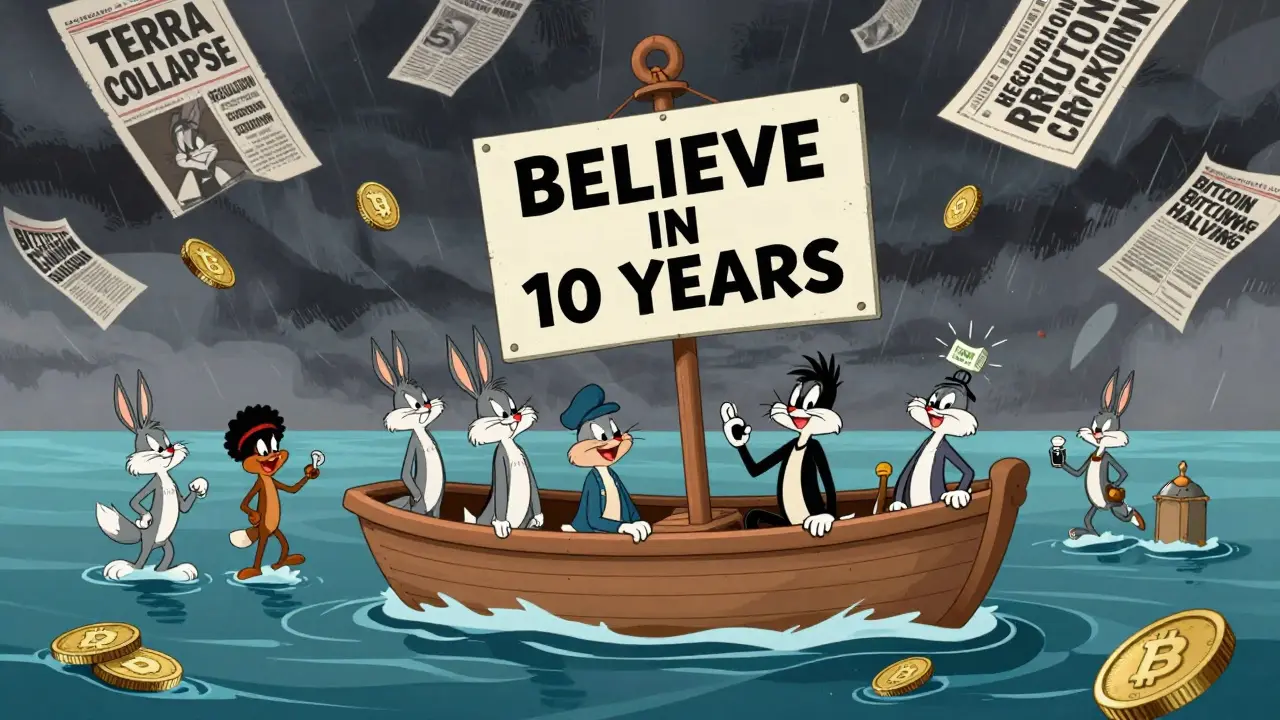
HODLing isn’t just buying crypto and forgetting about it. It’s choosing to ignore every headline, every tweet, every drop in price. The word started in 2013 from a typo on a Bitcoin forum: someone meant to type "holding" but wrote "hodling." The community loved it. Soon, "Hold On for Dear Life" became the official meaning. It’s not about timing the market. It’s about refusing to let fear make your decisions.Unlike traditional stocks, crypto doesn’t pay dividends. It doesn’t have earnings reports. You’re not investing in a company-you’re betting on adoption. Will Bitcoin become digital gold? Will Ethereum power the next generation of apps? HODLers believe yes. They don’t care if the price falls 30% in a week. They care if it’s still relevant in 10 years.
The Real Benefits of Holding
One of the biggest advantages of HODLing? It avoids taxes. Every time you sell crypto, the IRS treats it like selling a stock. You owe capital gains tax on the profit. But if you never sell? You owe nothing. That’s a massive edge. Imagine buying Bitcoin at $5,000 in 2020 and holding until 2024. You’re sitting on 500% gains-and if you never touch it, the tax bill stays in the future.Then there’s staking. After Ethereum switched to proof-of-stake in 2022, HODLers could earn 3-5% APY just by keeping their ETH locked up. Cardano and Solana offer similar rewards. This turns passive holding into passive income. You’re not trading. You’re not timing. You’re just holding-and getting paid for it.
And let’s talk about stress. Crypto moves fast. Bitcoin had a single-day drop of 29.4% in March 2020. In 2021, it jumped 10% in a single day more than 14% of the time. That’s unheard of in stocks. The S&P 500? Only 1.8% of its days had 10% swings. HODLing removes the pressure to react. You don’t need to be a trader. You just need to believe.
The Hidden Dangers
But here’s the dark side. In 2018, Bitcoin fell from $19,783 to $3,237. That’s an 83% loss. Ethereum dropped 94%. If you invested $10,000 in Bitcoin in January 2018, by December, it was worth $3,500. The same $10,000 in the S&P 500? It grew to $10,900. HODLing crypto isn’t like HODLing Apple stock. There’s no guarantee it will recover.And what if it never does? Crypto has no intrinsic value. No cash flow. No balance sheet. You can’t value it like a company. Its price is driven by hype, regulation, and fear of missing out. That’s dangerous. In 2022, the Terra/Luna collapse wiped out $40 billion in value overnight. HODLers of Luna lost everything. No recovery. No second chance.
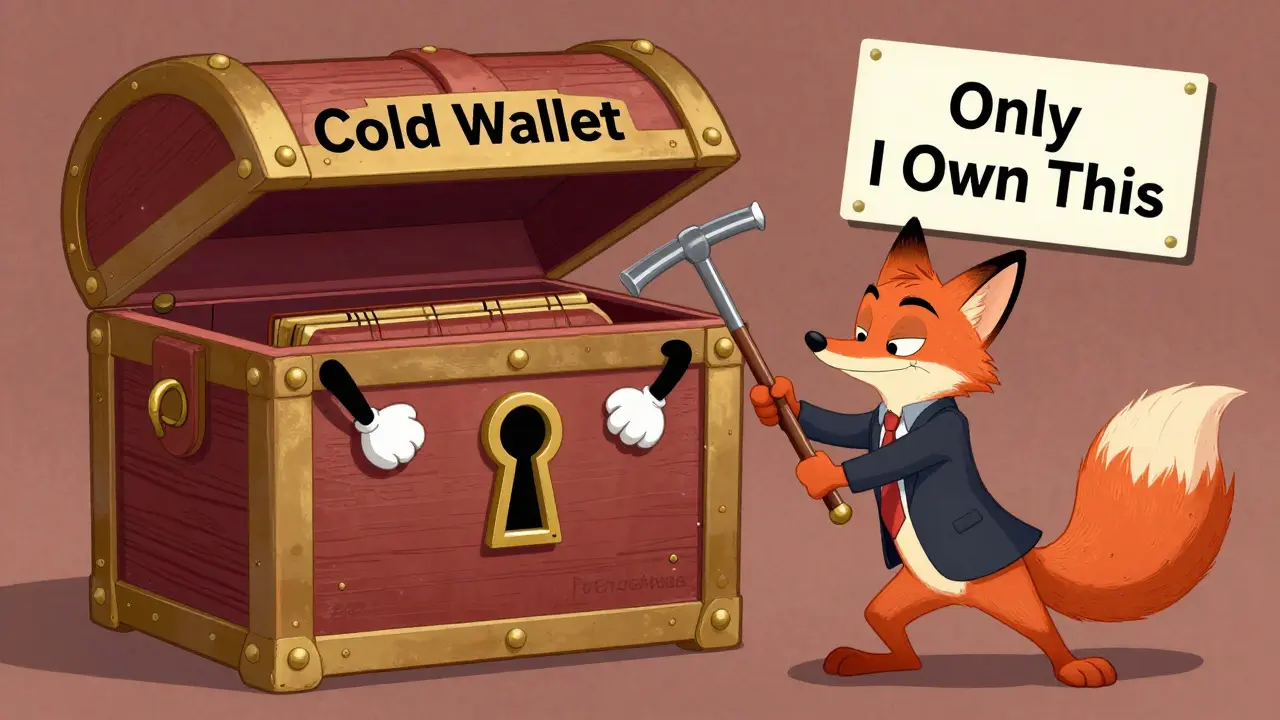
Then there’s the risk of losing your keys. Experts estimate 20% of all Bitcoin-about 3.7 million coins-is permanently lost. People forgot passwords. Lost hard wallets. Died without leaving instructions. That’s $120 billion in value gone forever. HODLing means you’re the only one responsible for your money. No bank. No customer service. No reset button.
Market Realities You Can’t Ignore
Crypto’s history is short. Bitcoin’s been around for 15 years. The stock market? Over 100. That means we’re guessing about long-term trends. The 2024 Bitcoin halving-when new coin rewards drop by half-has historically triggered bull runs. Past halvings led to 1,000-10,000% gains over the next 18 months. But this time? Analysts say the effect is weakening. The market is bigger. More institutions are in. The old patterns might not work anymore.Regulation is another wild card. China banned crypto in 2021 and prices plunged 30% overnight. The U.S. SEC is still deciding what’s a security. If they crack down hard, prices could tank again. But if they approve more ETFs-like the Bitcoin spot ETF that launched in January 2024-it could bring billions in new money.
And what about energy? Bitcoin uses more electricity than Greece. That’s not going away. Environmental pressure could lead to bans or restrictions. HODLers need to ask: Is this asset sustainable? Or is it a bubble wrapped in blockchain?
HODL vs. Other Strategies
Day trading? Forget it. Transaction fees add up. On Binance, each trade costs 0.1%. Do 100 trades? You’ve paid 20% of your profits just to trade. And studies show that missing just 10 of the best trading days over five years turns a 1,200% return into 150%. HODLing avoids all that.Dollar-cost averaging (DCA)-buying small amounts regularly-is a smart middle ground. A 2022 study found DCA beat lump-sum investing in 63% of 3-year periods from 2013 to 2022. But lump-sum (pure HODLing) still won big when timed right. The key difference? DCA reduces emotional risk. HODLing requires pure conviction.
And here’s the truth: most people who HODL don’t just hold Bitcoin. Coinbase found that 78% of long-term holders own at least three different coins. Diversifying within crypto reduces risk. Holding only one coin is like betting your entire portfolio on one horse.
What the Experts Say
Michael Saylor, CEO of MicroStrategy, bought over 150,000 Bitcoin. He calls it a treasury reserve. He’s betting the future. On the other side, economist Paul Krugman calls it a "greater fool theory"-someone pays you more because they think someone else will pay even more. Neither is wrong. Saylor sees long-term value. Krugman sees speculation.ARK Invest says Bitcoin could hit $1 million by 2030. JPMorgan says $35,000 is its fair value. The CFA Institute warns: if you’re going to HODL crypto, keep it under 5% of your total portfolio. Anything more? That’s gambling, not investing.
Who Should HODL?
You should HODL if:- You can afford to lose the money you invest
- You believe crypto will be part of the financial system in 10 years
- You don’t need to access your funds for at least 5 years
- You’re okay with no dividends, no earnings, no safety net
- You’ve secured your keys-cold wallet, backup phrase, no cloud storage
You should NOT HODL if:
- You’re using money you need for rent, medical bills, or emergencies
- You’re chasing quick riches
- You don’t understand how wallets or private keys work
- You’re emotionally reactive to market news
Final Thought: It’s Not About the Price
HODLing isn’t about predicting the next peak. It’s about accepting the ride. Crypto doesn’t care if you sleep. It doesn’t care if you panic. It moves on its own rhythm. The people who win aren’t the smartest. They’re the ones who stayed calm when everyone else ran.Some turned $1,000 into $100 million. Others lost everything. The difference? One believed. The other didn’t.
Is HODLing crypto still a good strategy in 2026?
Yes-but only if you treat it like long-term investing, not gambling. The market has matured. Institutional players like BlackRock and Fidelity are now involved. Bitcoin ETFs are live. Staking yields are real. But volatility hasn’t disappeared. HODLing works if you’re in it for 5+ years, have a small allocation (under 5% of your portfolio), and have secured your assets. If you’re hoping to get rich quick, you’re already behind.
Can you HODL crypto without a wallet?
No. If you leave your crypto on an exchange, you’re not HODLing-you’re trusting someone else. Exchanges can freeze accounts, get hacked, or go bankrupt. In 2022, FTX collapsed and users lost over $8 billion. True HODLing means holding your private keys. Use a hardware wallet like Ledger or Trezor. Write down your recovery phrase. Store it offline. If you don’t control your keys, you don’t own your crypto.
What happens if Bitcoin crashes 90% again?
If you’re HODLing, you wait. Historically, Bitcoin has recovered from every major crash. The 2018 dip? It took 2 years. The 2022 dip? It took 18 months. But past performance doesn’t guarantee future results. If Bitcoin loses its status as digital gold-if adoption stalls, regulation kills it, or a better technology replaces it-then yes, it could stay low forever. HODLing only works if you believe in its long-term value. If you’re not sure, don’t hold.
Does staking make HODLing safer?
It makes it more rewarding, not safer. Staking gives you yield, which helps offset price drops. But it doesn’t protect you from market crashes or protocol failures. In 2022, stakers in the Terra/Luna ecosystem lost everything-even their staking rewards. Staking adds income, but it doesn’t reduce risk. Always assume your staked assets can be wiped out if the network fails.
Should I HODL only Bitcoin or diversify?
Most successful HODLers hold a mix. Bitcoin is the strongest, but Ethereum, Solana, and others offer different use cases. Coinbase data shows users who held 3+ coins outperformed single-coin HODLers between 2021 and 2023. But don’t overdo it. Stick to coins with real adoption, strong teams, and transparent code. Avoid meme coins. They’re gambling, not HODLing.
Is HODLing crypto better than buying stocks?
It’s not better-it’s different. Stocks have earnings, dividends, and 100+ years of data. Crypto has none of that. If you want stability and predictable growth, stocks win. If you want high-risk, high-reward exposure to a new financial system, crypto might fit. The smart move? Hold both. Put 80-95% in stocks and ETFs. Put 5-10% in crypto. That way, you’re not betting your future on a single bet.