

Indonesia’s crypto market used to run on rules set by Bappebti. But as of January 10, 2025, that’s no longer true. The agency that once approved every crypto asset you could trade in Indonesia-Bitcoin, Ethereum, Solana, and hundreds more-has handed over its power to a new regulator: the Financial Services Authority, or OJK. This wasn’t just a paperwork shuffle. It was a complete rewrite of how crypto works in Indonesia.
What Was Bappebti’s Role?
Bappebti, short for Badan Pengawas Perdagangan Berjangka Komoditi, treated crypto like soybeans or crude oil. Not as money. Not as investments. As commodities. That meant their job was simple: make sure trading happened on licensed exchanges, prevent fraud, and keep users from getting ripped off. They didn’t care if a coin was a currency, a token, or a speculative asset. If it traded on an exchange in Indonesia, it needed Bappebti’s stamp. By 2023, they had approved 383 crypto assets. By mid-2023, that number jumped to 501. Every single one had to be registered. Every exchange had to be licensed. And every wallet provider, clearinghouse, and storage service had to follow strict rules under Bappebti Regulation No. 8/2021, later updated by Regulation No. 13/2022. They even built their own infrastructure-crypto exchanges, clearing houses, and custodians-to bring order to a chaotic market. That was a big deal. Indonesia had over 17 million crypto investors by the end of 2023. Transaction volumes hit IDR 300 trillion. People weren’t just holding crypto. They were trading it daily.Why Did Everything Change?
The shift didn’t happen because Bappebti failed. It happened because the government realized crypto wasn’t a commodity. It was becoming part of the financial system. In 2020, Indonesia passed Law No. 4/2023 on Financial Sector Development and Strengthening (P2SK Law). This law gave the OJK the legal power to take over crypto regulation. The goal? Bring crypto under the same roof as banks, stockbrokers, and insurance companies. No more treating Bitcoin like a bag of rice. Now it’s a digital financial asset. On December 31, 2024, President Jokowi signed Government Regulation No. 49/2024. That set the official handover date: January 10, 2025. At a ceremony in Jakarta, Bappebti’s acting chief, Tommy Andana, handed over control to OJK’s deputy commissioners. Bank Indonesia was also there-because even though OJK now handles trading, BI still controls how crypto moves as payment.What’s Different Under OJK?
OJK doesn’t just regulate. It supervises. And that changes everything. Under OJK Regulation No. 27/2024, crypto assets are now classified as digital financial assets. That means:- Trading platforms must meet capital requirements, just like brokers.
- Customer funds must be kept separate from company funds.
- Anti-money laundering (AML) and know-your-customer (KYC) rules are now legally binding.
- Advertising crypto as an investment is now subject to financial marketing rules.
- Platforms must report suspicious activity to OJK-not just Bappebti’s internal database.
Who’s Affected?
If you’re an Indonesian investor, you still trade the same coins. But now, the platform you use has to be more accountable. If your exchange gets hacked, OJK can step in faster. If they mislead you about returns, you have stronger legal recourse. For crypto businesses, the transition was a wake-up call. Bappebti’s rules were clear but narrow. OJK’s rules are broader, deeper, and more complex. Exchanges now need compliance officers, audit trails, and financial reporting systems. Startups building DeFi tools or NFT platforms? They’re no longer in a gray zone. OJK expects them to fit into financial services frameworks. Even wallet providers and custodians are now regulated. Before, they operated in the background. Now, they’re part of the financial infrastructure.What About Bank Indonesia?
Don’t forget BI. They still control the payment side. If you use crypto to pay for coffee, BI has a say. If a platform wants to integrate crypto into digital wallets like OVO or GoPay, BI must approve it. OJK handles trading and investment. BI handles movement. It’s a split system-like how the SEC regulates stocks and the Fed regulates banks. This dual structure is unusual. But it makes sense. Crypto touches both finance and payments. Indonesia didn’t want to pick one. So they made both regulators work together.
What’s Next?
OJK’s first big test? DeFi and NFTs. Bappebti didn’t touch them. OJK will. They’re already studying how decentralized lending, yield farming, and tokenized assets fit into financial regulation. Will NFTs be treated as securities? Will DeFi protocols need licenses? The answers are coming. International crypto firms are watching closely. Indonesia has one of the biggest crypto markets in Southeast Asia. If OJK’s rules are clear, fair, and stable, big players like Coinbase or Binance may finally set up local operations. Right now, most operate in legal gray areas. OJK could change that. The goal? Integration. Not elimination. Indonesia doesn’t want to ban crypto. They want to bring it into the formal economy. That means more protection for users, more accountability for platforms, and more clarity for everyone.What Should You Do Now?
If you’re trading crypto in Indonesia:- Make sure your exchange is still licensed. Check OJK’s official website for the updated list.
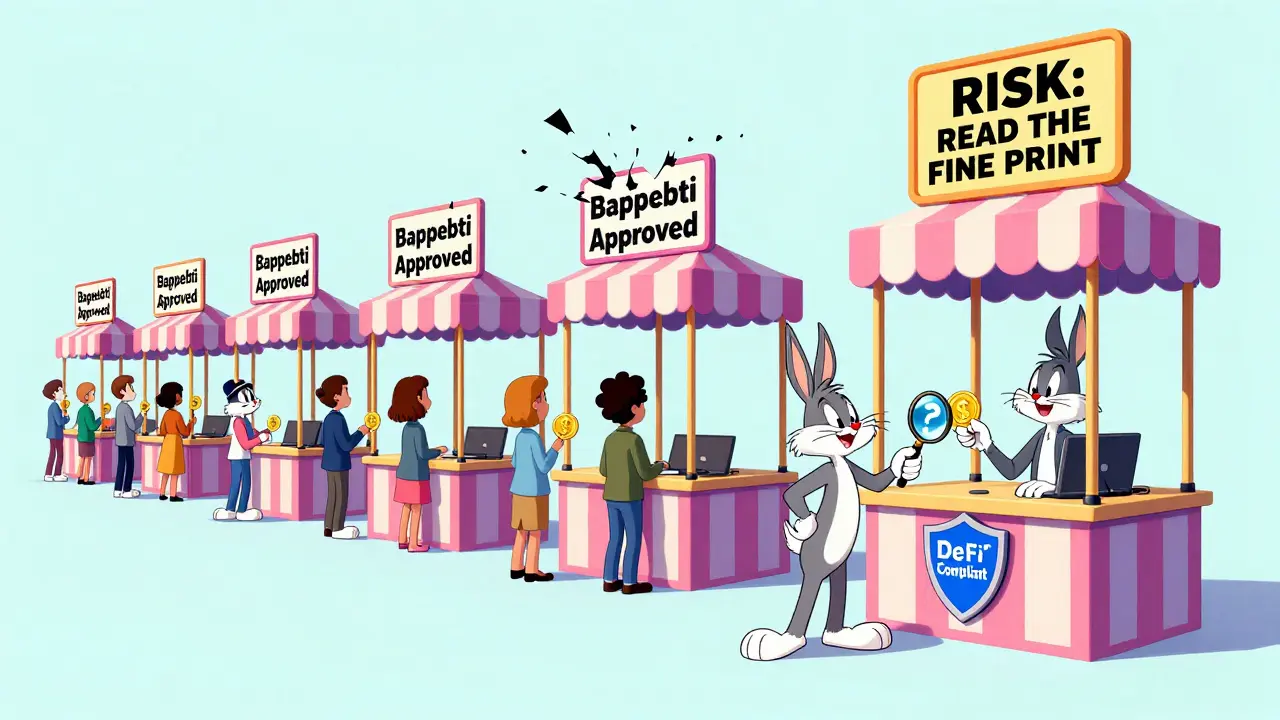
- Don’t trust platforms that say they’re “Bappebti-approved.” That’s outdated. Only OJK approvals matter now.
- Read the fine print. OJK requires clearer disclosures about risks, fees, and asset backing.
- If something feels off-report it. OJK has a dedicated reporting channel for crypto complaints.
Is Bappebti still regulating crypto in Indonesia?
No. As of January 10, 2025, all crypto oversight and licensing authority was officially transferred to the Financial Services Authority (OJK). Bappebti no longer approves new crypto assets, issues licenses, or enforces rules for crypto trading. Any reference to Bappebti approval is outdated.
What happened to the 501 crypto assets approved by Bappebti?
They were automatically transferred under OJK’s supervision. However, OJK is now reviewing each asset to determine if it meets new financial standards. Some may be delisted if they don’t meet criteria like transparency, utility, or legal compliance. Not all assets that were tradable under Bappebti will remain approved under OJK.
Can I still trade Bitcoin and Ethereum in Indonesia?
Yes. Bitcoin, Ethereum, Solana, and other major cryptocurrencies are still actively traded. However, you must use platforms licensed by OJK, not Bappebti. Make sure your exchange is listed on OJK’s official registry of Digital Financial Asset Traders.
What’s the difference between Bappebti and OJK rules?
Bappebti treated crypto as a commodity-focusing on exchange trading and physical market rules. OJK treats it as a financial asset-applying banking-style rules like capital requirements, investor protection, AML/KYC, and financial reporting. OJK’s rules are stricter, more comprehensive, and aligned with global financial standards.
Do I need a license to trade crypto personally in Indonesia?
No. Individual investors do not need a license to buy or hold crypto. Only businesses-exchanges, wallet providers, custodians, and trading platforms-need OJK licensing. But you must use licensed platforms to trade legally.
How does OJK protect me as an investor?
OJK requires platforms to keep customer funds separate from company funds, disclose all risks clearly, and follow strict anti-fraud and anti-money laundering rules. If a platform fails, OJK can intervene faster than Bappebti could. You also have formal channels to file complaints and seek redress.
Will OJK allow DeFi and NFTs in Indonesia?
OJK is actively studying DeFi and NFTs. They’re not banned, but they’re not officially regulated yet. The agency is working on frameworks to classify these assets under financial services rules. Expect formal guidance by late 2025 or early 2026. Until then, use caution-many DeFi platforms operate outside legal boundaries.