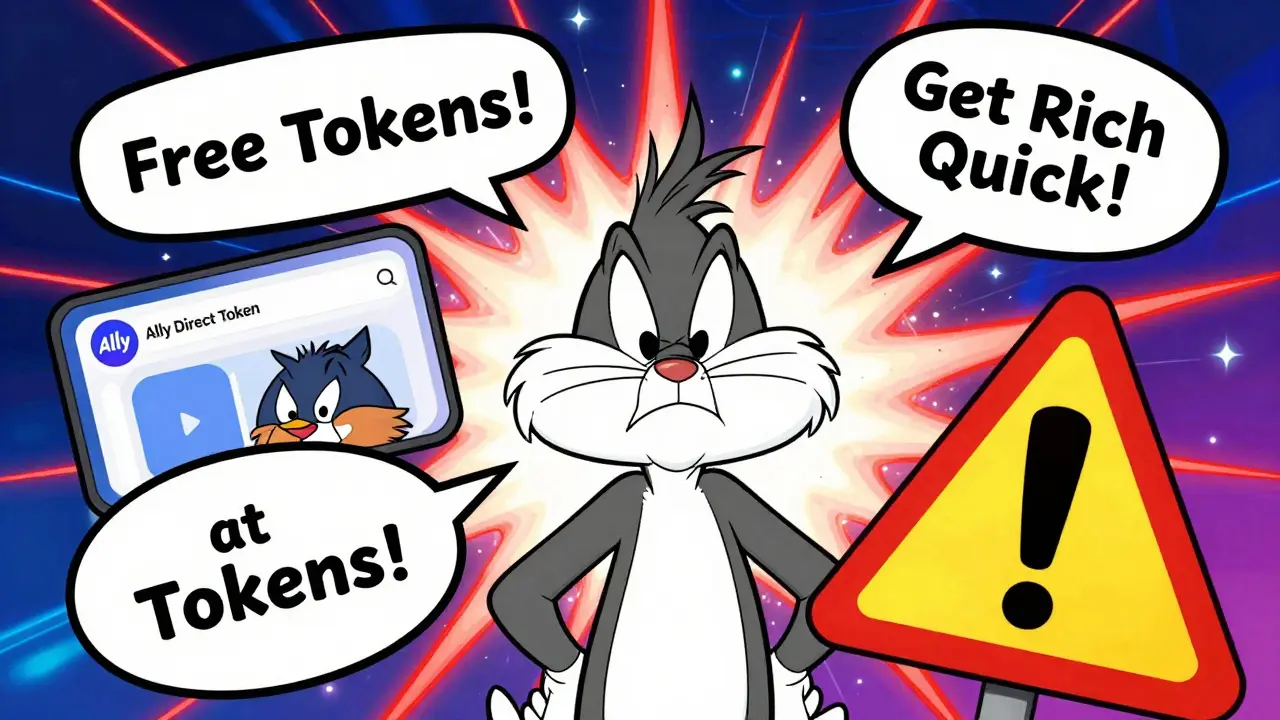
You’ve probably seen the hype. Social media feeds are flooded with promises of free tokens, and if you’re hunting for the next big thing, Ally Direct Token (DRCT) might have popped up on your radar. The pitch sounds too good to ignore: a blockchain platform that cuts out middlemen like DoorDash and Uber Eats, letting drivers earn more and customers pay less. But here is the hard truth you need to hear right now. There is no credible evidence of an active, legitimate DRCT airdrop. In fact, digging into the data reveals some serious red flags that suggest this project might be dormant-or worse.
Before you connect your wallet or click any suspicious links claiming to distribute these tokens, we need to look at what Ally Direct actually is, where the token stands in the market today, and why "free money" offers in crypto often lead to lost funds. Let’s break down the reality behind the hype so you can protect your assets.
The Promise vs. Reality of Ally Direct
To understand the risk, you first need to understand the product. Ally Direct is a blockchain-based software-as-a-service platform designed to connect businesses, drivers, and customers directly. The core idea is noble. Traditional gig economy platforms charge merchants fees ranging from 15% to 30%. These costs get passed down to consumers, while drivers often complain about low pay after expenses. Ally Direct claims to solve this by using enterprise technology that removes the third-party marketplace layer entirely.
According to their whitepaper and marketing materials, the benefits are significant:
- Merchants keep 100% of their revenue.
- Drivers reportedly earn an average of 42% more than on traditional apps.
- Customers save approximately 30% on orders because there are no platform markups.
The platform uses branded iOS, Android, and Web technologies. It allows merchants to reclaim customer relationships instead of renting them from giants like GrubHub or Postmates. On paper, it’s a decentralized solution to a centralized problem. However, a great business model does not automatically translate to a successful cryptocurrency token. This distinction is crucial when evaluating investment opportunities.
Token Economics: What Is DRCT?
The native currency of this ecosystem is the Ally Direct Token (DRCT). The project states that the total supply is capped at 1.2 billion tokens. They claim a circulating supply of roughly 362.65 million DRCT. But what does this token actually do within the network?
In theory, DRCT serves multiple functions:
- Value Transfer: Facilitating payments between customers, merchants, and drivers.
- Escrow Services: Holding funds securely until services are completed.
- Dispute Resolution: Acting as collateral or voting power in arbitration processes.
- Reputation Management: Potentially tied to NFTs or soulbound tokens to verify user history.
This structure mirrors other utility tokens in the logistics and service sectors. However, utility only matters if people are using the network. If the network is empty, the token has no intrinsic value. This leads us to the most critical part of our investigation: the current market status.
Market Status: The Zero-Volume Red Flag
If you go to major cryptocurrency tracking platforms like CoinGecko, CoinMarketCap, or even exchange-specific trackers like Bitget, you will find something alarming. As of mid-2026, the trading price of DRCT is listed as $0.00 USD. More importantly, the 24-hour trading volume is also $0.00.
Let’s unpack what this means. A zero price doesn’t always mean a project is dead-it could mean it hasn’t launched on a major exchange yet. But combined with zero volume, it suggests a complete lack of liquidity. No one is buying. No one is selling. The order books are effectively empty.
Furthermore, check the status on Binance. One of the world’s largest exchanges maintains a page for DRCT, but it explicitly states "Not Listed." This isn’t just a minor oversight; it indicates that the token lacks the regulatory compliance, security audits, or community traction required to list on top-tier venues. When a token cannot trade on major platforms, its accessibility drops to near zero. You might find it on obscure, unregulated decentralized exchanges (DEXs), but those come with high risks of slippage, rug pulls, and smart contract vulnerabilities.
Is There an Ally Direct Token Airdrop?
Here is the direct answer to the question that likely brought you here: **No, there is no verified, active airdrop for Ally Direct Token.**
In the crypto space, scammers thrive on confusion. They create fake websites, Telegram groups, and Twitter accounts mimicking real projects to steal private keys or seed phrases. With DRCT showing zero market activity, it becomes a prime target for such scams. Here is how to spot the difference:
| Feature | Legitimate Project | Scam / Fake Claim |
|---|---|---|
| Official Announcement | Posted on verified social media handles and official blog. | Found via random DMs, pop-up ads, or unverified forums. |
| Website Domain | Matches the official project domain exactly. | Slight misspellings (e.g., ally-direct-token.com vs allydirecttoken.xyz). |
| Wallet Connection | Never asks for your seed phrase or private key. | Requests seed phrase to "verify eligibility" or "unlock rewards". |
| Market Activity | Token has visible price and volume on tracked exchanges. | Token shows $0 price/volume or is untracked. |
If you see a site claiming you can claim free DRCT tokens right now, it is almost certainly a phishing attempt. Legitimate airdrops usually require specific on-chain actions-like bridging assets, providing liquidity, or interacting with testnets-not just clicking a button on a sketchy website.
Confusion Around Tickers: DRCT vs. ADT
Another layer of complexity is the confusion surrounding ticker symbols. Some older documentation or lesser-known sources refer to the token as "Ally Direct Token (ADT)." This inconsistency is a common sign of disorganized project management or rebranding efforts that weren't communicated clearly.
In crypto, precision matters. If a project changes its ticker from ADT to DRCT without clear migration instructions, users can end up holding worthless old tokens. Always verify the contract address on a block explorer. Never trust a ticker symbol alone. If you hold ADT, check if it’s the same contract as DRCT. If they are different contracts, you may be holding an obsolete asset with no path to redemption.
The Broader Airdrop Landscape in 2026
It helps to compare DRCT to what *actual* airdrops look like in 2026. The industry has matured significantly since the early days of simple "follow and retweet" giveaways. Today’s valuable airdrops reward genuine participation.
For example, projects on the Solana and Ethereum Layer 2 ecosystems often use retroactive rewards. You didn’t just sign up; you used the protocol. You provided liquidity. You staked assets. Projects like EigenLayer rewarded users who helped secure the network through restaking mechanisms. On the TON blockchain, mini-apps like Notcoin and Hamster Kombat engaged millions by gamifying interaction, but they still required sustained, verifiable activity over months.
These projects had:
- Active development teams pushing code updates weekly.
- Growing transaction volumes on-chain.
- Clear communication channels with responsive moderators.
- Listings on reputable exchanges post-airdrop.
Ally Direct currently lacks all of these indicators. Without active usage, there is no basis for a fair distribution. Distributing tokens to random wallets when the underlying product isn't being used creates immediate sell pressure and crashes the price, hurting everyone involved.
Risk Assessment: Should You Engage?
Let’s be blunt. Investing time or money into a project with zero liquidity and no exchange listings is extremely high-risk. Here are the specific dangers associated with DRCT right now:
- Liquidity Trap: Even if you acquire tokens, you may not be able to sell them. If there are no buyers, your tokens are digital paperweights.
- Smart Contract Risk: Unlisted tokens often reside on contracts that haven’t been audited by firms like CertiK or OpenZeppelin. This increases the risk of hidden backdoors allowing developers to freeze or drain funds.
- Phishing Attacks: As mentioned, fake airdrop sites targeting DRCT holders are likely proliferating. Connecting your wallet to these sites can compromise your entire portfolio, not just the DRCT tokens.
- Opportunity Cost: Time spent researching dormant projects is time taken away from vetting active, healthy ecosystems with proven track records.
The disconnect between the ambitious vision of Ally Direct (empowering drivers and merchants) and the stark reality of its token performance (zero value, zero volume) suggests the project may be in a state of dormancy or facing severe operational challenges. It is possible the team is still building, but in crypto, silence is rarely golden. It’s usually a warning sign.
How to Verify Future Opportunities Safely
If you remain interested in Ally Direct or similar gig-economy blockchain projects, follow these steps to stay safe:
- Check Official Channels Only: Go to the official website and verify the links to their Twitter, Discord, and Telegram. Do not search for them on Google, as SEO spam often ranks higher than official pages for low-volume keywords.
- Monitor On-Chain Data: Use tools like Etherscan or BscScan (depending on the chain) to look at the token contract. Are there new transactions? Are large wallets accumulating or dumping? If the last transaction was months ago, walk away.
- Look for Audits: Does the project have a published smart contract audit? If not, assume the code is unsafe.
- Wait for Exchange Listings: A legitimate airdrop usually precedes or coincides with an exchange listing. If there’s no news of listing on Binance, Coinbase, Kraken, or even mid-tier exchanges like KuCoin or Gate.io, the token has no exit strategy for retail investors.
Remember, in the world of cryptocurrency, skepticism is your best defense. If an offer feels too good to be true-especially involving a token with no market presence-it almost certainly is.
Is the Ally Direct Token (DRCT) a scam?
While the underlying concept of Ally Direct is not inherently a scam, the current status of the DRCT token raises significant red flags. The token trades at $0 with zero volume and is not listed on major exchanges. Additionally, there are numerous fake airdrop websites targeting this name. Users should exercise extreme caution and avoid connecting wallets to unverified sites.
How can I participate in the Ally Direct airdrop?
There is currently no verified or active airdrop for Ally Direct Token. Any website or person claiming otherwise is likely attempting to phish your wallet credentials. Do not enter your seed phrase anywhere. Wait for official announcements from the project's verified social media channels.
What is the difference between DRCT and ADT?
Ally Direct Token has been referred to as both DRCT and ADT in various documents. This inconsistency can cause confusion. Currently, DRCT is the primary ticker used on tracking platforms, though it shows no trading activity. Always verify the specific contract address rather than relying solely on the ticker symbol to ensure you are looking at the correct asset.
Why is the DRCT token price $0?
A price of $0 with zero trading volume typically indicates a lack of liquidity. This means there are no active buyers or sellers on major exchanges. The token may be delisted, dormant, or only tradeable on obscure decentralized exchanges with high risk. It reflects a market where the asset currently has no established monetary value.
Is Ally Direct still operating?
The operational status of the Ally Direct platform itself is unclear due to the lack of recent market activity and transparent updates. While the technology aims to connect merchants and drivers, the absence of token trading and public engagement suggests the project may be inactive or in early development stages. Check their official blog for the latest news before engaging.